Best Turbos AI Alternatives in 2026 [For Students]
Looking for a Turbos.ai alternative? Compare Duetoday vs Turbos.ai to find the best tool for lecture transcription, AI study guides, and exam preparation for students.
Why people look for a Turbos.ai alternative
Many students start their journey with Turbos.ai because they need a quick way to handle lecture recordings. It is an effective tool for turning audio into text, but over time, learners often realize that a transcript is just the beginning of the process. Having a document of what a professor said does not automatically mean the information is understood or retained. High-frequency learners often look for alternatives when they realize they are spending too much time managing transcripts and not enough time actually mastering the material. They need a system that does more than just transcribe; they need a workspace that helps them bridge the gap between hearing a lecture and passing an exam.
The fragmentation of the modern study workflow is another major driver for seeking alternatives. Currently, a student might use one tool for recording, another for storing PDFs, a third for flashcards, and a calendar to track it all. When these tools do not talk to each other, the student becomes a project manager of their own notes rather than a learner. If a tool only handles one part of the pipeline, such as transcription, it leaves the student to do the heavy lifting of organization and review elsewhere. This friction leads to looking for a more unified solution that handles the entire learning lifecycle in one place.
Quick verdict
At-a-glance:
Best for building a knowledge vault: Turbos.ai
Best for a real study system: Duetoday
Best if you want both: Use Turbos.ai for raw transcription storage and Duetoday for active retention and exam planning
What Turbos.ai is great at
Turbos.ai excels at its core promise of accuracy and speed in transcription. It is designed to be a reliable partner for students who find themselves sitting through hours of lectures without the ability to keep up with manual note-taking. The platform is straightforward, making it easy to upload audio files and receive a text-based version of the content quickly. For many, this provides a massive sense of relief because it ensures that no detail from the lecture is lost. It captures the nuances of what was said, providing a safety net for those who might have missed a key point during a fast-paced presentation.
Furthermore, Turbos.ai offers a focused experience. It does not try to be everything to everyone, which can be an advantage for users who just want a digital archive of their classes. The interface is generally clean and the output is easy to read. It serves as a strong foundational tool for building a library of spoken content. For students who already have a highly developed manual study routine and just need the raw text to feed into their own systems, it performs its role consistently well without unnecessary complexity.
Where Turbos.ai breaks for students on deadlines
The primary breakdown occurs when a deadline approaches and the student realizes they have twenty transcripts but no actual grasp of the concepts. There is a phenomenon known as productive procrastination where a student feels they are working because they are uploading and organizing transcripts, but they aren't actually learning. Turbos.ai provides the raw material, but it often leaves the student staring at a wall of text. Transitioning from a transcript to exam readiness requires several more steps—like summarizing, creating practice questions, and scheduling reviews—that the tool isn't designed to handle autonomously.
Additionally, modern learning is rarely just audio. Students deal with a mix of YouTube videos, research PDFs, website articles, and handwritten notes. When a tool is heavily focused on the transcription aspect, it struggles to integrate these diverse media types into a single, cohesive brain. This fragmentation forces students to jump between browser tabs and apps, losing focus every time they switch. On a tight deadline, the friction of moving a transcript from one app into a flashcard app, and then checking a calendar to see when to study, creates a cognitive load that can lead to burnout or ineffective cramming.
What Duetoday does instead
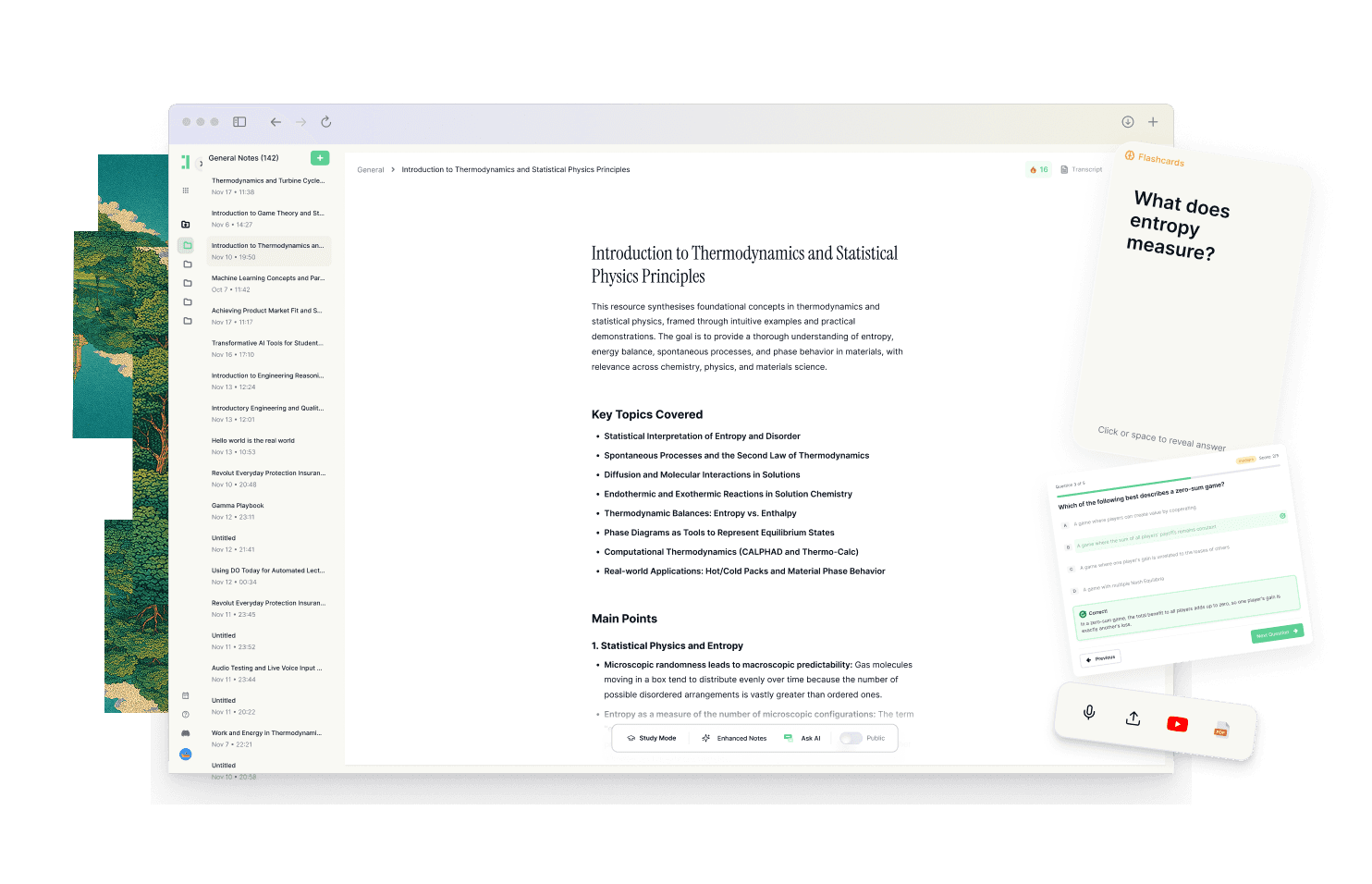
Duetoday is designed as a unified learning workspace that prioritizes retention over simple storage. It serves as one place that holds everything you learn, including lectures, PDFs, YouTube videos, websites, and personal notes. You can upload lecture recordings and get a high-quality transcription, but that is just the starting point. Duetoday immediately allows you to turn that raw content into structured study outputs. Instead of just a transcript, you get summaries, cheatsheets, and comprehensive study guides that are ready for review. It moves the student from "having the notes" to "understanding the notes" in a few clicks.
The system goes deeper by generating active recall tools such as flashcards and quizzes directly from your uploaded materials. You can ask questions with an AI chat that is grounded in your specific files, not generic internet data, ensuring the answers are relevant to your professor's specific curriculum. Importantly, all materials remain connected to the source; if you are looking at a flashcard, you can instantly see where that information came from in the original lecture or PDF. By integrating with tools like Notion and Google Calendar, Duetoday aligns your study materials with your real-world schedule. It makes the next right action obvious, taking the guesswork out of what to study and when to do it.
How the Duetoday workflow feels in real life
On a typical Monday, a student might finish a complex three-hour lecture and upload the recording to Duetoday. While they grab lunch, the system transcribes the audio and generates a structured summary and a set of practice questions. Instead of spending their evening trying to decipher their own messy notes, the student reviews the AI-generated cheatsheet and identifies a few confusing concepts. They use the AI tutor chat to clarify those specific points, grounding the explanation in the lecture they just heard. The student then marks these topics for review, and the system suggests a study block based on their Google Calendar.
As the exam approaches three weeks later, the student doesn't feel the need to panic or re-listen to old lectures. They open their Duetoday workspace and find a centralized library of all their lecture transcripts, YouTube research, and related PDFs. They run through the generated flashcards and take a few mock quizzes to find their weak spots. Because everything is connected, they can jump from a failed quiz question back to the exact moment in the transcript where the professor explained that concept. The workflow feels less like a race against time and more like a repeatable, calm process of refinement and practice.
Duetoday vs Turbos.ai in plain English
When comparing the two, the fundamental difference lies in the goal of the user. Setup time for both is relatively low, but the learning curve shifts as you move deeper into the semester. Turbos.ai is excellent if you just need to get words onto a screen. It is a linear tool that solves for transcription. Duetoday, however, covers the entire cycle of learning. It handles the transcription just as well, but it then immediately processes that text into formats that are usable for actual studying. If you find yourself frequently copy-pasting text from a transcript into another app to make flashcards, you are feeling the gap that Duetoday is meant to fill.
Another major difference is support for mixed media. Most students today don't just learn from lectures; they use a variety of sources. While Turbos.ai is built around audio and video files, Duetoday creates a cohesive environment where a PDF of a textbook and a YouTube tutorial can live alongside your lecture transcripts. This reduces the fragmentation that causes students to lose track of their resources. In terms of daily routine, Duetoday is more prescriptive, helping you see what needs to be done next through its execution layer, whereas Turbos.ai is a passive repository that waits for you to decide how to use the data it has generated.
Who should choose Duetoday
Duetoday is the ideal choice for university students who are lecture-heavy and deadline-driven. It is for the person who feels like they are drowning in information and needs a way to filter the noise into actionable study tasks. If you are someone who likes to use a variety of media—PDFs, YouTube, and websites—and you want all of those inputs to contribute to one single "AI Brain," this is the system for you. It appeals to those who want a structured path to retention and want to avoid the chaos of managing multiple disconnected study apps.
It is also perfect for learners who want to prioritize active recall without the manual labor of creating cards and quizzes. If you value seeing your study tasks integrated with your Google Calendar so you can actually stick to a plan, Duetoday provides that execution layer. It is built for those who aren't just looking for a transcript, but for a way to ensure they actually know the material before they walk into the exam room.
Who should still choose Turbos.ai
Turbos.ai remains an excellent choice for individuals who only need a high-quality transcription service and have no need for a broader study system. It is well-suited for researchers or hobbyists who are building a long-term vault of text-based information and prefer to do all their own processing and synthesis manually. If you are someone who enjoys tinkering with various plugins and building your own custom workflows between many different apps, you might prefer the simplicity of a tool that does one thing and stays out of the way.
Verdict
The choice comes down to whether you need a storage vault or a learning system. Turbos.ai is a reliable vault for your lecture audio, providing high-quality transcripts for your records. Duetoday is a unified study system that takes those transcripts—as well as your PDFs and videos—and transforms them into a loop of retention and practice. While one stores the information, the other ensures you actually learn it, helping you move from fragmented notes to a cohesive, schedule-aware study routine that works against the stress of deadlines.
FAQ
Is Duetoday only flashcards and quizzes?
No, Duetoday is a complete learning workspace. While it does generate flashcards and quizzes for active recall, it also handles lecture transcription, PDF organization, AI-driven summaries, and even integrates with your calendar to help you manage your time and tasks.
Does Duetoday work for lectures and YouTube?
Yes, Duetoday is designed to handle mixed media. You can upload audio or video recordings from your university lectures and import YouTube links or website articles, bringing all your different learning sources into one connected environment.
Will it help reduce cramming?
By creating structured study outputs and connecting with your Google Calendar, Duetoday helps you distribute your learning over time. It makes the next study step obvious, which encourages consistent review rather than waiting until the night before an exam to look at your notes.
Can I still use Notion or Google Calendar?
Absolutely, Duetoday is designed to work alongside your existing tools. You can sync or pull content from Notion into your learning brain and connect your Google Calendar so your study sessions align with your real-world schedule and deadlines.
Who is Turbos.ai still best for?
Turbos.ai is a great fit for users who strictly need transcription services and already have a separate, established method for studying. It serves those who want a simple, focused tool to convert speech to text without additional features like quizzes or calendar integration.
Determining which tool fits your needs depends on whether you want a transcript or a total study transformation.
Read More Alternative To Comparison
Turn lectures, PDFs, and notes into AI-Powered summaries, bite-sized
courses, flashcards, quizzes, and study plans.