
Free Templates for Students
Recommendation Request Email Templates [Students Free Download]
Get professional email templates to request recommendations for internships, grad school, or jobs. Learn what to include and how to follow up effectively.
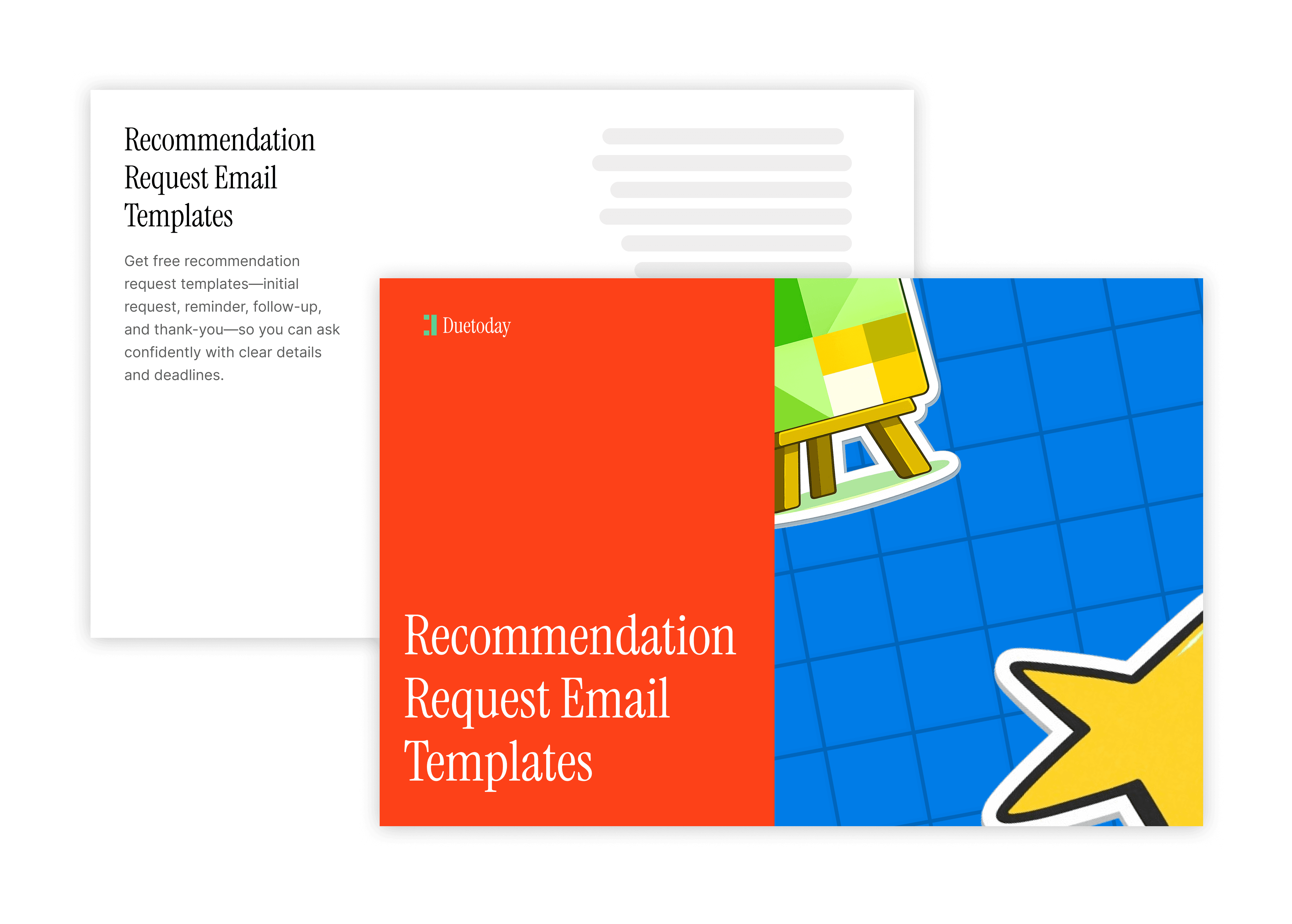
What’s inside? Exclusive insights into:
The importance of the "timing and tone" approach—and exactly when to send your request for the best results.
How to provide your recommender with a "cheat sheet" so they can write your letter in half the time.
Everything you need to include: from specific project reminders to clear deadlines and submission links.
Asking for a recommendation can feel awkward. Whether you’re reaching out to a professor you haven't spoken to in months or a busy former supervisor, the fear of being a burden (or getting a 'no') is real. But here is the secret: most mentors actually want to help—they just don't have the time to hunt down your details.
Recommendation Request Templates: Why a Script Matters
Preparation isn’t just about being polite; it’s about being professional. A well-structured email template removes the friction for the person you are asking. It ensures they have every piece of information they need to say "yes" and write something that actually helps you stand out.
Using a template helps you avoid common pitfalls like:
Being too vague about what you need the letter for.
Forgetting to attach your CV or latest transcript.
Sending the request too close to the deadline.
Failing to remind them of the specific work you did under their supervision.
By using these resources, you are setting yourself up for a smoother application process. This guide covers the essential components: the initial outreach, the follow-up, and the thank-you note.
About Duetoday AI
Duetoday is your ultimate AI study companion. It transcribes lectures in real time, translates instantly, and turns recordings, PDFs, and videos into clean notes, summaries, flashcards, and quizzes—fast. Don't just record class; master it with Duetoday.
What Your Request Email Should Include
A high-quality recommendation request isn't just a favor; it's a professional transaction. To get the best letter possible, your email should cover:
Clear Subject Line: Include your name and the words "Recommendation Request."
The Context: Remind them who you are and which class or project you worked on together.
The "Why": Briefly explain why you are applying for this specific role or program.
The Logistics: Clearly state the deadline and how they need to submit the letter.
Supporting Documents: Attach your resume, a draft of your personal statement, and any specific points you'd like them to highlight.
Set Yourself Up for more than just a "Yes"
When you are organized, your recommender feels respected. They are more likely to write a glowing review if you've already done the heavy lifting for them. This means providing a summary of your achievements and a clear timeline.
Explore Related Resources
How to Ask a Professor for a Letter of Recommendation
What to Put in Your Academic CV
Writing a Personal Statement that Wins Scholarships
The Art of the Thank-You Note: Follow-up 101
Frequently Asked Questions
When should I ask for a recommendation?
Ideally, at least 4 to 6 weeks before the deadline. This gives the person plenty of time to fit it into their schedule without feeling rushed.
What if they haven't responded to my email?
Wait about 7 to 10 days before sending a polite follow-up. Keep it brief and ask if they need any additional information from your side.
Is it okay to ask via LinkedIn or Phone?
Email is the professional standard for these requests as it allows the recipient to review your documents and check their calendar. Only use other platforms if you have a very close, casual relationship with them.
What should I do after they submit the letter?
Always send a thank-you email immediately after they confirm submission. Once you get the result of your application (whether you got in or not), send a second update to let them know the outcome.

Duetoday is an AI-powered learning OS that turns your study materials into personalised, bite-sized study guides, cheat sheets, and active learning flows.