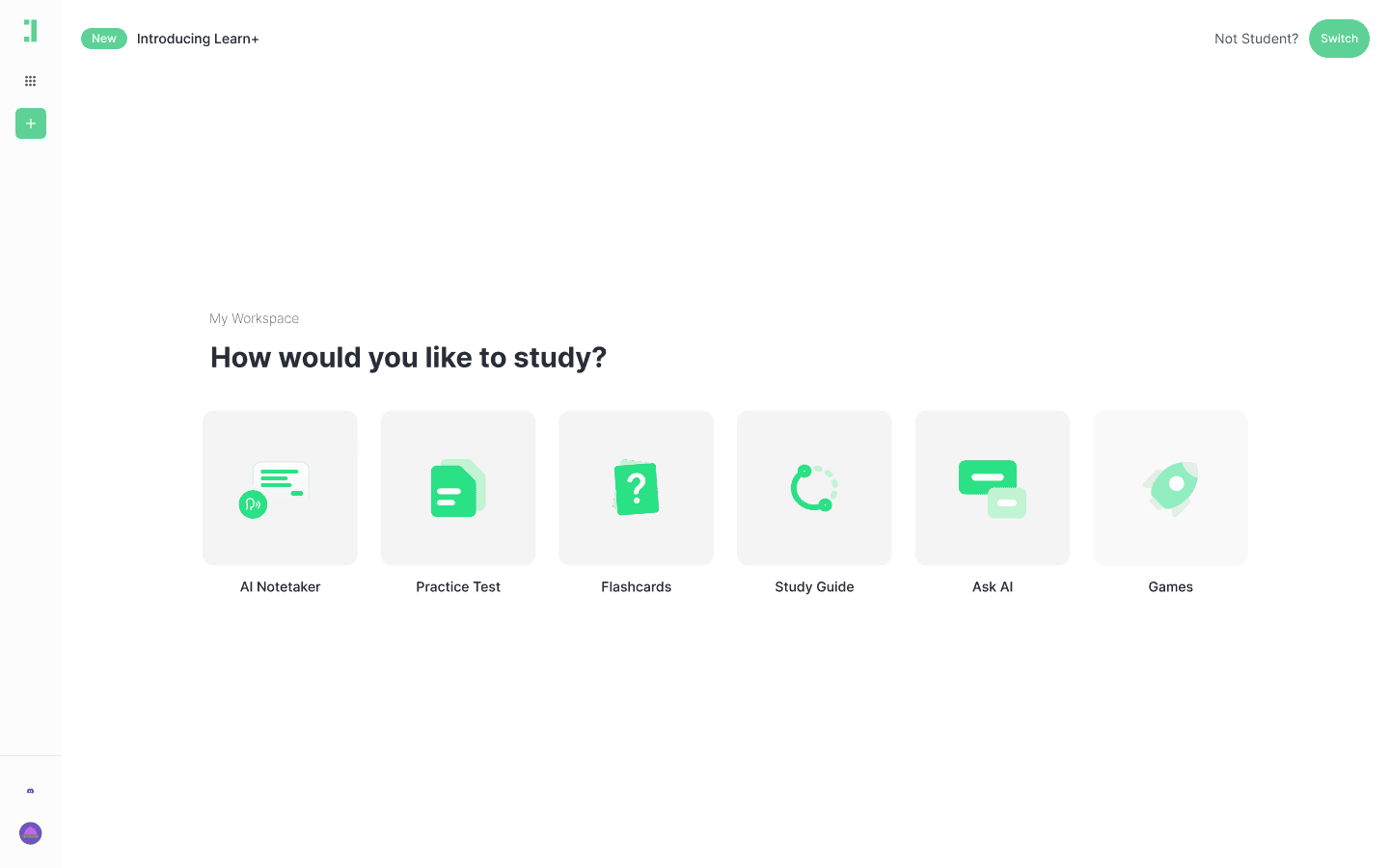
Generate Flashcards for Forces and Free-Body Diagrams
Generate Forces and Free-Body Diagram flashcards in seconds. Try Duetoday for free!
Generate Flashcards with AI Free
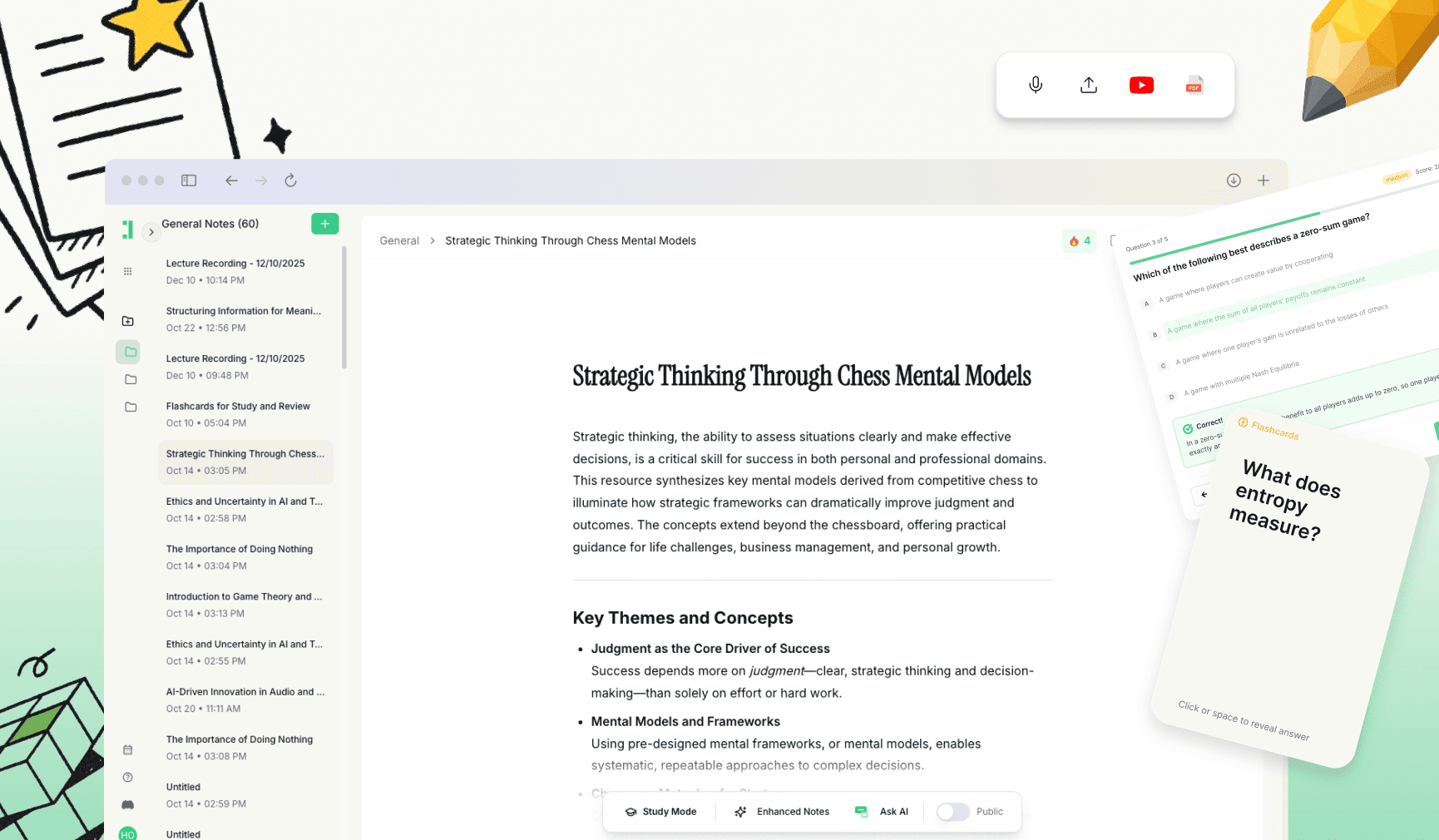
Generate Flashcards for Forces and Free-Body Diagrams
Turn your physics notes, PDFs, slides, or lecture recordings into Forces and Free-Body Diagrams flashcards so you can review faster and remember more. Whether you are struggling with vector components or Newton's Laws, our AI-powered tool helps you master the mechanics of physics.
Generate Forces FlashcardsUpload Notes / Paste Text
In Duetoday, the process is simple: upload your materials, let the AI generate high-quality cards, review and edit them for accuracy, and start your study session immediately.
What are Forces and Free-Body Diagrams flashcards?
Forces and Free-Body Diagrams flashcards cover the fundamental principles of classical mechanics. They include key terms like inertia, tension, friction, and gravity, as well as the step-by-step logic required to solve complex vector problems. These cards help you memorize formulas and recognize which forces apply to a specific scenario.
The ultimate outcome is improved problem-solving speed. Instead of simply rereading your textbook, you test your ability to identify force vectors and calculate net forces on the fly. If you already have notes, Duetoday can generate a clean deck in minutes.
Why flashcards work for Forces and Free-Body Diagrams
Physics is a subject that requires both conceptual understanding and procedural application. Flashcards bridge this gap by isolating specific concepts and forcing you to recall them without looking at the answer. This builds the mental pathways needed for high-stakes exams.
Remember key physics terms like 'Normal Force' and 'Equilibrium' without cramming.
Separate similar concepts, such as Static Friction vs. Kinetic Friction.
Learn processes step-by-step, like the stages of drawing a correct Free-Body Diagram.
Practice applying Newton's Three Laws to different physical scenarios.
What to include in your Forces and Free-Body Diagrams flashcards
Effective physics flashcards follow the "one idea per card" rule. They should move beyond simple definitions and into the logic of why an object moves or stays at rest. Using question-based prompts ensures you are actually thinking through the physics rather than just memorizing a sentence.
Definitions & key terms: "What is Newton's First Law?" or "Define Tension in a rope."
Processes & steps: "What is the first step when drawing a Free-Body Diagram for a block on an incline?"
Comparisons: "How is mass different from weight?"
Application: "If the net force on an object is zero, what are the two possible states of motion?"
Example prompts: "What formula relates force, mass, and acceleration?", "Which direction does friction always act relative to motion?", "Define the Normal Force.", "How do you calculate the weight of an object on Earth?"
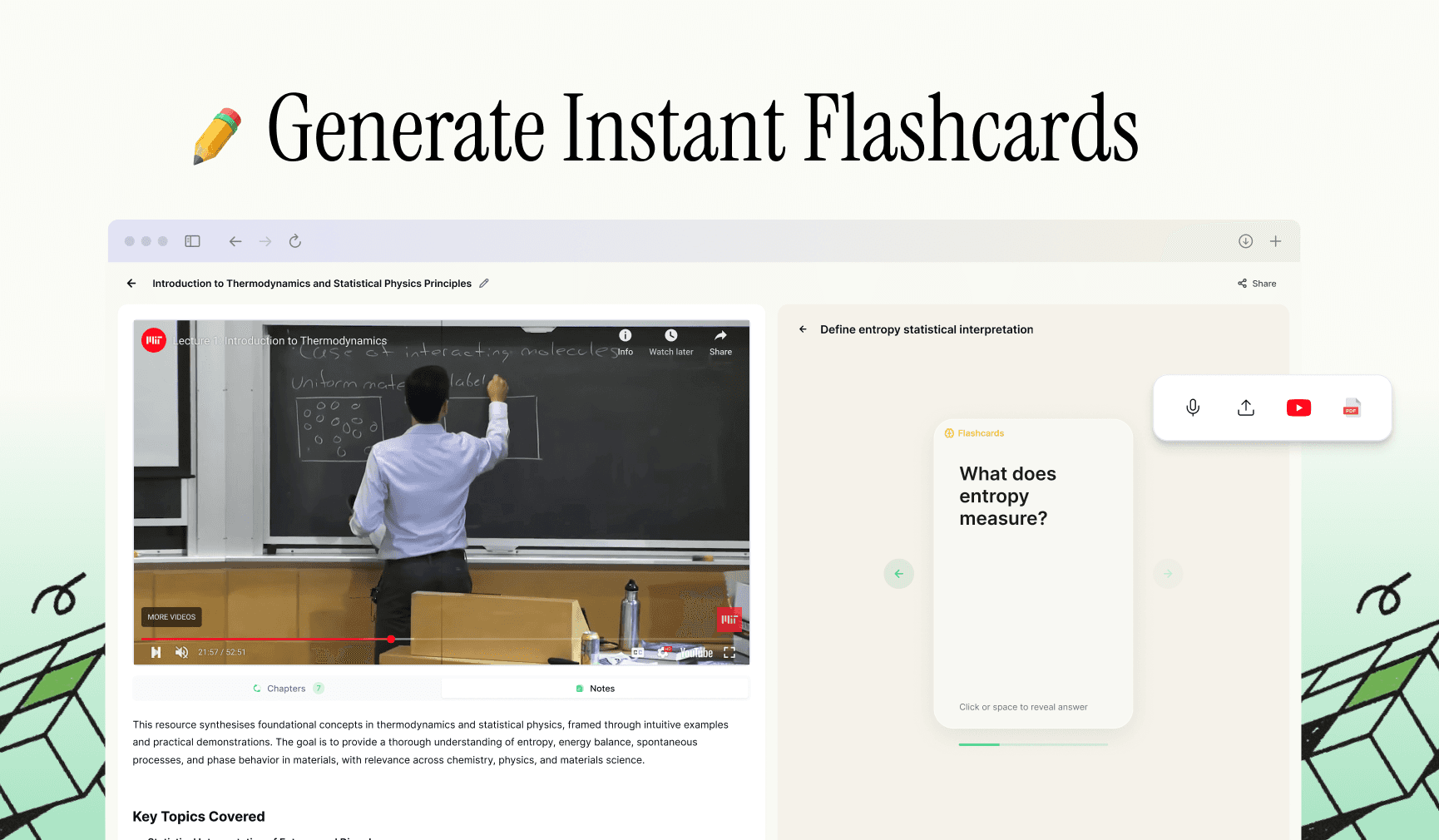
How to study Forces and Free-Body Diagrams with flashcards
To master physics, use a two-pass approach. First, generate your deck based on your class material to ensure all concepts are covered. Then, move into repetitive review rounds where you prioritize the cards that challenge you the most.
Make a deck from your physics notes or generate it from a textbook PDF.
Do one quick round to find weak spots in your vector math or conceptual knowledge.
Review weak cards daily using spaced repetition.
Mix in harder application problems involving multiple forces.
Do a final mixed review of all forces before your quiz or exam.
Generate Forces and Free-Body Diagrams flashcards automatically
Making flashcards manually is slow, messy, and often results in cards that are too wordy to be useful. Designing diagrams and typing out formulas takes time away from actual studying.
Duetoday solves this by automating the creation process. Simply upload your physics notes, PDFs, or slides, and the AI will generate study-ready flashcards instantly. You can then edit them for clarity and start your session right away.
Upload or paste your physics material
Click Generate Flashcards
Review, edit, and start studying
Generate Forces Flashcards in Duetoday
Start with your notes and get a deck you can actually use today to boost your physics grades.
Common Forces flashcard mistakes
Most students make cards that are too long or focus only on definitions. To get the most out of your study time, avoid these common pitfalls:
Cards are too long: Split complex force problems into smaller, individual steps.
Only memorizing formulas: Add cards that ask "why" a certain force is present in a diagram.
Confusing mass and weight: Create specific comparison cards to highlight the difference.
No review schedule: Use an AI tutor or app to ensure you repeat the hardest cards.
FAQ
How many flashcards do I need for Forces? Usually, a comprehensive deck for this topic ranges from 30 to 50 cards, covering definitions, laws, and common problem scenarios.
What’s the best format for physics flashcards? Question and answer format is best. Ask a specific question about a force or law on the front and provide a concise explanation or formula on the back.
How often should I review my cards? Daily review is recommended until you have mastered the concepts, then shift to every few days to keep the information in your long-term memory.
Should I make cards from a textbook or slides? Use both! Textbook definitions are great for foundations, while lecture slides often contain the specific types of problems your teacher prefers.
How do I stop forgetting formulas? Use active recall. Instead of looking at the formula, try to write it down from memory every time a flashcard asks for it.
What if my flashcards feel too easy? If they are too easy, start adding scenario-based cards, like 'What happens to the Normal Force if the angle of the ramp increases?'
Can I generate flashcards from a PDF? Yes, Duetoday allows you to upload any physics PDF and converts the text into structured flashcards automatically.
Are digital flashcards better than paper? Digital cards are often better for physics because they can be organized instantly and use spaced repetition algorithms to save you time.
How long does it take to make a full deck? Manually it could take hours, but with Duetoday's AI, it takes less than a minute.
Can Duetoday organize my cards for me? Absolutely. Duetoday categorizes your flashcards by topic so you can focus your study sessions effectively.
Ready to generate your Forces flashcards?
Stop rereading and start recalling. Upload your notes, generate your deck, and master Free-Body Diagrams today.
Start Generating Flashcards
Works with notes, PDFs, slides, and transcripts.

Duetoday is an AI-powered learning OS that turns your study materials into personalised, bite-sized study guides, cheat sheets, and active learning flows.