Generate Flashcards for Zoology
Make Zoology flashcards from your notes or PDFs. This guide shows how to generate study material for animal biology and taxonomy.
Generate Flashcards with AI Free
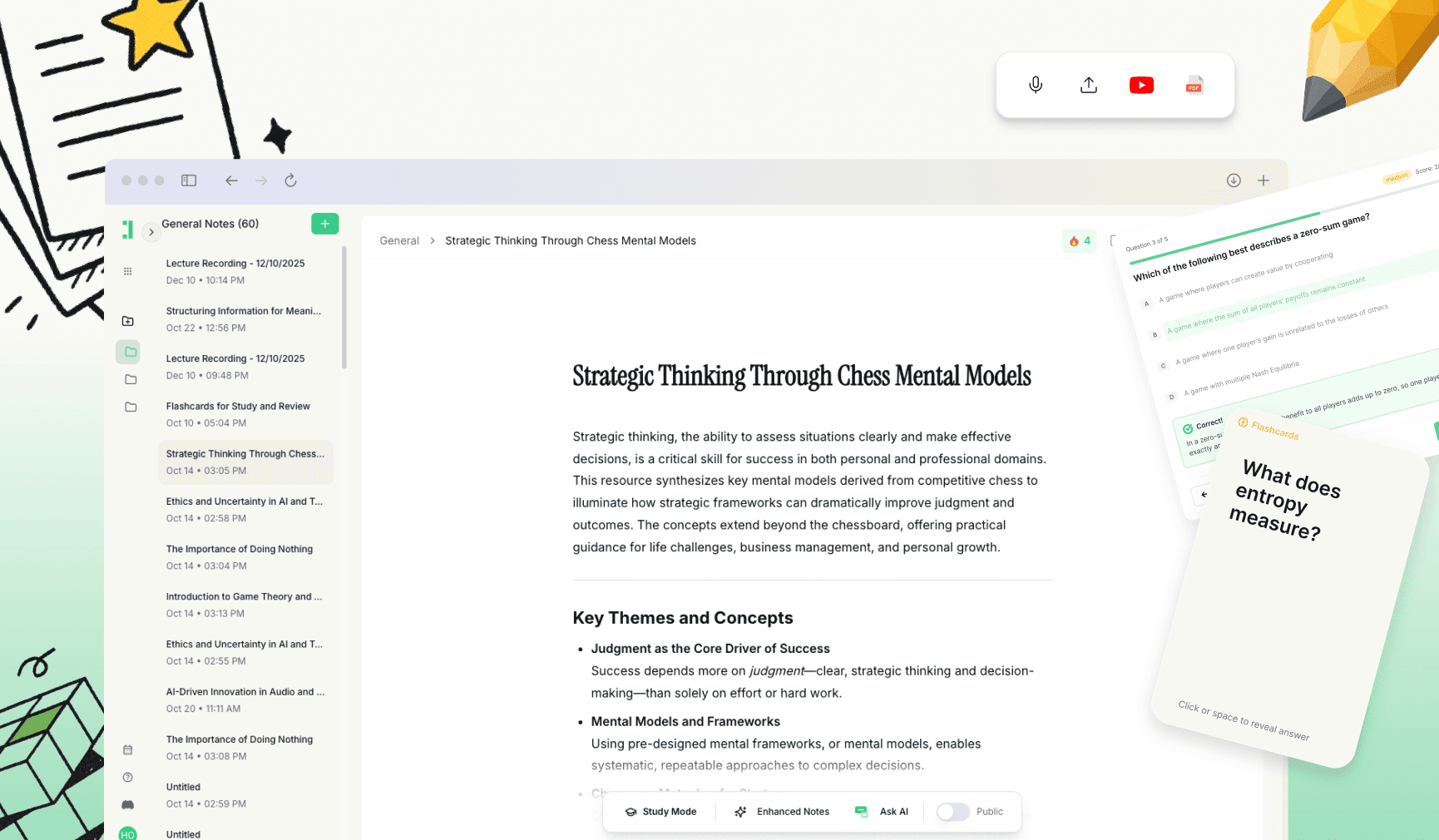
Turn your Zoology notes into study-ready flashcards
Turn your notes, PDFs, slides, or lectures into Zoology flashcards so you can review faster and remember more. Efficiently master complex animal structures, classifications, and ecological roles without the manual grunt work.
Generate Zoology FlashcardsUpload notes / paste text
In Duetoday, the process is simple: upload your materials, let the AI generate a structured deck, review or edit the content, and start your study session immediately.
What are Zoology flashcards?
Zoology flashcards are concise study aids designed to cover the vast spectrum of animal biology. They focus on key terms like phylogeny and morphology, biological processes such as metabolic cycles, and the specific anatomical features of different phyla. Instead of passively rereading dense textbooks, these cards force you to test your knowledge, building stronger neurological pathways for recall.
If you already have notes on chordates, invertebrates, or comparative anatomy, Duetoday can generate a clean, organized deck in minutes.
Why flashcards are one of the best ways to study Zoology
Zoology requires a unique blend of structural memorization and conceptual understanding. Flashcards bridge this gap by breaking down massive biological systems into digestible units. Using active recall and spaced repetition helps you move information from short-term memory into long-term mastery.
Remember complex taxonomic hierarchies without cramming.
Separate similar concepts (e.g., Protostomes vs. Deuterostomes).
Learn life cycles and reproductive stages step-by-step.
Practice identifying anatomical structures and their functions quickly.
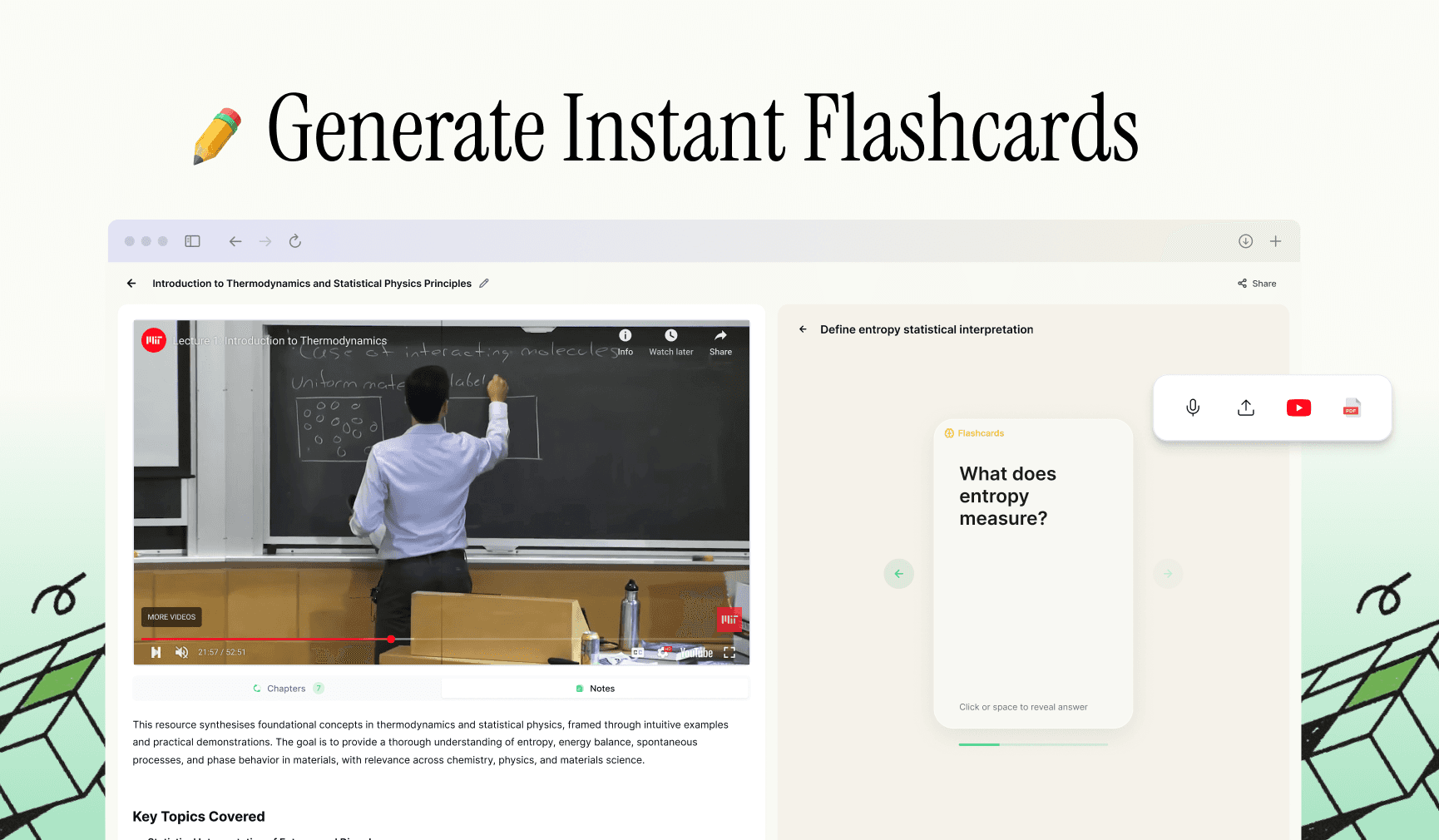
What to include in your Zoology flashcards
Effective Zoology flashcards follow the atomic rule: one specific idea per card. By framing your notes as questions, you transform your study session into a series of mini-challenges that keep your brain engaged.
Definitions & Key Terms: What is the function of the madreporite in echinoderms?
Processes & Steps: What is the first stage of holometabolous metamorphosis?
Comparisons: How do cartilaginous fish differ from bony fish regarding buoyancy?
Application: Given a three-chambered heart, which vertebrate classes could this animal belong to?
How to study Zoology with flashcards (a simple system)
Success in Zoology comes from a two-pass approach. First, generate your deck to see the big picture, then use repetitive rounds to sharpen your focus on difficult specimens or physiological systems.
Make a deck from your lab manuals or lecture slides in Duetoday.
Do one quick round to identify which phyla or systems you struggle with.
Review these weak cards daily to solidify the memory.
Mix in harder application questions to prepare for practical exams.
Perform a final mixed review to ensure you can jump between topics fluidly.
Generate Zoology flashcards automatically in Duetoday
Making cards manually for a subject as broad as Zoology is slow and often leads to messy, inconsistent notes. Duetoday solves this by automating the creation process, letting you focus on the actual learning.
Upload your Zoology PDF or paste your lecture transcript.
Click Generate Flashcards to see your custom deck.
Edit the cards for personal context and start studying right away.
Generate Zoology Flashcards in Duetoday
Start with your notes and get a deck you can actually use today. Stop rereading and start recalling.
Common Zoology flashcard mistakes
Cards are too long: Don't put an entire lab description on one card; split it into specific anatomical parts.
Only memorizing names: Ensure you include why or how questions regarding evolutionary adaptations.
Ignoring diagrams: Always create cards that describe the spatial relationship between organs.
Lack of consistency: Spaced repetition only works if you review your cards every few days.
Ready to generate your Zoology flashcards?
Upload your notes, generate your deck, and master animal biology with active recall today. Duetoday works with notes, PDFs, slides, and lab transcripts.
Start Generating Flashcards
FAQ
How many flashcards do I need for Zoology?
It depends on the scope, but typically 50-100 cards per chapter (like Mammalogy or Entomology) ensures you cover definitions, anatomy, and processes without feeling overwhelmed.
What’s the best format for Zoology flashcards?
The question-and-answer format is best. Use the front for a specific structure or term and the back for its function, classification, or unique characteristic.
How often should I review Zoology flashcards?
Review daily when first learning new phyla, then move to every 3-5 days once you feel confident, using a spaced repetition schedule to prevent forgetting.
Should I make cards from a textbook or lecture notes?
Both are useful, but lecture notes often highlight what your professor deems most important for the exam, making them the best primary source for generation.
How do I stop forgetting complex life cycles?
Break the cycle into individual cards for each stage. Number them (e.g., Stage 1, Stage 2) so you can recall the sequence perfectly.
Can I generate Zoology flashcards from a PDF automatically?
Yes, Duetoday is designed to scan Zoology PDFs and textbooks to extract high-value terms and concepts into flashcards instantly.
Are digital flashcards better than paper for Zoology?
Digital cards are generally superior for Zoology because they allow for faster organization, instant generation from digital notes, and automated spaced repetition tracking.
Can Duetoday organize my flashcards by Phylum?
Yes, you can upload specific sections of your material to keep your decks organized by topic, phylum, or exam module.

Duetoday is an AI-powered learning OS that turns your study materials into personalised, bite-sized study guides, cheat sheets, and active learning flows.