Generate Flashcards for World History
Make World History flashcards easily with our guide to generate study decks for exams, history facts, and global subjects.
Generate Flashcards with AI Free
Generate Flashcards for World History
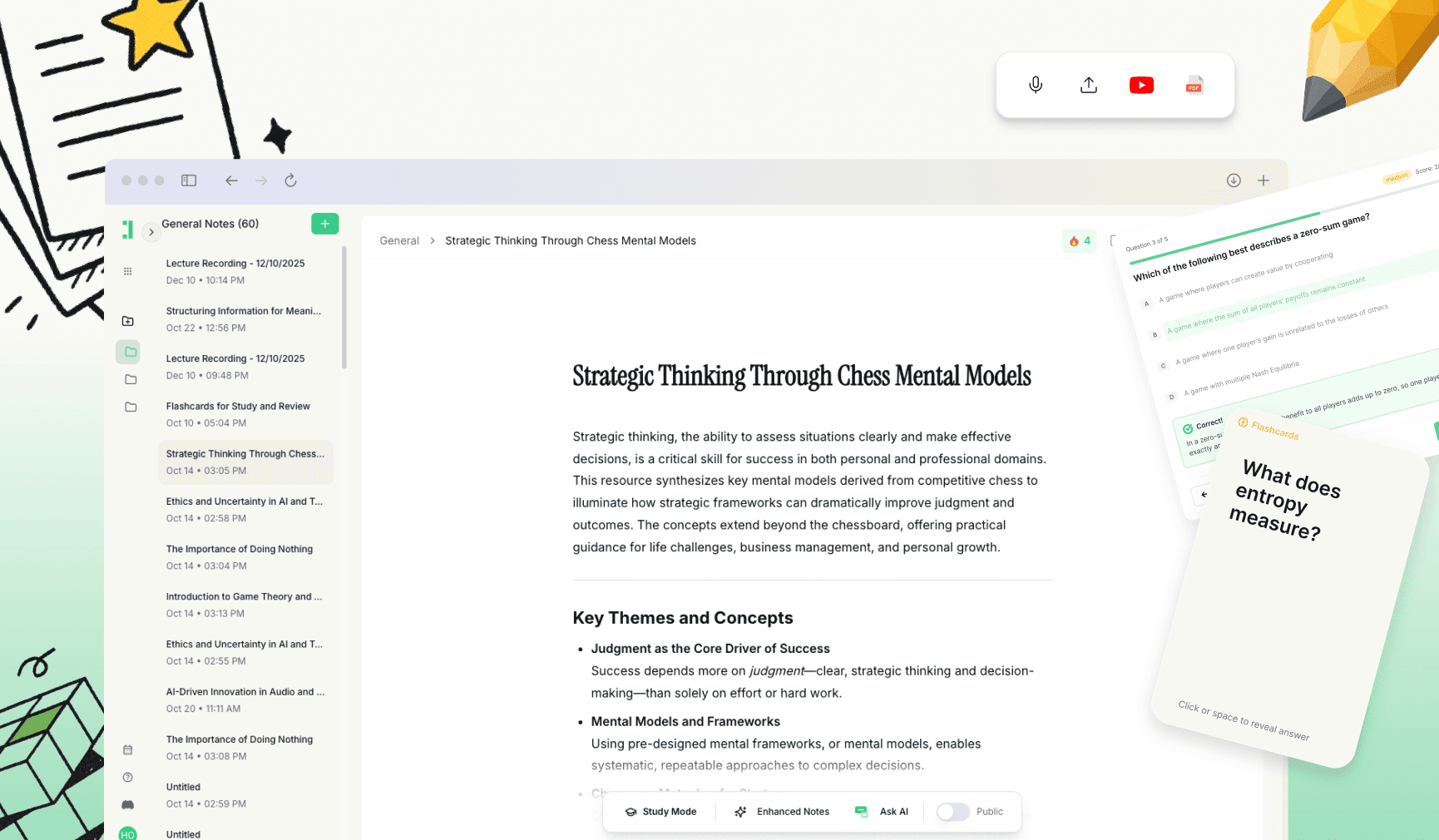
Turn your notes, PDFs, slides, or lectures into World History flashcards so you can review faster and remember more. Whether you are studying ancient civilizations, the Renaissance, or modern global conflicts, Duetoday helps you transform dense historical texts into active study tools.
Identify key dates, influential leaders, and tectonic shifts in global power without the manual labor of hand-writing cards. Simply upload your materials, generate your deck, and start mastering history today.
What are World History flashcards?
World History flashcards are focused study tools that break down the vast timeline of human history into manageable, bite-sized pieces. They cover essential elements such as chronological timelines, causes and effects of major revolutions, definitions of political ideologies, and the significance of cultural movements.
Instead of passively rereading hundreds of pages of textbooks, these flashcards force you to test your memory on specific historical facts and connections. This process builds stronger cognitive pathways, ensuring you don't just recognize a name like 'Napoleon' but can actually recall his impact on European law and borders.
Why flashcards work for World History
World History requires a unique blend of rote memorization (dates and names) and conceptual understanding (why empires fall). Flashcards are perfect for bridging this gap because they facilitate active recall and spaced repetition—the most effective ways to move information into long-term memory.
Remember key terms like 'Feudalism' or 'Industrialization' without cramming
Separate similar concepts, such as the causes of WWI versus WWII
Learn processes step-by-step, like the stages of the French Revolution
Practice applying historical context to specific events quickly
What to include in your World History flashcards
Effective World History flashcards should follow the 'atomic' rule: one specific idea per card. This ensures you aren't overwhelmed by too much information at once. Your cards should range from simple facts to complex 'why' questions.
Definitions & Key Terms: What was the Silk Road? Define the Enlightenment.
Processes & Steps: What were the three stages of the Triangular Trade?
Comparisons: How did the Roman Republic differ from the Roman Empire?
Application: What was the primary cause of the collapse of the Soviet Union?
Example Prompts: 'Who wrote the Magna Carta?', 'What year did the Berlin Wall fall?', 'Define Mercantilism.', 'Explain the impact of the Printing Press on the Reformation.'
How to study World History with flashcards
To master World History, use a two-pass approach. First, build your deck based on your specific curriculum—this ensures you aren't studying irrelevant material. Then, move into high-frequency review sessions.
Make a deck from your notes or generate it automatically from your syllabus.
Do one quick round to find weak spots (dates you keep forgetting or confusing dynasties).
Review these 'weak' cards daily for a few days to build familiarity.
Mix in harder conceptual cards with simple identification cards to keep your brain sharp.
Do a final mixed review of the entire timeline before exams.
Generate World History flashcards automatically in Duetoday
Making history flashcards manually is incredibly slow. Writing out the context for the Cold War by hand can take hours—time you should be spending actually learning. Duetoday eliminates this friction.
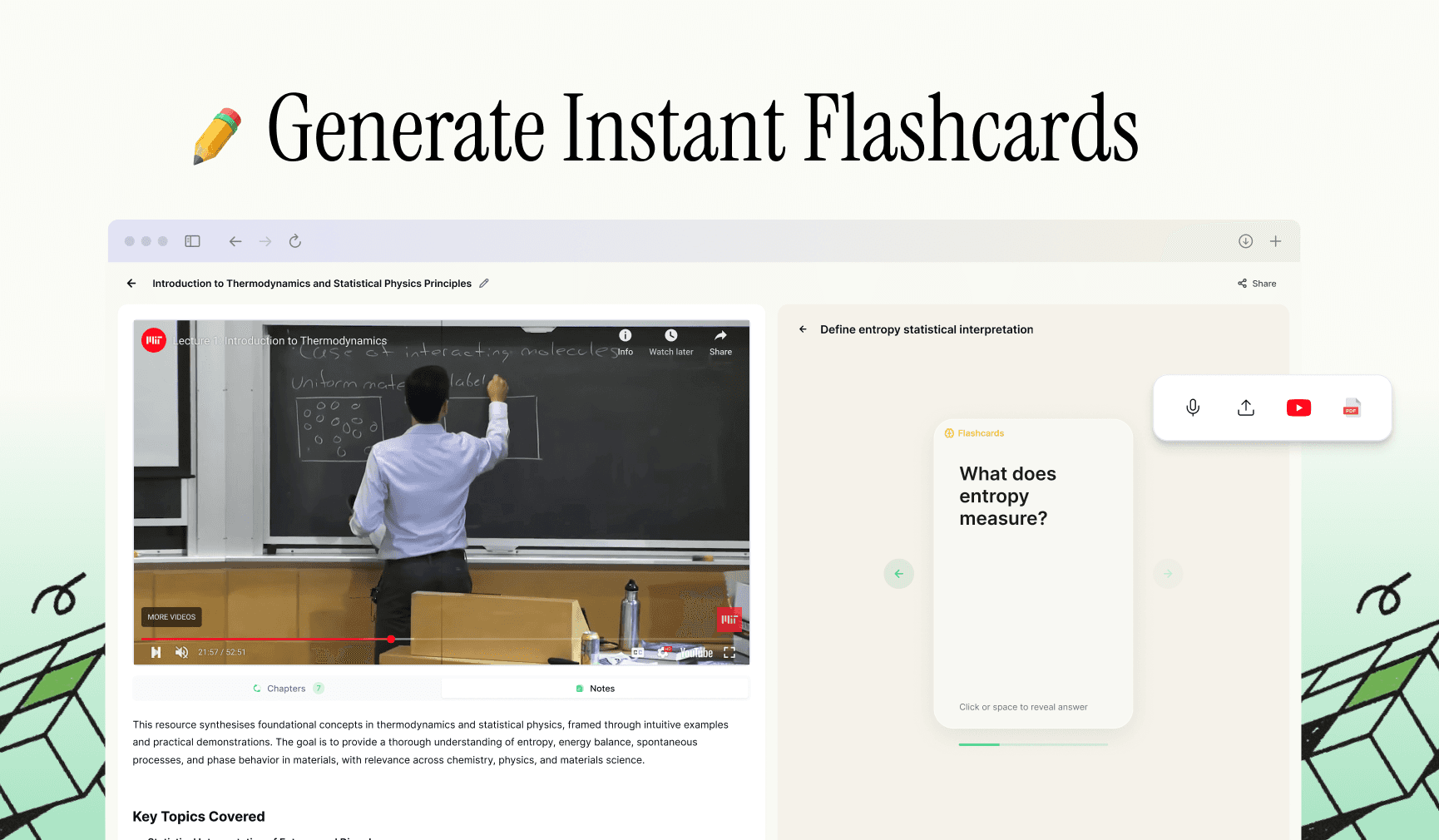
With Duetoday, you can upload your textbook chapters or lecture slides and get a comprehensive deck in seconds. It identifies the most important people, places, and events so you don't have to.
Upload or paste your World History material
Click 'Generate Flashcards'
Review, edit, and start studying immediately
Common World History flashcard mistakes
Many students make cards that are too wordy or focus only on dates. To fix this, ensure your cards are 'one-fact-per-card.' Don't list every cause of the Great Depression on one side; create separate cards for each cause. Also, avoid only memorizing dates—make sure you have cards that ask 'Why' an event happened to ensure you understand the narrative of history, not just the numbers.
FAQ
How many flashcards do I need for World History?
It depends on the scope, but usually 50-100 cards per major unit (e.g., The Cold War) is enough to cover the essential figures, dates, and concepts.
What’s the best format for World History flashcards?
A mix of 'Term/Definition' and 'Question/Answer' works best to cover both vocabulary and causal relationships between events.
How often should I review World History flashcards?
Review daily for new material. Once you know a card well, spaced repetition tools will show it to you less frequently, perhaps once every few weeks.
Should I make cards from a textbook or lecture notes?
Lecture notes are usually better because they highlight exactly what your instructor thinks is important for the exam.
How do I stop forgetting dates after a few days?
Focus on the 'why' behind the date. If you understand the sequence of events, the specific year becomes a marker in a larger story, making it easier to recall.
What if my flashcards feel too easy?
If cards are too easy, you are likely focusing only on simple definitions. Add 'Comparison' or 'Cause/Effect' cards to increase the difficulty.
Can I generate World History flashcards from a PDF?
Yes, Duetoday allows you to upload PDFs of your readings and instantly generates a structured flashcard deck from the text.
Are digital flashcards better than paper for History?
Digital cards are generally better because they allow for faster organization and use algorithms to ensure you see difficult cards more often.
How long does it take to make a full World History deck?
Manually, it can take hours. With Duetoday’s AI generation, it takes less than a minute once your notes are uploaded.
Can Duetoday organize my flashcards by era?
Yes, you can generate different decks for different historical periods to keep your study sessions organized and focused.

Duetoday is an AI-powered learning OS that turns your study materials into personalised, bite-sized study guides, cheat sheets, and active learning flows.