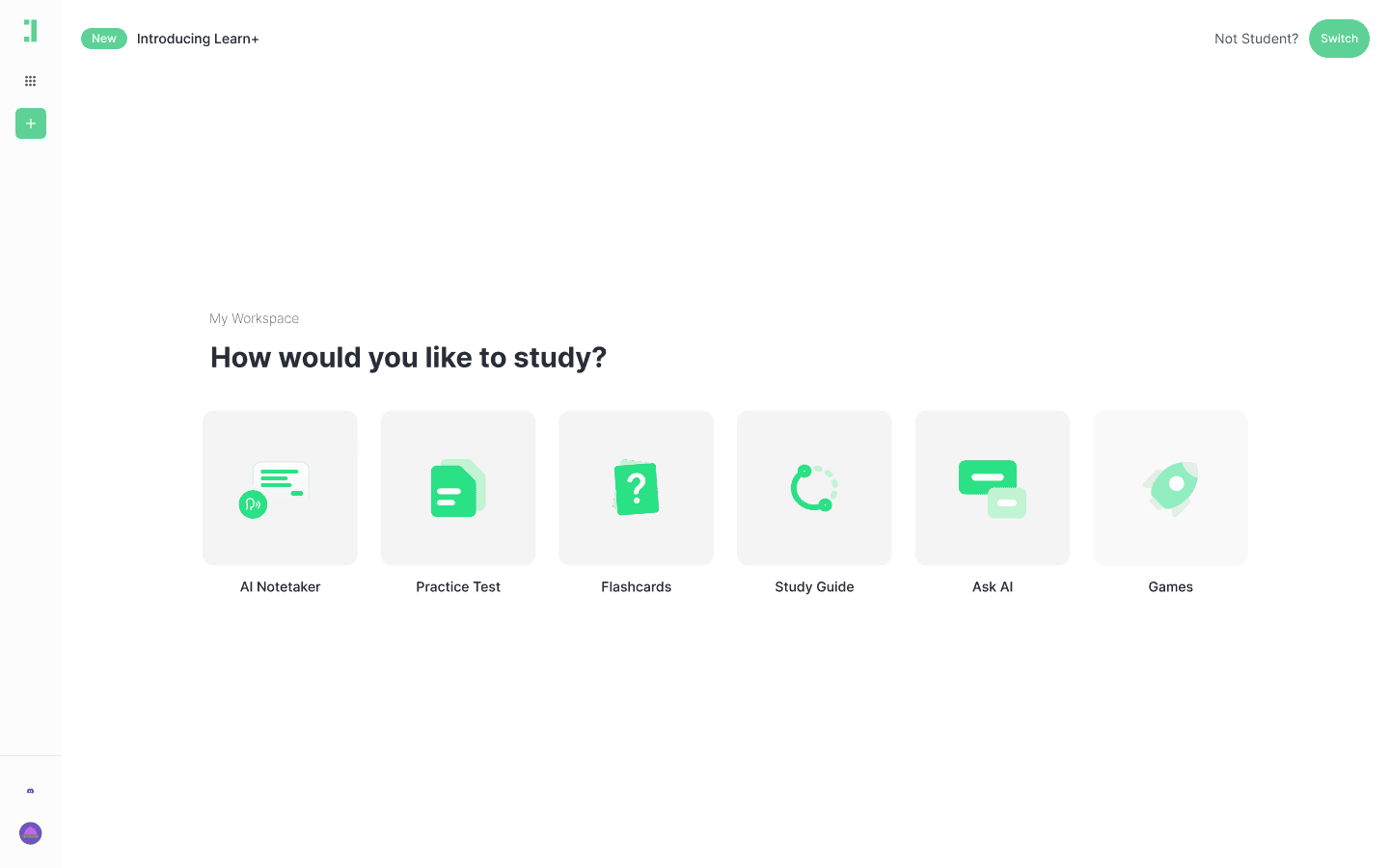
Generate Flashcards for Waves and Oscillations
Make custom Waves and Oscillations flashcards to master physics concepts. This guide shows how to generate study materials for SHM and wave mechanics.
Generate Flashcards with AI Free
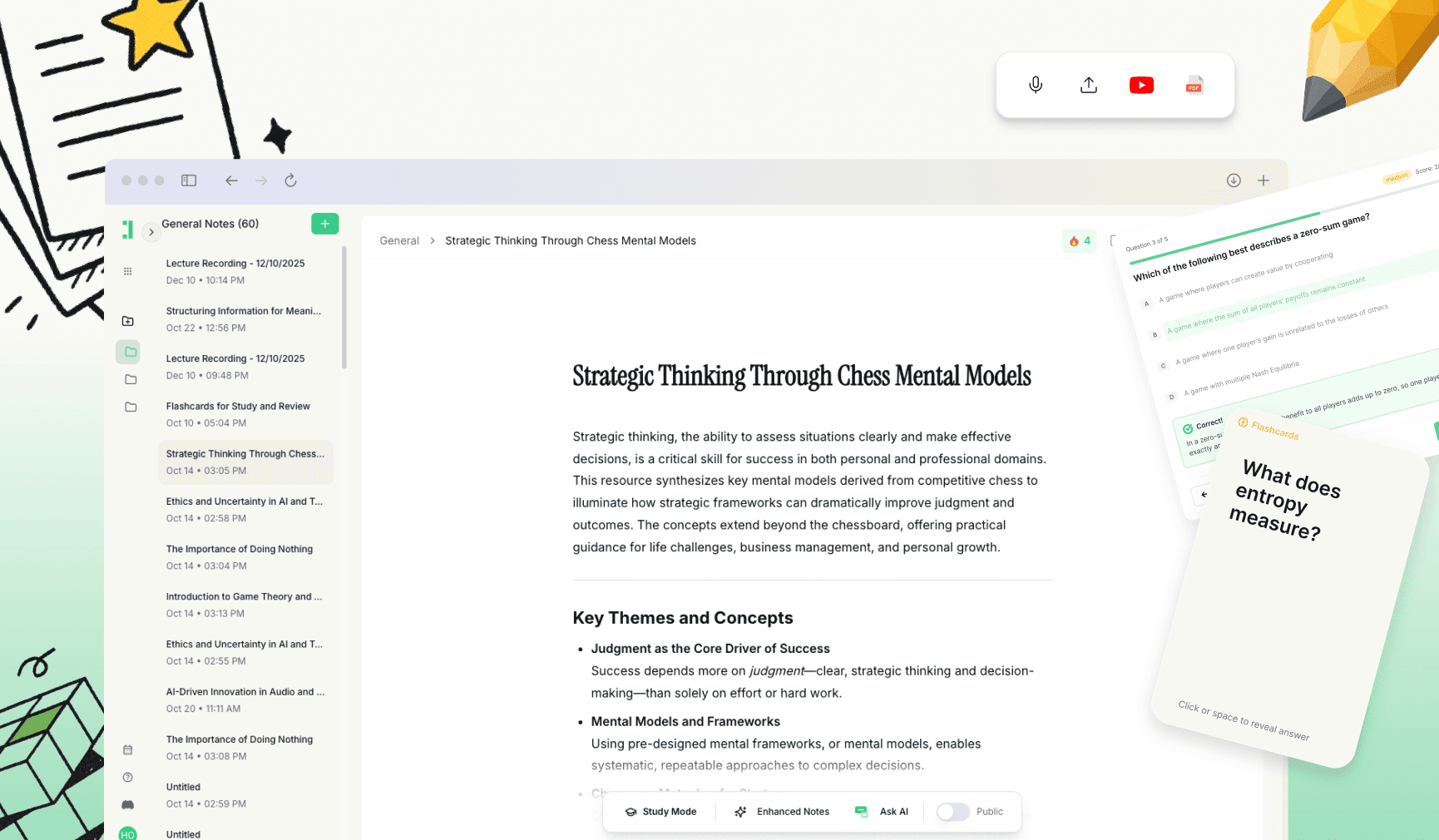
What are Waves and Oscillations flashcards?
Waves and Oscillations flashcards are specialized study tools designed to help students master the complexities of periodic motion, wave propagation, and electromagnetic behavior. These cards cover everything from simple harmonic motion (SHM) and pendulum formulas to wave interference patterns and Doppler shifts.
Instead of passively rereading dense physics textbooks, these flashcards force you to define variables, solve quick calculations, and visualize wave interactions. The result is a much faster transition from 'reading about it' to 'applying it' in an exam setting.
If you already have lecture notes or a textbook chapter, Duetoday can generate a clean deck of Waves and Oscillations flashcards in minutes.
Why flashcards are one of the best ways to study Waves and Oscillations
Physics is highly conceptual and math-heavy. Flashcards bridge the gap by testing your ability to recall symbols, physical constants, and the relationships between variables like frequency, wavelength, and velocity. By using active recall, you strengthen the neural pathways associated with these abstract concepts.
Memorize wave functions and SHM differential equations without cramming.
Separate similar concepts like transverse vs. longitudinal waves.
Learn multi-step processes like calculating harmonics in open vs. closed pipes.
Practice applying the superposition principle to interference problems.
What to include in your Waves and Oscillations flashcards
The key to effective physics flashcards is the 'one idea per card' rule. Avoid dumping a whole chapter on one card. Instead, focus on specific questions that trigger a single, precise answer.
Definitions & Key Terms: Ask for definitions of damping, resonance, or phase difference.
Processes & Steps: Break down how to find the resultant wave using the principle of superposition.
Comparisons: Compare the speeds of sound in different mediums or the differences between traveling and standing waves.
Application: Create cards that ask 'What happens to the period if the mass of a spring system doubles?'
Example Prompts:
• Define Simple Harmonic Motion (SHM) requirements.
• What is the relationship between wave speed, frequency, and wavelength?
• Draw a displacement-time graph for a damped oscillator.
• State the law of reflection for mechanical waves.
• How does the fundamental frequency change when a string is shortened?
How to study Waves and Oscillations with flashcards
For a subject as technical as Waves and Oscillations, a two-pass approach works best. Start by generating a deck from your lecture slides or textbook. Then, go through the deck once to identify which formulas or conceptual graphs are sticking and which ones feel like a foreign language.
Review the 'red' or difficult cards daily, focusing on the derivation of wave equations and the specific properties of light and sound. In your final sessions, mix those cards into your broader physics deck to ensure you can switch contexts quickly during a test.
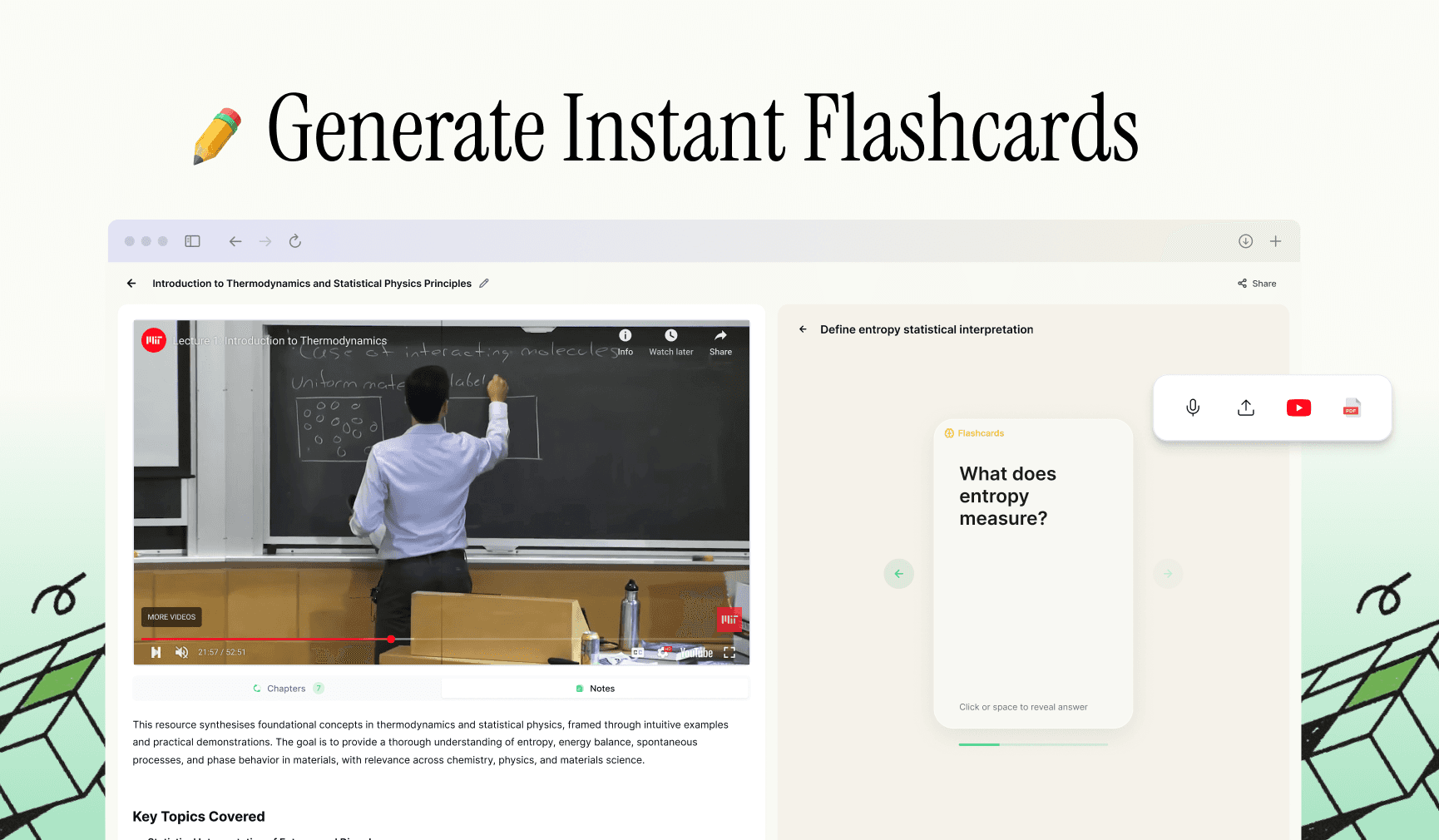
Generate your deck instantly from your PDFs or notes.
Perform an initial pass to identify weak spots in wave mechanics.
Review high-difficulty concepts like phase shifts and interference daily.
Incorporate some manual sketch-cards for complex wave diagrams.
Conduct a final timed review to build speed for exams.
Generate Waves and Oscillations flashcards automatically in Duetoday
Manually drawing wave diagrams and writing out long equations is slow and often leads to procrastination. Duetoday eliminates the friction of 'prep time.' Simply upload your physics notes or textbook PDFs, and our AI extracts the core concepts to build a balanced deck for you.
Upload your notes, PDFs, or lecture transcripts.
Click 'Generate Flashcards'.
Edit the output as needed and start your first study session immediately.
Common Waves and Oscillations flashcard mistakes
Most students make their cards too wordy. If a card takes 30 seconds to read, it’s not a flashcard; it’s a page of notes. Keep them snappy. Another common mistake is ignoring the 'Why'—don't just memorize the formula for the period of a pendulum, make a card that explains why the mass doesn't affect it.
Cards are too long: Keep it to one concept per card.
Ignoring units: Always include the SI units for frequency (Hz), period (s), and power.
Lacking visuals: Waves are visual; ensure you describe or sketch wave shapes.
Neglecting theory: Don't just study math; remember to include the qualitative physical laws.
Ready to master Waves and Oscillations? Turn your notes into study tools now.
Start Generating Flashcards
FAQ
How many flashcards do I need for Waves and Oscillations?
Most students find that 40-60 cards cover the core fundamentals including SHM, wave properties, and sound/light specifics.
What’s the best format for these flashcards?
A 'Question on Front, Answer on Back' format is best, specifically focusing on variable definitions and 'If/Then' scenarios for wave behavior.
How often should I review my deck?
Physics involves high decay rates for formulas. Review daily for the first week, then move to every 3 days as you build mastery.
Should I make cards from my textbook or teacher's slides?
Use both. The textbook provides the rigorous definitions, while the slides usually highlight the specific types of problems your teacher prefers.
How do I stop forgetting wave equations?
Don't just memorize the letters. Create cards that ask you to explain the relationship (e.g., 'If frequency increases, what happens to the wavelength?').
What if my flashcards feel too easy?
Start adding 'Challenge' cards where you have to calculate an answer mentally or explain a complex phenomenon like the Doppler effect in reverse.
Can I generate flashcards from a physics PDF?
Yes, Duetoday is designed to read complex PDF text and formulas to create accurate physics flashcards instantly.
Are digital flashcards better than paper for physics?
Digital is generally better because you can easily edit equations and use spaced repetition algorithms to ensure you see hard cards more often.
How long does it take to make a full Waves deck?
Manually, it can take hours. With Duetoday, you can have a structured deck ready in under two minutes.
Can Duetoday handle mathematical notation?
Yes, our AI understands mathematical contexts and can help organize formulas into clear, studyable flashcard formats.

Duetoday is an AI-powered learning OS that turns your study materials into personalised, bite-sized study guides, cheat sheets, and active learning flows.