Generate Flashcards for Unit Economics
Generate Unit Economics flashcards in seconds. Turn PDFs and notes into study decks. Try it for free!
Generate Flashcards with AI Free
Generate Flashcards for Unit Economics
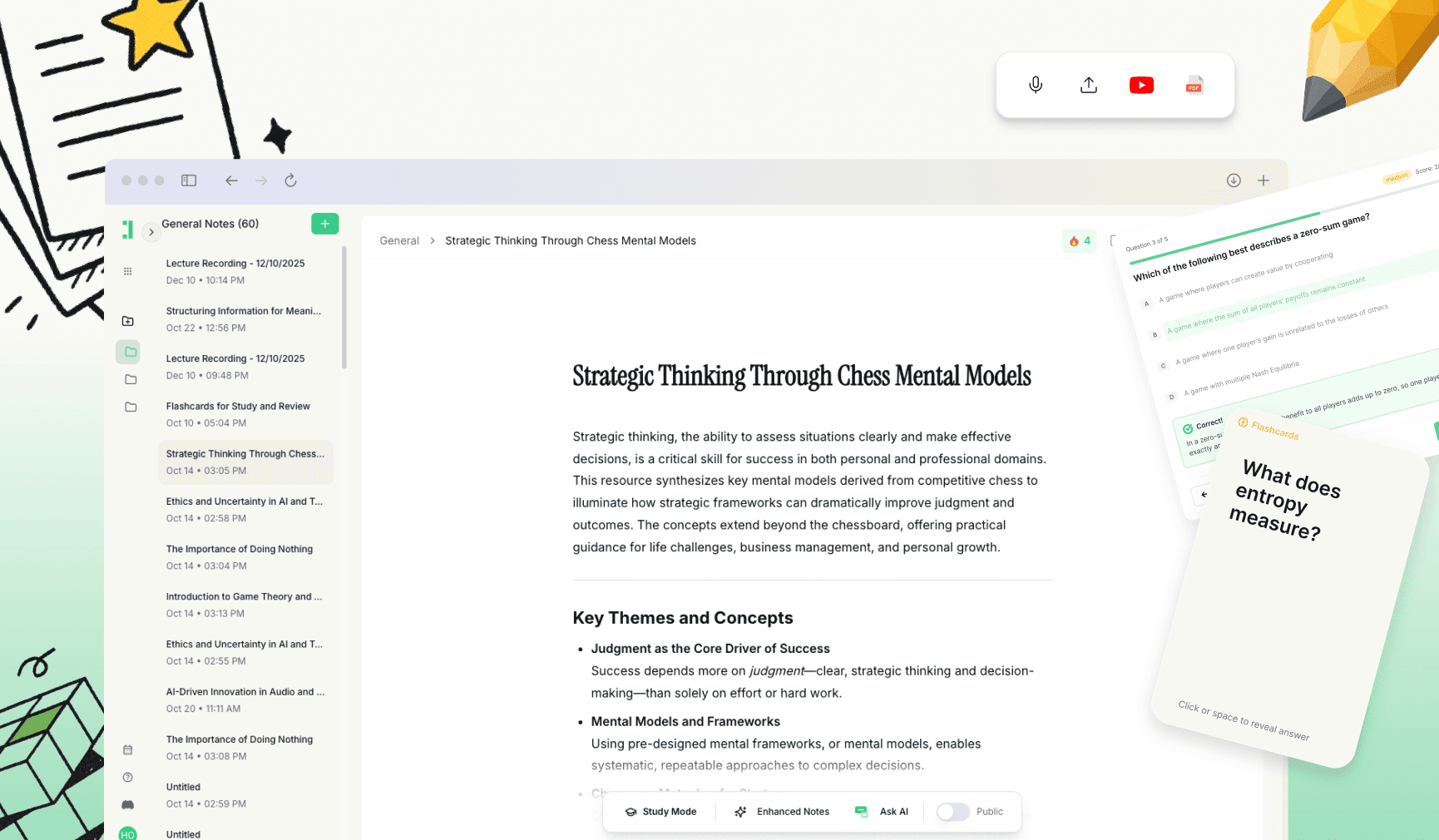
Turn your notes, PDFs, slides, or lectures into Unit Economics flashcards so you can review faster and remember more. Instead of manually typing out formulas and definitions, let AI handle the heavy lifting so you can focus on mastering the math behind business growth.
Generate Unit Economics Flashcards Upload notes / paste text
In Duetoday, the process is simple: upload your materials, and our AI analyzes the core financial concepts to generate a precise deck. You can then review, edit, and study using active recall to ensure you actually understand the metrics.
What are Unit Economics flashcards?
Unit Economics flashcards cover the fundamental financial building blocks of a business model. They focus on the direct revenues and costs associated with an individual business unit—usually a single customer or a single product sold.
The outcome is simple: instead of rereading complex textbooks or staring at spreadsheets, you test yourself on key variables like LTV (Lifetime Value), CAC (Customer Acquisition Cost), and contribution margins. This builds the mental muscle memory needed to analyze any business model on the fly.
If you already have notes, Duetoday can generate a clean deck in minutes.
Why flashcards are one of the best ways to study Unit Economics
Unit Economics requires a mix of rote memorization for definitions and quick mental application for formulas. Flashcards bridge this gap by forcing you to recall relationships between data points rather than just recognizing them on a page.
Using active recall and spaced repetition simplifies the learning process for quantitative subjects:
Memorize complex formulas without last-minute cramming.
Separate similar concepts like Gross Margin vs. Contribution Margin.
Learn the step-by-step pathways for calculating payback periods.
Practice applying rules to different business models (SaaS vs. E-commerce).
What to include in your Unit Economics flashcards
Good flashcards follow the "one idea per card" rule. For Unit Economics, your cards should be question-based to simulate the pressure of an exam or a real-world business case study.
Include these four main card types for a balanced deck:
Definitions & Key Terms: "What is Churn Rate?" "Define ARPU (Average Revenue Per User)."
Processes & Steps: "What are the three steps to calculate the LTV:CAC ratio?"
Comparisons: "How is CAC different from Marketing Spend?"
Application: "If churn increases, what happens to the LTV?"
Use these example prompts in your deck:
• "Formula for Contribution Margin per Unit?"
• "Define the 'Payback Period.'"
• "What is the impact of a high discount rate on LTV?"
• "List the components of fully-loaded CAC."
• "What is a 'sticky' customer in unit terms?"
How to study Unit Economics with flashcards (a simple system)
Mastering Unit Economics isn't about one long study session; it’s about a two-pass approach. First, build your deck from your lectures or readings, then review them in short, high-intensity rounds.
Reviewing in quick bursts helps you identify exactly which formulas you keep forgetting. Repeat those tough cards more often than the ones you know by heart.
Make a deck from your notes using Duetoday's AI generator.
Do one quick round to find your weak spots (likely the LTV calculations).
Review weak cards every morning for three days.
Mix in scenario-based cards (e.g., "What happens if COGS increases?").
Do a final mixed review 24 hours before your quiz or meeting.
Generate Unit Economics flashcards automatically in Duetoday
Making flashcards manually is slow, messy, and error-prone—especially when dealing with math-heavy subjects. You end up spending more time writing the cards than actually studying them.
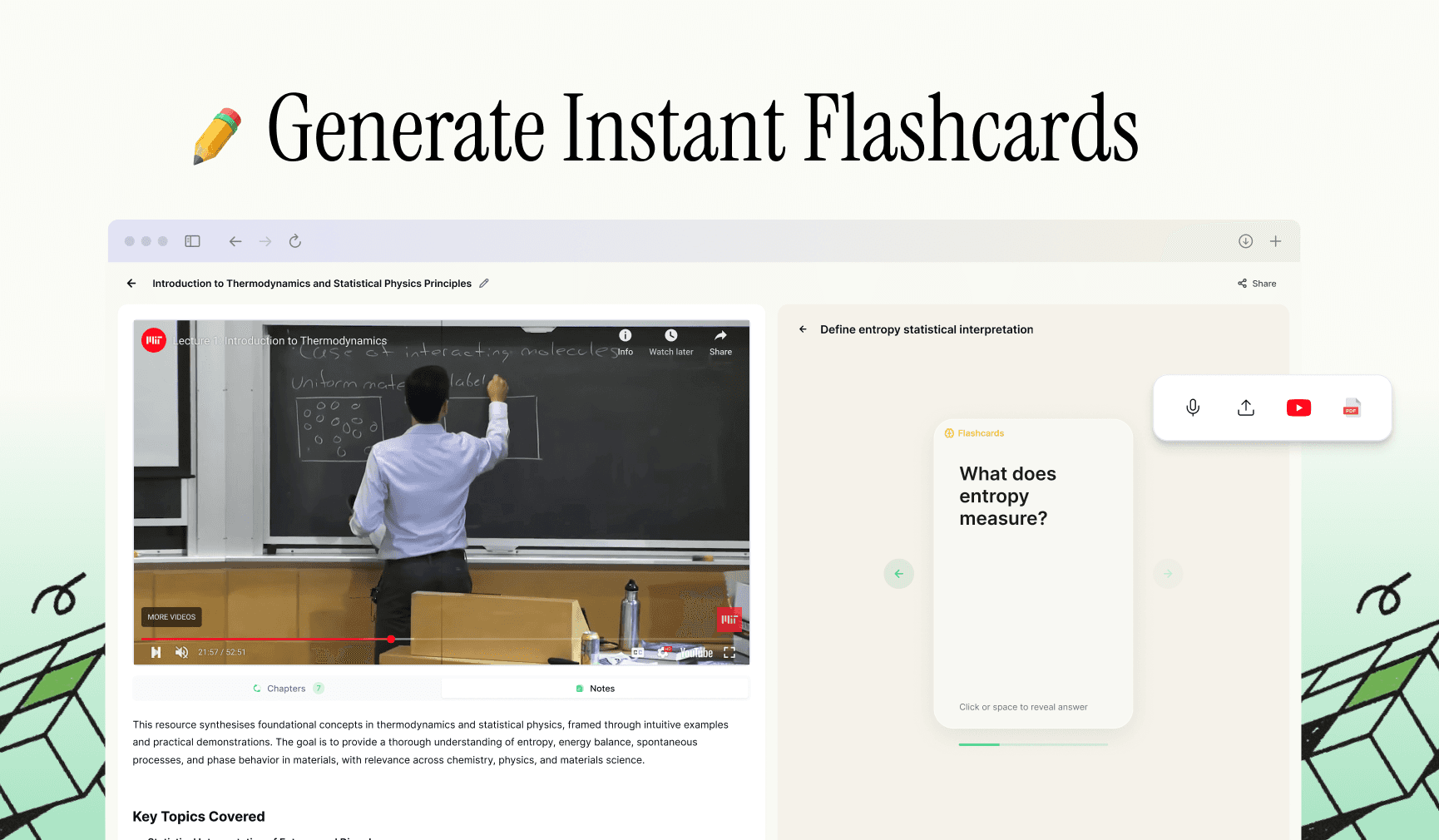
Duetoday changes that. You can upload your PDF or paste your lecture transcript, and the AI will extract the most important metrics and formulas instantly. You get a study-ready deck in seconds, allowing you to move straight to active recall.
Upload your Unit Economics PDF or slides.
Click "Generate Flashcards."
Review, edit, and start studying immediately.
Generate Unit Economics Flashcards in Duetoday
Start with your notes and get a deck you can actually use today.
Common Unit Economics flashcard mistakes
Many students create cards that are essentially paragraphs. These are hard to memorize and don't help with recall. Avoid these common pitfalls:
Too much information: If a card has three different formulas on it, split it into three separate cards.
Ignoring the 'Why': Don't just memorize the LTV formula; have a card that explains what LTV represents.
Missing the components: Ensure you have cards for the sub-metrics like 'Average Order Value.'
No schedule: Don't just look at the cards once; use spaced repetition to keep information fresh.
Ready to generate your Unit Economics flashcards?
Stop rereading your textbooks. Upload your notes, generate your deck, and start mastering the metrics that matter. Active recall is the fastest way to learn the math of business.
Start Generating Flashcards
Works with notes, PDFs, slides, and transcripts.
FAQ
How many flashcards do I need for Unit Economics?
For a standard course, 40–60 cards usually cover the core formulas, definitions, and relationships between metrics.
What’s the best format for Unit Economics flashcards?
Question and answer format is best. Put the name of the metric on the front and the formula and a brief definition on the back.
How often should I review Unit Economics flashcards?
Review daily for the first week until the formulas become second nature, then transition to once every few days.
Should I make cards from a textbook or slides?
Focus on your lecture slides first, as these usually highlight the specific formulas your professor expects you to know.
How do I stop forgetting formulas after a few days?
Use spaced repetition. Duetoday’s system ensures you see the harder cards more frequently until you master them.
What if my flashcards feel too easy?
Add 'Application' cards. Instead of 'What is CAC?', use 'How would a 20% increase in ad spend affect CAC?'
Can I generate Unit Economics flashcards from a PDF?
Yes, Duetoday is designed to scan PDFs and extract key terminology and data points into cards automatically.
Are digital flashcards better than paper for Unit Economics?
Digital is usually better because you can include complex formulas and use AI to shuffle and time your reviews effectively.

Duetoday is an AI-powered learning OS that turns your study materials into personalised, bite-sized study guides, cheat sheets, and active learning flows.