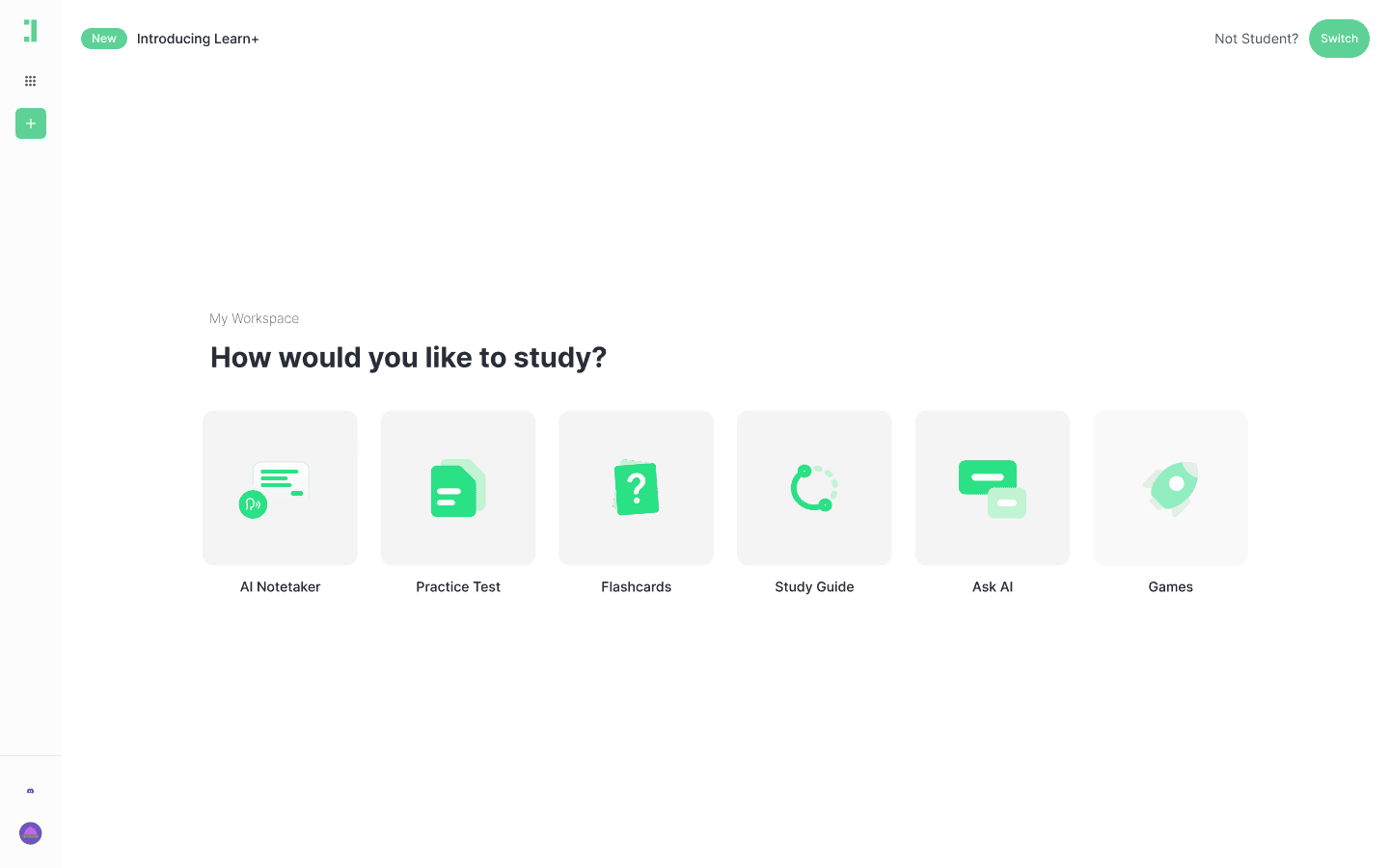
Generate Flashcards for Translation Studies
Make Translation Studies flashcards to master theory, linguistics, and terminology using our AI-powered study guide generator.
Generate Flashcards with AI Free
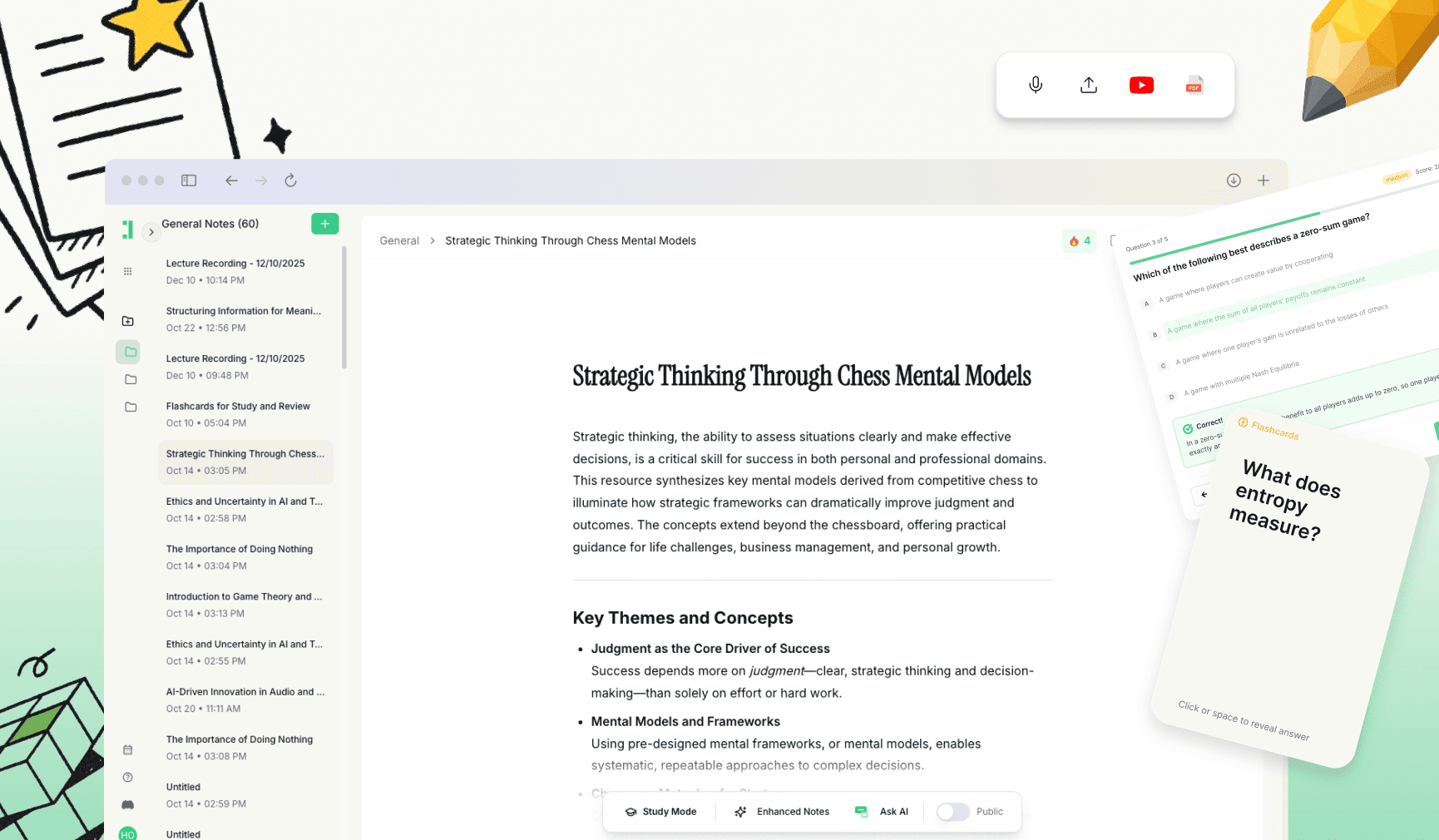
Generate Flashcards for Translation Studies
Turn your notes, PDFs, slides, or lectures into Translation Studies flashcards so you can review faster and remember more. Whether you are tackling complex theories or technical terminology, Duetoday helps you bridge the gap between reading and mastering the material.
Primary: Generate Translation Studies Flashcards
Secondary: Upload notes / paste text
Using Duetoday is simple: upload your seminar notes or textbook chapters, generate a structured deck, review the AI-suggested cards, and start studying immediately using active recall.
What are Translation Studies flashcards?
Translation Studies flashcards cover the academic discipline focused on the theory, description, and application of translation and interpreting. These cards typically include key theoretical frameworks, linguistic concepts, historical figures in the field (like Venuti or Nida), and specialized terminology for different translation modes.
The outcome is a shift from passive reading to active testing. Instead of looking over highlighted pages, you force your brain to retrieve specific concepts like 'equivalence' or 'domestication,' which builds much stronger long-term recall for your exams or professional practice.
If you already have notes, Duetoday can generate a clean deck in minutes.
Why flashcards work for Translation Studies
Translation Studies requires a mix of theoretical understanding and the ability to apply specific strategies to text. Flashcards are perfect for this because they isolate complex relationships and force you to define abstract concepts clearly without the help of surrounding text.
By using active recall and spaced repetition, you ensure that the difference between 'formal' and 'dynamic' equivalence stays sharp in your mind, even weeks after you first studied them.
Remember key theoretical terms without cramming before the final.
Separate similar concepts (e.g., Catford’s shifts vs. Vinay and Darbelnet’s procedures).
Learn translation processes step-by-step (analysis, transfer, restructuring).
Practice applying translation rules to specific linguistic pairings.
What to include in your Translation Studies flashcards
Effective flashcards follow the 'atomic' rule: one idea per card. This prevents you from recognizing a whole paragraph without actually knowing the specific facts within it.
Your deck should be built around four main card types to ensure full coverage of the curriculum:
Definitions & key terms: What is Skopos Theory? or Define Gist Translation.
Processes & steps: What are the three stages of the interpretative model of translation?
Comparisons: How does 'Domestication' differ from 'Foreignization'?
Application: When would you use a literal translation over an oblique one?
Here are some example prompts for your deck: Who coined the term 'Translation Studies'?, Define the 'cultural turn' in translation theory, and What is the difference between overt and covert translation?
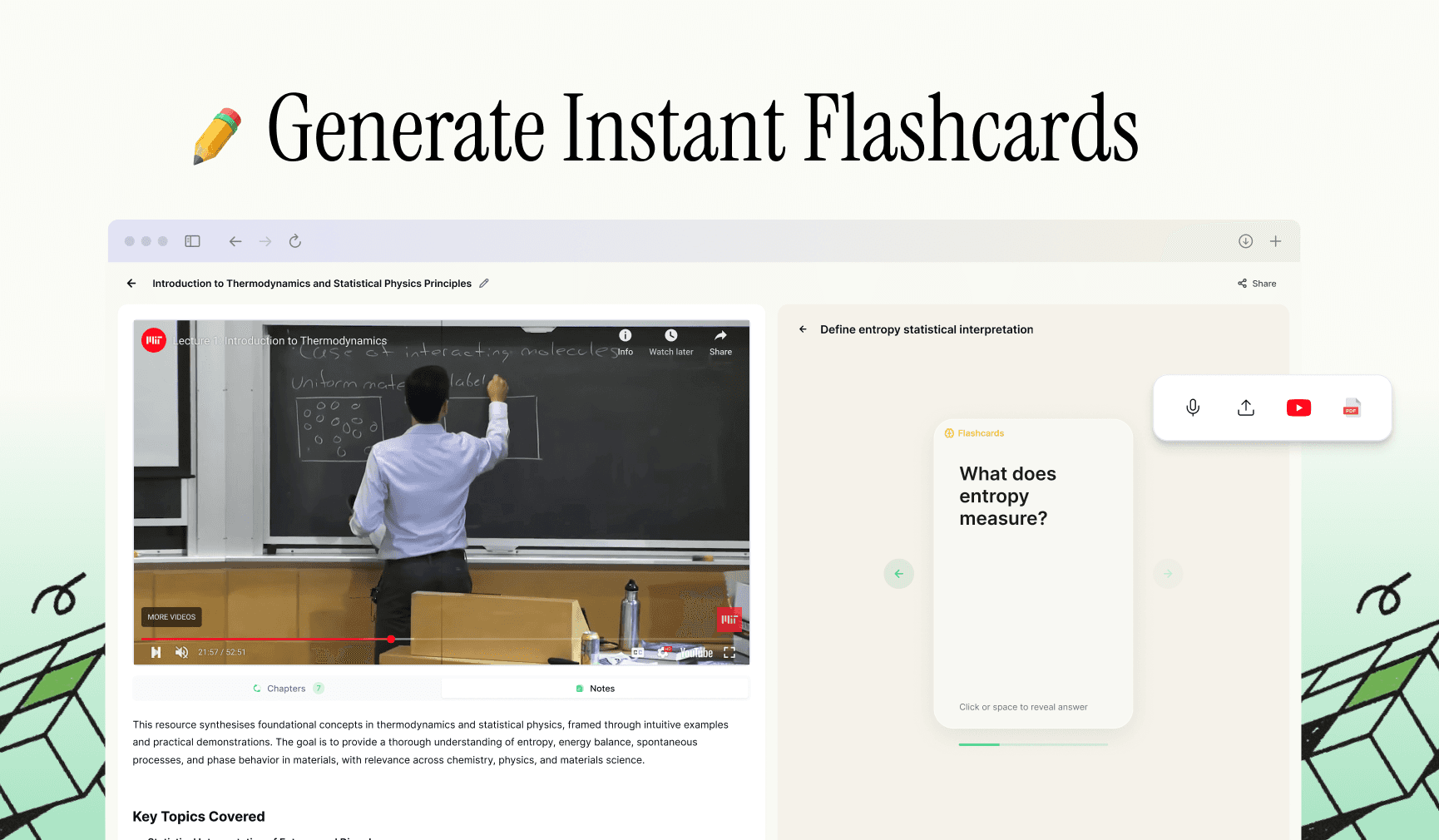
How to study Translation Studies with flashcards (a simple system)
Don't just flip through cards; use a system. Start with a 'two-pass' approach: build your deck from your lectures, then perform a high-speed review to sort what you know from what you don't. This prevents you from wasting time on concepts you have already mastered.
Keep your sessions short but frequent. Reviewing for 15 minutes a day is more effective than a five-hour session once a week because it leverages the psychological spacing effect.
Make a deck from your notes or generate it from a PDF chapter.
Do one quick round to flag weak spots and difficult theorists.
Review these weak cards daily for three consecutive days.
Mix in a few 'easy' cards to maintain total confidence.
Do a final mixed-topic review before your translation exams.
Generate Translation Studies flashcards automatically in Duetoday
Making flashcards manually is tedious. It takes hours to copy-paste definitions and format cards, which is time you should be spending actually studying. Manual card making is often inconsistent and results in wordy, ineffective cards.
Duetoday changes this. Simply upload your PDF, lecture slides, or even a video transcript, and our AI identifies the core concepts of Translation Studies to build a professional-grade deck in seconds. You can then edit them to add your own examples before starting your study session.
Upload or paste your Translation Studies material.
Click 'Generate Flashcards'.
Review, edit, and start studying.
Button: Generate Translation Studies Flashcards in Duetoday
Start with your notes and get a deck you can actually use today.
Common Translation Studies flashcard mistakes (and how to fix them)
Many students create cards that are too bulky. If a card has five sentences on the back, you aren't using flashcards; you're just reading your notes on a smaller screen.
Cards are too long: split them into specific, one-answer questions.
Only memorizing words: add 'explain why' prompts to understand the theory.
Confusing similar models: use comparison cards for scholars like Nida and Newmark.
No review schedule: use the built-in spaced repetition to repeat tough cards.
No application: include cards that ask how a theory applies to a specific language pair.
Ready to generate your Translation Studies flashcards?
Stop rereading your textbooks and start active testing. Whether it's for a translation exam or a linguistics quiz, Duetoday transforms your material into a powerful study tool in seconds.
Button: Start Generating Flashcards
Works with notes, PDFs, slides, and transcripts.
FAQ
How many flashcards do I need for Translation Studies? A typical theory-heavy course usually benefits from a deck of 50–100 cards covering major theorists, terms, and historical shifts.
What’s the best format for Translation Studies flashcards? Simple Question-and-Answer or 'Cloze Deletion' (fill-in-the-blank) works best for terminology and theoretical definitions.
How often should I review my flashcards? Ideally, every day for new cards and every 3–5 days for cards you have already mastered to ensure they stay in your long-term memory.
Should I make cards from a textbook or my own lecture notes? Ideally both. Textbooks provide technical definitions, while lecture notes often contain the specific examples your professor wants to see on an exam.
How do I stop forgetting translation theories after a few days? This is common. The fix is Spaced Repetition—you must review the difficult theories right at the point when you are about to forget them.
What if my flashcards feel too easy? That means you've mastered those concepts. Archive them and focus on 'Application' cards that ask you to apply theoretical frameworks to real-world translation scenarios.
Can I generate Translation Studies flashcards from a PDF automatically? Yes, Duetoday can read your linguistics or translation PDFs and extract the most important concepts to create an instant deck.
Are digital flashcards better than paper for Translation Studies? Yes, because they allow for faster editing, digital search, and automated spaced repetition scheduling that paper cards can't provide.
How long does it take to make a full deck? Manually, it can take hours. With Duetoday, you can generate a full deck from your notes in less than 60 seconds.
Can Duetoday organize my cards by scholar or theory? Yes, you can generate different decks for specific chapters or topics, such as 'Medieval Translation' vs 'Modern Machine Translation'.

Duetoday is an AI-powered learning OS that turns your study materials into personalised, bite-sized study guides, cheat sheets, and active learning flows.