Generate Flashcards for Translation
Turn translation notes into flashcards instantly. Try out free AI generation today!
Generate Flashcards with AI Free
Generate Flashcards for Translation
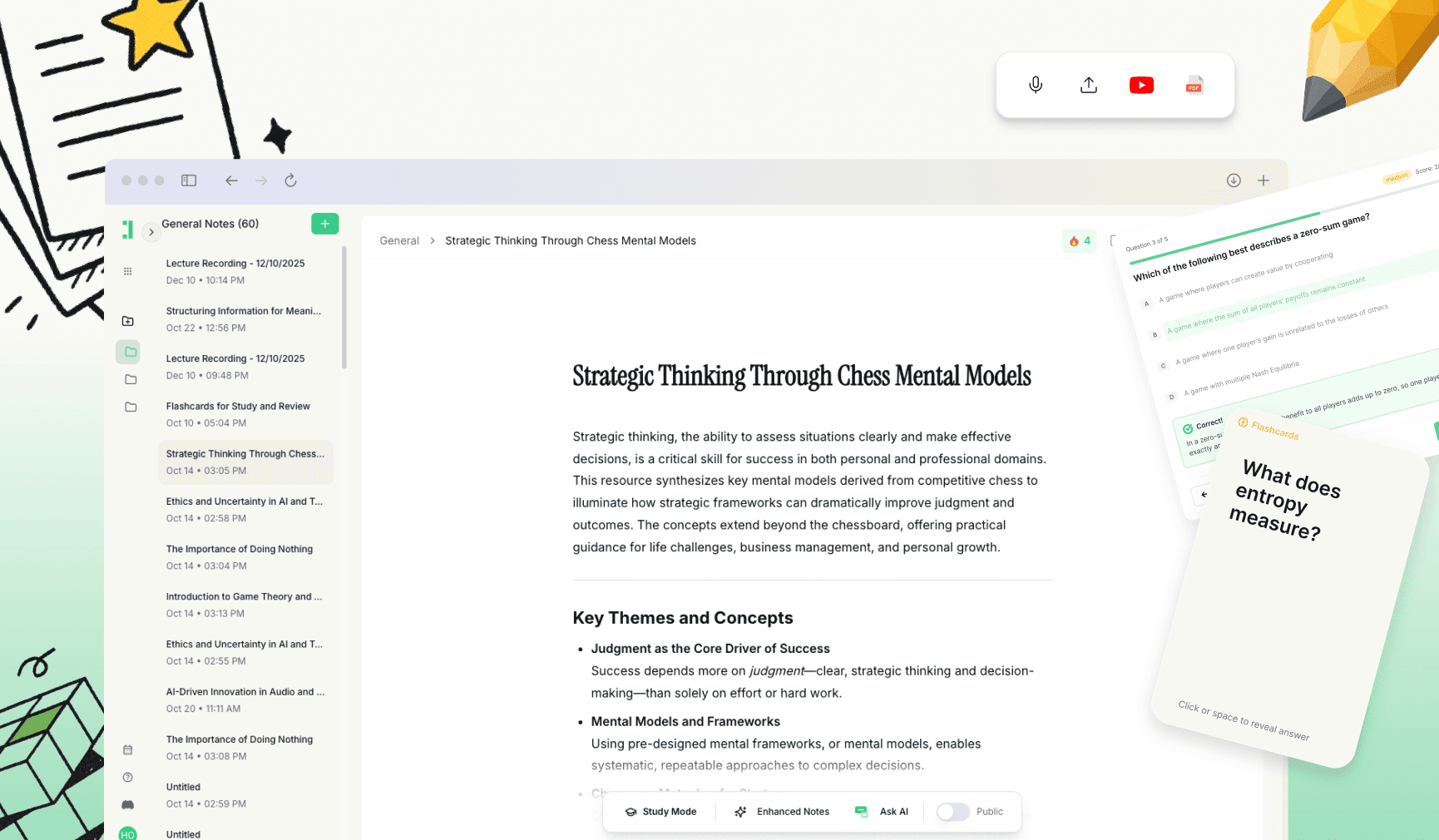
Turn your translation notes, glossaries, PDFs, or lecture slides into Translation flashcards so you can review faster and remember more.
Generate Translation FlashcardsUpload notes / paste text
With Duetoday, you don't have to manually copy and paste. Simply upload your source material, and our AI will generate a structured deck of cards. You can then review, edit, and use our spaced repetition system to master complex terminology and linguistic nuances.
What are Translation flashcards?
Translation flashcards are specialized study tools designed to help you internalize the bridge between source and target languages. They go beyond simple vocabulary lists to cover technical terminology, idiomatic expressions, syntactic structures, and cultural contexts specific to your field of study.
Instead of passively rereading your translation theories or glossaries, these flashcards force you to predict the correct rendering or explain a grammatical rule. This active recall process builds the neural pathways necessary for fast, accurate translation during exams or professional assignments.
If you already have notes, Duetoday can generate a clean deck in minutes.
Why flashcards are one of the best ways to study Translation
Learning translation requires more than just knowing words; it requires understanding the relationships between languages and the specific application of rules. Flashcards are ideal for this because they break down massive linguistic systems into manageable, testable units.
By using active recall and spaced repetition, you ensure that high-frequency terms stay fresh in your mind while the AI identifies the niche concepts you struggle with most, showing them to you more frequently until they stick.
Memorize technical terminology across different domains (medical, legal, technical).
Separate similar concepts and false cognates (e.g., 'actual' vs 'actualmente').
Learn translation processes step-by-step, such as localization or transcreation cycles.
Practice applying translation rules and syntactic shifts quickly.
What to include in your Translation flashcards
Effective Translation flashcards follow the "one idea per card" rule. Rather than putting an entire paragraph on a card, focus on specific questions that trigger a single, clear answer. This prevents the illusion of competence and ensures you truly know the material.
We recommend using four main card types to cover all your bases:
Definitions & Key Terms: "What is back-translation?" or "Define skopos theory."
Processes & Steps: "What is the first step in the CAT tool workflow?"
Comparisons: "How does literal translation differ from free translation?"
Application: "How would you translate this specific idiom while maintaining the tone?"
Example Prompts:
• Define 'source language' vs 'target language.'
• What is the common mistranslation for 'éventuellement'?
• Explain the concept of 'Equivalence' in translation studies.
• What are the three phases of the GILT process?
• How do you handle untranslatable cultural references?
• When should a translator use a loanword?
How to study Translation with flashcards (a simple system)
To master Translation, use a two-pass approach. First, generate your deck to get all the core concepts organized. Then, move into repetitive testing rounds to move that information from short-term to long-term memory.
Keep your sessions short but frequent. Reviewing for 15 minutes twice a day is significantly more effective than a three-hour marathon session once a week.
Make a deck from your translation notes or glossaries.
Do one quick round to find weak spots and difficult terms.
Review weak cards daily for a few days to build familiarity.
Mix in a few harder cards each session to challenge your recall.
Do a final mixed review of all topics before your translation exams.
Generate Translation flashcards automatically in Duetoday
Making cards manually is slow, messy, and often leads to cards that are too wordy to be useful. You should spend your time studying, not formatting spreadsheets or cutting up paper.
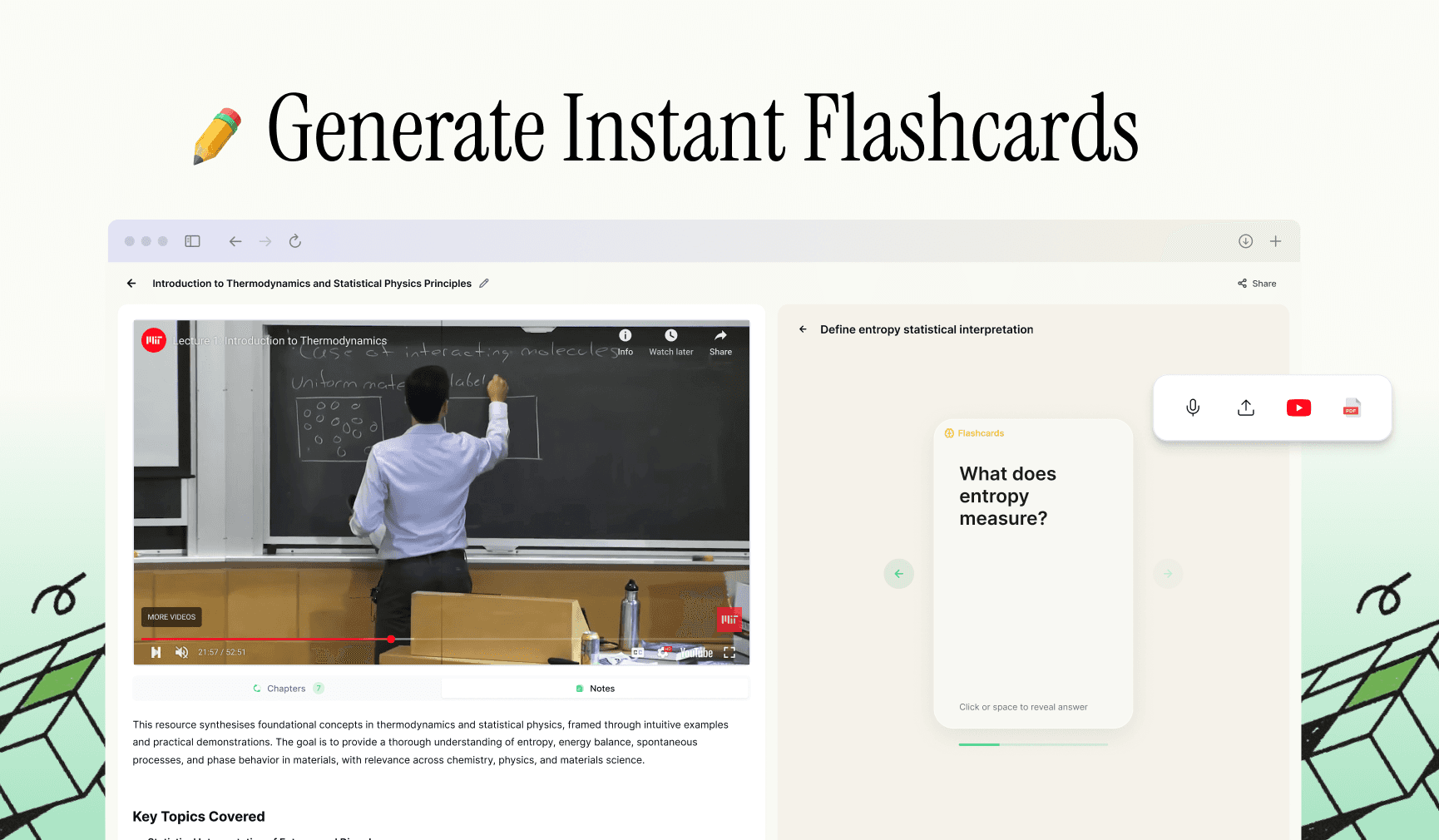
Duetoday streamlines the process: upload your PDFs, slides, or lecture transcripts, and the AI handles the heavy lifting. Within seconds, you have a professional-grade study deck ready for any device.
Upload or paste your Translation material.
Click "Generate Flashcards."
Review, edit, and start studying immediately.
Generate Translation Flashcards in Duetoday
Start with your notes and get a deck you can actually use today.
Common Translation flashcard mistakes (and how to fix them)
Most students make the mistake of creating cards that are far too complex. If a card has five different bullet points on the back, you will likely remember three and convince yourself you "know" the card.
Cards are too long: Split complex theories into one idea per card.
Only memorizing words: Add "explain why" prompts to understand the logic behind a choice.
Ignoring context: Include full sentences to show how a term is used in situ.
No review schedule: Use an automated system to repeat weak cards more often.
Ignoring false friends: Create specific comparison cards for deceptive cognates.
Ready to generate your Translation flashcards?
Stop rereading your textbooks and start recalling the information that matters. Upload your notes today and let AI build your perfect study guide.
Start Generating Flashcards
Works with notes, PDFs, slides, and transcripts.
FAQ
How many flashcards do I need for Translation?
It depends on the complexity of the subject. For a specific domain like Legal Translation, 50-100 cards may cover the core terminology and rules.
What’s the best format for Translation flashcards?
Term-on-front, definition-on-back is classic, but 'Contextual Clue' cards—where you translate a word within a sentence—are better for fluency.
How often should I review Translation flashcards?
Daily is best. Spaced repetition works by testing you right before you are about to forget a concept.
Should I make cards from a textbook or lecture notes?
Use both! Textbooks provide the theory, while lecture notes often contain the specific examples your instructor finds important.
How do I stop forgetting terms after a few days?
Consistent review using automated spaced repetition is the only way to move terms into long-term memory.
What if my flashcards feel too easy or too hard?
If they are too easy, combine concepts. If they are too hard, break the answer down into smaller, individual cards.
Can I generate Translation flashcards from a PDF automatically?
Yes, Duetoday can scan your PDF textbooks or handouts and extract the most important concepts into cards instantly.
Are digital flashcards better than paper for Translation?
Digital cards are superior because they allow for audio clips, easy reorganization, and automated scheduling that paper can't provide.
How long does it take to make a full Translation deck?
Manually, it can take hours. With Duetoday, you can generate a full deck in under a minute.
Can Duetoday organize my flashcards for me?
Absolutely. The AI categorizes your cards by topic so you can focus on specific areas of translation study.

Duetoday is an AI-powered learning OS that turns your study materials into personalised, bite-sized study guides, cheat sheets, and active learning flows.