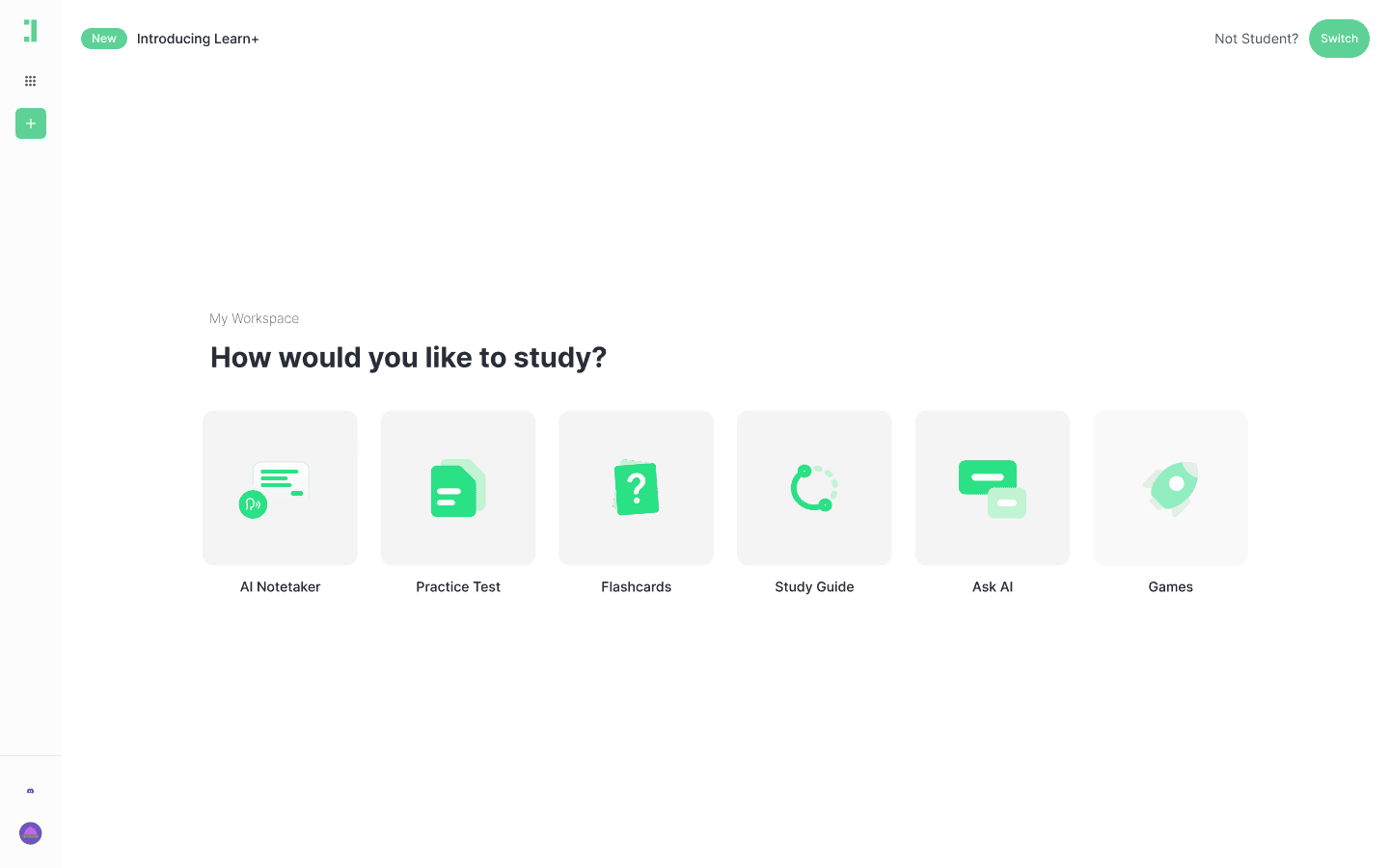
Generate Flashcards for Thermodynamics (Physics)
Stop rereading and start active recall. Create Thermodynamics flashcards in seconds for free!
Generate Flashcards with AI Free
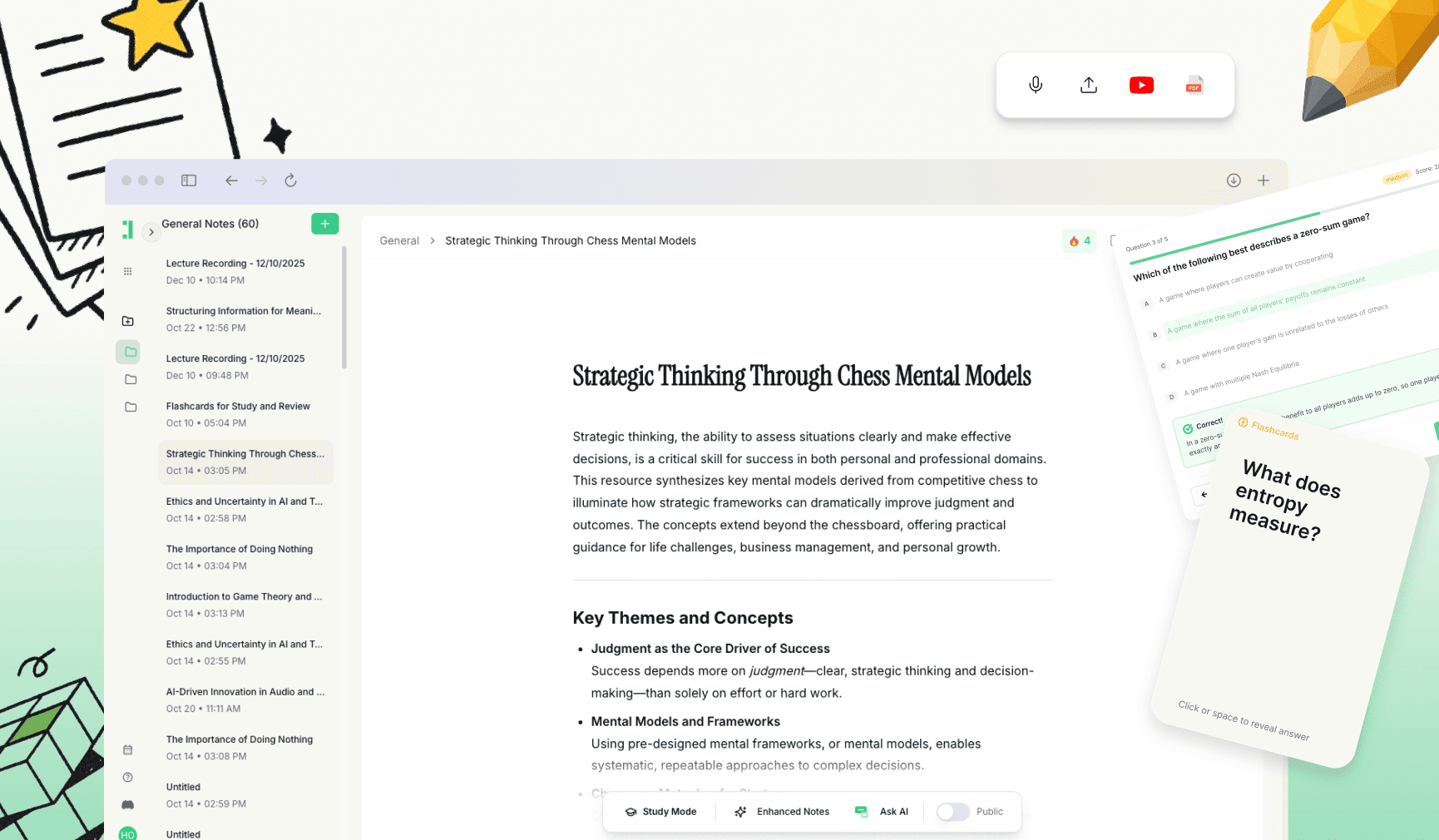
Generate Flashcards for Thermodynamics
Turn your notes, PDFs, slides, or lectures into Thermodynamics flashcards so you can review faster and remember more. Whether you are tackling the Zeroth Law or complex heat engine cycles, Duetoday helps you master the physics of heat and energy.
Generate Thermodynamics FlashcardsUpload notes / paste text
In Duetoday, the process is simple: upload your study material, generate your deck with AI, refine the cards, and start your study session immediately.
What are Thermodynamics flashcards?
Thermodynamics flashcards cover the fundamental principles governing heat, work, temperature, and energy. These cards focus on key terms like enthalpy and entropy, mathematical formulas for state changes, and the conceptual relationships between different thermodynamic systems.
Instead of passively rereading a textbook, these flashcards force you to test yourself on specific variables and laws. This active testing builds stronger neural pathways, ensuring you can recall the right formula during a high-pressure physics exam. If you already have notes, Duetoday can generate a clean deck in minutes.
Why flashcards are one of the best ways to study Thermodynamics
Physics requires a mix of rote memorization for laws and deep conceptual understanding for problem-solving. Flashcards bridge this gap by breaking down complex systems into digestible units of information. By using active recall and spaced repetition, you ensure that the sign conventions for work and heat become second nature.
Remember state functions vs. path functions without cramming
Separate similar concepts like Isothermal vs. Adiabatic processes
Learn cycles step-by-step (Carnot, Otto, Rankine)
Practice applying the First and Second Laws quickly
What to include in your Thermodynamics flashcards
Effective Thermodynamics flashcards follow the "atomicity" principle: one idea per card. This prevents your brain from recognizing a pattern without actually understanding the underlying physics. Your deck should be question-based rather than just a list of definitions.
Definitions & key terms: "What is the Triple Point?" or "Define Enthalpy in terms of Internal Energy."
Processes & steps: "What are the four processes in a Carnot Cycle?"
Comparisons: "How does an open system differ from a closed system?"
Application: "If a gas expands isothermally, what is the change in internal energy?"
Use these example prompts for your deck: 'What does the Second Law say about entropy?', 'State the formula for work in an isobaric process', 'What is a reversible process?', and 'Define the heat capacity ratio (gamma).'
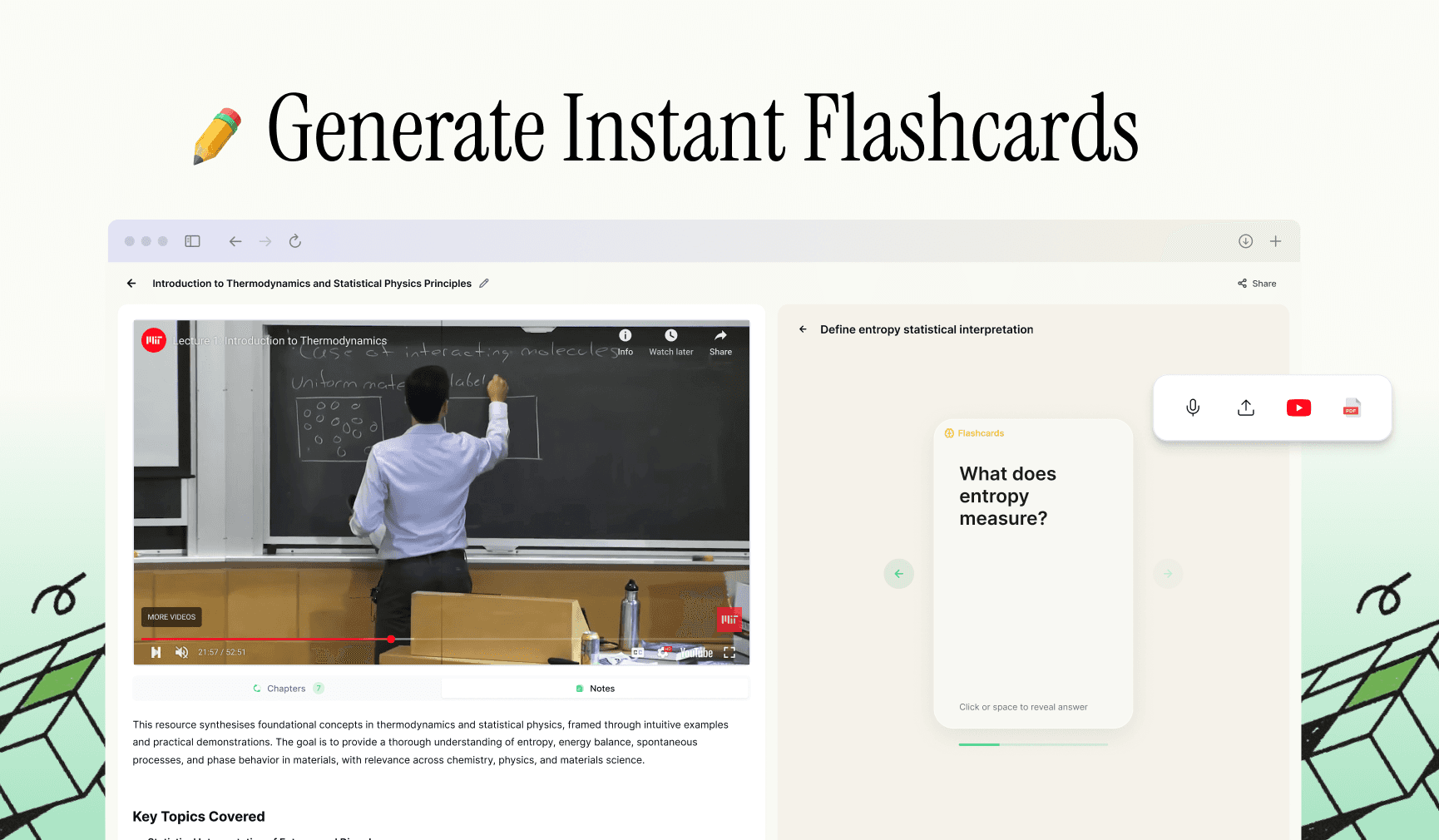
How to study Thermodynamics with flashcards (a simple system)
Mastering Thermodynamics requires a two-pass approach. First, you build your deck to capture all the core variables and laws. Second, you engage in iterative review sessions that challenge your mental model of energy transfer.
Keep your sessions short but frequent. It is better to review 20 cards a day for a week than to review 200 cards the night before a midterm. Your brain needs time to consolidate the relationship between pressure, volume, and temperature.
Make a deck from your lecture slides or textbook chapters.
Do one quick round to identify which cycles or laws confuse you.
Review these "weak" cards daily for three consecutive days.
Mix in conceptual cards with formula calculation cards.
Do a final mixed-topic review before your physics exam.
Generate Thermodynamics flashcards automatically in Duetoday
Manually writing out flashcards for every thermodynamic derivation is slow and often leads to messy, inconsistent notes. Duetoday uses AI to scan your physics materials and extract the most important information for you.
Simply upload your PDF or paste your lecture transcript, and our engine will create a structured deck including all the critical equations and conceptual definitions you need to pass.
Upload or paste your Thermodynamics material
Click Generate Flashcards
Review, edit, and start studying
Generate Thermodynamics Flashcards in Duetoday
Start with your notes today and get a study-ready deck in seconds.
Common Thermodynamics flashcard mistakes (and how to fix them)
Many students make cards that are too dense. If a card contains the entire derivation for the Efficiency of a Heat Engine, you aren't actually memorizing the steps; you're just recognizing the block of text. Break it down!
Cards are too long → Split derivations into individual steps.
Only memorizing symbols → Add prompts to explain what symbols represent (e.g., what is 'Q'?).
Ignoring sign conventions → Create specific cards for 'Work done BY' vs 'Work done ON' a system.
No review schedule → Use Duetoday’s spaced repetition to track your mastery.
FAQ
How many flashcards do I need for Thermodynamics? A typical introductory course module usually requires between 50 and 80 cards to cover all laws, processes, and major formulas.
What’s the best format for Thermodynamics flashcards? A mix of image-based cards for PV diagrams and question-based cards for laws and definitions works best.
How often should I review Thermodynamics flashcards? Ideally, review your deck daily for the first week, then every 3 to 5 days once you start getting the cards right consistently.
Should I make cards from a textbook or lecture notes? Use lecture notes to identify what your professor emphasizes, but refer to the textbook for precise definitions and sign conventions.
How do I stop forgetting formulas after a few days? Practice the 'why' behind the formula. Use cards that ask for the conditions under which a specific formula is valid.
What if my flashcards feel too easy? Add 'application' cards where you have to solve a mini-problem or predict the direction of heat flow based on a scenario.
Can I generate Thermodynamics flashcards from a PDF? Yes, Duetoday can process your physics textbook PDFs or lab manuals and turn them into flashcards automatically.
Are digital flashcards better than paper for Physics? Digital cards are superior because they allow for easier organization of complex diagrams and use algorithms to automate spaced repetition.
How long does it take to make a full Thermodynamics deck? Manually it takes hours, but with Duetoday’s AI, you can generate a comprehensive deck in under a minute.
Can Duetoday organize my flashcards by sub-topic? Yes, you can generate separate decks for Laws of Thermodynamics, Thermochemistry, and Statistical Mechanics.

Duetoday is an AI-powered learning OS that turns your study materials into personalised, bite-sized study guides, cheat sheets, and active learning flows.