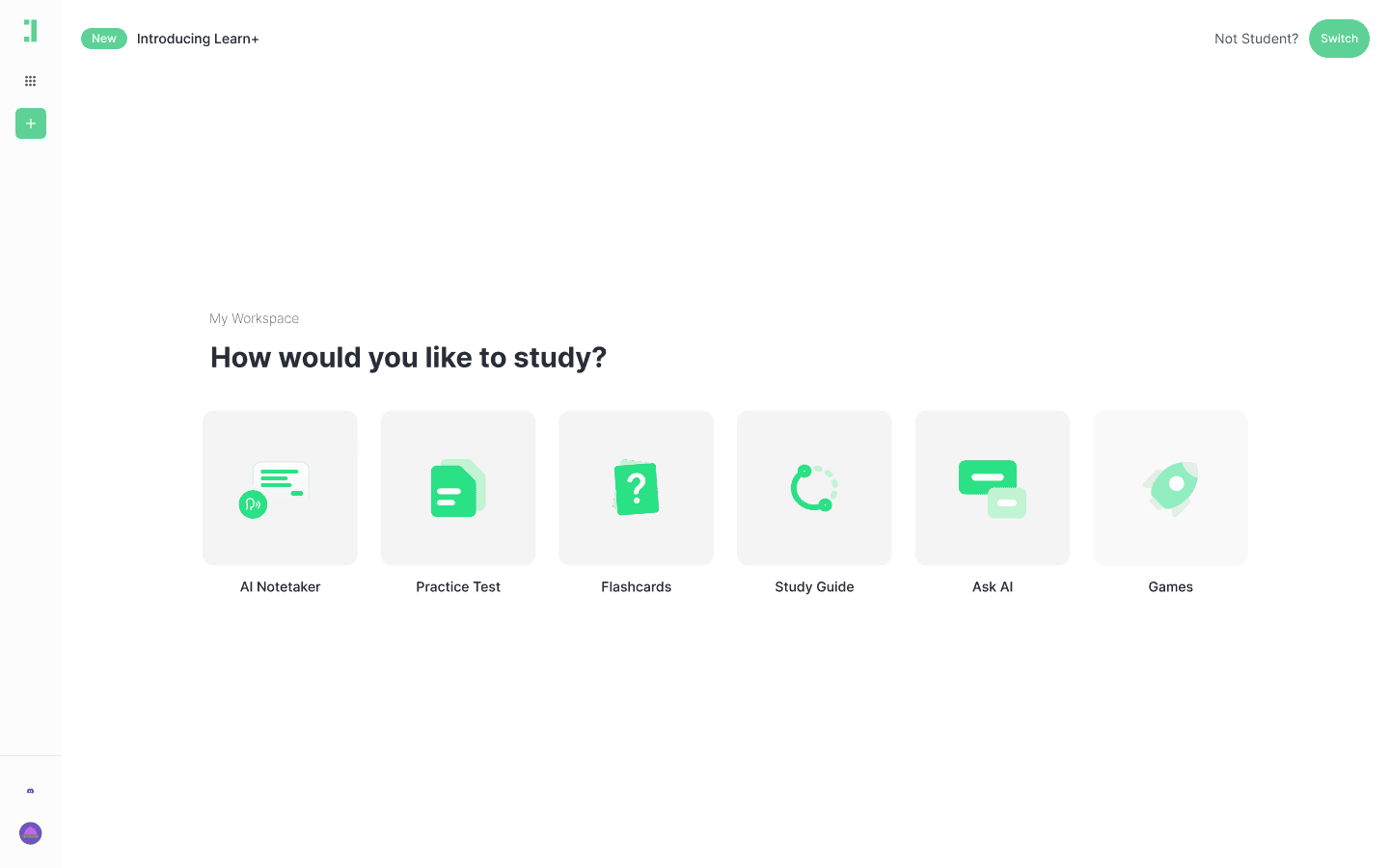
Generate Flashcards for Thermodynamics
Make Thermodynamics flashcards automatically from your subject notes with this guide to generate better study materials.
Generate Flashcards with AI Free
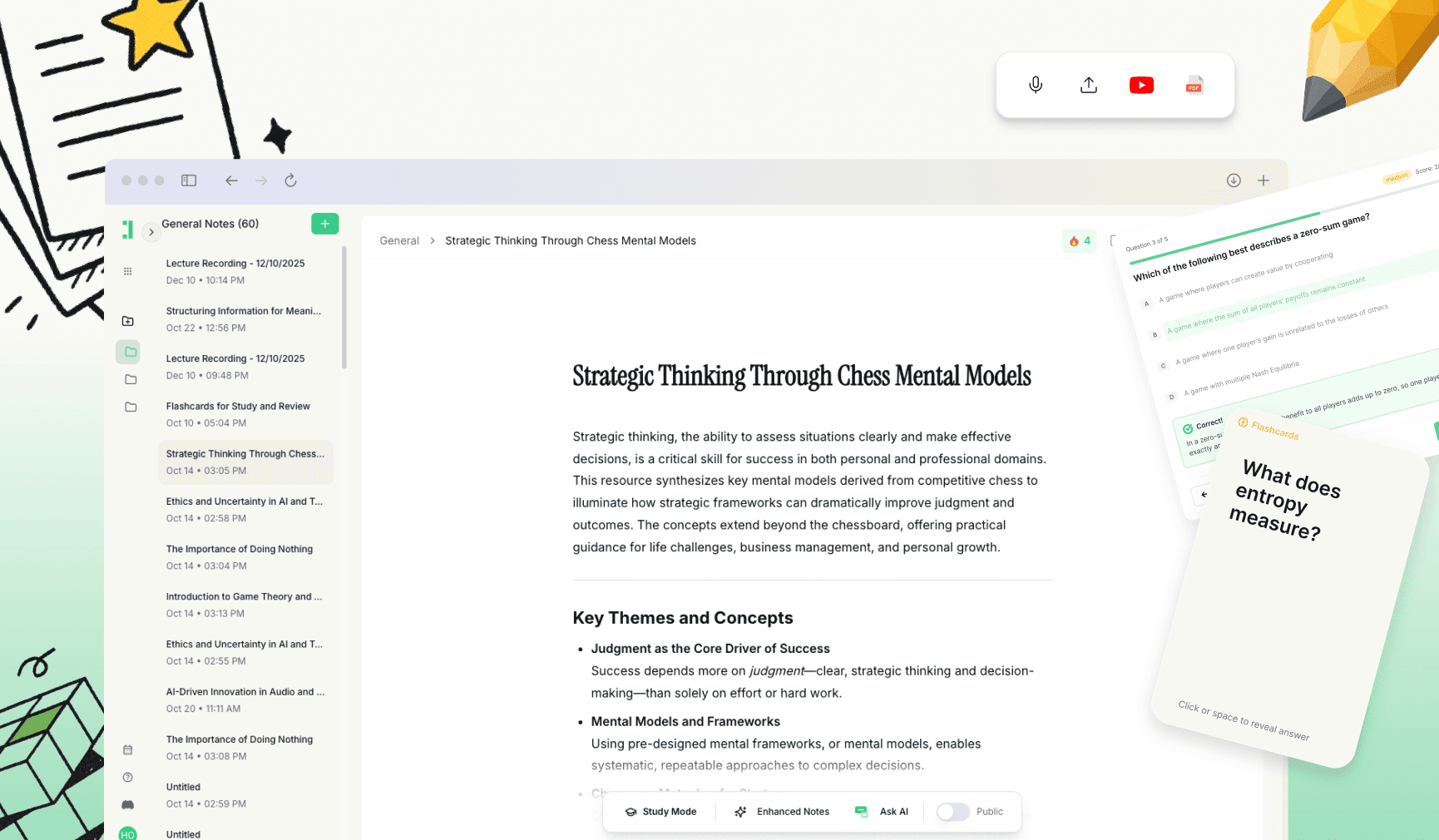
Generate Thermodynamics Flashcards Automatically
Turn your complex thermodynamics notes, PDFs, slides, or lecture transcripts into structured flashcards so you can review faster and remember more. Whether you are tackling heat engines or the laws of entropy, Duetoday helps you synthesize difficult concepts into manageable study sessions.
Generate Thermodynamics FlashcardsUpload notes / paste text
Simply upload your materials to Duetoday, and our AI will extract key formulas and concepts to generate a custom deck. You can then review, edit, and study your cards immediately to maximize your exam preparation.
What are Thermodynamics flashcards?
Thermodynamics flashcards are bite-sized study tools designed to cover the fundamental principles of energy, heat, work, and the properties of matter. They break down complex topics like state variables, phase diagrams, and the behavior of ideal gases into clear question-and-answer pairs.
Instead of passively rereading dense textbooks, these flashcards force you to use active recall. By testing your memory on specific laws and cycles, you build a deeper functional understanding of how energy transforms within a system. If you already have notes, Duetoday can generate a clean deck in minutes.
Why flashcards work for Thermodynamics
Thermodynamics requires a unique mix of conceptual understanding and the ability to recall specific mathematical relationships. Flashcards are ideal for this subject because they bridge the gap between theory and application through repetition and self-testing.
Active recall and spaced repetition allow you to memorize complex relationships without the stress of cramming. By breaking down the subject into individual components, you can master the logical flow of thermal systems step-by-step.
Remember key terms like Enthalpy vs. Entropy without confusion
Separate similar concepts such as Open, Closed, and Isolated systems
Learn thermodynamic cycles step-by-step (Carnot, Otto, Rankine)
Practice applying specific equations and unit conversions quickly
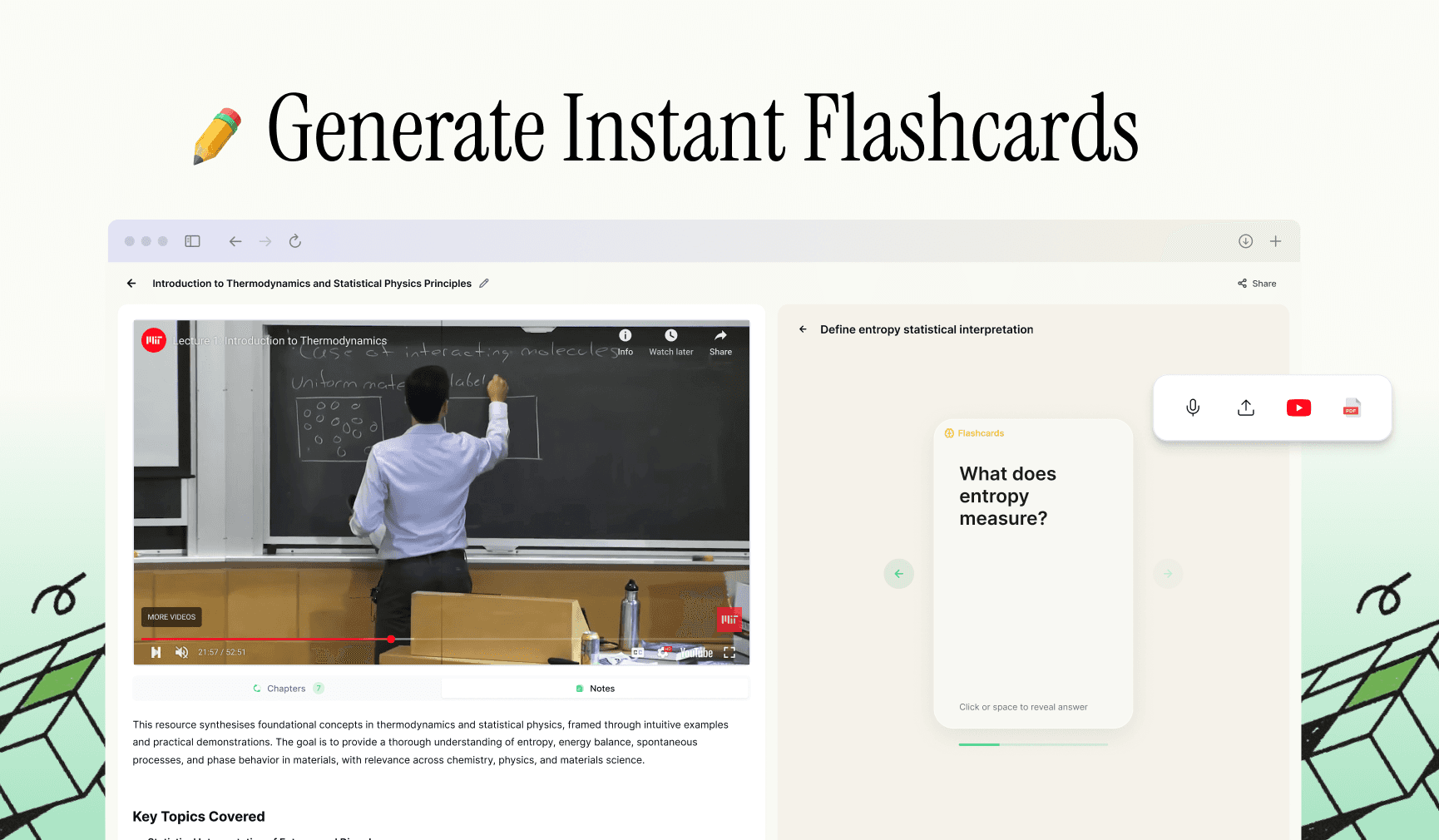
What to include in your Thermodynamics flashcards
Effective thermodynamics flashcards follow the "one idea per card" rule. They should transform abstract theories into direct questions that challenge your comprehension of energy interactions.
Your deck should cover four main categories: definitions, process pathways, comparisons, and practical application. This ensures you aren't just memorizing words, but understanding how they apply to physical systems.
Definitions & Key Terms: "What is the Second Law of Thermodynamics?" "Define an Adiabatic process."
Processes & Steps: "What happens to pressure during an Isothermal expansion?"
Comparisons: "How does an Intensive property differ from an Extensive property?"
Application: "When would you use the Clausius-Clapeyron equation?"
Example prompts: "State the Zeroth Law of Thermodynamics," "What is the efficiency formula for a heat engine?" or "Define the triple point of water."
How to study Thermodynamics with flashcards
Success in thermodynamics comes from a systematic approach to the material. Use a "two-pass" workflow: first, use Duetoday to build your deck from your syllabus, then engage in focused review rounds to identify your knowledge gaps.
Start with quick sessions that cover the basic laws. As you become more comfortable, move toward cards that require you to explain the relationship between variables, such as volume and temperature in a gas cycle.
Generate a deck from your textbook chapters or lecture slides.
Run a quick diagnostic round to flag difficult formulas.
Review these "weak" cards daily to build long-term retention.
Mix in conceptual cards with calculation-based prompts.
Perform a final comprehensive review before your midterms or finals.
Generate Thermodynamics flashcards automatically in Duetoday
Making thermodynamics cards manually is slow, often resulting in messy notation and inconsistent formulas that are hard to study from. Duetoday simplifies this by automating the heavy lifting.
Position yourself for success by uploading your PDFs or slides directly into our AI engine. Duetoday generates flashcards instantly, allowing you to spend more time studying and less time formatting.
Upload or paste your thermodynamics study material
Click "Generate Flashcards"
Review, edit, and start your active recall session
Generate Thermodynamics Flashcards in Duetoday
Start with your notes and get a deck you can actually use today.
Common Thermodynamics flashcard mistakes
Many students create cards that are too wordy or complex, which hinders the learning process. Avoid these common pitfalls to ensure your study sessions are efficient.
Cards are too long: Don't put an entire derivation on one card; split it into logical steps.
Ignoring units: Always include the standard SI units for variables like Joules or Pascals.
Confusing sign conventions: Use cards to clarify when work is positive vs. negative.
No review schedule: Spaced repetition only works if you revisit the hard cards consistently.
Ready to generate your Thermodynamics flashcards?
Stop rereading and start recalling. Upload your notes today and transform your thermodynamics study sessions with AI-powered tools designed for engineering and physics students.
Start Generating Flashcards
Works with notes, PDFs, slides, and transcripts.
FAQ
How many flashcards do I need for Thermodynamics? A standard introductory course usually requires 100-150 cards covering laws, properties, and specific cycles.
What’s the best format for Thermodynamics flashcards? Question-on-front and Answer-on-back is best. Use prompts like "Define," "Show the formula for," or "Identify the process."
How often should I review Thermodynamics flashcards? Aim for daily reviews of new or difficult cards, and weekly reviews for concepts you've already mastered using spaced repetition.
Should I make cards from a textbook or lecture notes? It's best to use both. Lecture notes tell you what the professor prioritizes, while textbooks provide the precise definitions needed for accuracy.
How do I stop forgetting formulas after a few days? Practice cards that ask you to explain the relationship between variables (e.g., PV=nRT) rather than just the symbols themselves.
What if my flashcards feel too easy? Add "application" cards that describe a real-world scenario and ask you to identify which thermodynamic law applies.
Can I generate Thermodynamics flashcards from a PDF automatically? Yes, Duetoday allows you to upload any study PDF and identifies key concepts to create a high-quality deck instantly.
Are digital flashcards better than paper for Thermodynamics? Digital cards are superior for thermodynamics because they allow for easier organization of complex diagrams and use AI to schedule your reviews.
How long does it take to make a full Thermodynamics deck? Manually it could take hours, but with Duetoday's AI generation, you can have a full deck ready in under a minute.
Can Duetoday organize my flashcards for me? Yes, Duetoday categorizes your generated cards by topic so you can focus on specific areas like the Second Law or Refrigeration cycles.

Duetoday is an AI-powered learning OS that turns your study materials into personalised, bite-sized study guides, cheat sheets, and active learning flows.