Generate Flashcards for The Periodic Table
Generate Periodic Table flashcards in seconds. Turn notes into study tools now. Try for free!
Generate Flashcards with AI Free
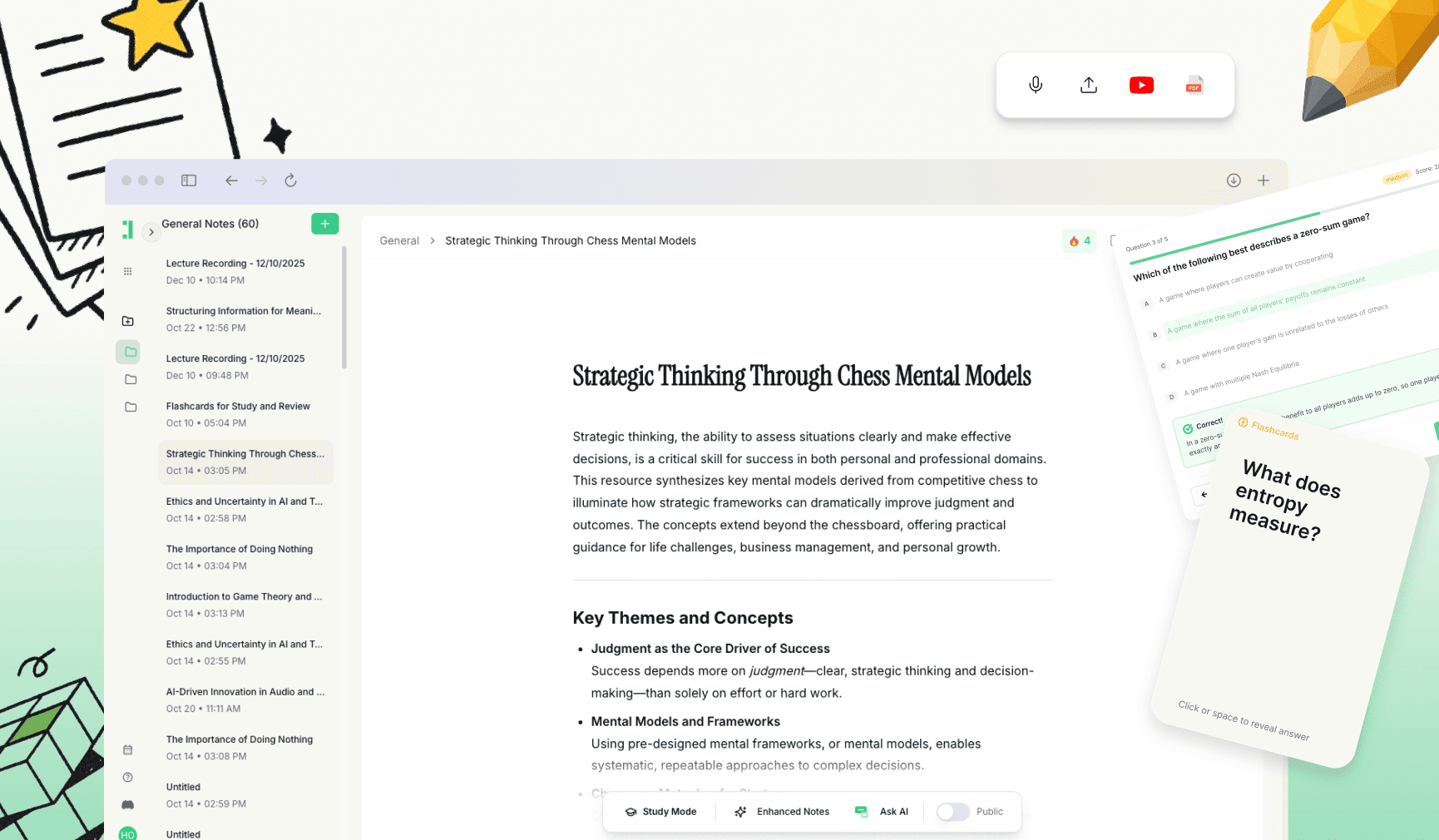
Generate Flashcards for The Periodic Table
Turn your chemistry notes, PDFs, slides, or lectures into The Periodic Table flashcards so you can review faster and remember more.
Generate The Periodic Table FlashcardsUpload notes / paste text
Upload your chemistry materials to Duetoday to instantly generate a structured deck. Once created, you can review, edit, and organize your cards to fit your specific exam needs.
What are The Periodic Table flashcards?
The Periodic Table flashcards are focused study tools designed to help you memorize element symbols, atomic numbers, electron configurations, and periodic trends (like electronegativity or atomic radius). Instead of staring at the chart, these cards isolate specific properties to test your knowledge.
By using flashcards for chemistry, you shift from passive reading to active recall. Instead of hoping you remember where the Halogens are, you test yourself repeatedly until the information is locked in. If you already have notes, Duetoday can generate a clean deck in minutes.
Why flashcards are one of the best ways to study The Periodic Table
Learning the table requires a mix of rote memorization (symbols and names) and conceptual understanding (why trends move the way they do). Flashcards bridge this gap by forcing your brain to retrieve answers without looking at the full chart.
Remember symbols and atomic numbers without cramming
Separate similar concepts (e.g., Ionization Energy vs. Electron Affinity)
Learn groups and periods step-by-step
Practice identifying trends across different rows and columns
What to include in your Periodic Table flashcards
The best chemistry flashcards follow the "atomic" rule: one specific idea per card. Keep the questions direct and avoid cluttering a single card with too much data.
Definitions & key terms: "What is the definition of Valence Electrons?"
Processes & steps: "What happens to atomic size as you move left to right?"
Comparisons: "How does a Metal differ from a Metalloid?"
Application: "Identify the element with atomic number 12."
Example prompts: "Symbol for Gold?", "Which group contains Noble Gases?", "Name the three subatomic particles," and "What is the trend for metallic character top to bottom?"
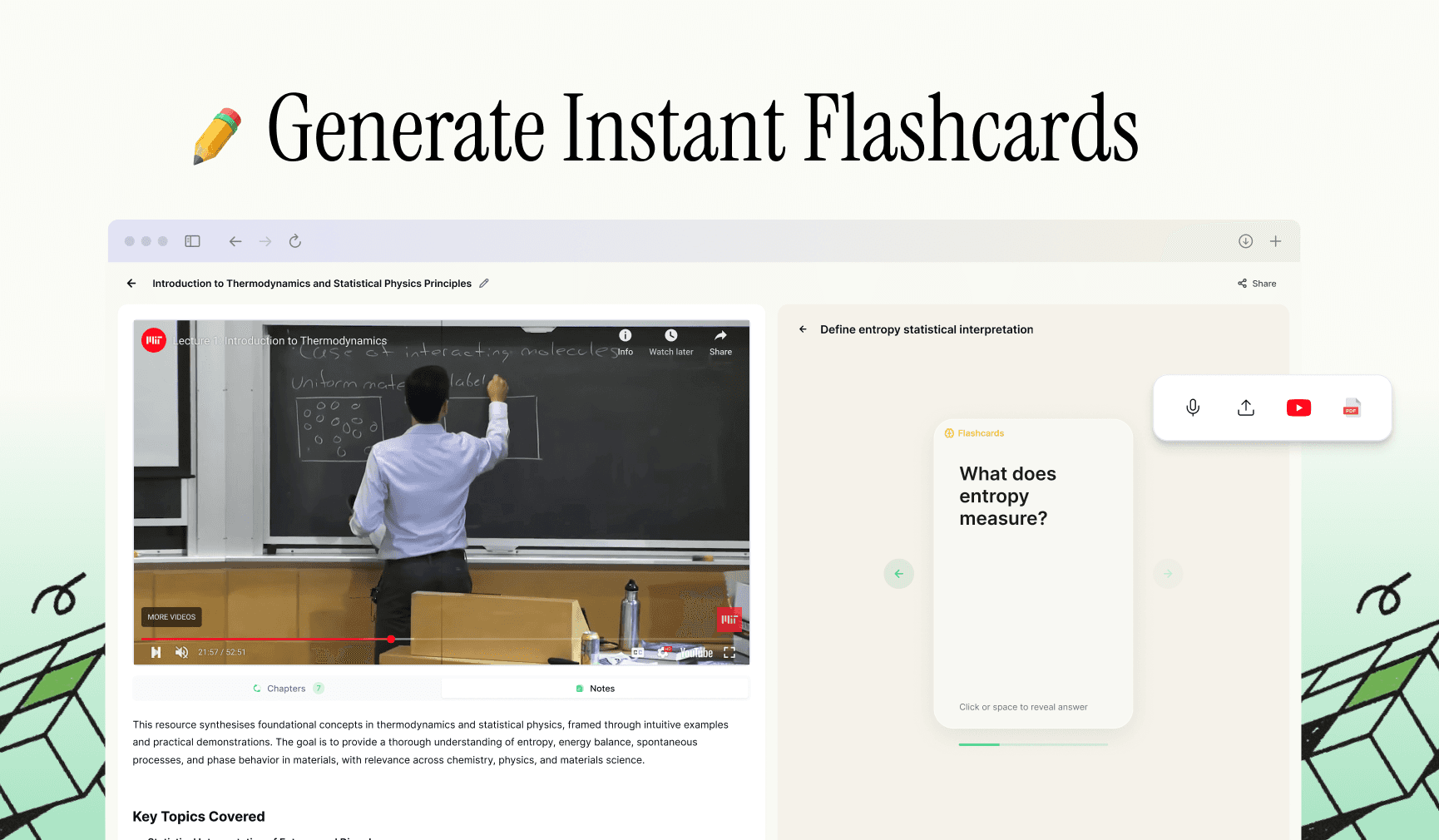
How to study The Periodic Table with flashcards
Don't try to learn all 118 elements in one sitting. Use a two-pass approach: first, build your deck based on your specific syllabus, then use spaced repetition to master the difficult segments.
Make a deck from your chemistry notes or textbook chapters.
Do one quick round to find the elements or trends you keep forgetting.
Review the hardest cards every morning for three days.
Mix in easier elements to maintain your confidence.
Do a final mixed-category review before your chemistry quiz.
Generate The Periodic Table flashcards automatically in Duetoday
Making cards manually is slow and tedious, especially when dealing with atomic weights and group numbers. Duetoday eliminates the manual data entry so you can spend your time actually learning.
Simply upload your chemistry PDF or paste your lecture transcript, and our AI will identify the key elements and trends to create a comprehensive study set.
Upload your chemistry slides or textbook chapters
Click Generate Flashcards
Review, edit, and start studying instantly
Generate Periodic Table Flashcards in Duetoday
Start with your notes and get a deck you can actually use today.
Common Periodic Table flashcard mistakes
Most students make cards that are too complex. If a card takes 30 seconds to read, it's not a flashcard—it's a note. Split complex trends into multiple simple questions.
Cards are too long -> split into one property per card
Only memorizing names -> add cards for atomic numbers and group roles
Ignoring trends -> add 'Why' cards to explain chemical behavior
No review schedule -> use Duetoday's system to see tough cards more often
Ready to generate your Periodic Table flashcards?
Stop rereading your chemistry textbook. Upload your notes to Duetoday, generate your deck, and start using active recall to master the elements today.
Start Generating Flashcards
Works with notes, PDFs, slides, and lecture transcripts.
FAQ
How many flashcards do I need for The Periodic Table? Most students benefit from 50 to 100 cards covering the first 20 elements, major groups, and the four primary periodic trends.
What's the best format for chemistry flashcards? Direct Q&A is best. Put the symbol on the front and the name, number, and mass on the back.
How often should I review? Spend 15 minutes daily for a week. Periodic trends are easy to forget if not reviewed consistently.
Should I make cards from a textbook or notes? Both. Textbooks provide the facts, but lecture notes tell you which specific elements your teacher wants you to know for the exam.
How do I stop forgetting the trends? Focus on the 'Why' cards. If you understand why atoms get smaller, you won't have to memorize the direction blindly.
Can I generate flashcards from a PDF? Yes, Duetoday can process your chemistry PDFs and extract element data automatically.
Are digital cards better than paper? Digital cards are superior for chemistry because you can easily include 3D models or diagrams of electron shells.
How long does it take to make a full deck? Manually, it could take hours. With Duetoday, it takes less than a minute to generate a full Periodic Table deck.

Duetoday is an AI-powered learning OS that turns your study materials into personalised, bite-sized study guides, cheat sheets, and active learning flows.