Generate Flashcards for Taxes and Subsidies
Master Taxes and Subsidies with AI-generated flashcards. Turn notes into study tools in seconds. Try it for free!
Generate Flashcards with AI Free
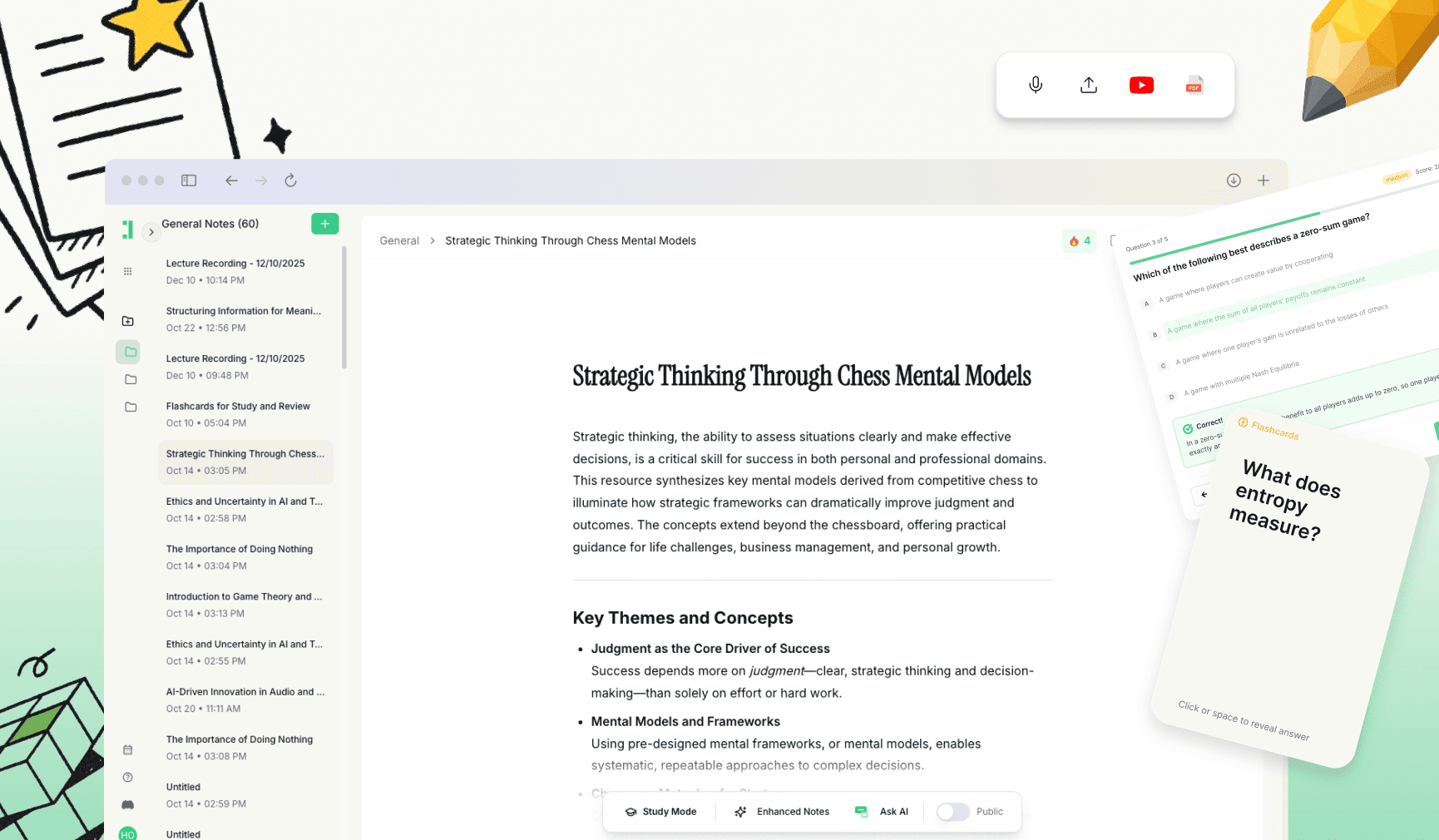
Generate Flashcards for Taxes and Subsidies
Turn your economics notes, PDFs, slides, or lecture transcripts into Taxes and Subsidies flashcards so you can review faster and remember more. Master complex supply and demand shifts without the manual data entry.
Generate Taxes and Subsidies Flashcards Upload notes / paste text
In Duetoday, the process is seamless: simply upload your economics materials, our AI generates a comprehensive deck, you review or edit the cards, and start studying with active recall.
What are Taxes and Subsidies flashcards?
Taxes and Subsidies flashcards cover the critical mechanics of government intervention in markets. This includes key terms like tax incidence, deadweight loss, per-unit vs. ad valorem taxes, and the specific impact of subsidies on consumer and producer surplus.
The outcome is a shift from passive reading to active testing. Instead of staring at supply and demand curves, you challenge yourself to predict shifts, calculate tax revenue, and identify welfare losses, building much stronger mental recall for your exams.
If you already have lecture notes or textbook chapters, Duetoday can generate a clean deck in minutes.
Why flashcards work for Taxes and Subsidies
Taxes and Subsidies require a mix of terminology and logical application. You need to remember not just definitions, but also the sequence of market reactions when a tax is imposed or removed.
Flashcards utilize active recall and spaced repetition, forcing your brain to retrieve the logic of market shifts repeatedly until it becomes second nature.
Remember key terms like 'Statutory' vs. 'Economic' incidence without cramming.
Separate similar concepts, such as consumer surplus vs. producer surplus.
Learn the step-by-step process of how a tax wedge impacts equilibrium price.
Practice applying the rules of elasticity to determine who bears the tax burden.
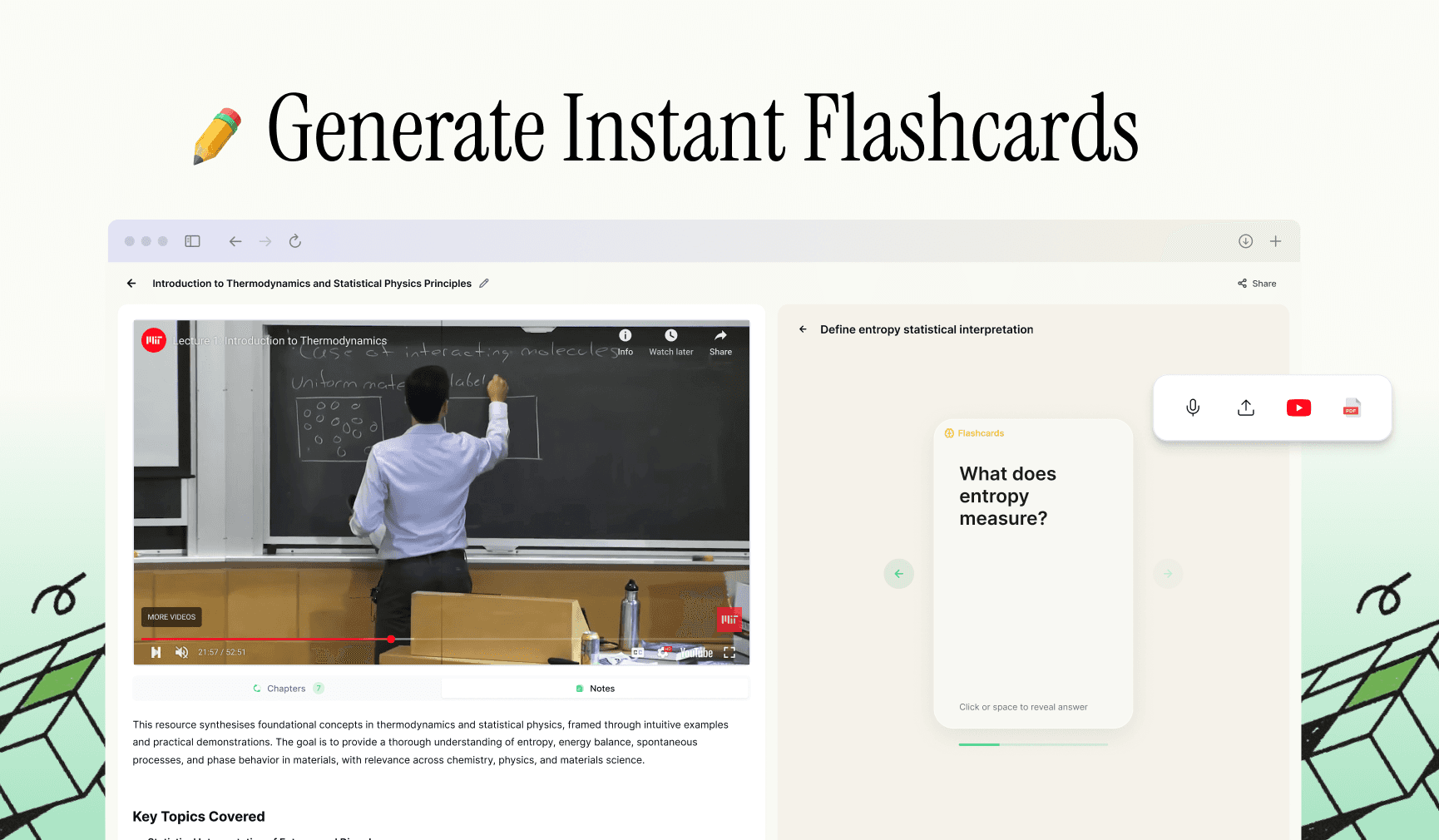
What to include in your Taxes and Subsidies flashcards
Good flashcards follow the "atomic" rule: one idea per card. They should be question-based rather than just a list of facts, forcing you to think through the economic logic.
Focus on these four categories to ensure full coverage of the topic:
Definitions & key terms: "What is an excise tax?" or "Define a Pigouvian subsidy."
Processes & steps: "How does a per-unit tax affect the supply curve?"
Comparisons: "How does tax incidence differ when demand is perfectly inelastic vs. perfectly elastic?"
Application: "What determines the size of the deadweight loss triangle?"
Try these example prompts: "Who bears the burden of a tax if supply is more elastic than demand?", "Label the area of tax revenue on a graph," and "What is the effect of a subsidy on market quantity?"
How to study Taxes and Subsidies with flashcards
We recommend a "two-pass" approach. First, generate your deck and do a high-speed pass to see which concepts (like elasticity or total surplus) you struggle with. Then, focus your energy on those specific gaps.
Review in short, focused sessions. If you can't explain why a subsidy leads to overproduction in under 10 seconds, mark that card for a repeat review the following day.
Make a deck from your notes or generate it automatically.
Do one quick round to find weak spots in your understanding of market wedges.
Review weak cards daily to cement the relationship between tax and elasticity.
Mix in harder application cards, such as calculating deadweight loss.
Execute a final mixed review 24 hours before your economics exam.
Generate Taxes and Subsidies flashcards automatically in Duetoday
Making economics cards manually is slow and frustrating, especially when trying to describe shifts in graphs. Duetoday eliminates the busywork so you can focus on the actual learning.
Simply upload your PDF, slides, or even a recording of your econ lecture. Duetoday transcribes the content and extracts the most important concepts into a ready-to-use study deck.
Upload or paste your Taxes and Subsidies material
Click Generate Flashcards
Review, edit, and start studying immediately
Generate Taxes and Subsidies Flashcards in Duetoday
Start with your notes and get a deck you can actually use today.
Common Taxes and Subsidies flashcard mistakes
Avoid these common pitfalls to make your study sessions more effective:
Cards are too long: Don't try to explain the entire concept of welfare economics on one card; break it into specific pieces.
Only memorizing definitions: Ensure you include "why" and "how" cards regarding market shifts.
Ignoring Elasticity: Incidence is determined by elasticity; make sure you have dedicated cards for different elasticity scenarios.
No graph practice: Even if digital, prompt yourself to visualize where the tax revenue box sits.
Ready to generate your Taxes and Subsidies flashcards?
Stop rereading your textbook. Upload your notes, generate your AI deck, and master the mechanics of Taxes and Subsidies with active recall.
Start Generating Flashcards
Works with notes, PDFs, slides, and transcripts.
FAQ
How many flashcards do I need for Taxes and Subsidies? Typically, a comprehensive deck for this topic ranges from 30 to 50 cards to cover definitions, shifts, incidence, and welfare effects.
What’s the best format for Taxes and Subsidies flashcards? Question and answer format is best. Use "If-Then" scenarios, such as "If demand is inelastic, who pays the tax?"
How often should I review Taxes and Subsidies flashcards? Use spaced repetition. Review daily initially, then push to every 3 days once you consistently land the correct answers.
Should I make cards from a textbook or slides? Both are useful, but lecture slides often highlight exactly what your professor thinks is important for the exam.
How do I stop forgetting the difference between tax incidence and tax statutory? Create a comparison card that explicitly asks for the difference between 'who legally pays' and 'who actually pays' the tax.
What if my flashcards feel too easy? Add application cards that require you to calculate the value of deadweight loss or tax revenue based on hypothetical numbers.
Can I generate Taxes and Subsidies flashcards from a PDF automatically? Yes, Duetoday is designed to read your PDFs and instantly convert the text into structured flashcards.
Are digital flashcards better than paper for Economics? Digital cards are often superior because they allow for faster organization and the use of automated spaced-repetition algorithms.
How long does it take to make a full Taxes and Subsidies deck? With Duetoday, it takes less than a minute. Manually, it could take over an hour of typing and formatting.
Can Duetoday organize my flashcards for me? Yes, Duetoday categorizes your cards by topic within the deck to ensure a logical flow of study.

Duetoday is an AI-powered learning OS that turns your study materials into personalised, bite-sized study guides, cheat sheets, and active learning flows.