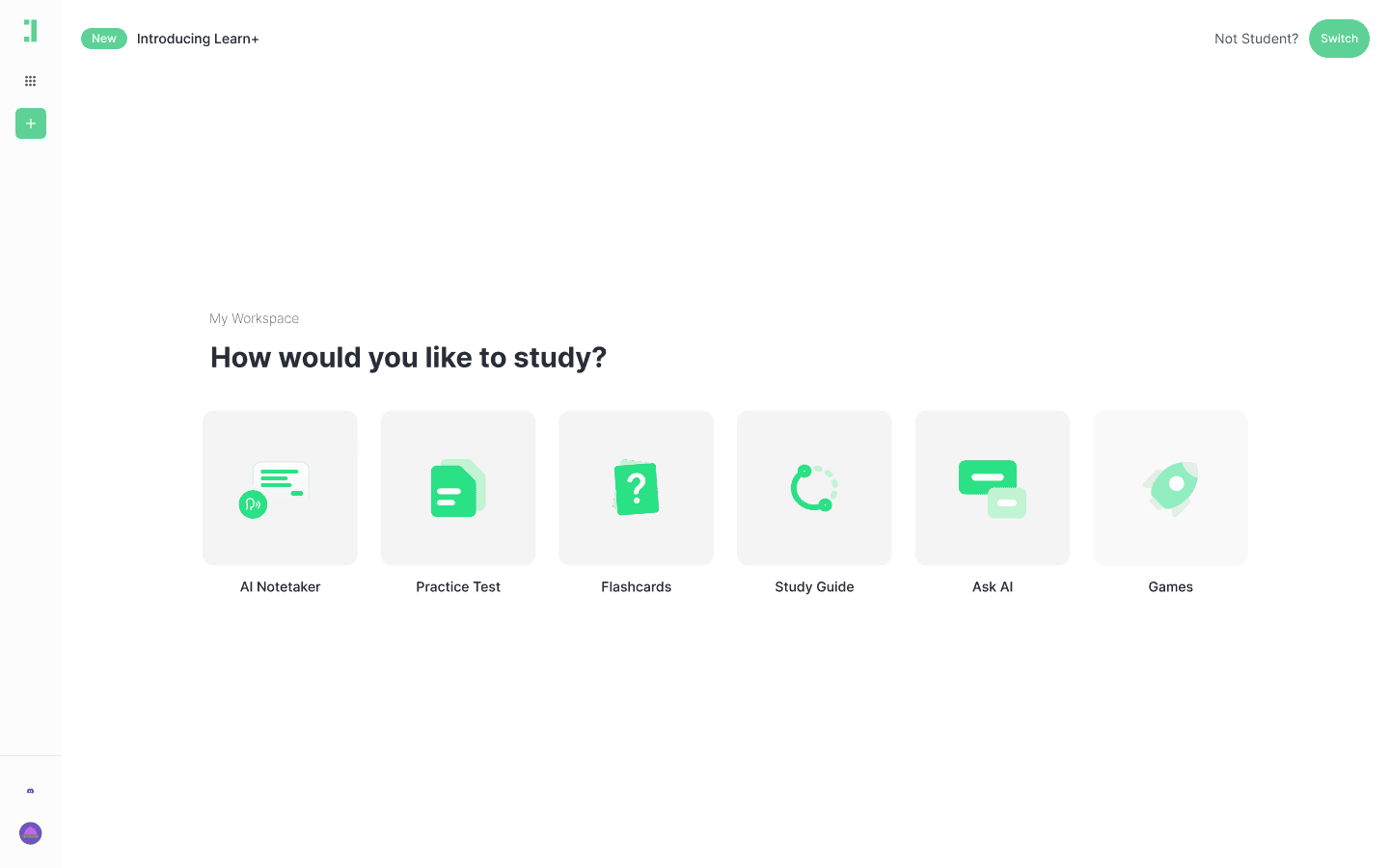
Generate Flashcards for Supply Chain Basics
Generate Supply Chain Basics flashcards in seconds. Try out our free AI tool today!
Generate Flashcards with AI Free
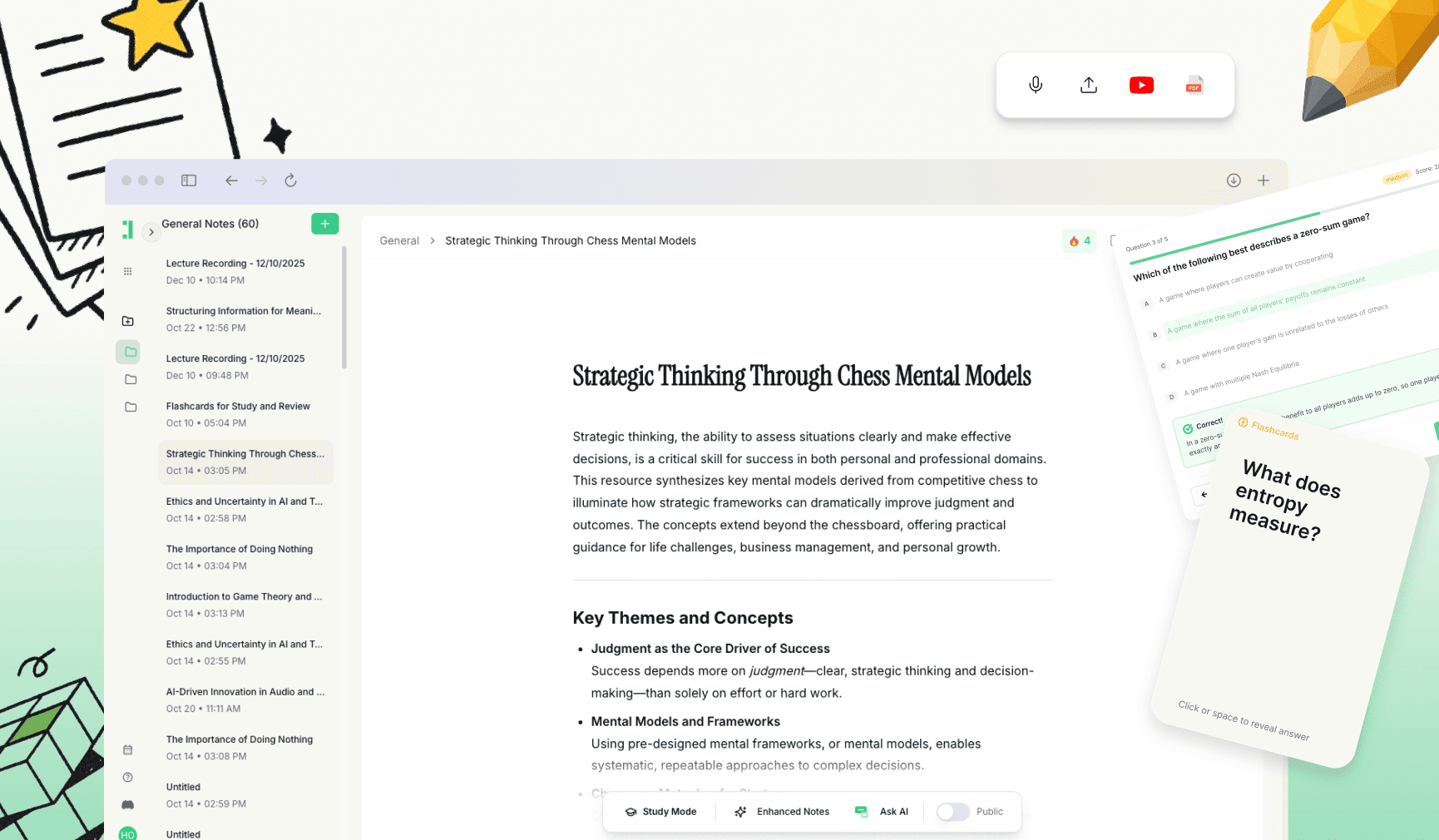
Turn your Supply Chain Basics notes into flashcards
Turn your notes, PDFs, slides, or lectures into Supply Chain Basics flashcards so you can review faster and remember more. Instead of spending hours manually writing out cards for logistics and procurement, let AI handle the heavy lifting while you focus on mastering the material.
Generate Supply Chain Basics FlashcardsUpload notes / paste text
In Duetoday, the process is simple: upload your study material, click generate, and our AI instantly creates a structured deck. You can then review, edit, and study using active recall to ensure you're exam-ready.
What are Supply Chain Basics flashcards?
Supply Chain Basics flashcards cover the fundamental concepts of how goods, information, and finances flow from suppliers to consumers. They typically include key terms like 'Cold Chain,' 'JIT (Just-in-Time),' 'Lead Time,' and 'Bullwhip Effect,' as well as formulas for inventory turnover and safety stock.
Instead of passively rereading a textbook or scrolling through slides, these flashcards force you to retrieve information from memory. This active testing builds strong neural pathways, helping you recall complex logistics processes during a quiz or on the job.
If you already have notes, Duetoday can generate a clean deck in minutes.
Why flashcards work for Supply Chain Basics
Supply Chain Management requires memorizing specific definitions, sequential stages, and the relationships between different stakeholders. Flashcards are ideally suited for this because they break down massive global systems into bite-sized, digestible pieces of information.
By using active recall and spaced repetition, you ensure that the more difficult concepts—like demand forecasting or lean manufacturing—are reviewed more frequently than the ones you already know.
Remember industry terminology without cramming for hours.
Separate similar concepts like Logistics vs. Supply Chain Management.
Learn end-to-end processes step-by-step (sourcing, manufacturing, distribution).
Practice applying inventory formulas quickly and accurately.
What to include in your Supply Chain Basics flashcards
Effective Supply Chain flashcards follow the "atomic" rule: one idea per card. When cards are too cluttered, your brain struggles to isolate the information, making it harder to build long-term memory.
Definitions & key terms: Focus on acronyms (3PL, ERP, KPI) and core vocabulary.
Processes & steps: Break down the stages of the procurement cycle.
Comparisons: Contrast concepts like Push vs. Pull strategy.
Application: Create scenarios where you must identify the cause of a bottleneck.
Example prompts: "What is the main goal of the Bullwhip Effect?", "Define 'Inbound Logistics' in one sentence.", "What are the 5 Rs of procurement?", "Explain the difference between 3PL and 4PL providers."
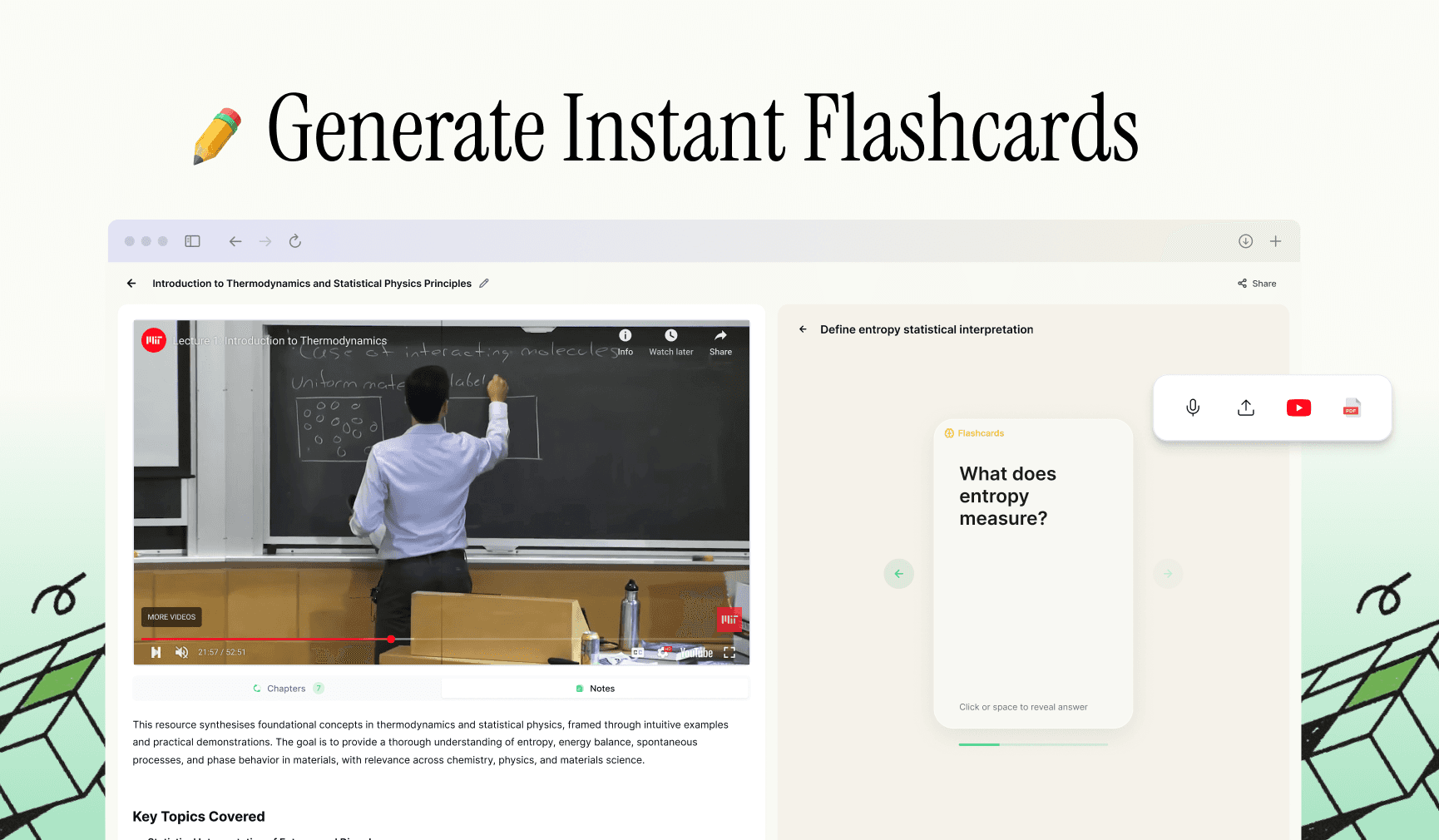
How to study Supply Chain Basics with flashcards
To master Supply Chain Basics, use a two-pass approach. First, generate your deck and do a quick "familiarity run" to see which concepts stick immediately and which feel like a foreign language. Then, move into targeted study sessions.
Focus on quality over quantity. Five 10-minute sessions throughout the week are much more effective than one 2-hour session the night before a test. This allows the spaced repetition algorithm to work its magic.
Make a deck from your notes or generate it directly from a PDF.
Do one quick round to identify your weak spots in the supply chain cycle.
Review high-difficulty cards daily for three consecutive days.
Mix in a few easier cards to boost confidence and maintain context.
Do a final mixed review of the entire supply chain before your assessment.
Generate Supply Chain Basics flashcards automatically
Making cards manually is slow, messy, and inconsistent. You often end up writing too much on one side, which makes the study session counterproductive. Duetoday solves this by using AI to extract the most important data points from your documents.
Whether you have a 50-page PDF on global logistics or a messy set of lecture notes on inventory turnover, Duetoday can organize that information into an optimized study deck in seconds.
Upload or paste your Supply Chain material.
Click Generate Flashcards.
Review, edit, and start studying instantly.
Generate Supply Chain Basics Flashcards in Duetoday
Start with your notes and get a deck you can actually use today.
Common Supply Chain flashcard mistakes
Most students make cards that are too long. If you are reading a paragraph on the back of a card, you aren't using active recall—you're just reading. Another mistake is ignoring the "why." Don't just memorize what SCM stands for; memorize why it is vital for business profitability.
Cards are too long: Split complex logistics models into multiple cards.
Only memorizing words: Add "compare and contrast" prompts for better depth.
Confusing similar concepts: Create specific cards to differentiate 'Procurement' and 'Sourcing'.
No review schedule: Ensure you are repeating the harder formulas.
Ready to generate your Supply Chain Basics flashcards?
Stop rereading your slides and start recalling the material. Upload your notes, generate your deck, and master the supply chain today.
Start Generating Flashcards
Works with notes, PDFs, slides, and transcripts.
FAQ
How many flashcards do I need for Supply Chain Basics? A comprehensive foundational deck usually consists of 50 to 100 cards, covering vocabulary, processes, and basic formulas.
What’s the best format for Supply Chain flashcards? Question-and-answer format is best. For example: 'Question: What is lead time? Answer: The latency between the initiation and completion of a process.'
How often should I review Supply Chain flashcards? Ideally, review daily for the first week, then transition to every 2-3 days as the concepts move into your long-term memory.
Should I make cards from a textbook or slides? Use both. Textbooks provide the 'why' (theory), while slides usually highlight the key terms that will appear on your exam.
How do I stop forgetting formulas after a few days? Practice the formula on a blank sheet of paper every time the flashcard comes up, rather than just saying the formula in your head.
What if my flashcards feel too easy or too hard? If they are too hard, break the concept down into smaller cards. If they are too easy, combine them or add 'when would you use this?' application prompts.
Can I generate Supply Chain flashcards from a PDF automatically? Yes, Duetoday allows you to upload any SCM PDF and transforms the text into study-ready flashcards in seconds.
Are digital flashcards better than paper for Supply Chain? Digital cards are superior because they can use Spaced Repetition Systems (SRS) to automatically show you the hardest cards at the perfect time.
How long does it take to make a full Supply Chain deck? Manually, it can take hours. With Duetoday, it takes less than a minute once your materials are uploaded.
Can Duetoday generate and organize my flashcards for me? Absolutely. Our AI analyzes your Supply Chain content, picks out the most important concepts, and formats them into a deck.

Duetoday is an AI-powered learning OS that turns your study materials into personalised, bite-sized study guides, cheat sheets, and active learning flows.