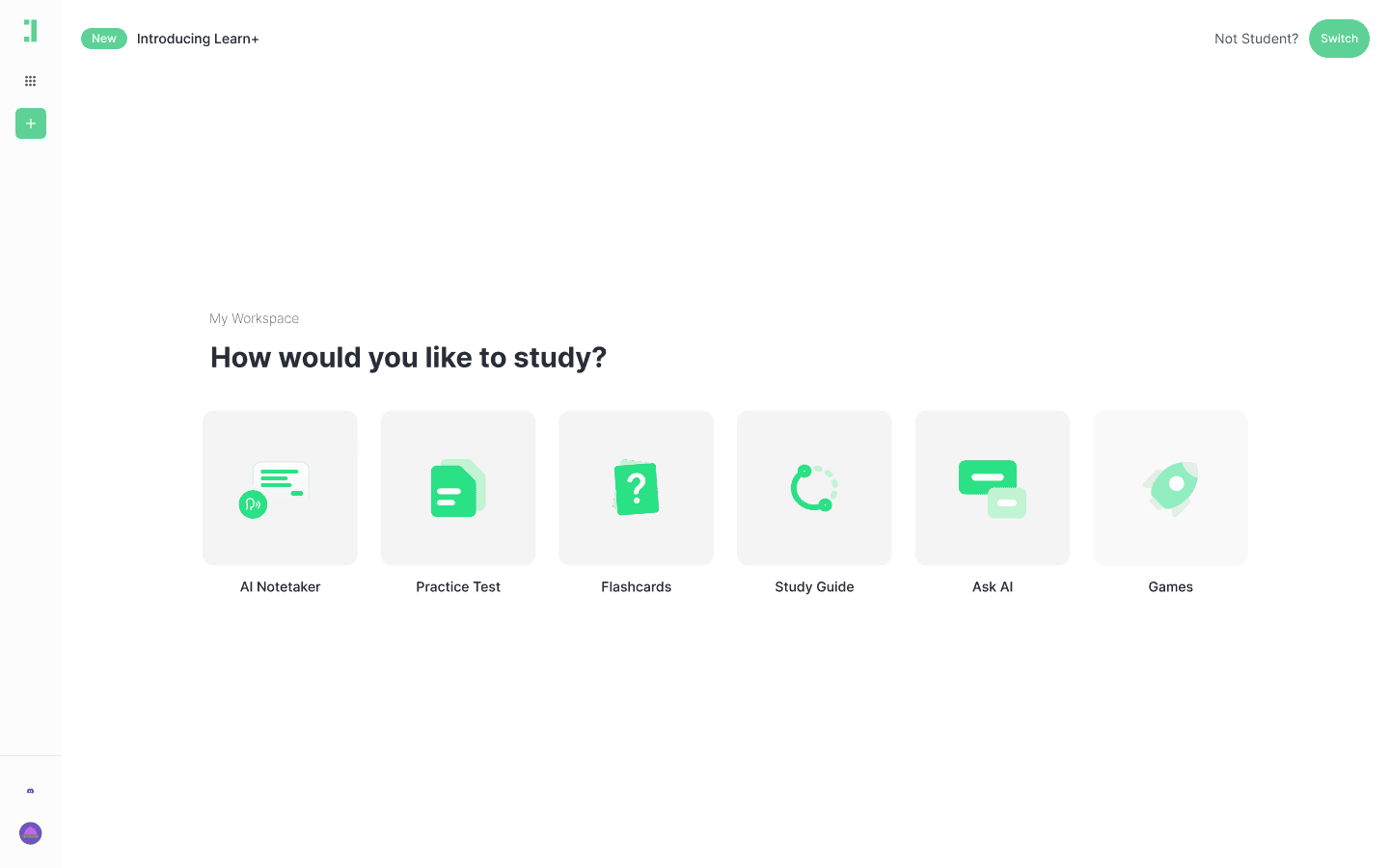
Generate Flashcards for Supply and Demand
Generate Supply and Demand flashcards in seconds. Turn PDFs or notes into study decks. Try it for free!
Generate Flashcards with AI Free
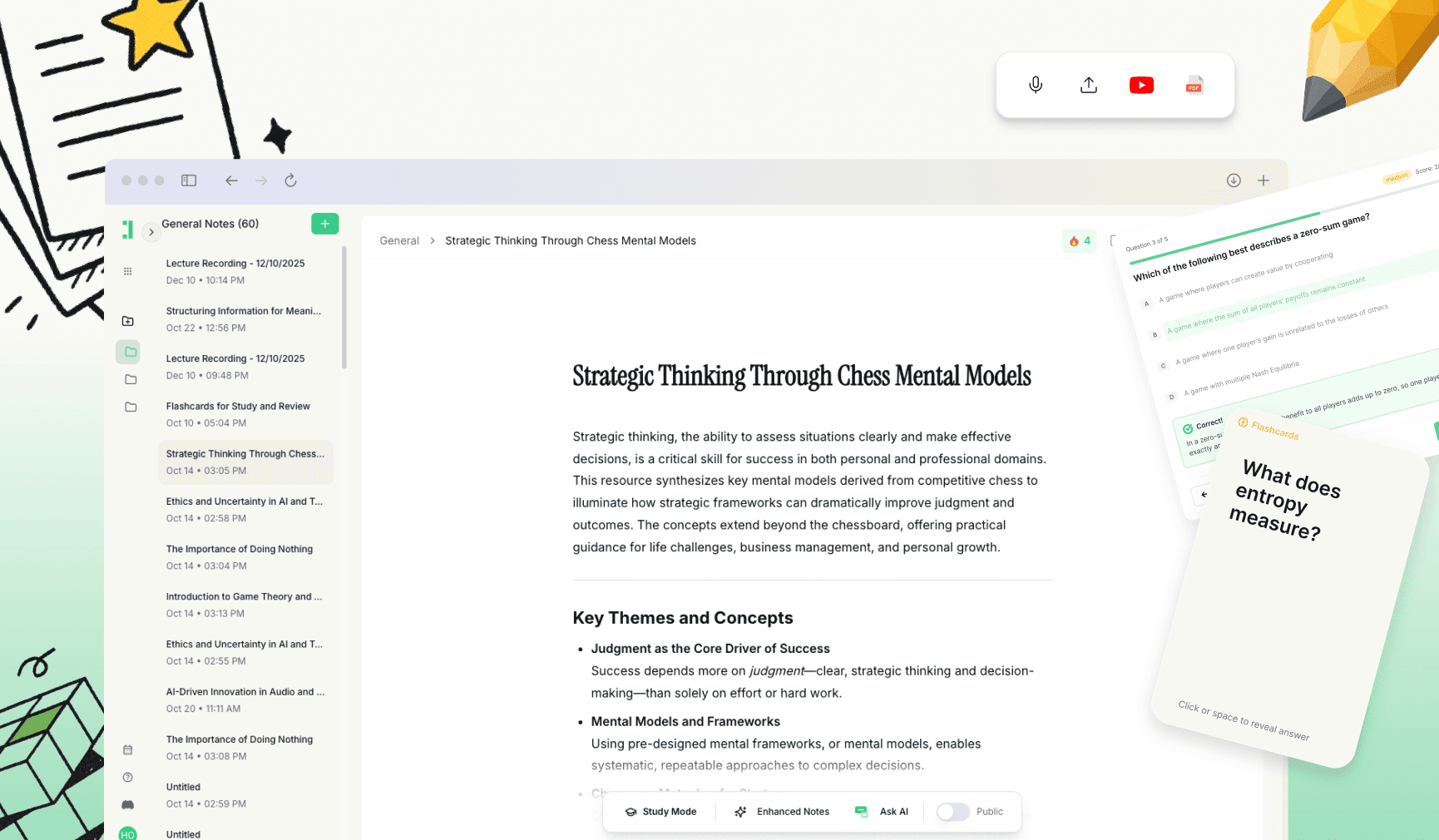
Generate Flashcards for Supply and Demand
Turn your notes, PDFs, slides, or lectures into Supply and Demand flashcards so you can review faster and remember more. Whether you are prepping for a microeconomics midterm or a high school exam, mastering market equilibrium requires focus, not just rereading.
Generate Supply and Demand FlashcardsUpload notes / paste text
In Duetoday, the process is simple: upload your materials, generate a structured deck, edit any nuances, and start your study session immediately.
What are Supply and Demand flashcards?
Supply and Demand flashcards cover the fundamental principles of how buyers and sellers interact in a market. They typically include technical terms like elasticity, price ceilings, and shifts versus movements along a curve. Good cards focus on the cause-and-effect relationship between market forces and price outcomes.
Instead of staring at a graph and hoping you understand it, flashcards force you to predict how a curve will shift before you see the answer. This builds active recall, ensuring you don't just recognize the material but actually know it.
If you already have notes, Duetoday can generate a clean deck in minutes.
Why flashcards are one of the best ways to study Supply and Demand
Economics is a subject built on logical relationships and sequences. Flashcards are perfect for this because they isolation specific variables—like how an increase in income affects the demand for a normal good—allowing you to master one concept at a time before looking at the whole graph.
Remember key terms like 'Ceteris Paribus' without cramming
Separate similar concepts (e.g., Change in Demand vs. Change in Quantity Demanded)
Learn market cycles and stages of equilibrium step-by-step
Practice applying elasticity formulas quickly and accurately
What to include in your Supply and Demand flashcards
The secret to effective econ flashcards is keeping them to 'one idea per card.' If a card is too wordy, you'll end up memorizing the paragraph rather than the economic principle. Use question-based prompts to challenge your brain.
Definitions & key terms: "What is a surplus?" or "Define Law of Supply."
Processes & steps: "What happens to price when demand exceeds supply?"
Comparisons: "How is a substitute good different from a complementary good?"
Application: "If production costs rise, which way does the supply curve shift?"
Use prompts like: "Graph the effect of a subsidy on supply," "What creates a shortage?" or "Identify the formula for Price Elasticity of Demand."
How to study Supply and Demand with flashcards
To master this topic, use a 'two-pass' approach. First, generate your deck and do a high-speed pass to see which laws and shifts you already understand. Then, focus your energy on the complex scenarios that usually trip students up during exams.
Make a deck from your textbook or lecture slides in Duetoday.
Do one quick round to identify weak spots, like cross-price elasticity.
Review these tough cards daily for a few days to build muscle memory.
Mix in scenario cards (e.g., 'What happens if taxes increase?') to test application.
Do a final mixed review of the entire deck before your test.
Generate Supply and Demand flashcards automatically in Duetoday
Making cards manually is slow and tedious, especially when you have to draw graphs or write out complex definitions. Duetoday eliminates the busywork so you can spend your time actually learning the material.
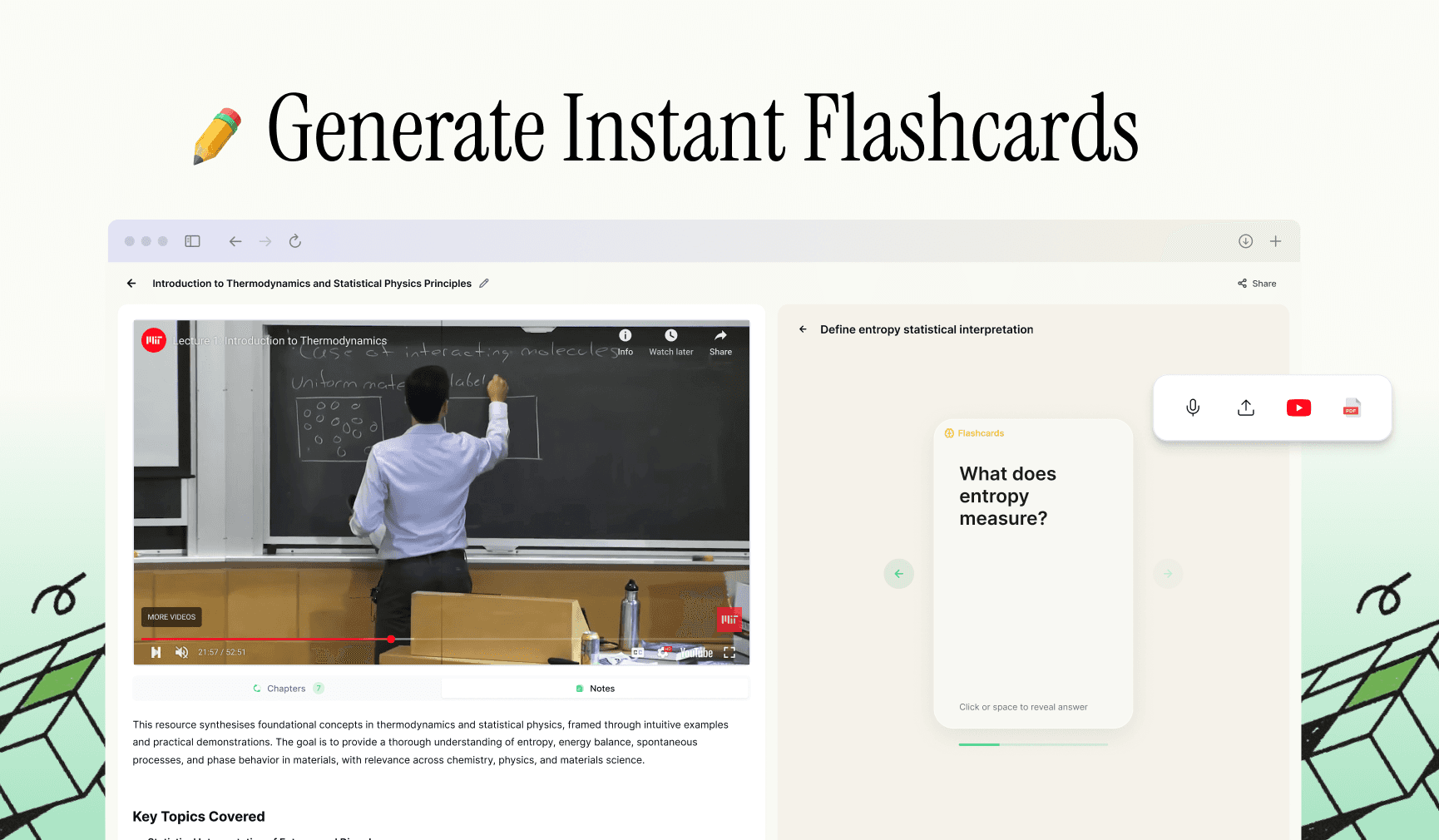
Simply upload your PDF, lecture slides, or paste your notes. Duetoday's AI analyzes the text, identifies the most important economic principles, and creates a polished deck for you to study instantly.
Upload your Supply and Demand material
Click 'Generate Flashcards'
Review, edit, and start studying with active recall
Generate Supply and Demand Flashcards in Duetoday
Start with your notes and get a deck you can actually use today.
Common Supply and Demand flashcard mistakes
Many students make cards that are too complex. If your card has a 5-sentence answer, it's a note, not a flashcard. Split long concepts into smaller, bite-sized questions to improve retention.
Cards are too long: Focus on one shift or one definition per card.
Only memorizing definitions: Ensure you include 'why' and 'how' cards for curve shifts.
Confusing Demand vs Quantity Demanded: These need specific comparison cards.
Ignoring graphs: Make sure to describe the visual movement (left vs right).
FAQ
How many flashcards do I need for Supply and Demand? Usually, 40–60 cards cover the core principles, including elasticity, shifts, and equilibrium. Focus on quality over quantity.
What’s the best format for Supply and Demand flashcards? Use 'If/Then' scenarios. For example: 'If the price of a substitute rises, what happens to the demand for the primary good?'
How often should I review my cards? Review once a day for three days before an exam. Use spaced repetition to keep the harder definitions fresh.
Should I make cards from my textbook or slides? Both. Textbooks are great for definitions, while lecture slides often highlight the specific shift scenarios your professor prefers.
How do I stop forgetting the directions of the shifts? Use flashcards specifically for 'Left' and 'Right' movements. Associate 'Right' with 'Increase' and 'Left' with 'Decrease' consistently.
Can I generate Supply and Demand flashcards from a PDF? Yes, Duetoday can read your economics PDF and instantly pull out key concepts to create study-ready cards.
Are digital flashcards better than paper? Digital cards are better for econ because they allow for faster repetition and can easily store complex elasticity formulas.
How long does it take to make a deck? Manually, it takes hours. With Duetoday, it takes less than a minute to generate a full deck from your notes.
Ready to generate your Supply and Demand flashcards?
Stop rereading your textbook and start practicing active recall. Upload your material and get a custom deck in seconds.
Start Generating Flashcards
Works with notes, PDFs, slides, and transcripts.

Duetoday is an AI-powered learning OS that turns your study materials into personalised, bite-sized study guides, cheat sheets, and active learning flows.