Generate Flashcards for Social Research Methods
Make Social Research Methods flashcards to master research design and data analysis. Generate study decks from your notes.
Generate Flashcards with AI Free
Maximize Your Social Research Methods Study Time
Turn your lecture notes, PDFs, textbooks, or research papers into Social Research Methods flashcards so you can review complex methodologies faster and remember core concepts for your exams. Social Research Methods involves a high density of terminology, from ontological positions to specific statistical tests, making active recall essential for success.
Generate Social Research Methods Flashcards
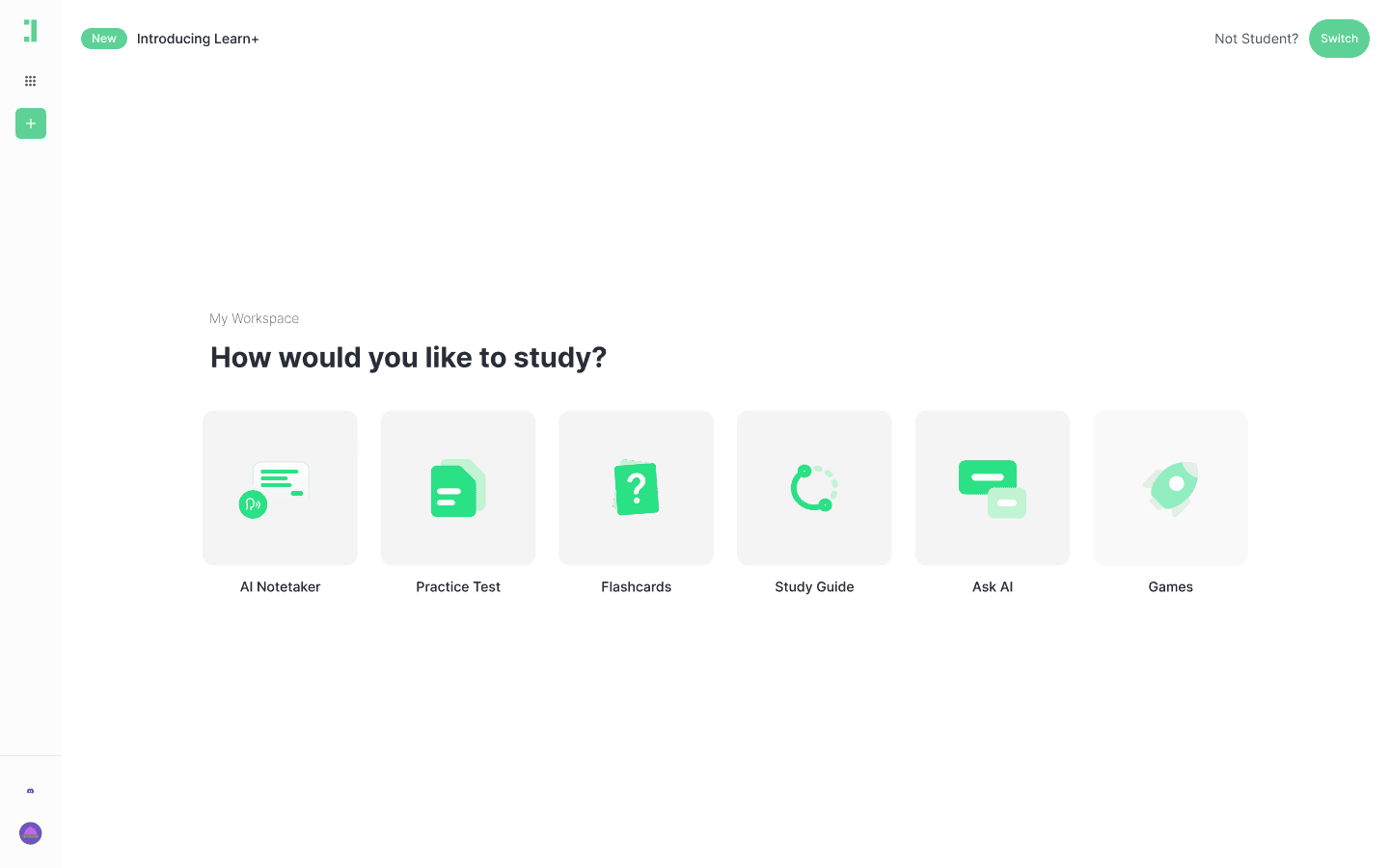
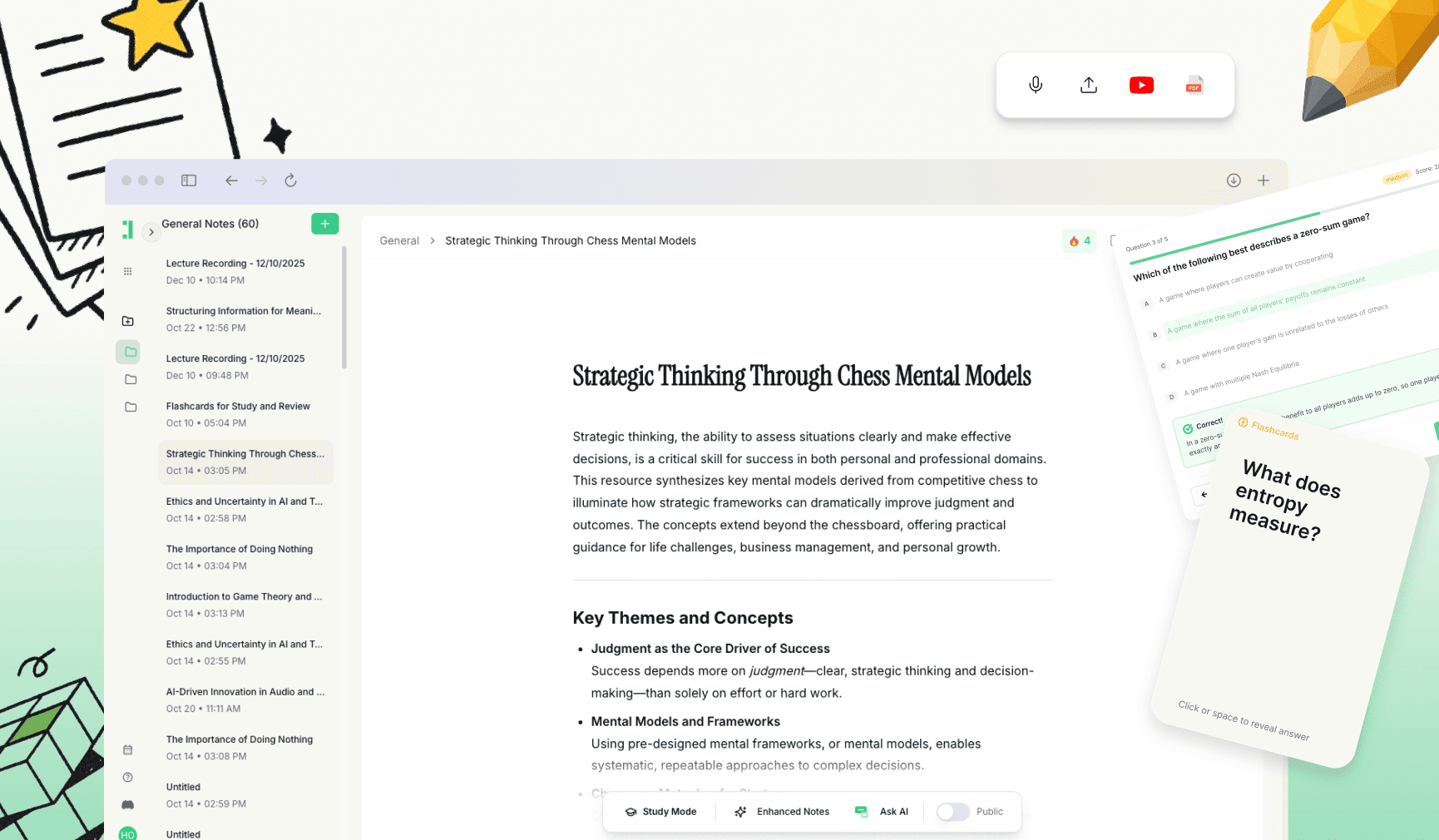
Using Duetoday is simple: upload your course material, click generate, and instantly receive a deck of structured cards tailored to your specific curriculum. You can edit them, add your own notes, and start your review session immediately.
What are Social Research Methods flashcards?
Social Research Methods flashcards cover the systematic tools and techniques used to investigate social phenomena. This includes qualitative and quantitative approaches, research design, ethics, and data interpretation. Instead of just reading about 'grounded theory' or 'p-values,' these cards force you to define, compare, and apply these concepts.
The outcome is simple: instead of passively rereading your textbook, you test your knowledge through active retrieval. This process builds stronger neural pathways, ensuring you can explain the difference between reliability and validity when it matters most.
Why flashcards work for Social Research Methods
This subject requires a precise understanding of abstract relationships and rigid procedural steps. Flashcards are uniquely suited for this type of learning because they break down dense theories into manageable, testable units. By using active recall and spaced repetition, you focus more energy on the methodologies you struggle with while maintaining your grasp on easier concepts.
Remember complex definitions like 'Epistemology' or 'Inductive Reasoning' without cramming.
Separate similar concepts easily (e.g., Stratified vs. Cluster Sampling).
Learn the steps of the research process, from hypothesis formulation to reporting.
Practice identifying the correct statistical test for different variables.

What to include in your Social Research Methods flashcards
Effective flashcards follow the 'atomic' rule: one specific idea per card. For Social Research Methods, your cards should bridge the gap between theory and application. You need to know not just what a term means, but when and why a researcher would choose that specific method.
Definitions & Key Terms: What is a Likert scale? Define 'Generalizability'.
Processes & Steps: What are the four stages of a systematic review?
Comparisons: How does a structured interview differ from a semi-structured one?
Application: Which sampling method is best for hard-to-reach populations?
Example prompts: What is the main goal of Ethnography?, Describe the difference between nominal and ordinal data., or When should you use a t-test versus an ANOVA?
How to study Social Research Methods with flashcards
Don't try to master the whole deck at once. Start with a 'two-pass' system: build your deck based on your weekly readings, then run through them to identify which methodologies confuse you. Focus your subsequent study sessions on these 'weak' cards until the logic of the research design becomes second nature.
Generate a deck from your specific lecture slides or PDFs.
Do a quick daily round to identify cards that require more thought.
Prioritize reviewing ethics and sampling techniques—they are common exam staples.
Mix qualitative and quantitative cards together to test your ability to switch mindsets.
Conduct a final review of your entire 'Mastery' deck 48 hours before your exam.
Generate Social Research Methods flashcards automatically
Creating cards by hand is a massive time sink that distracts from actual learning. Duetoday automates the tedious part. Simply upload your PDF readings or paste your seminar notes, and our AI extracts the most important variables, theories, and methods for you.
Upload your research methodology PDFs or slides.
Click 'Generate Flashcards' to see the AI-curated results.
Edit, refine, and start studying on any device.
Ready to generate your Social Research Methods flashcards? Stop rereading and start recalling. Upload your material and get a study deck you can actually use today.
FAQ
How many flashcards do I need for Social Research Methods? This depends on the syllabus, but typically 100-150 cards cover the core differences between qualitative and quantitative methods, sampling, and ethics.
What’s the best format for these flashcards? Question-and-answer format is best. For example, 'What's the difference between Reliability and Validity?' is better than just having 'Reliability' on the front.
How often should I review them? Aim for 15-20 minutes a day. Frequent, short sessions are much more effective for memorizing methodological steps than one long weekly session.
Should I make cards from a textbook or slides? Use both! Your textbook provides the depth, but your lecture slides often highlight which specific methods your professor considers most important for the exam.
How do I stop forgetting terms after a few days? This is common. Use a spaced repetition schedule where you see the cards you got wrong more frequently than the ones you got right.
What if my flashcards feel too hard? If a card is too dense, split it into two. Instead of asking 'List all qualitative methods,' ask specifically about 'Thematic Analysis' on one card.
Can I generate flashcards from a PDF automatically? Yes, Duetoday is designed to parse PDFs and convert them into structured, high-quality study flashcards in seconds.
Are digital flashcards better than paper? Yes, because digital tools like Duetoday organize the review schedule for you and allow you to study on the go without carrying a stack of paper.
How long does it take to make a full deck? Manually, it can take hours. With Duetoday, you can generate a comprehensive deck for a full module in just a few minutes.
Can Duetoday organize my cards by topic? Absolutely. You can generate separate decks for 'Ethics,' 'Quantitative Data,' and 'Qualitative Methods' to keep your studying organized.

Duetoday is an AI-powered learning OS that turns your study materials into personalised, bite-sized study guides, cheat sheets, and active learning flows.