Generate Flashcards for SN1 vs SN2
Generate SN1 vs SN2 flashcards in seconds with AI. Master Orgo mechanisms easily. Try out free today!
Generate Flashcards with AI Free

Generate Flashcards for SN1 vs SN2
Turn your organic chemistry notes, PDFs, slides, or lecture recordings into SN1 vs SN2 flashcards so you can review faster and remember complex mechanisms with ease.
Generate SN1 vs SN2 FlashcardsUpload notes / paste text
With Duetoday, you simply upload your chemistry materials, and our AI identifies key mechanisms, solvents, and kinetics to create a custom study deck. Review, edit, and start mastering nucleophilic substitution in minutes.
What are SN1 vs SN2 flashcards?
SN1 vs SN2 flashcards cover the fundamental differences between unimolecular and bimolecular nucleophilic substitution reactions. These cards focus on identifying substrates, leaving groups, nucleophile strength, solvent effects, and stereochemical outcomes.
Instead of staring at a reaction coordinate diagram and hoping it sticks, these flashcards force you to test your knowledge of reaction pathways. You build active recall by predicting products and identifying the rate-determining steps of each mechanism.
If you already have lecture notes, Duetoday can generate a clean deck in minutes so you can stop copying diagrams and start studying.
Why flashcards are one of the best ways to study SN1 vs SN2
Organic chemistry requires more than just memorization; it requires the ability to distinguish between competing pathways. Flashcards are perfect for this because they isolate the variables that determine whether a reaction follows an SN1 or SN2 route.
By using active recall and spaced repetition, you train your brain to recognize patterns—like seeing a secondary alkyl halide and a polar aprotic solvent and immediately thinking 'SN2'.
Distinguish between protic and aprotic solvents instantly.
Memorize the order of carbocation stability (3° > 2° > 1°).
Compare inversion of configuration vs. racemization.
Practice identifying strong vs. weak nucleophiles.
What to include in your SN1 vs SN2 flashcards
The most effective SN1 vs SN2 flashcards follow the "one idea per card" rule. Instead of asking 'What is the difference between SN1 and SN2?', ask specific questions about kinetics or stereochemistry.
Focus on these four main categories to ensure full mastery:
Definitions & Kinetics: "What is the rate law for an SN2 reaction?"
Substrate & Stability: "Why do tertiary halides favor SN1?"
Stereochemistry: "Which mechanism results in a racemic mixture?"
Solvent Effects: "How does a polar protic solvent affect the rate of SN2?"
Example prompts for your deck: 'Identify the rate-determining step in SN1,' 'Predict the product of (S)-2-bromobutane + NaOH,' 'List three strong nucleophiles,' and 'What is the effect of doubling nucleophile concentration in SN2?'
How to study SN1 vs SN2 with flashcards (a simple system)
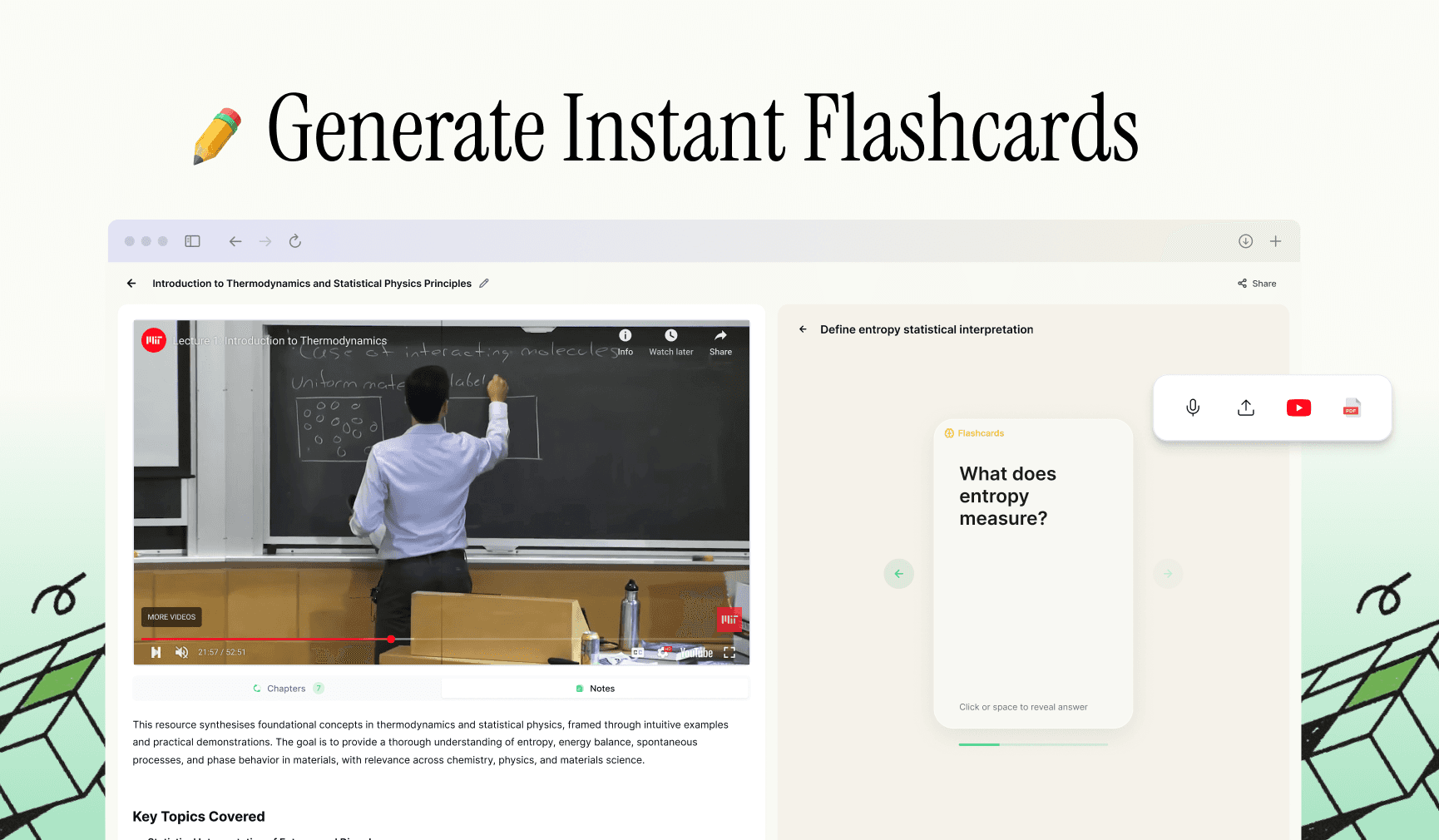
To master organic chemistry reactions, use a two-pass approach. First, generate your deck to establish the basic rules, then use the cards to solve practice problems.
Keep your sessions short but frequent. Reviewing 10-15 cards for 10 minutes a day is more effective than a four-hour cram session the night before your exam.
Generate your deck from your textbook or lecture slides using Duetoday.
Do a 'Rules Round' to memorize rate laws and solvent preferences.
Do a 'Prediction Round' where you look at a substrate and nucleophile and guess the mechanism.
Repeat tough cards—especially those involving stereochemistry—daily.
Mix in SN1 vs SN2 cards with E1/E2 cards to simulate a real exam environment.
Generate SN1 vs SN2 flashcards automatically in Duetoday
Manually drawing out reaction mechanisms on paper cards is incredibly time-consuming and often leads to messy diagrams that are hard to read. It takes away from the time you should spend actually learning the material.
Duetoday streamlines this: upload your PDF or paste your notes, and the AI extracts the specific conditions for SN1 and SN2 reactions to create high-quality cards instantly.
Upload your Orgo I / II lecture slides.
Click 'Generate Flashcards'.
Review the generated mechanisms and start studying.
Generate SN1 vs SN2 Flashcards in Duetoday
Start with your notes and get a deck you can actually use today.
Common SN1 vs SN2 flashcard mistakes (and how to fix them)
Many students make cards that are too vague, which leads to 'recognition' rather than 'recall.' Avoid these traps:
Cards are too long: Don't put the whole reaction summary on one card. Split the rate law, substrate, and solvent into separate cards.
Ignoring stereochemistry: Always include a card specifically for 'inversion' or 'racemization.'
Forgetting solvent trends: Make distinct cards for polar protic vs. polar aprotic impacts.
No practice problems: Don't just memorize definitions; include 'What is the product?' cards with a simple drawing.
Ready to generate your SN1 vs SN2 flashcards?
Stop rereading your textbook and start testing yourself. Upload your notes to Duetoday to generate a custom deck and master organic chemistry mechanisms today.
Start Generating Flashcards
Works with notes, PDFs, slides, and transcripts.
FAQ
How many flashcards do I need for SN1 vs SN2?
A focused deck of 25-40 cards is usually enough to cover the kinetics, stereochemistry, solvent effects, and substrate preferences for both mechanisms.
What’s the best format for SN1 vs SN2 flashcards?
Question on the front, specific answer on the back. For example: Front: 'SN2 Stereochemical Outcome?' Back: 'Complete Inversion (Walden Inversion).'
How often should I review these flashcards?
Review daily leading up to your exam. Use spaced repetition so you see the cards you struggle with more frequently than the ones you know well.
Should I make cards from my textbook or lecture notes?
Lecture notes are often better because they highlight the specific examples and 'tricks' your professor focuses on.
How do I stop forgetting the difference after a few days?
Use Duetoday’s AI to regenerate cards every few weeks to keep the material fresh, or use the AI tutor to explain why a specific solvent favors one over the other.
Can I generate SN1 vs SN2 flashcards from a PDF automatically?
Yes, Duetoday can scan your textbook PDF or lecture slides to extract the relevant reaction data and create cards instantly.
Are digital flashcards better than paper for Chemistry?
Digital is generally better because you can quickly search for terms, edit mechanisms, and study on the go without carrying hundreds of index cards.
How long does it take Duetoday to make a deck?
Once you upload your content, it takes less than a minute to generate a full deck of SN1 vs SN2 flashcards.

Duetoday is an AI-powered learning OS that turns your study materials into personalised, bite-sized study guides, cheat sheets, and active learning flows.