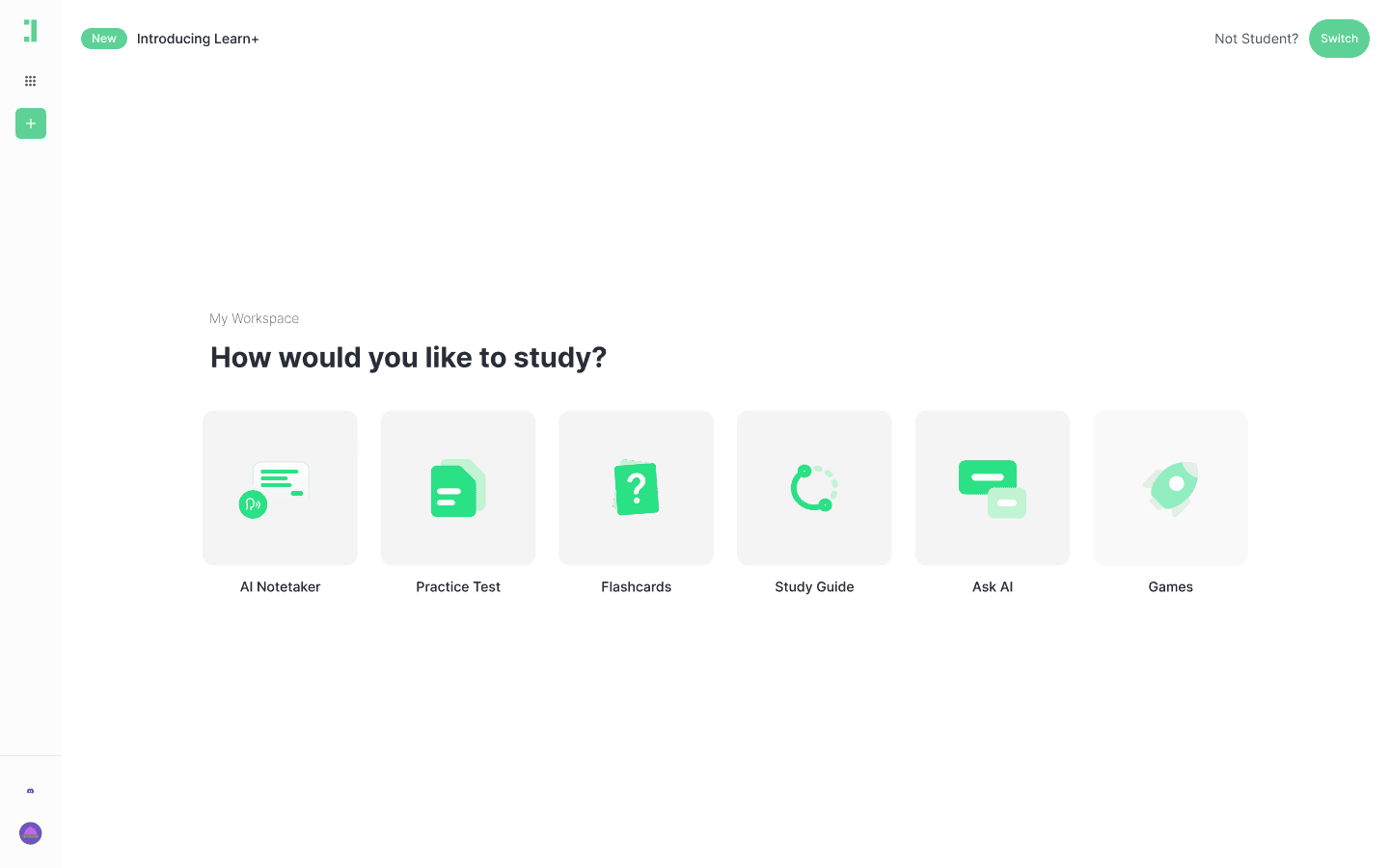
Generate Flashcards for Sensation and Perception
Make Sensation and Perception flashcards from your notes to learn psychology topics like sensory pathways and anatomy fast.
Generate Flashcards with AI Free
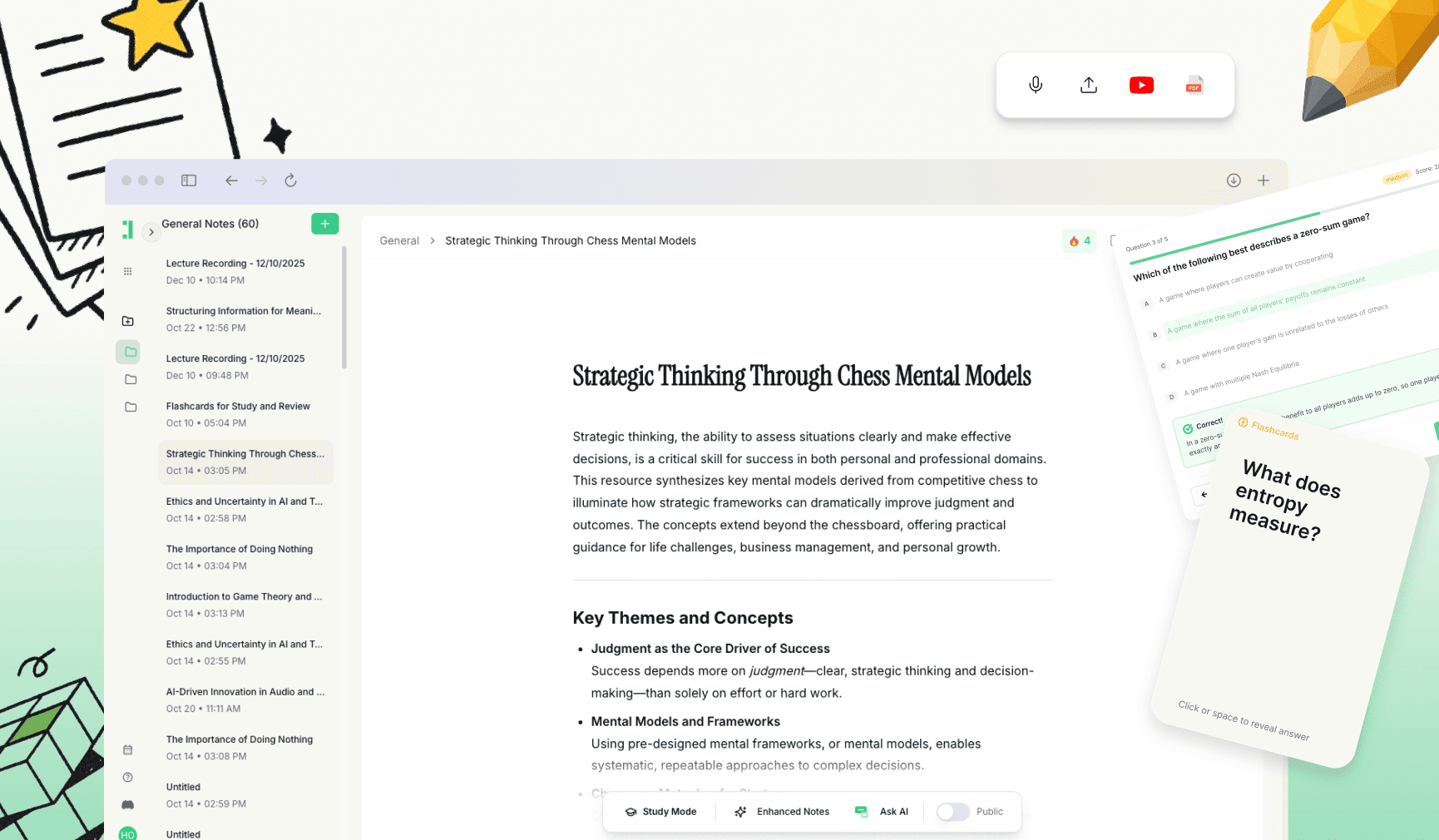
What are Sensation and Perception flashcards?
Sensation and Perception flashcards are focused study tools designed to help you master the complex journey of sensory information from physical stimuli to mental experience. These cards cover everything from the basic anatomy of the eye and ear to the intricate neural pathways of the brain and the psychological theories of interpretation.
By using these flashcards, you transition from passive reading to active testing. Instead of just looking at a diagram of the retina, you challenge yourself to recall the specific functions of rods and cones, building much stronger neural connections and improving your long-term memory for psychology exams.
If you already have lecture notes or textbook chapters, Duetoday can generate a clean, organized deck of Sensation and Perception flashcards in minutes.
Why flashcards work for Sensation and Perception
This branch of psychology requires a mix of biological memorization and conceptual understanding. You need to remember specific anatomy (sensation) while also understanding how environmental context changes what we see (perception). Flashcards are the perfect medium to manage this dual requirement through active recall and spaced repetition.
Remember biological structures: Easily memorize the parts of the thalamus, cochlea, and primary motor cortex.
Differentiate similar concepts: Clearly separate bottom-up vs. top-down processing or sensation vs. perception.
Master sensory thresholds: Practice applying Weber's Law and Signal Detection Theory to real-world scenarios.
Understand neural pathways: Learn the step-by-step process of how sound waves become electrical signals.
What to include in your Sensation and Perception flashcards
The most effective flashcards follow the principle of atomicity—one specific idea per card. Focus on questions that force you to explain the 'how' and 'why' rather than just identifying a label on a diagram.
Effective Sensation and Perception decks generally include four main categories of cards:
Definitions & Key Terms: What is transduction? or Define absolute threshold.
Anatomy & Pathways: What is the role of the fovea in the eye? or Trace the pathway of a visual signal after the optic chiasm.
Psychological Theories: Explain the Trichromatic Theory of color vision.
Application & Interpretation: Give an example of a Gestalt principle in daily life.
Example Prompts:
- What is the difference between sensation and perception?
- Define the just noticeable difference (JND).
- What happens during sensory adaptation?
- Describe the function of the hair cells in the cochlea.
- What is the 'phi phenomenon' and what does it demonstrate?
- Contrast monocular and binocular cues for depth perception.
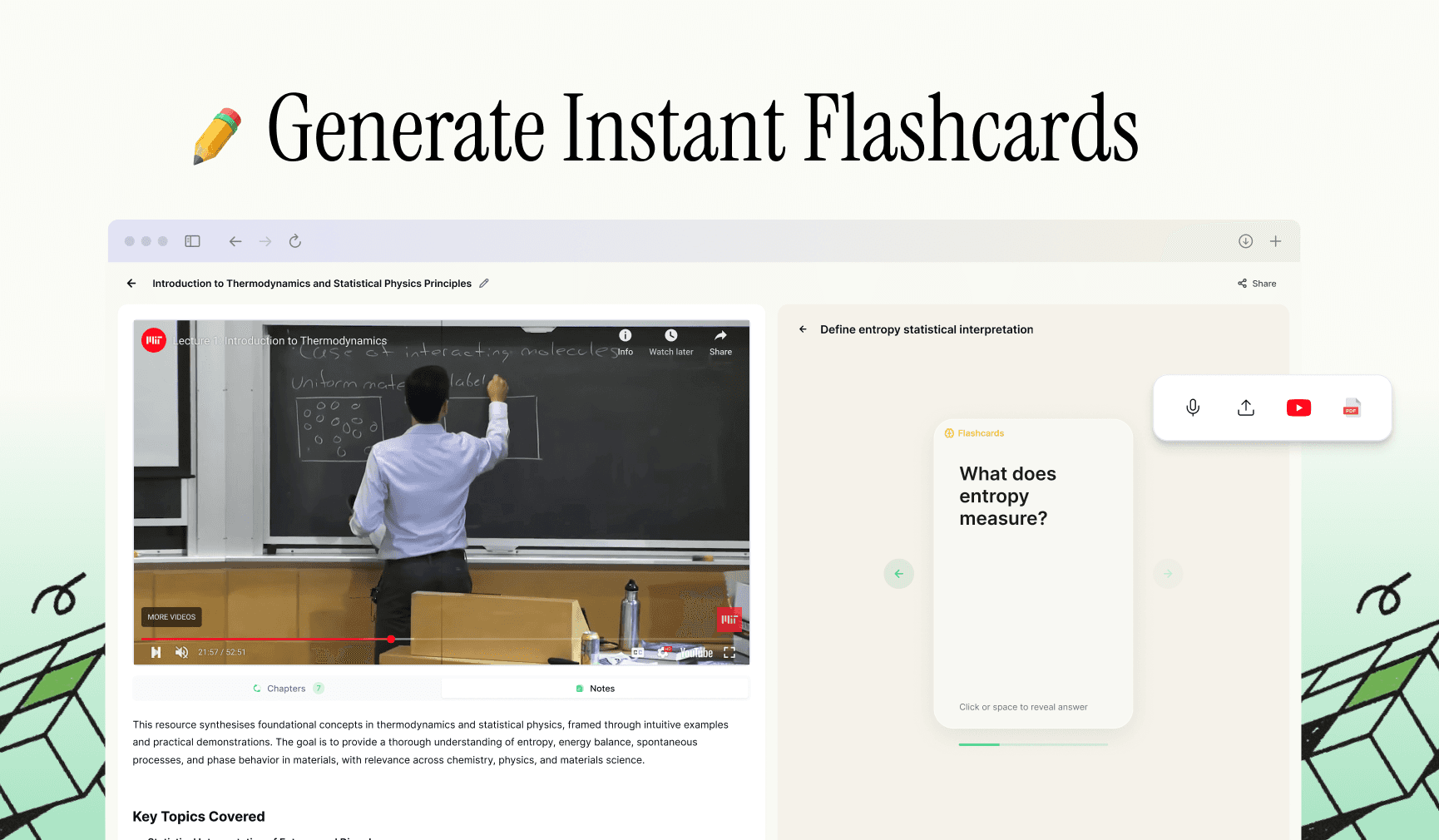
How to study Sensation and Perception with flashcards
Studying this subject requires a two-pass system. First, use your cards to build a foundation of the biological terms. Once you have the anatomy down, switch to a second pass where you focus on how those biological structures create the illusions and perceptions we experience daily.
Generate your deck: Paste your notes into Duetoday to create cards for the specific chapter you are studying.
Identify weak spots: Run through the deck once and flag cards about pathways or theories that confuse you.
Daily spaced repetition: Review your flagged cards every morning for 5-10 minutes.
Mix and match: Once comfortable, shuffle different chapters (e.g., Vision and Audition) to ensure you can distinguish between them.
Final prep: Do a high-speed mixed review 48 hours before your exam to ensure total recall.
Generate Sensation and Perception flashcards automatically in Duetoday
Manually drawing diagrams and writing out definitions for every sensory organ is incredibly slow. By the time you finish making the cards, you're often too tired to actually study them. Duetoday eliminates that bottleneck by doing the heavy lifting for you.
Simply upload your PDFs, lecture slides, or textbook transcripts, and our AI will extract the core concepts to build a comprehensive study deck instantly.
Upload your material: Paste your notes on the visual or auditory system.
Click Generate: Our AI identifies terms like 'transduction' and 'perceptual set' automatically.
Study instantly: Edit your cards for personal flair and start your first review session.
Generate Sensation and Perception Flashcards in Duetoday
Start with your notes and get a deck you can actually use today.
Common Sensation and Perception flashcard mistakes
Many students make cards that are too broad, leading to 'illusion of competence' where they think they know the material but fail the exam.
Overcrowding cards: Don't put all of Gestalt psychology on one card; make one card for each principle (closure, proximity, etc.).
Ignoring the 'Why': Don't just memorize the name of the optic nerve—include a card on what happens if it is damaged.
Skipping the diagrams: Sensation is visual; ensure your cards prompt you to mentally map the anatomy.
No scheduling: Reviewing the whole deck once isn't enough; you need to repeat the difficult concepts multiple times.
Ready to generate your Sensation and Perception flashcards?
Stop wasting hours on manual data entry and start mastering the complexities of the human mind. Upload your materials, generate your deck, and use active recall to ace your next psychology exam.
Start Generating Flashcards
Works with notes, PDFs, slides, and transcripts.
[object Object]

Duetoday is an AI-powered learning OS that turns your study materials into personalised, bite-sized study guides, cheat sheets, and active learning flows.