Generate Flashcards for Semantics
Make Semantics flashcards from your study guides. Generate a linguistics guide about word meanings and logic automatically.
Generate Flashcards with AI Free
Generate Flashcards for Semantics
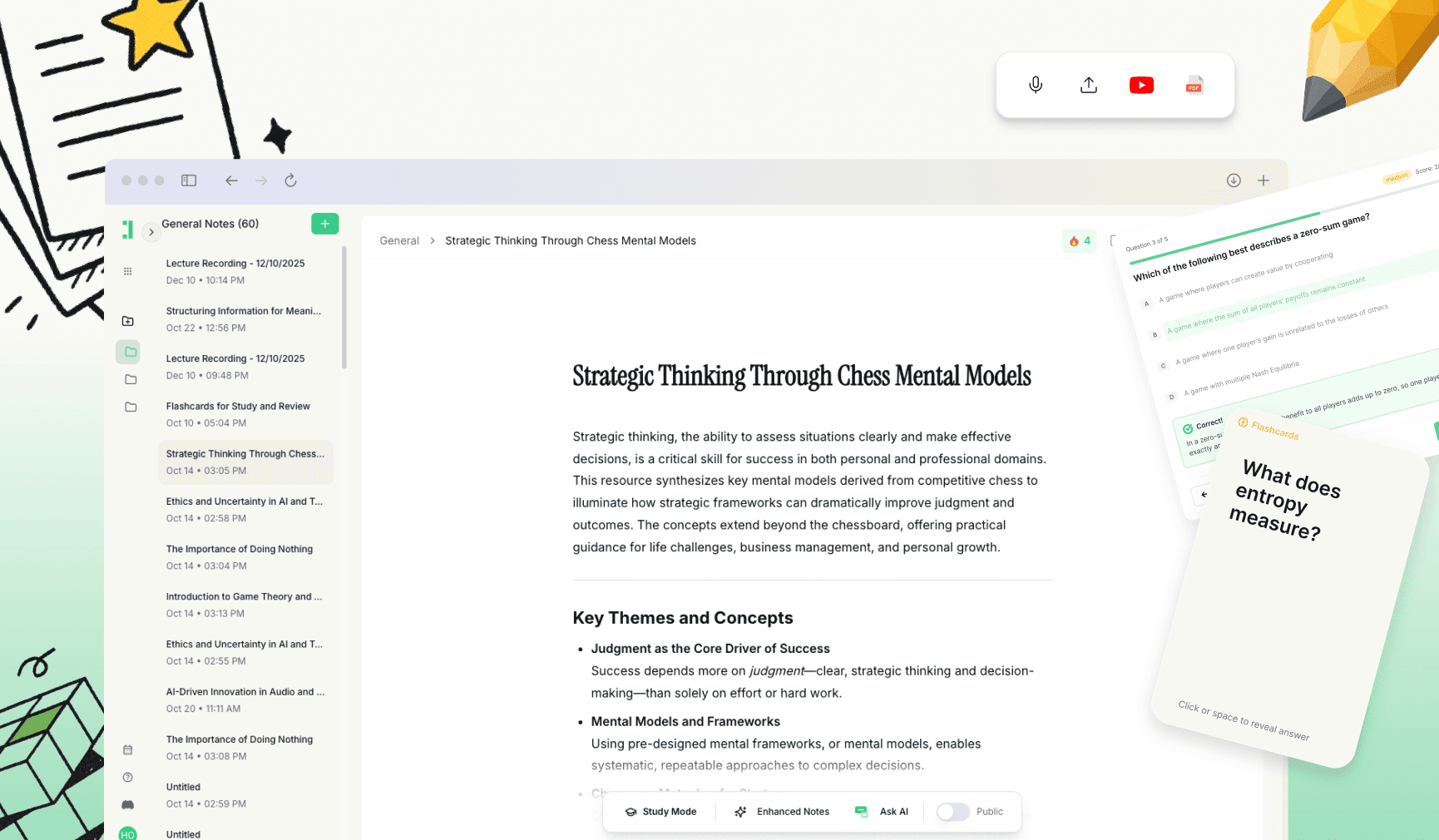
Turn your linguistics notes, textbook chapters, or lecture slides into Semantics flashcards so you can review complex theories faster and remember more for your exams. Whether you are struggling with truth-conditional semantics or lexical relations, Duetoday helps you organize your study material into actionable tools.
Generate Semantics Flashcards Upload Notes
Using Duetoday is simple: upload your documents, generate your deck, and start reviewing. It transforms passive reading into active recall in seconds.
What are Semantics flashcards?
Semantics flashcards cover the systematic study of meaning in language. This includes key terms like denotation and connotation, logical formulas, entailment, and the relationship between words and their referents. Instead of just highlighting definitions in a textbook, these cards force you to retrieve the meaning of specific linguistic concepts from memory.
Instead of rereading chapters on pragmatics versus semantics, you test yourself on the specific differences to build long-term recall. If you already have notes, Duetoday can generate a clean deck in minutes so you can spend your time studying rather than formatting.
Why flashcards work for Semantics
Semantics requires a mix of rote memorization for terminology and logical application for sentence meaning. Flashcards are perfectly suited for this because they break down abstract theories into manageable pieces. By using active recall and spaced repetition, you ensure that the distinction between a 'sense' and a 'referent' stays clear in your mind.
Remember complex linguistic terms without cramming.
Separate similar concepts like Hyponymy vs. Meronymy.
Learn logical processes like truth-table mappings step-by-step.
Practice applying semantic rules to example sentences quickly.
What to include in your Semantics flashcards
Effective Semantics flashcards follow the 'one idea per card' rule. They should be question-based rather than just a list of terms. This forces your brain to work harder during the review process. We recommend focusing on four main categories:
Definitions & Key Terms: What is the Principle of Compositionality?
Processes & Relations: How does Entailment differ from Presupposition?
Comparisons: What is the difference between Polysemy and Homonymy?
Application: Identify the thematic role of 'the ball' in: 'John kicked the ball.'
Example prompts include: Define a possible worlds semantics, What are the three components of the semiotic triangle? and Draw the semantic feature matrix for 'bachelor'.
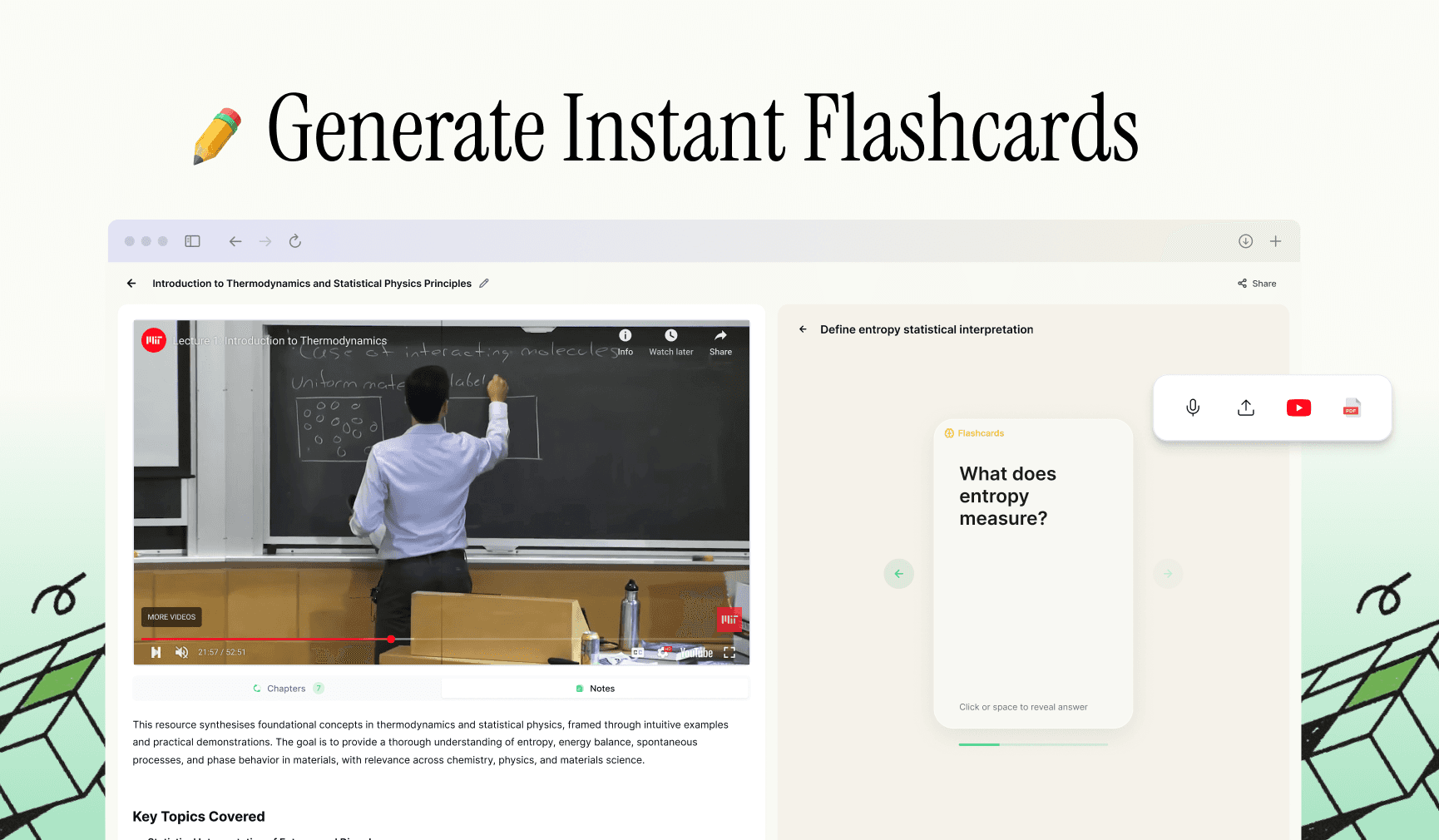
How to study Semantics with flashcards
To master Semantics, we recommend a two-pass approach. First, build your deck using your lecture notes to establish the foundations. Then, review in rounds, moving from simple definitions to complex logical applications. This prevents cognitive overload and helps you identify which theories you actually understand.
Make a deck from your syllabus or textbook chapters.
Do one quick round to find weak spots in your logic diagrams.
Review weak cards daily to solidify semantic rules.
Mix in harder application cards involving truth conditions.
Do a final mixed review before your linguistics midterms.
Generate Semantics flashcards automatically in Duetoday
Making cards manually for linguistics is slow and often results in overly wordy cards that are hard to memorize. Duetoday uses AI to scan your material and extract the most important semantic principles for you.
Position Duetoday as your personal study assistant: upload your PDF or transcript, generate flashcards instantly, and then edit them to match your professor's specific requirements.
Upload or paste your Semantics material.
Click Generate Flashcards.
Review, edit, and start studying.
Generate Semantics Flashcards in Duetoday
Start with your notes and get a deck you can actually use today.
Common Semantics flashcard mistakes
Many students make the mistake of putting an entire paragraph about Gricean Maxims on one card. This makes it impossible to test yourself effectively. Keep it simple and focused.
Cards are too long: split 'Lexical Relations' into separate cards for each type.
Only memorizing words: ensure you add 'Show an example' prompts.
Confusing similar concepts: create specific comparison cards for 'Sense vs Reference'.
No review schedule: use spaced repetition to keep old concepts fresh.
No application: include example sentences to check for semantic ambiguity.
Ready to generate your Semantics flashcards?
Stop rereading your linguistics textbook and start testing yourself. Upload your notes today and let AI create the perfect study deck for you.
Start Generating Flashcards
Works with notes, PDFs, slides, and lecture transcripts.
FAQ
How many flashcards do I need for Semantics? Most introductory courses require between 100 to 150 cards to cover all core terminology and logical frameworks.
What’s the best format for Semantics flashcards? Question-and-answer format is best, specifically using example sentences to illustrate semantic roles or relations.
How often should I review Semantics flashcards? Review daily when first learning new logical formulas, then shift to every 3-4 days once you have mastered the definitions.
Should I make cards from a textbook or lecture notes? Use lecture notes for the specific theories your professor emphasizes, and use the textbook for more detailed examples of semantic analysis.
How do I stop forgetting Semantics terms? Use spaced repetition. Duetoday helps by highlighting the concepts you struggle with most frequently.
What if my flashcards feel too easy? Add 'Challenge' cards that require you to draw a truth table or a semantic tree from memory.
Can I generate Semantics flashcards from a PDF? Yes, Duetoday allows you to upload any linguistics PDF and turns the text into structured flashcards automatically.
Are digital flashcards better than paper for Semantics? Yes, digital cards allow for faster editing and better organization of the logical symbols used in Semantics.
How long does it take to make a full Semantics deck? With Duetoday, you can generate a comprehensive deck in under two minutes by uploading your study materials.
Can Duetoday organize my flashcards for me? Yes, Duetoday categorizes your cards by topic within the Semantics deck for structured learning sessions.

Duetoday is an AI-powered learning OS that turns your study materials into personalised, bite-sized study guides, cheat sheets, and active learning flows.