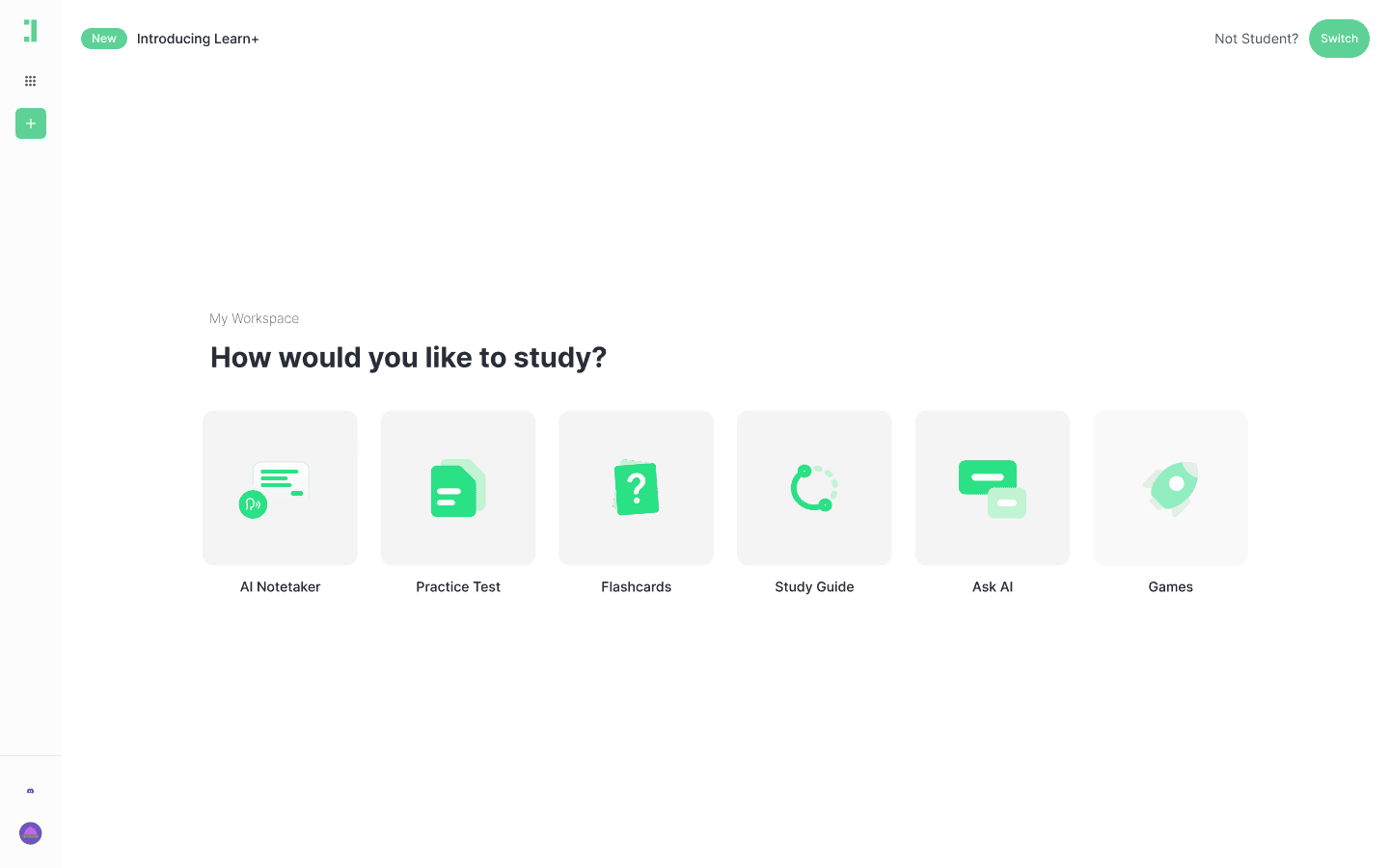
Generate Flashcards for Second Language Acquisition
Make and generate Second Language Acquisition flashcards to master SLA theories, linguistics, and learning stages efficiently.
Generate Flashcards with AI Free
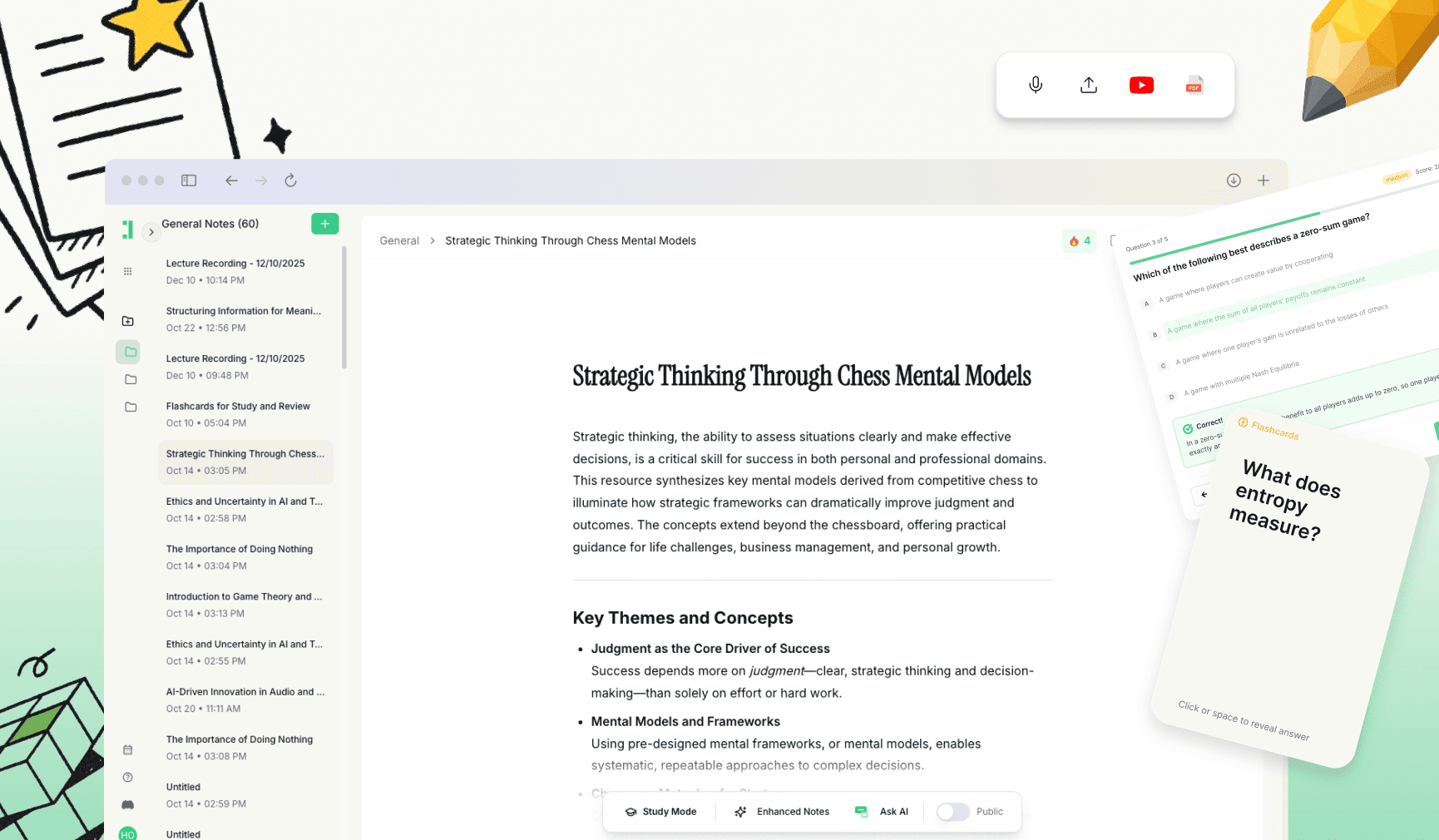
What are Second Language Acquisition flashcards?
Second Language Acquisition (SLA) flashcards are targeted study tools designed to help you master the complex theories, hypotheses, and linguistic concepts involved in how people learn a non-native language. They cover everything from Krashen’s Monitor Model and the Critical Period Hypothesis to concepts like interlanguage, fossilization, and scaffolding.
Instead of passively rereading dense textbooks or research papers, SLA flashcards force you to engage in active recall. By testing yourself on specific terms and their applications, you build stronger neural pathways, making it much easier to retrieve these academic concepts during exams or classroom observations. If you already have notes, Duetoday can generate a clean deck in minutes.
Why flashcards are one of the best ways to study SLA
The study of Second Language Acquisition requires a mix of theoretical understanding and technical vocabulary. Flashcards are uniquely suited for this because they break down high-level academic discourse into manageable, bite-sized pieces of information that you can review using spaced repetition.
Remember key terms like 'Negative Transfer' or 'Input Flooding' without cramming.
Separate similar concepts, such as the difference between 'Acquisition' and 'Learning'.
Learn processes step-by-step, such as the stages of the Natural Order Hypothesis.
Practice applying SLA rules to real-world classroom scenarios.
What to include in your Second Language Acquisition flashcards
Effective SLA flashcards should follow the 'one idea per card' rule. This prevents your brain from getting overwhelmed and ensures you actually know the material rather than just recognizing the text on the page.
Definitions & Key Terms: What is the 'affective filter'? Define 'zone of proximal development' in one sentence.
Processes & Steps: What are the five stages of second language development?
Comparisons: How is 'explicit learning' different from 'implicit learning'?
Application: When would a teacher use 'recasts' in a lesson? What happens if a learner's interlanguage fossilizes?
Example prompts include: Explain the 'Silent Period', Name three types of corrective feedback, and What is the role of 'Comprehensible Input'?
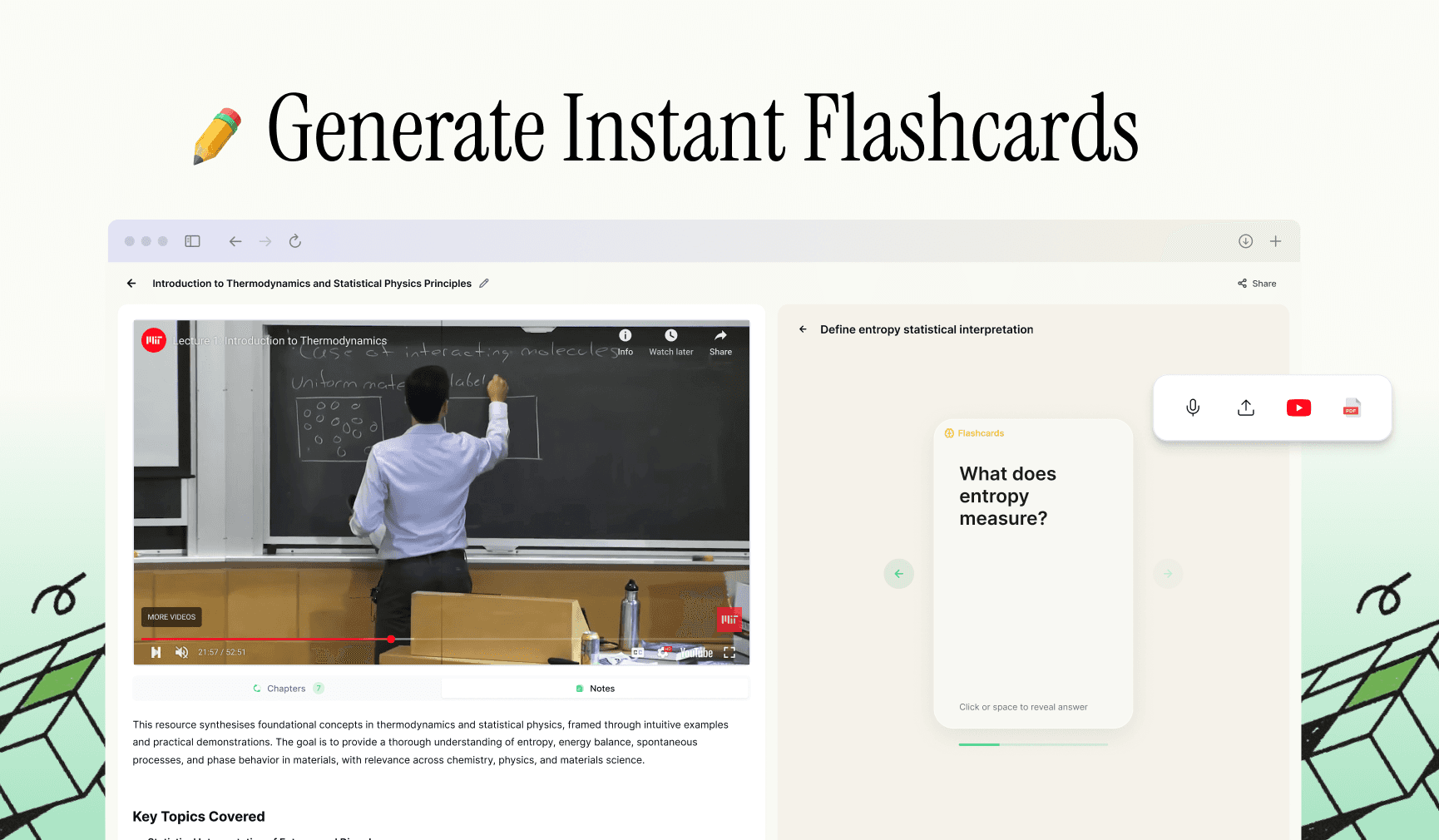
How to study Second Language Acquisition with flashcards
To master SLA, use a two-pass approach. First, generate your deck from your syllabus or lecture notes, then move into focused review rounds. This structure ensures you aren't just memorizing definitions but are understanding the underlying pedagogical principles.
Make a deck from your notes or generate it from your core SLA textbook chapters.
Do one quick round to find weak spots in your theoretical knowledge.
Review weak cards—like specific generative linguistics terms—daily for a few days.
Mix in a few harder application-based cards each session.
Do a final mixed review before your midterms or teaching certification exams.
Generate SLA flashcards automatically in Duetoday
Making cards manually is slow, messy, and inconsistent—especially with the jargon-heavy nature of Second Language Acquisition. Duetoday simplifies the process by handling the heavy lifting for you.
By uploading your PDFs, slides, or transcripts, Duetoday instantly creates a structured deck. You spend less time formatting and more time actually learning the nuances of language pedagogy.
Upload or paste your SLA material.
Click Generate Flashcards.
Review, edit, and start studying instantly.
Common Second Language Acquisition flashcard mistakes
Most students make the mistake of creating cards that are far too wordy. In SLA, where theories are complex, it’s easy to copy-paste entire paragraphs onto one card. This makes it impossible to test a single concept efficiently. Another common error is focusing solely on the names of theorists while ignoring the functional application of their work in a classroom setting.
Ready to generate your Second Language Acquisition flashcards?
Stop rereading and start recalling. Upload your notes today and generate a professional-grade study deck in seconds.
FAQ
How many flashcards do I need for SLA? Aim for 50-100 cards per major unit to cover theories, theorists, and terminology thoroughly.
What’s the best format for SLA flashcards? Question-and-answer format is best for definitions, while scenario-based cards work well for teaching strategies.
How often should I review my cards? Use spaced repetition; review new cards daily and mastered cards every few days.
Should I make cards from a textbook or slides? Both. Slides often contain the core terms, while textbooks provide the detailed definitions needed for the back of the card.
How do I stop forgetting SLA theories? Focus on the 'why' and 'how' of each theory, not just the name, to build deep conceptual links.
What if my cards feel too easy? Combine concepts, such as asking for a comparison between two competing hypotheses on one card.
Can I generate SLA flashcards from a PDF? Yes, Duetoday can process your academic PDFs and research papers into flashcards instantly.
Are digital flashcards better than paper? Yes, because they allow for faster searching, easy editing, and automated spaced repetition scheduling.
How long does it take to make a full SLA deck? Using Duetoday, you can generate a full deck in under a minute compared to hours of manual typing.
Can Duetoday organize my cards by unit? Yes, you can generate and categorize decks by specific SLA topics like 'Morphology' or 'Sociocognitive factors'.

Duetoday is an AI-powered learning OS that turns your study materials into personalised, bite-sized study guides, cheat sheets, and active learning flows.