Generate Flashcards for Rotational Motion
Generate Rotational Motion flashcards from your notes in seconds. Try it for free today!
Generate Flashcards with AI Free
Generate Flashcards for Rotational Motion
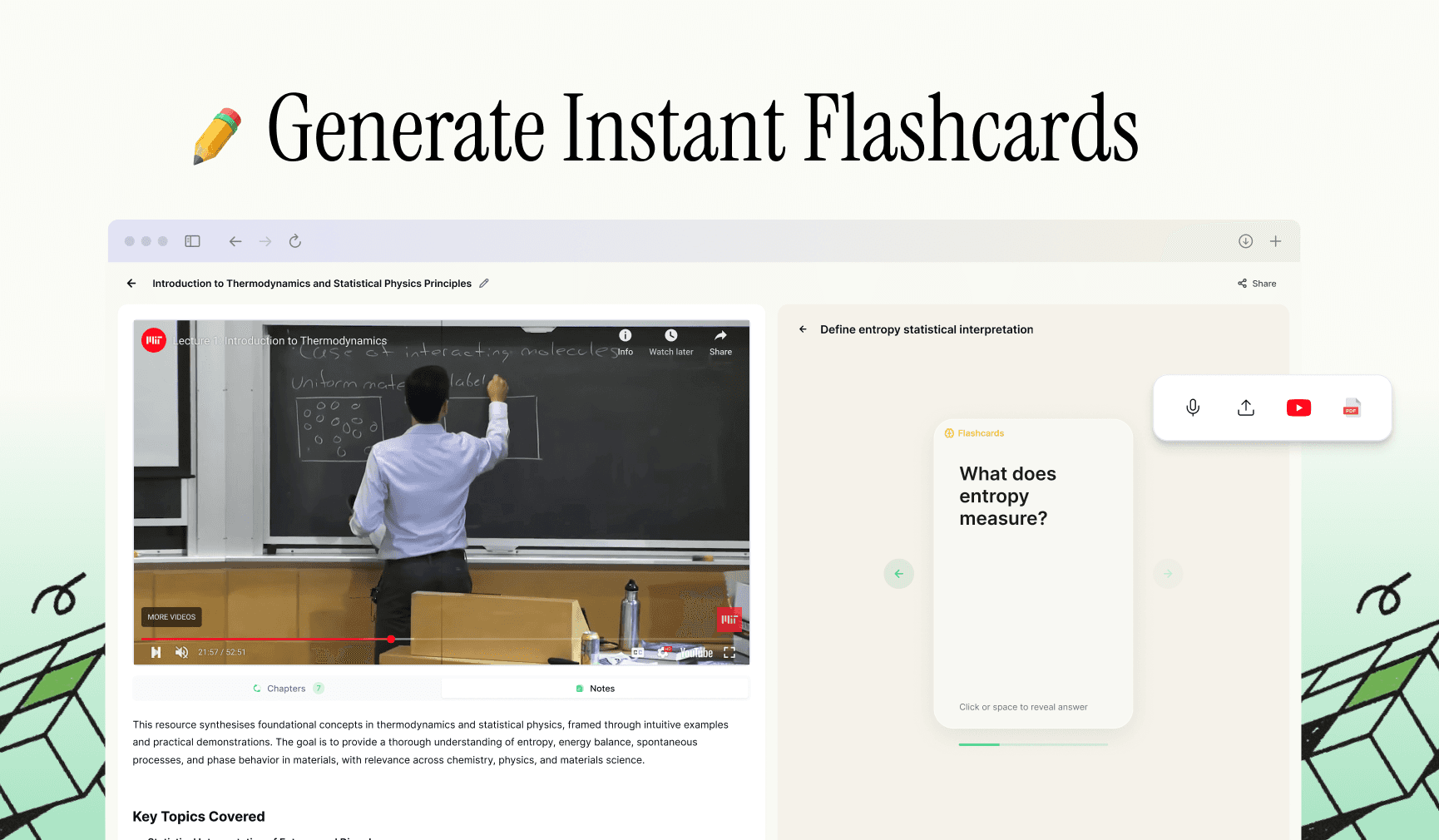
Turn your physics notes, PDFs, slides, or textbook chapters into Rotational Motion flashcards so you can review faster and remember more. Rotational dynamics is complex, but with the right study tools, you can master every formula and concept.
Generate Rotational Motion Flashcards
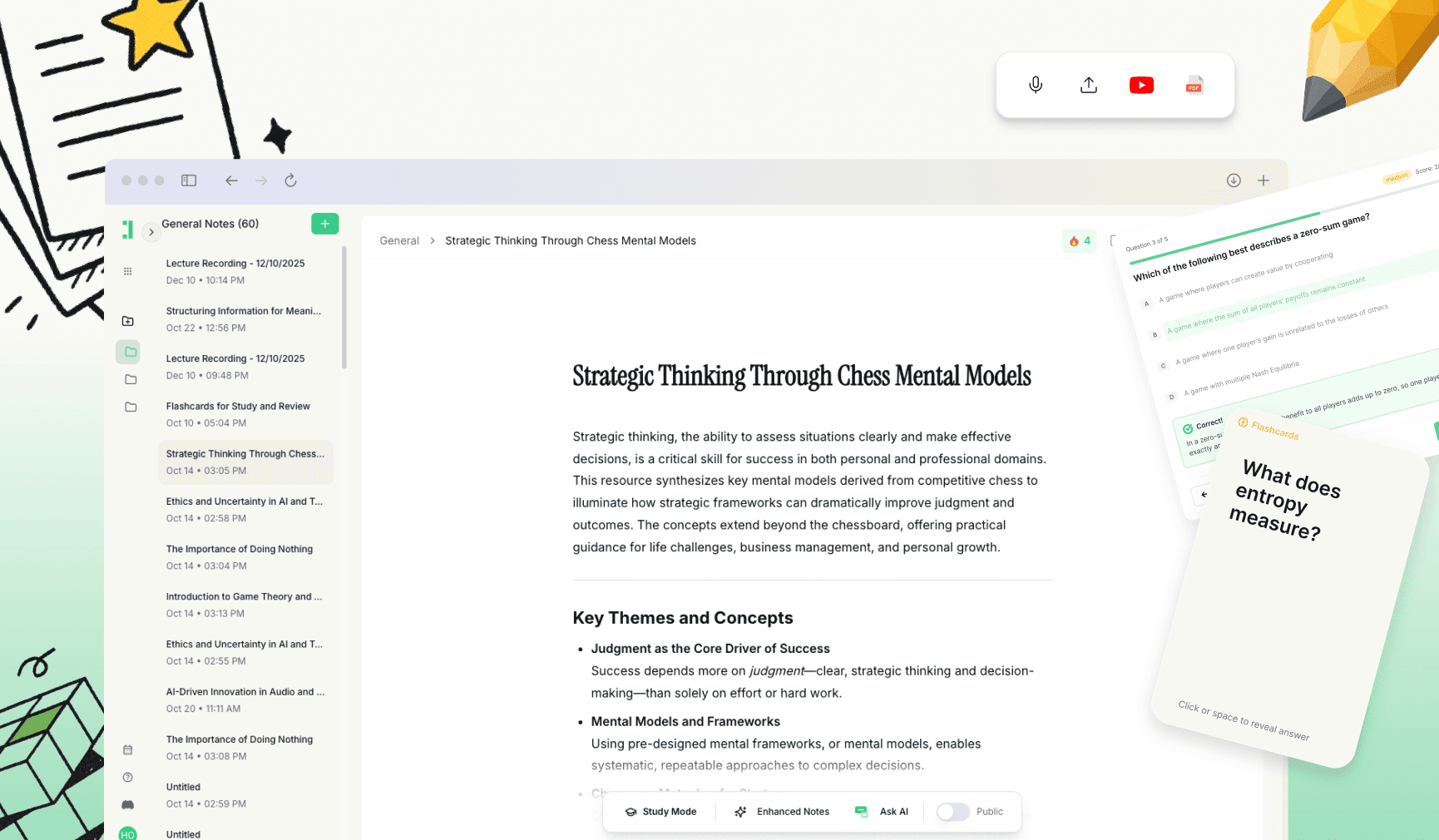
Upload your physics notes or paste your lecture text to create a custom study deck in seconds.
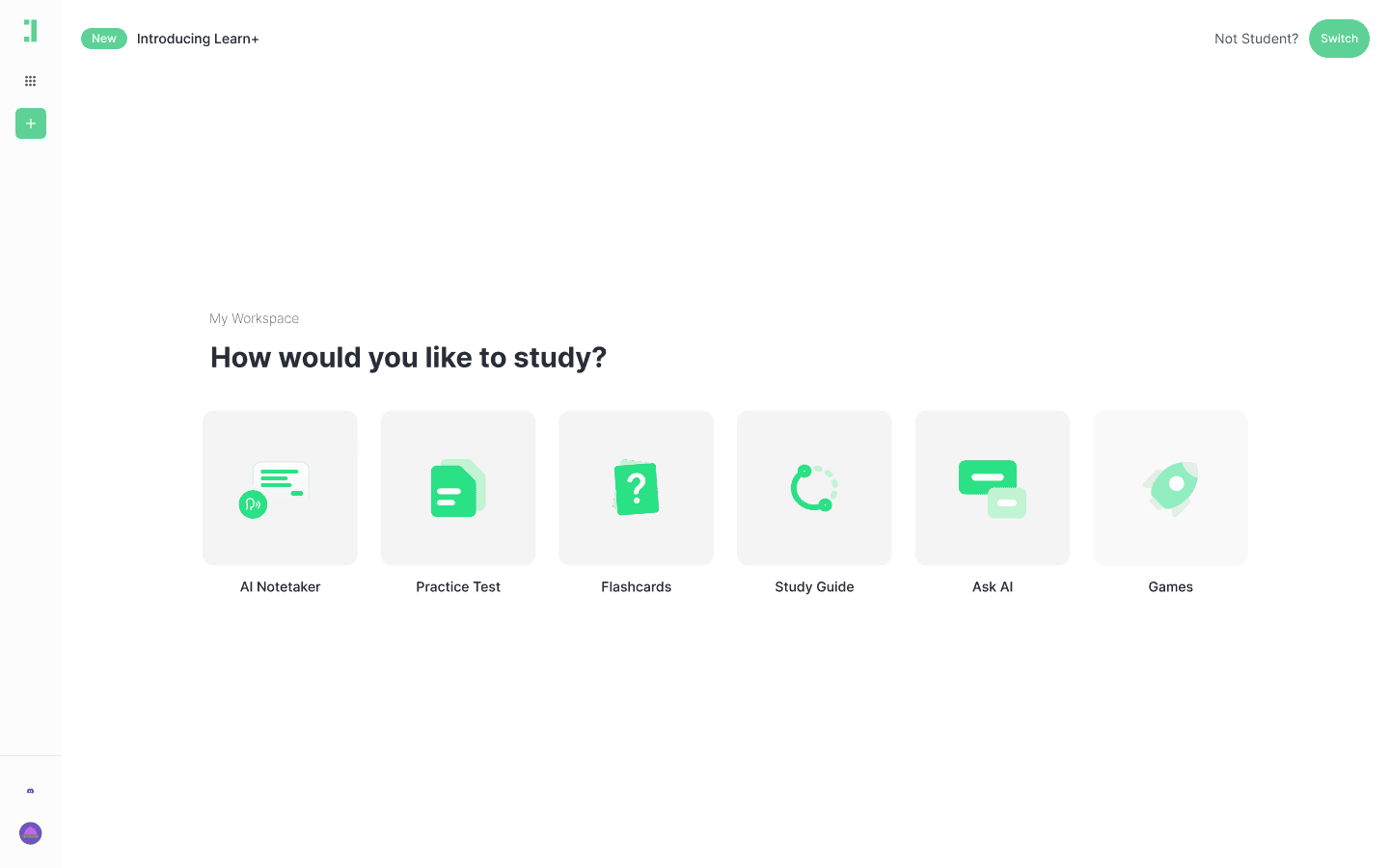
In Duetoday, the process is simple: you upload your study materials, our AI generates a structured deck, you review or edit the cards, and then you start your active recall session.
What are Rotational Motion flashcards?
Rotational Motion flashcards cover the physics of objects spinning around an axis. This includes key terms like angular displacement, velocity, and acceleration, as well as complex relationships like torque, moment of inertia, and angular momentum. These cards help you bridge the gap between linear kinematics and rotational dynamics.
The outcome is simple: instead of rereading dense physics chapters, you test your brain on specific relationships and vector directions, building the neural pathways needed for exam day. If you already have notes, Duetoday can generate a clean deck in minutes.
Why flashcards work for Rotational Motion
Rotational motion requires a specific type of memory that balances conceptual understanding with mathematical application. Flashcards allow you to isolate variables and sign conventions that often confuse students in longer problems.
Remember key terms like 'Radially' vs 'Tangentially' without cramming.
Separate similar concepts, such as centripetal vs centrifugal forces.
Learn processes step-by-step, like the stages of calculating torque.
Practice applying the right-hand rule and rotational formulas quickly.
What to include in your Rotational Motion flashcards
Good physics flashcards follow the 'one idea per card' rule. They should be question-based rather than just a list of formulas. This forces your brain to retrieve the information rather than just recognizing it.
Definitions & key terms: What is the moment of inertia? Define torque in terms of force and lever arm.
Processes & steps: What is the first step in solving a rolling-without-slipping problem?
Comparisons: How is angular momentum (L) different from linear momentum (p)?
Application: What happens to angular velocity if the radius of a spinning object decreases?
Example prompts: 'State the formula for rotational kinetic energy,' 'Which direction does the torque vector point in this scenario?' and 'How does mass distribution affect the moment of inertia?'
How to study Rotational Motion with flashcards
We recommend a two-pass approach. First, build your deck using your class slides or textbook. Then, review the cards in rounds, starting with the basic definitions before moving into the vector math. Use quick sessions of 15 minutes to keep your focus sharp, repeating the 'tough' cards—like those involving the Parallel Axis Theorem—more frequently.
Make a deck from your physics notes or generate it automatically.
Do one quick round to find weak spots in your formula recall.
Review weak cards daily to cement the relationships between variables.
Mix in conceptual 'why' cards with mathematical 'how' cards.
Do a final mixed review before your midterm or final exam.
Common Rotational Motion flashcard mistakes
Many students make cards that are too long or contain entire derivation steps. This makes them hard to review. Keep them short: one idea per card. Another mistake is only memorizing the Greek symbols without knowing the 'why' behind them. Ensure you add 'explain why' prompts to your deck to build deep conceptual understanding.
Cards are too long: split 'Rotational Kinematics' into four separate cards.
Only memorizing words: add cards that ask you to predict a physical outcome.
Confusing radius with diameter: use cards to clarify variable definitions.
No review schedule: use spaced repetition to keep formulas fresh.
Ready to generate your Rotational Motion flashcards?
Stop rereading your physics textbook. Upload your notes or PDF slides to Duetoday and get a custom deck of Rotational Motion flashcards ready for study today. Master torque and inertia with active recall.
FAQ
How many flashcards do I need for Rotational Motion? A comprehensive deck usually consists of 30 to 50 cards covering kinematics, dynamics, and energy.
What’s the best format for physics flashcards? Question on the front, a single concept or formula on the back, often with a small sketch description.
How often should I review Rotational Motion formulas? Formulas should be reviewed daily for the first week, then every few days until they become second nature.
Should I make cards from my textbook or lecture notes? Use both. Textbooks provide the formal definitions, while lecture notes often contain the specific problem-solving shortcuts your professor prefers.
How do I stop forgetting the right-hand rule? Create cards that describe a specific rotation and ask you to identify the vector direction, forcing you to 'perform' the rule mentally.
What if my flashcards feel too easy? If a card is easy, increase the intervals between reviews or add a follow-up card that asks for an application of that concept.
Can I generate Rotational Motion flashcards from a PDF? Yes, Duetoday can scan your physics PDFs and automatically extract the key concepts and formulas into a deck.
Are digital flashcards better than paper? Digital cards are better for physics because they use spaced repetition algorithms to ensure you don't waste time on concepts you already know.
How long does it take to create a full deck? With Duetoday, you can turn a 20-page chapter into a study-ready deck in under two minutes.
Can Duetoday handle Greek symbols and equations? Yes, our AI understands and formats mathematical notation and physics symbols correctly for your cards.

Duetoday is an AI-powered learning OS that turns your study materials into personalised, bite-sized study guides, cheat sheets, and active learning flows.