Generate Flashcards for Requirements Engineering
Generate flashcards for Requirements Engineering to master system elicitation and analysis with this study guide.
Generate Flashcards with AI Free
What are Requirements Engineering flashcards?
Requirements Engineering flashcards are specialized study tools designed to help you master the bridge between user needs and software design. These flashcards cover the entire lifecycle of a requirement—from elicitation and analysis to specification and validation. Instead of just reading about stakeholder interviews or use case diagrams, these cards force you to recall the specific steps and criteria needed to build high-quality software systems.
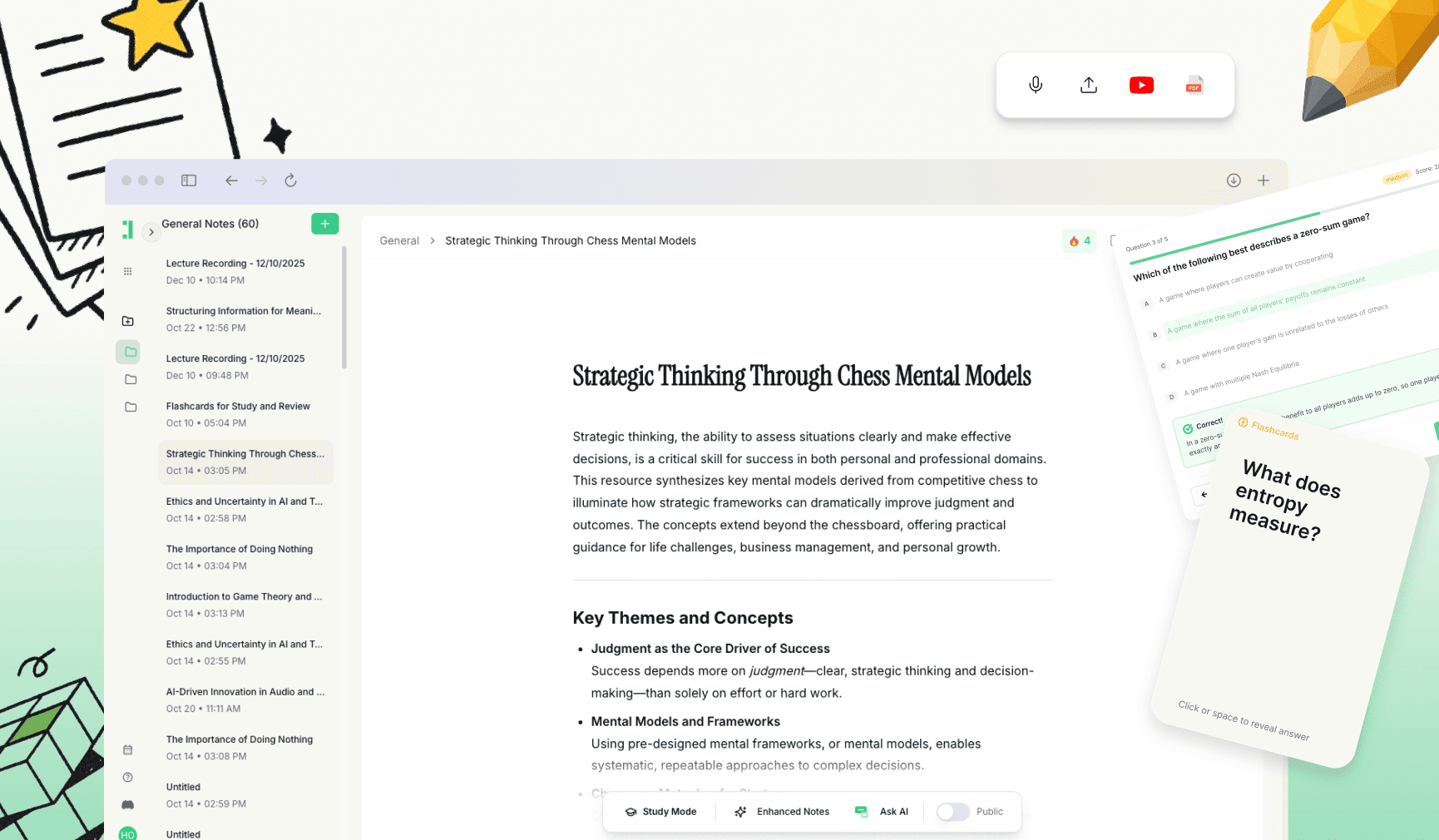
The outcome is simple: instead of passively rereading dense textbooks or lecture slides, you test yourself on key concepts like functional vs. non-functional requirements. If you already have your course notes or a project brief, Duetoday can generate a clean, professional flashcard deck in minutes so you can start studying immediately.
Why flashcards are one of the best ways to study Requirements Engineering
Requirements Engineering is a discipline built on clear definitions, structured processes, and distinct categories. Flashcards are ideal for this subject because they require precision—something that is vital when defining system constraints or quality attributes. By using active recall, you train your brain to retrieve technical terms and process steps without looking at your notes, which is exactly what you'll need to do during exams or industry certification tests.
Master key terminology: Quickly learn the difference between terms like 'verifiability' and 'traceability.'
Differentiate requirement types: Instantly categorize functional requirements from performance or security constraints.
Learn the engineering cycle: Memorize the stages of the RE process (elicitation, negotiation, specification) in the correct order.
Practice validation techniques: Internalize the checklist items for a high-quality SRS (Software Requirements Specification) document.
What to include in your Requirements Engineering flashcards
Effective Requirements Engineering cards should adhere to the 'one idea per card' rule. This ensures that you aren't just memorizing a block of text, but actually understanding the nuances of how systems are defined. You should focus on a mix of theoretical definitions and practical application scenarios to ensure you're ready for any question style.
Definitions & Key Terms: What is an emergent property? or Define Requirement Traceability.
Processes & Steps: What are the four main activities in the RE process?
Comparisons: Compare a User Requirement vs. a System Requirement.
Application: When would you use an interview over a questionnaire for elicitation?
Example prompts include: What is the main goal of the negotiation phase?, How do you define a non-functional requirement?, and What are the three categories of conflict in RE?
How to study Requirements Engineering with flashcards
Mastering this subject requires a systematic approach. Start by generating a deck from your lecture slides or the BABOK/SREB guide. Take a first pass through the deck to identify which system models or validation techniques trip you up. Once you've identified your weak spots, use a spaced repetition schedule to review those specific cards daily while leaving the easier cards for weekly check-ins.
Generate your deck automatically from your PDF notes or textbook chapters.
Perform a rapid first pass to flag difficult concepts like 'Feasibility Studies'.
Review high-priority cards every morning for three days.
Mix in advanced cards involving case studies or specific modeling notations.
Finish with a full deck review before your exam or project deadline.
Generate Requirements Engineering flashcards automatically in Duetoday
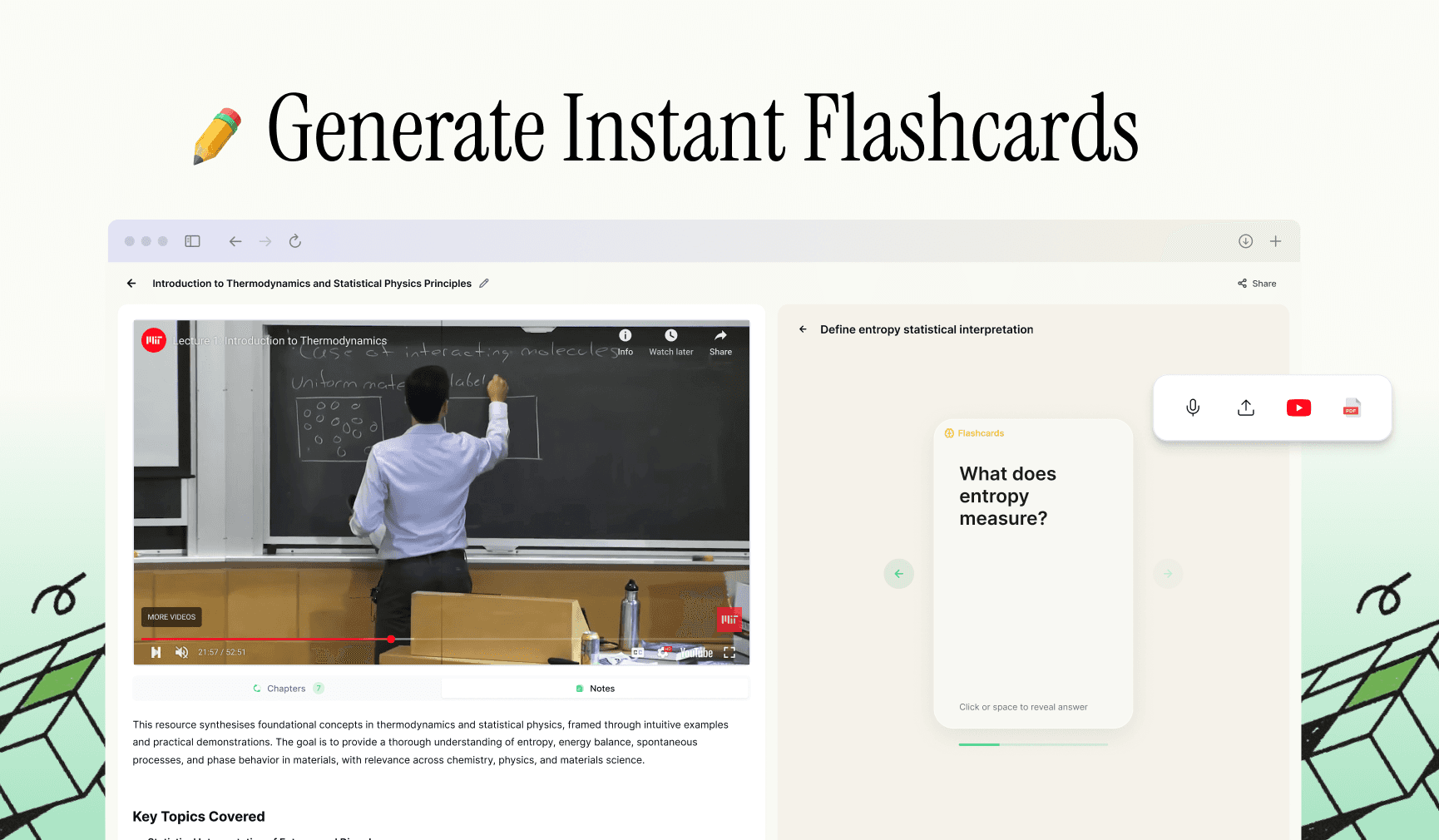
Manually writing out flashcards for a 200-page Requirements Engineering textbook is exhausting and takes time away from actual learning. Duetoday solves this by using AI to scan your materials and extract the most important technical concepts for you. Simply upload your PDF, slides, or transcripts, and get a study-ready deck in seconds.
Upload your Requirements Engineering slides or project notes.
Click 'Generate Flashcards' to see the AI-driven output.
Edit the cards for specific project context and start your study session.
FAQ
How many flashcards do I need for Requirements Engineering? High-level courses usually require 100-150 cards to cover elicitation, analysis, and management thoroughly.
What’s the best format for RE flashcards? Question-and-answer format works best, especially for defining quality attributes and process steps.
How often should I review my RE cards? Reviewing daily for 15 minutes is more effective than one long session, especially for memorizing ISO standards or elicitation techniques.
Should I make cards from a textbook or slides? Use lecture slides for the core definitions your professor cares about, and textbook chapters for deep dives into modeling notation.
How do I stop forgetting RE processes? Use 'Order of Operations' cards that ask 'What happens after [Step A]?' to lock the sequence into your memory.
What if my cards feel too easy? Add 'Comparison' cards that ask you to explain why one elicitation method is better than another in a specific scenario.
Can I generate RE flashcards from a PDF? Yes, Duetoday can read your RE textbooks or lecture PDFs and instantly turn them into structured flashcards.
Are digital flashcards better than paper for RE? Digital is superior for RE because you can include diagrams of Use Cases or State Charts directly on the card.
How long does it take to make a full deck? With Duetoday, you can generate a full deck from a chapter in under 60 seconds.
Can Duetoday organize my RE cards by topic? Yes, you can generate and categorize decks by specific phases, such as 'Elicitation' or 'Validation'.

Duetoday is an AI-powered learning OS that turns your study materials into personalised, bite-sized study guides, cheat sheets, and active learning flows.