Generate Flashcards for Regression Analysis
Make Regression Analysis flashcards for statistics. This guide shows how to generate study decks for better exam grades.
Generate Flashcards with AI Free
What are Regression Analysis flashcards?
Regression Analysis flashcards are concise study tools designed to help you master the statistical methods used to estimate relationships between variables. These cards cover essential concepts such as independent and dependent variables, slopes, intercepts, residuals, and specific models like simple linear or multiple regression. Instead of staring at complex equations in a textbook, these flashcards force you to define terms and interpret data outputs actively.
The main outcome is clarity: instead of rereading dense chapters, you test yourself on specific concepts to build immediate recall. If you already have lecture notes or slides, Duetoday can generate a clean, organized deck in minutes so you can spend your time studying rather than formatting.
Why flashcards are one of the best ways to study Regression Analysis
Regression Analysis requires a mix of theoretical understanding and mathematical application. Flashcards excel here because they help you link specific terminology to its practical function in a model. By using active recall, you strengthen the neural pathways associated with statistical interpretation, making it easier to recall formulas or assumptions during an exam.
Using spaced repetition prevents ‘crammers regret’ by ensuring you revisit the most difficult statistical concepts just as you are about to forget them. This method is far more effective for long-term retention than passive reading.
Remember key terms like Heteroscedasticity and Multicollinearity without confusion.
Separate similar concepts, such as the difference between R-squared and Adjusted R-squared.
Learn the step-by-step process of identifying and fixing model violations.
Practice applying rules for interpreting P-values and Coefficients quickly.
What to include in your Regression Analysis flashcards
Effective Regression Analysis flashcards follow the "one idea per card" rule. They should transform passive information into active questions that challenge your understanding of how data relates. You want to focus on both the 'what' and the 'why' behind the numbers.
Definitions & key terms: Focus on concepts like "What is the Ordinary Least Squares (OLS) method?"
Processes & steps: Detail workflows such as "What is the first step in checking for outliers?"
Comparisons: Contrast methods like "How does Lasso regression differ from Ridge regression?"
Application: Practice interpretation like "If the P-value is 0.03, is the coefficient statistically significant at the 5% level?"
Example prompts: "Define the null hypothesis in a regression context," "What does a high VIF score indicate?", and "What is the purpose of a residual plot?"
How to study Regression Analysis with flashcards
To master this subject, use a two-pass approach. First, generate your deck from your syllabus or notes and do a broad sweep of all terms. Second, filter your deck to focus specifically on the areas where you struggle, such as error terms or complex transformations.
Reviewing in short, frequent sessions is better than one long marathon. This keeps the statistical logic fresh in your mind and allows you to build confidence with the mathematical components gradually.
Create a deck from your lecture notes or upload a PDF of your statistics textbook.
Run a quick diagnostic round to identify which formulas or assumptions you struggle with.
Review those weak cards daily, focusing on the interpretation of the results.
Mix in harder application cards involving specific data scenarios.
Perform a final comprehensive review of the entire deck before your quiz or exam.
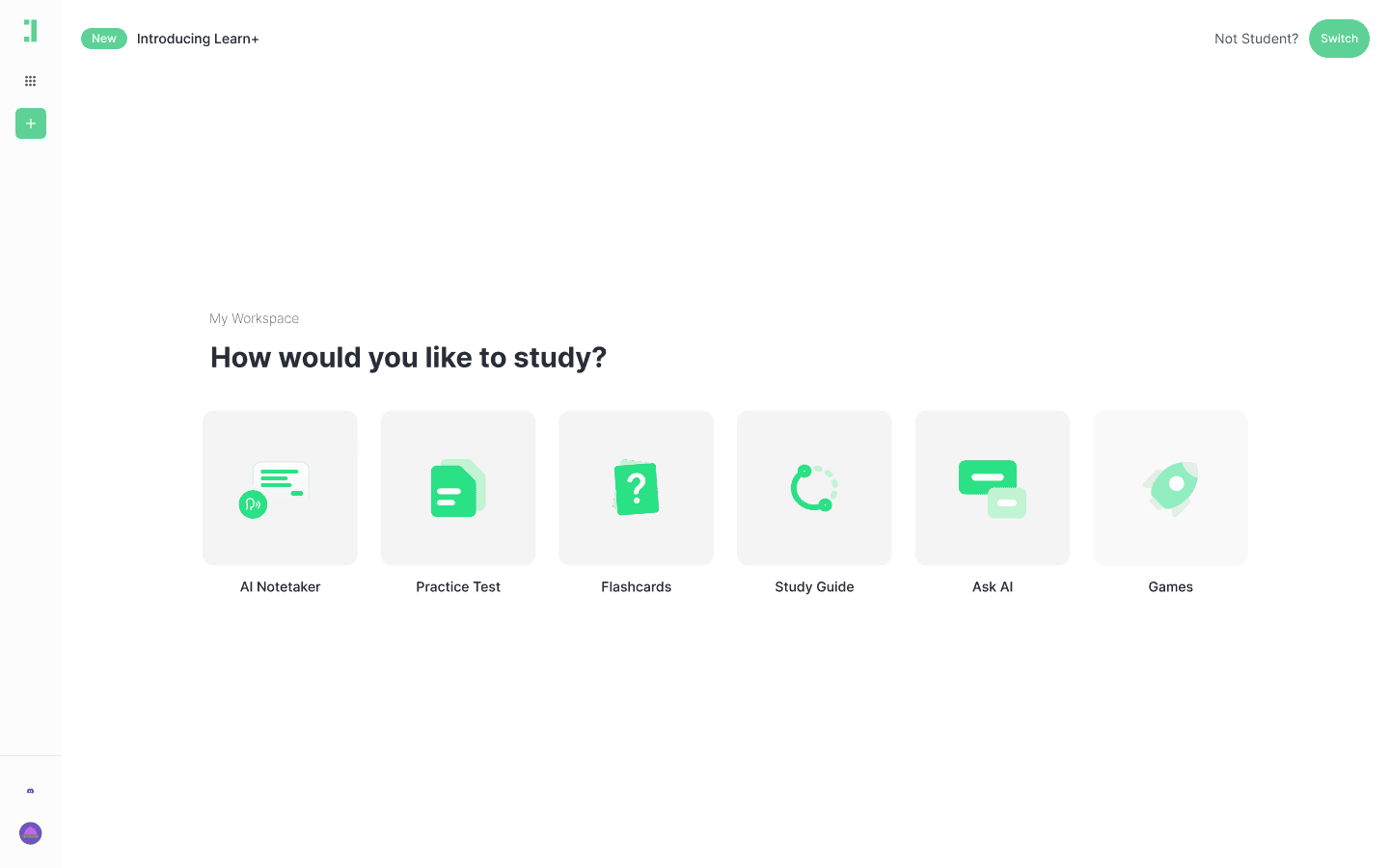
Generate Regression Analysis flashcards automatically in Duetoday
Writing out flashcards for statistics by hand is incredibly slow, and it's easy to make mistakes when copying complex formulas or definitions. Manual card creation often becomes a form of busywork that doesn't actually help you learn the material.
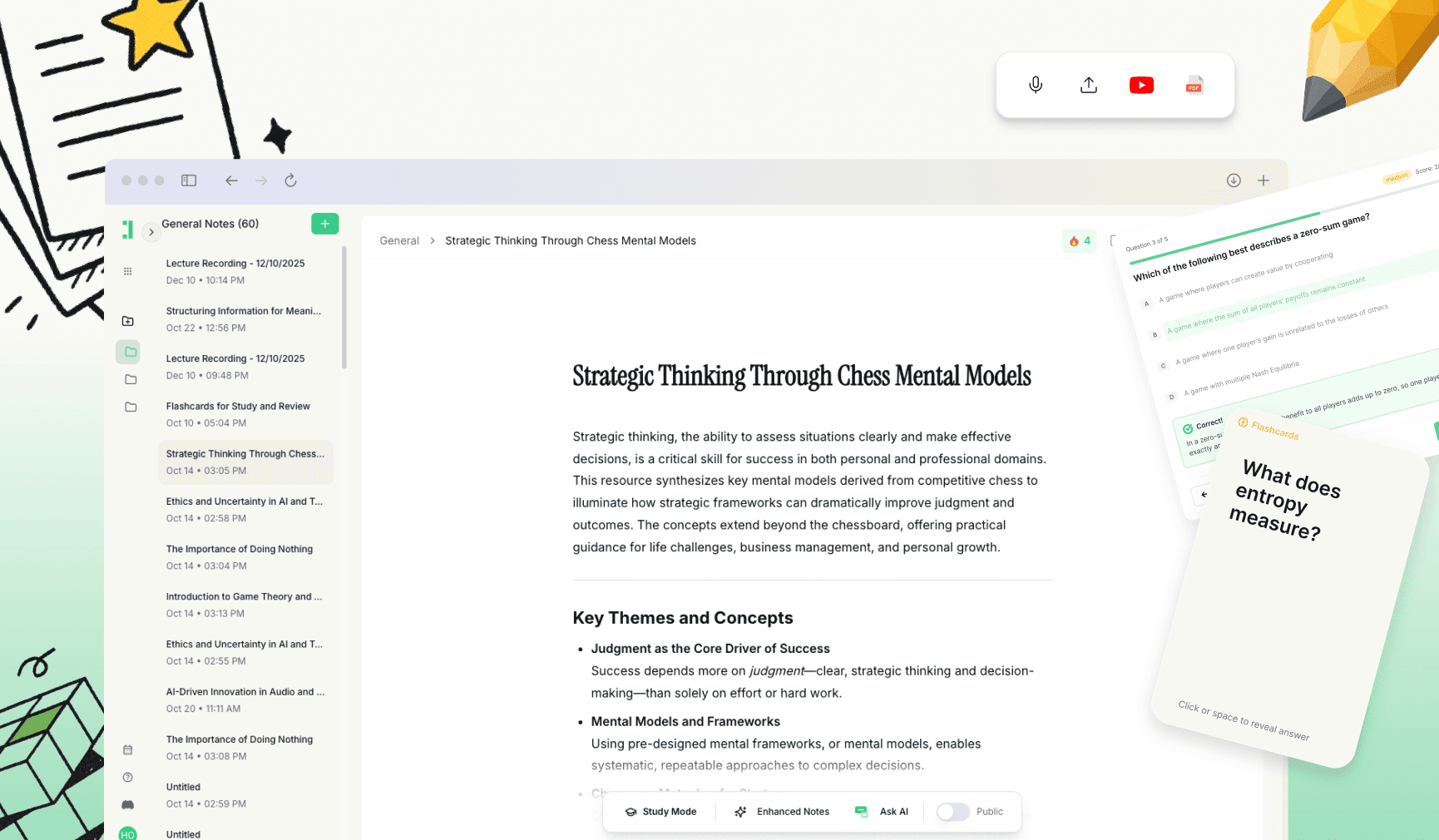
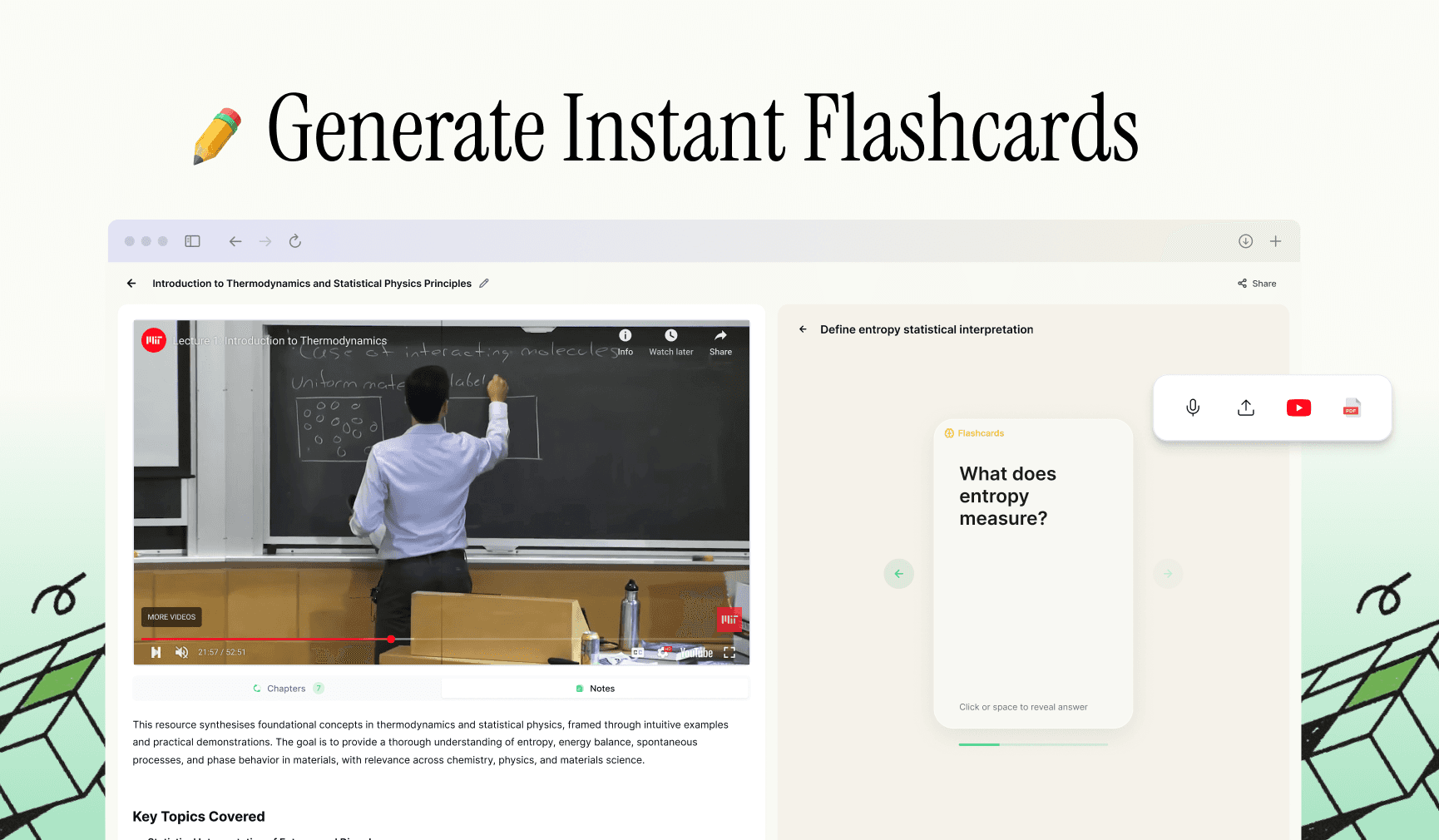
Duetoday solves this by automating the creation process. You can upload your PDFs, slides, or messy notes, and our AI will extract the core concepts to build a structured study deck instantly. This lets you move straight from "organizing" to "learning."
Upload or paste your Regression Analysis material.
Click Generate Flashcards.
Review, edit the formulas if needed, and start studying.
Common Regression Analysis flashcard mistakes
Avoid making cards that are basically entire paragraphs from your textbook; these are impossible to memorize. Instead, break down complex theorems into smaller, bite-sized questions that you can answer in five seconds or less.
Cards are too long: Split a multi-part assumption into four separate cards.
Only memorizing terms: Ensure you include cards that ask you to interpret a specific coefficient.
Ignoring assumptions: Make sure you have cards for Normality, Linearity, and Independence.
No review schedule: Don't just look at the cards once; use Duetoday to repeat the difficult ones.
Ready to generate your Regression Analysis flashcards?
Stop rereading your stats textbook and start testing your knowledge. Upload your notes today and let Duetoday build a custom Regression Analysis deck that helps you ace your next statistics exam.
FAQ
How many flashcards do I need for Regression Analysis? A standard undergraduate module usually requires 40 to 60 cards to cover basic terms, assumptions, and interpretation rules. Complex topics like econometrics might require more.
What’s the best format for these flashcards? Question-and-answer format is best. For example: "Front: What does R-squared represent? Back: The proportion of variance in the dependent variable explained by the independent variables."
How often should I review them? Daily review is best during the first week of learning a new concept. Once you feel confident, you can move to every three days to maintain retention via spaced repetition.
Should I make cards from a textbook or my own notes? Both work, but lecture slides are often better as they highlight exactly what your professor thinks is important for the exam.
How do I stop forgetting the formulas? Don't just memorize the symbols; create cards that explain what each part of the formula does. Understanding the logic helps the formula stick.
What if the flashcards feel too easy? If they are too easy, start adding scenario-based cards, such as "What would happen to the slope if we added a specific outlier?"
Can I generate flashcards from a statistics PDF? Yes, Duetoday can read your PDF textbooks or handouts and extract the most relevant information to create flashcards automatically.
Are digital flashcards better than paper for stats? Digital is usually better because you can easily include screenshots of graphs and use automated spaced repetition algorithms that paper cards can't offer.
How long does it take to make a full deck? With Duetoday, it takes less than a minute. Manually, it could take two to three hours to write out 50 high-quality cards.
Can Duetoday organize the cards by topic? Yes, you can generate cards for specific chapters or topics like "Multiple Regression" and keep them in distinct decks for organized studying.

Duetoday is an AI-powered learning OS that turns your study materials into personalised, bite-sized study guides, cheat sheets, and active learning flows.