Generate Flashcards for Redox Reactions
Generate high-quality Redox Reactions flashcards in seconds. Try out our free AI tool today!
Generate Flashcards with AI Free

Generate Flashcards for Redox Reactions
Turn your notes, PDFs, slides, or chemistry lectures into Redox Reactions flashcards so you can review faster and remember more. Understanding how electrons move between species is the core of electrochemistry, and active recall is the fastest way to master it.
Generate Redox Reactions FlashcardsUpload notes / paste text
Simply upload your study materials to Duetoday. Our AI analyzes your content, identifies key oxidizing and reducing agents, and generates a structured deck. You can review, edit, and start studying immediately.
What are Redox Reactions flashcards?
Redox Reactions flashcards cover the fundamental principles of reduction-oxidation chemistry. This includes identifying oxidation states, recognizing half-reactions, balancing equations in acidic or basic solutions, and understanding the role of oxidizing and reducing agents.
Instead of passively rereading your textbook, these flashcards force you to determine which element is losing electrons and which is gaining them. This builds the mental muscle needed for complex exam problems. If you already have notes, Duetoday can generate a clean deck in minutes.
Why flashcards are one of the best ways to study Redox Reactions
Chemistry requires more than just memorization; it requires the application of rules to different chemical species. Flashcards are perfect for this because they break down complex reactions into manageable pieces of information.
By using active recall and spaced repetition, you ensure that you don't just recognize a redox reaction when you see it, but that you can actively explain the electron transfer happening behind the scenes.
Remember oxidation state rules without cramming
Separate similar concepts (e.g., Oxidizing Agent vs. Reducing Agent)
Learn balancing processes step-by-step (half-reaction method)
Practice applying the OIL RIG mnemonic quickly
Master electrochemical cell notation and potentials
What to include in your Redox Reactions flashcards
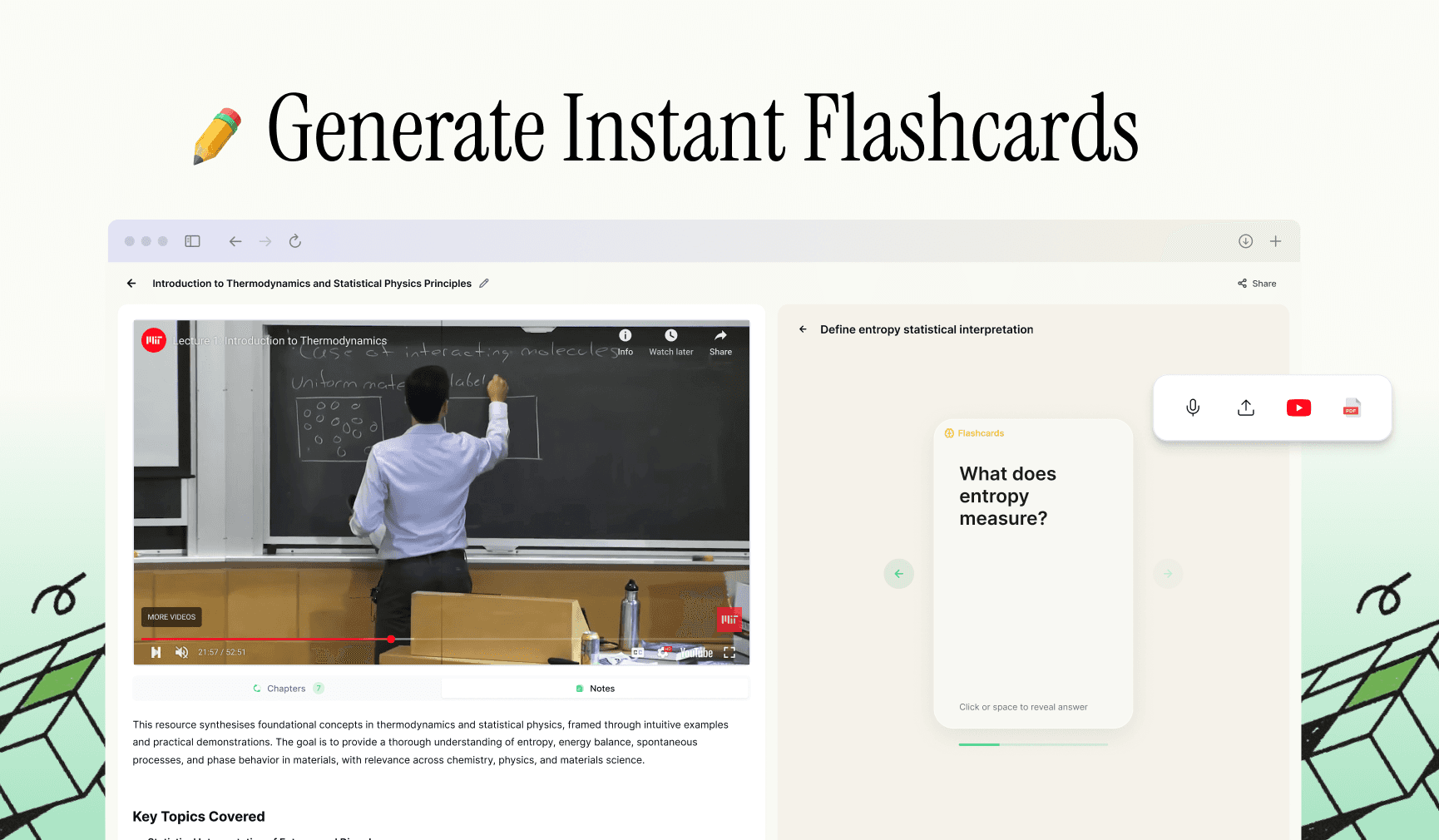
Good flashcards follow the "one idea per card" rule. For chemistry, this means focusing on specific transfers or definitions rather than trying to balance an entire equation on a single card. Using question-based prompts creates a more effective study session.
Definitions & key terms: "What is oxidation?" "Define a reducing agent."
Processes & steps: "What is the first step in the half-reaction method?"
Comparisons: "How is a galvanic cell different from an electrolytic cell?"
Application: "In the reaction Zn + Cu2+, which species is oxidized?"
Example prompts for your deck include: "What is the oxidation state of Oxygen in peroxides?", "Does reduction happen at the anode or cathode?", and "State the mnemonic OIL RIG."
How to study Redox Reactions with flashcards (a simple system)
Start with a "two-pass" approach. Use your first session to build your deck and do a quick run-through to see which concepts (like balancing in basic solutions) are tripping you up. Then, move into targeted rounds.
Make a deck from your notes or generate it from your textbook PDF.
Do one quick round to find weak spots in oxidation number rules.
Review weak cards daily for a few days to build fluency.
Mix in a few harder balancing cards each session.
Do a final mixed review before your chemistry midterm or final.
Generate Redox Reactions flashcards automatically in Duetoday
Making chemistry cards manually is slow and writing out chemical formulas by hand can get messy. Duetoday eliminates the friction. Simply upload your PDF or paste your lecture transcript, and our AI does the heavy lifting.
Upload or paste your Redox Reactions material
Click Generate Flashcards
Review, edit, and start studying with active recall
Generate Redox Reactions Flashcards in Duetoday
Common Redox Reactions flashcard mistakes
Most students make cards that are too wordy. If a card takes 30 seconds to read, it's not a flashcard—it's a note. Break down the balancing steps into individual cards. Another common mistake is only memorizing the definition of "oxidation" without practicing it on actual elements. Always include "Identify the agent" cards to bridge the gap between theory and practice.
Ready to generate your Redox Reactions flashcards?
Stop rereading your chemistry textbook and start recalling the facts. Upload your notes, generate your deck, and master electron transfer today.
Start Generating Flashcards
FAQ
How many flashcards do I need for Redox Reactions? Most students find that 40-60 cards cover the essential rules, common oxidation states, and balancing steps for a standard unit.
What’s the best format for Redox cards? A mix of "Definition" cards for terms and "Problem-Solving" cards for identifying oxidation numbers is most effective.
How often should I review? Review daily for the first week until you master the rules, then use spaced repetition every 3-4 days until your exam.
Should I make cards from my textbook or teacher's slides? Use slides for the specific methods your teacher prefers, and the textbook for extra practice examples.
How do I stop forgetting oxidation rules? Consistent repetition of the 'exception' rules (like Fluorine always being -1) is the only way to make them stick.
What if my flashcards feel too easy? Add more complex reactions involving polyatomic ions or transition metals to increase the difficulty.
Can I generate Redox flashcards from a PDF automatically? Yes, Duetoday can scan your chemistry PDFs and instantly extract key concepts into cards.
Are digital flashcards better than paper? Yes, digital cards allow for easier editing of chemical symbols and use algorithms to show you the hardest cards more often.
How long does it take to make a full deck? With Duetoday, it takes less than a minute. Manually, it can take over an hour to write and draw formulas.
Can Duetoday organize my cards by sub-topic? Yes, you can categorize your cards into groups like 'Balancing', 'Electrochemistry', and 'Oxidation States'.

Duetoday is an AI-powered learning OS that turns your study materials into personalised, bite-sized study guides, cheat sheets, and active learning flows.