
Generate Flashcards for Real Estate Finance
Generate or make Real Estate Finance flashcards to master mortgage math and investment analysis for your exams.
Generate Flashcards with AI Free
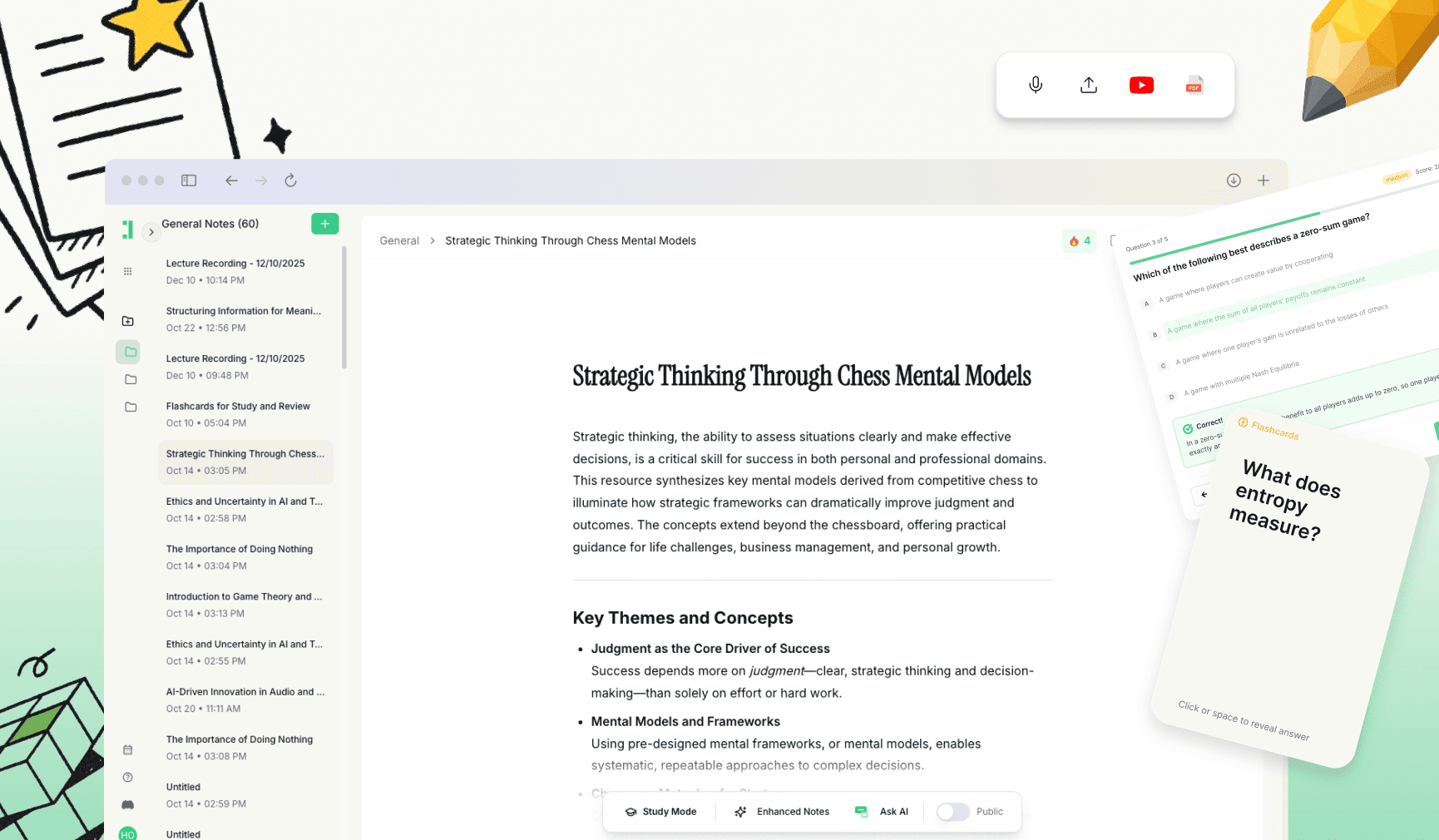
What are Real Estate Finance flashcards?
Real Estate Finance flashcards are targeted study tools designed to help you master the complex financial structures of the property market. These flashcards cover critical concepts such as mortgage instruments, debt-to-equity ratios, net operating income (NOI), and the legal frameworks governing real estate transactions. Instead of passively reading a textbook, these cards force you to recall specific formulas and definitions on demand.
By using flashcards, you transform dense financial theories into manageable bite-sized questions. This active engagement helps you build the mental agility required for licensing exams or professional investment analysis. If you already have lecture slides or notes, Duetoday can generate a clean deck in minutes so you can spend less time typing and more time learning.
Why flashcards are one of the best ways to study Real Estate Finance
Real Estate Finance requires a mix of rote memorization and mathematical application. Flashcards bridge this gap by isolating variables and definitions, ensuring you don't confuse similar concepts like Amortization vs. Depreciation. They leverage active recall and spaced repetition to move information from your short-term memory into long-term mastery.
Remember key terms like 'Hypothecation' and 'Escrow' without cramming.
Separate similar concepts such as Recourse vs. Non-Recourse loans.
Learn complex processes like the loan underwriting cycle step-by-step.
Practice applying valuation formulas like Cap Rate and IRR quickly.
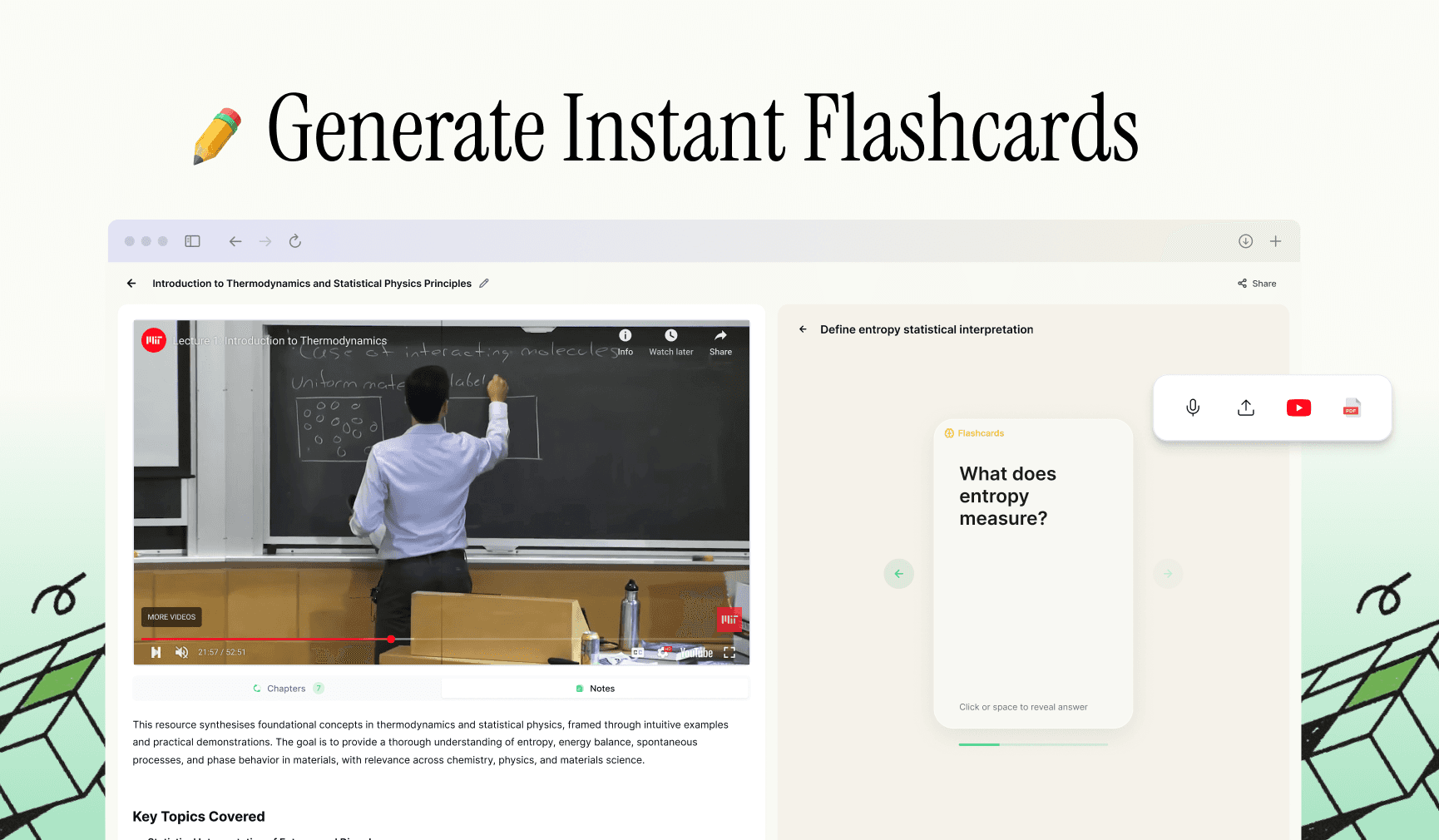
What to include in your Real Estate Finance flashcards
The most effective flashcards follow the 'atomic' rule: one idea per card. When studying finance, your questions should be pointed and specific to avoid 'recognition bias' where you think you know the answer just because it looks familiar. Focus on four main categories: definitions, processes, comparisons, and application scenarios.
Definitions: What is the Loan-to-Value (LTV) ratio?
Processes: What are the steps in a 1031 exchange?
Comparisons: How does an ARM differ from a fixed-rate mortgage?
Application: If NOI is $50k and Cap Rate is 5%, what is the property value?
How to study Real Estate Finance with flashcards
To master this subject, use a two-pass approach. First, build your deck using your course materials or let Duetoday generate one from your PDF notes. In the first pass, focus on understanding the core terminology. In the second pass, focus on the math and the 'why' behind the financial structures.
Make a deck from your notes or generate it automatically.
Do one quick round to find weak spots in your math formulas.
Review high-difficulty cards daily to build muscle memory.
Mix in scenario-based cards to test your application skills.
Do a final mixed review of all concepts before your exam.
Common Real Estate Finance flashcard mistakes
Many students create cards that are too wordy, which leads to memorizing the 'paragraph' rather than the concept. Another common pitfall is ignoring the math; people often make cards for definitions but forget to include quick mental-math practice for interest rates or equity calculations. Finally, ensure you aren't just memorizing the answer—make sure you can actually explain *why* a particular financing structure is used in a specific market context.
Ready to generate your Real Estate Finance flashcards?
Stop spending hours manually writing out index cards. Upload your PDFs, lecture notes, or textbook chapters to Duetoday and let our AI create a professional study deck instantly. You can edit, organize, and start studying with active recall in seconds.
FAQ
How many flashcards do I need for Real Estate Finance? Most comprehensive courses require between 100 to 150 cards to cover everything from lean law to investment calculations.
What’s the best format for these flashcards? A question-and-answer format is best. For math, put the formula name on the front and the variables/equation on the back.
How often should I review my finance cards? Review daily for at least 15 minutes leading up to an exam to take advantage of spaced repetition.
Should I make cards from a textbook or slides? Both are useful, but lecture slides usually highlight the specific formulas your instructor prioritizes for exams.
How do I stop forgetting formulas after a few days? Use application cards that ask you to solve a small problem rather than just stating the formula.
Can I generate flashcards from a PDF automatically? Yes, Duetoday allows you to upload any Real Estate Finance PDF and converts the key points into study-ready cards.
Are digital flashcards better than paper? Yes, digital cards allow for easier organization, faster generation, and the ability to study on the go.
How long does it take to make a full deck? Manually it could take hours; with Duetoday's AI, it takes less than a minute.

Duetoday is an AI-powered learning OS that turns your study materials into personalised, bite-sized study guides, cheat sheets, and active learning flows.