Generate Flashcards for Public Economics
Make Public Economics flashcards from your notes. Generate study guides for government policy and market failures.
Generate Flashcards with AI Free
Generate Flashcards for Public Economics
Turn your notes, PDFs, slides, or lectures into Public Economics flashcards so you can review faster and remember more. Whether you are analyzing fiscal policy or deadweight loss, skip the manual entry and start studying immediately.
Generate Public Economics Flashcards
Upload notes / paste text
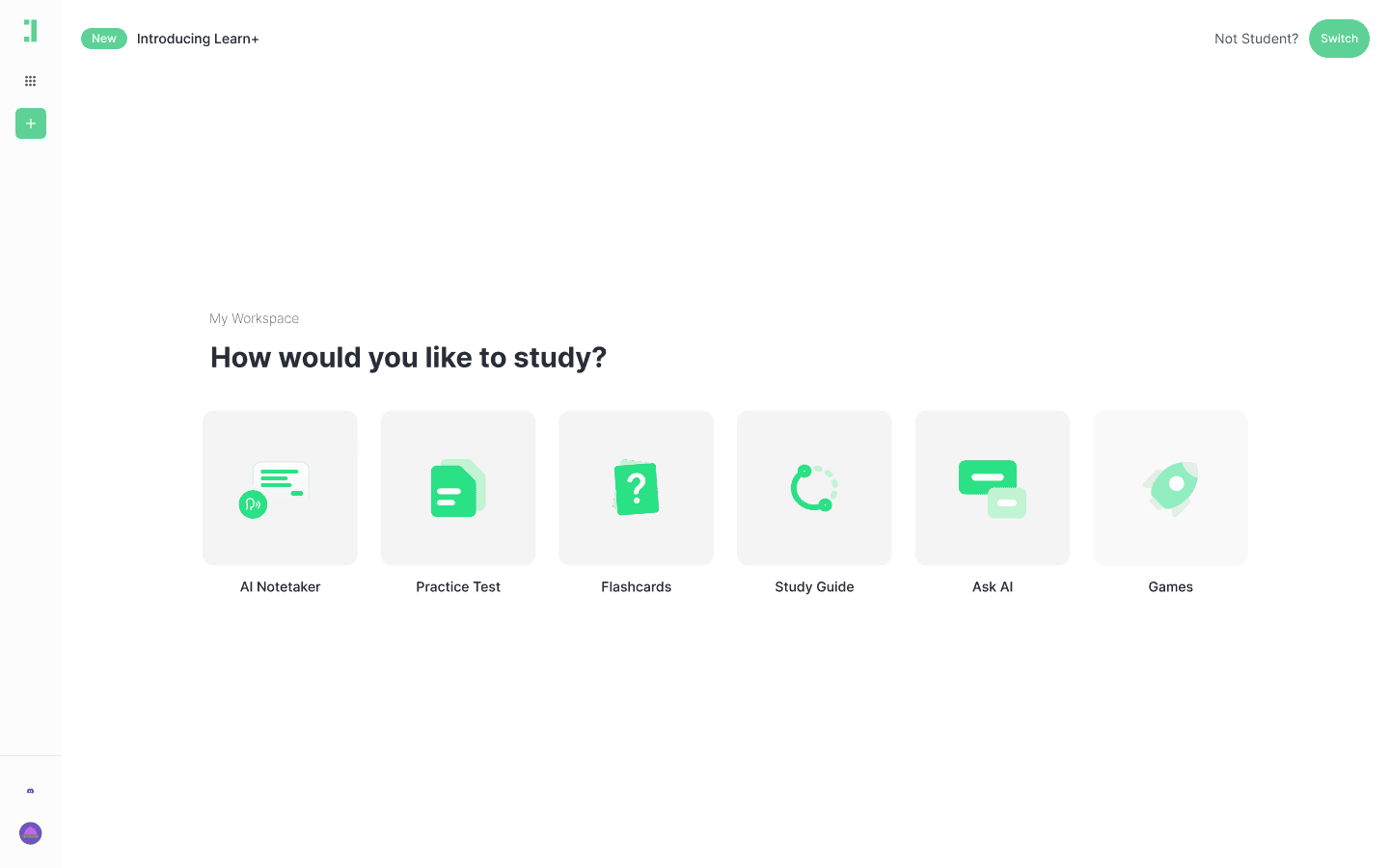
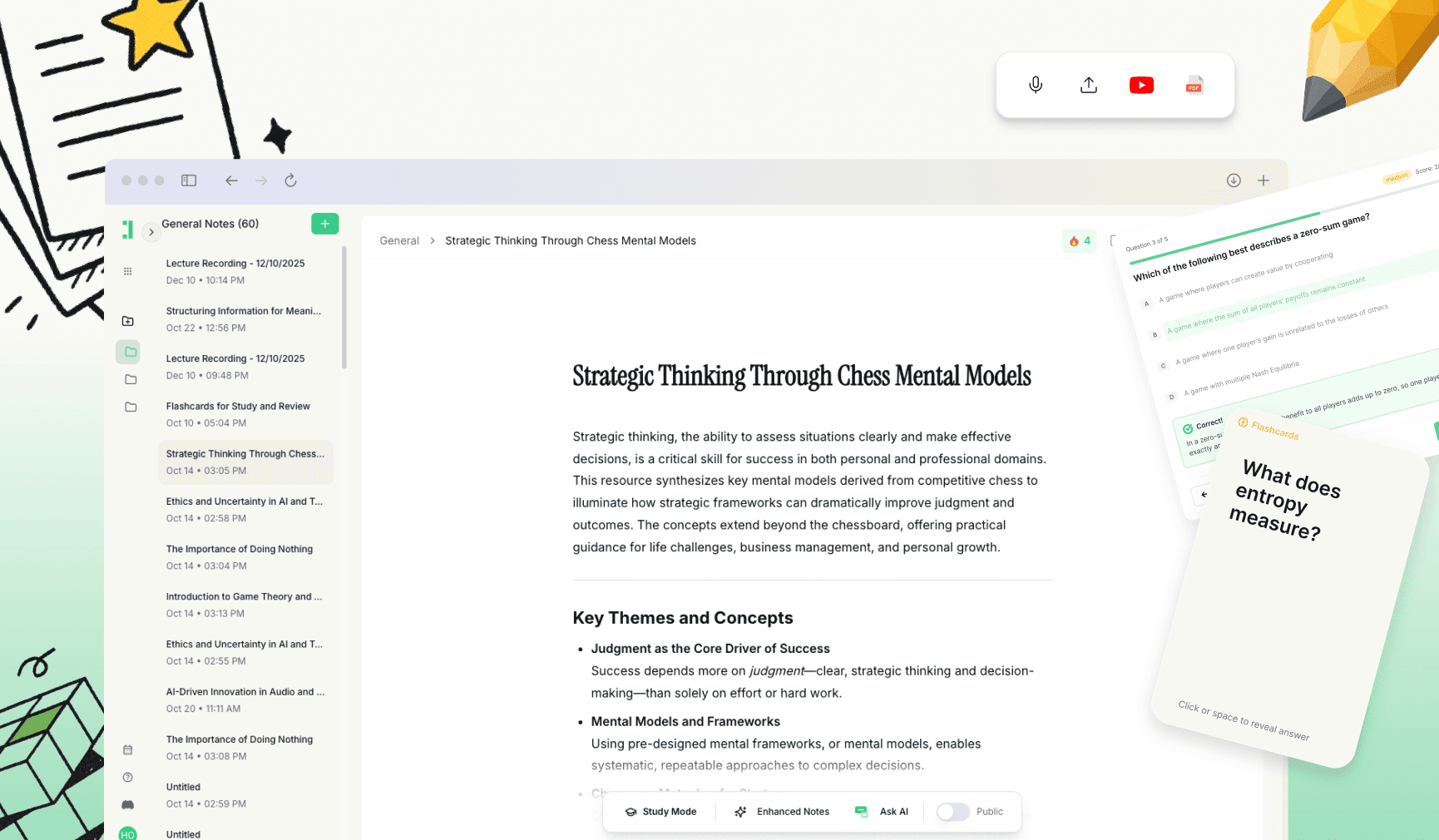
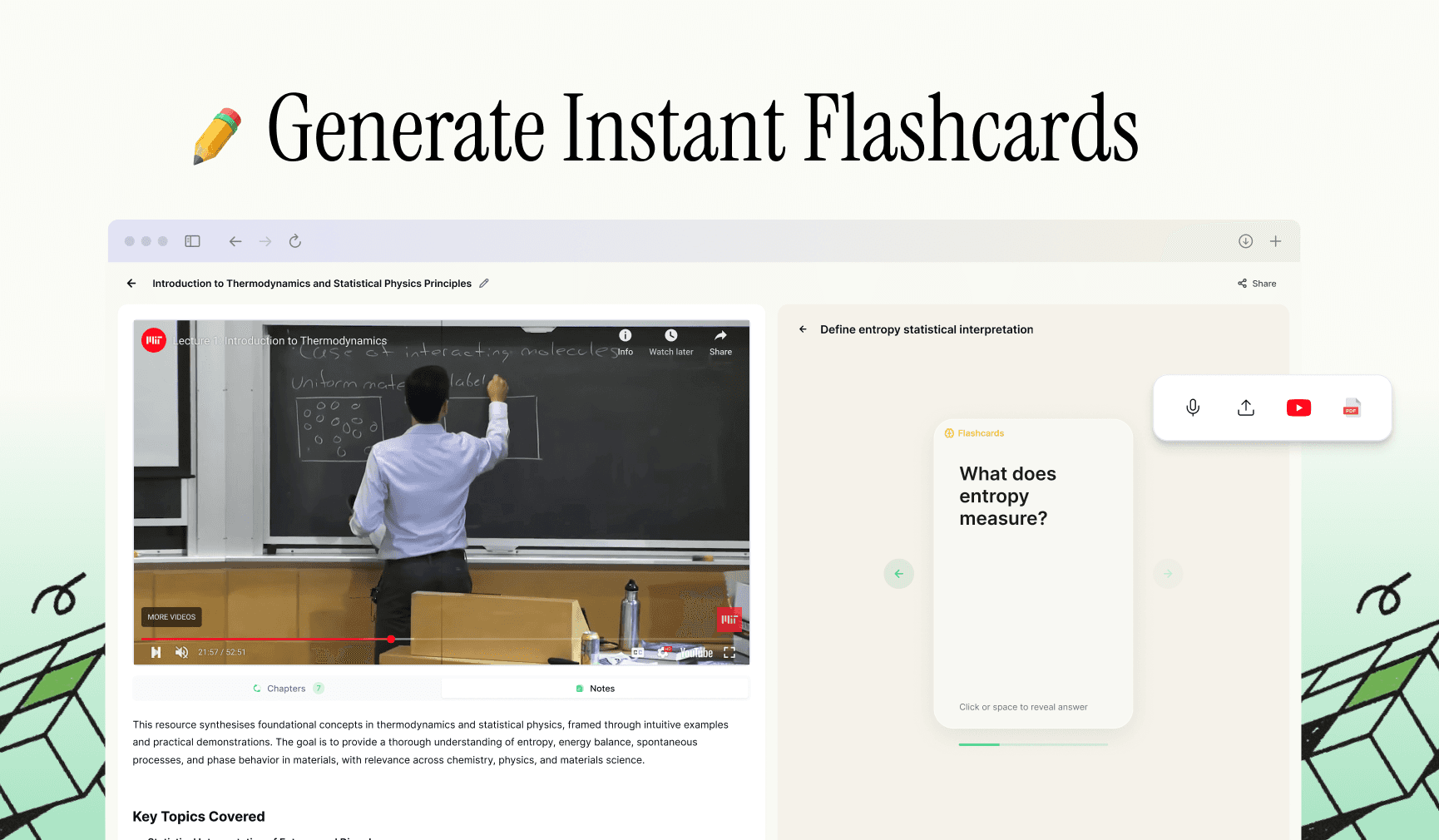
Using Duetoday is simple: upload your study materials, our AI generates a structured deck, and you can instantly review, edit, or start your study session. It is the fastest way to move from passive reading to active recall.
What are Public Economics flashcards?
Public Economics flashcards cover the complex intersection of government policy and the economy. They focus on key terms like externalities, the Coase theorem, progressive taxation, and cost-benefit analysis. These cards break down intricate mathematical formulas and theoretical models into bite-sized, testable questions.
The outcome is a shift in your study habit: instead of rereading dense chapters on welfare economics, you test yourself quickly to build long-term recall. If you already have notes, Duetoday can generate a clean deck in minutes.
Why flashcards work for Public Economics
Public Economics requires a mix of theoretical understanding and mathematical application. Flashcards are perfect for this because they force you to recall definitions, sequences of policy implementation, and the relationships between economic variables without looking at the answers.
By using active recall and spaced repetition, you ensure that government failure concepts and tax incidence theories stay fresh in your mind. This method prevents the 'familiarity bias' where you think you know the material just because you’ve read it several times.
Remember key terms like 'Marginal Social Benefit' without cramming
Separate similar concepts (e.g., Public Goods vs. Common Resources)
Learn policy processes step-by-step (legislative cycles, budget pathways)
Practice applying elasticity rules to tax burdens quickly
What to include in your Public Economics flashcards
Good flashcards follow the 'one idea per card' rule. They should be question-based rather than just a list of facts. In Public Economics, you need a balance of vocabulary and scenario-based logic.
Definitions & key terms: What is the Free Rider problem? or Define Pareto Efficiency.
Processes & steps: What are the four stages of a cost-benefit analysis?
Comparisons: How does an ad valorem tax differ from a specific tax?
Application: If demand is perfectly inelastic, who bears the tax burden?
Example prompts include: State the First Fundamental Theorem of Welfare Economics, What are the three characteristics of a pure public good? or Explain the difference between vertical and horizontal equity.
How to study Public Economics with flashcards
Use a two-pass approach. First, generate your deck from your syllabus or lecture slides. In the first pass, identify which economic models (like the Medial Voter Theorem) are hardest for you to explain. In the second pass, focus heavily on those weak areas.
Make a deck from your notes using Duetoday.
Do one quick round to find weak spots in policy theory.
Review weak cards daily for a few days to build neural paths.
Mix in harder application cards involving tax formulas.
Do a final mixed review before your midterm or final exam.
Generate Public Economics flashcards automatically in Duetoday
Making cards manually is slow, messy, and takes hours away from actual learning. Duetoday solves this by automating the creation process so you can focus on the 'economics' part of the study.
Upload or paste your Public Economics material (PDFs or Slides)
Click 'Generate Flashcards'
Review, edit, and start studying immediately
Generate Public Economics Flashcards in Duetoday
Start with your notes and get a deck you can actually use today.
Common Public Economics flashcard mistakes
Most students make cards that are too wordy. If a card contains an entire paragraph about the Samulson Rule, you won't remember the core mechanic. Split complex theories into multiple cards. Avoid just memorizing the definition of 'externality'—ensure you have cards that ask how to internalize them using Pigouvian taxes.
Cards are too long → split into one idea per card
Only memorizing words → add explain why/how prompts
Confusing similar concepts → add comparison cards for types of taxes
No review schedule → use spaced repetition for high-yield topics
Ready to generate your Public Economics flashcards?
Stop rereading and start recalling. Upload your notes, generate your deck, and master the complexities of the public sector. Works with notes, PDFs, slides, and transcripts.
FAQ
How many flashcards do I need for Public Economics? Usually, 100-150 cards per major exam cover the essential definitions, theorems, and policy applications without becoming overwhelming.
What’s the best format for Public Economics flashcards? A mix of 'Concept/Definition' for vocabulary and 'Scenario/Outcome' for understanding tax incidence and market failures.
How often should I review Public Economics flashcards? Aim for short 15-minute sessions daily. Spacing your review helps move economic models from short-term to long-term memory.
Should I make cards from a textbook or slides? Both. Textbooks provide depth for theory (e.g., Arrow’s Impossibility Theorem), while slides highlight what your professor thinks is most important for the exam.
How do I stop forgetting Public Economics after a few days? Use spaced repetition. Reviewing difficult concepts like 'Shadow Pricing' at increasing intervals prevents the forgetting curve from taking effect.
What if my flashcards feel too easy? Add 'Application' cards. Instead of 'What is a tax?', ask 'What happens to consumer surplus when a $2 tax is applied to a perfectly elastic supply?'.
Can I generate Public Economics flashcards from a PDF? Yes, Duetoday allows you to upload any Public Economics PDF or textbook chapter and converts the text into flashcards instantly.
Are digital flashcards better than paper for Economics? Digital cards are superior for Economics because they allow for easy editing of formulas and the use of AI to generate cards from complex charts.
How long does it take to make a full Public Economics deck? Manually it takes hours, but with Duetoday, you can generate a comprehensive deck in under 60 seconds.
Can Duetoday organize my flashcards for me? Yes, Duetoday categorizes your cards by topic, such as 'Taxation', 'Market Failure', or 'Public Choice', keeping your study sessions organized.

Duetoday is an AI-powered learning OS that turns your study materials into personalised, bite-sized study guides, cheat sheets, and active learning flows.