Generate Flashcards for Psychological Statistics
Make Psychological Statistics flashcards to master ANOVA and P-values. Generate study decks from your notes today.
Generate Flashcards with AI Free
Generate Flashcards for Psychological Statistics
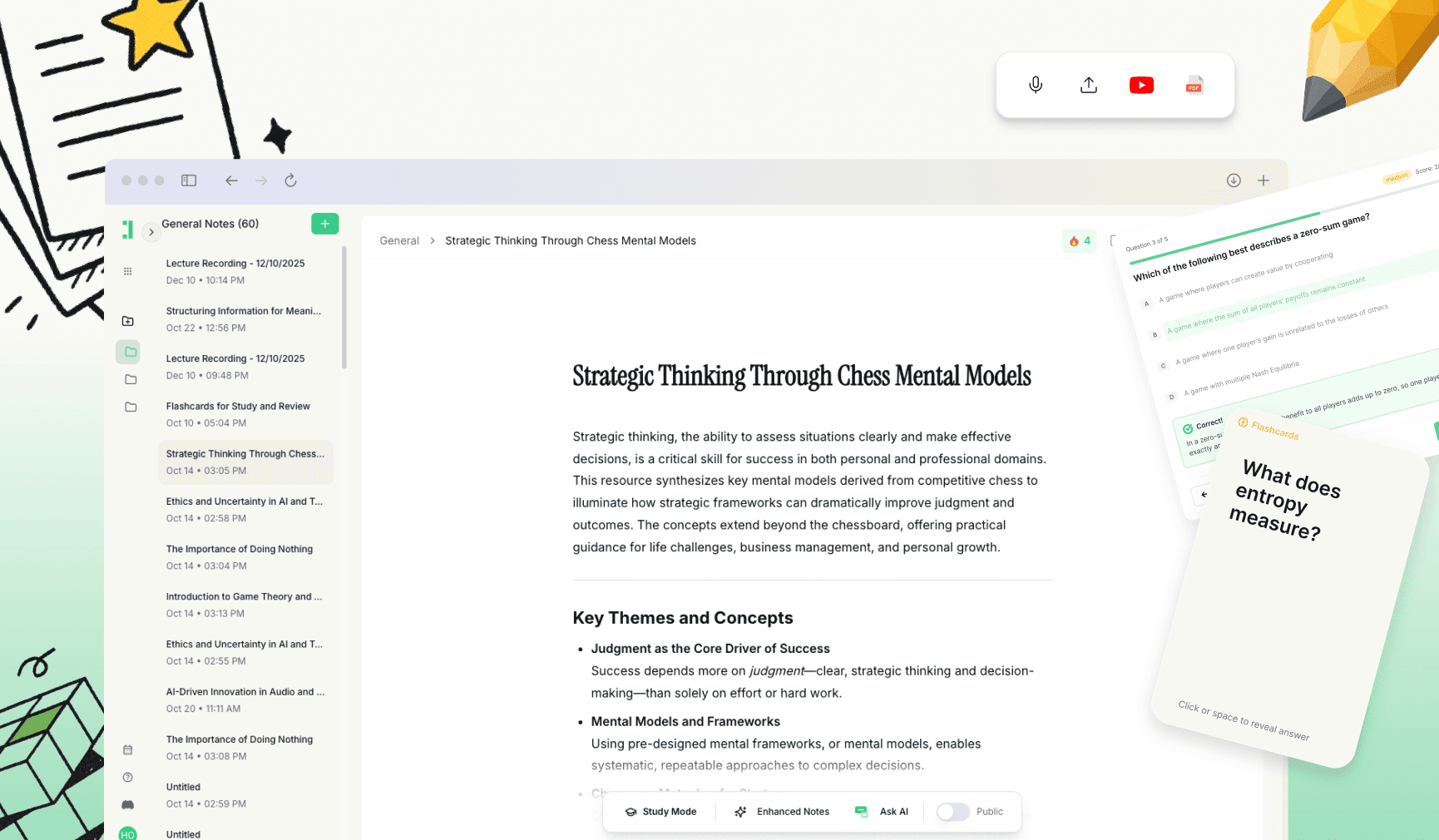
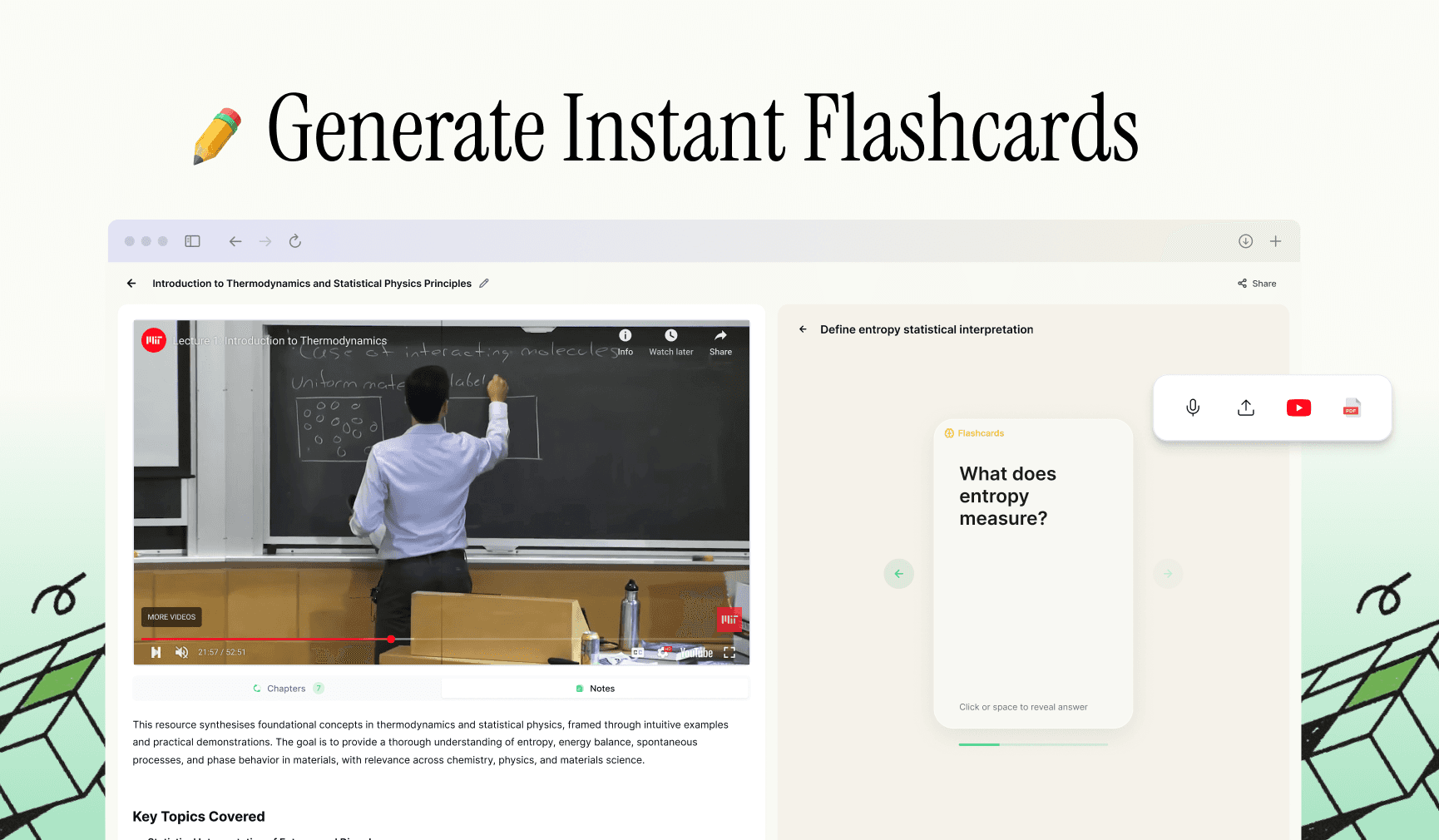
Turn your notes, PDFs, slides, or lectures into Psychological Statistics flashcards so you can review faster and remember more. Whether you are struggling with hypothesis testing or mastering correlation coefficients, Duetoday helps you transform complex data into bite-sized study units.
Generate Psychological Statistics Flashcards | Upload notes / paste text
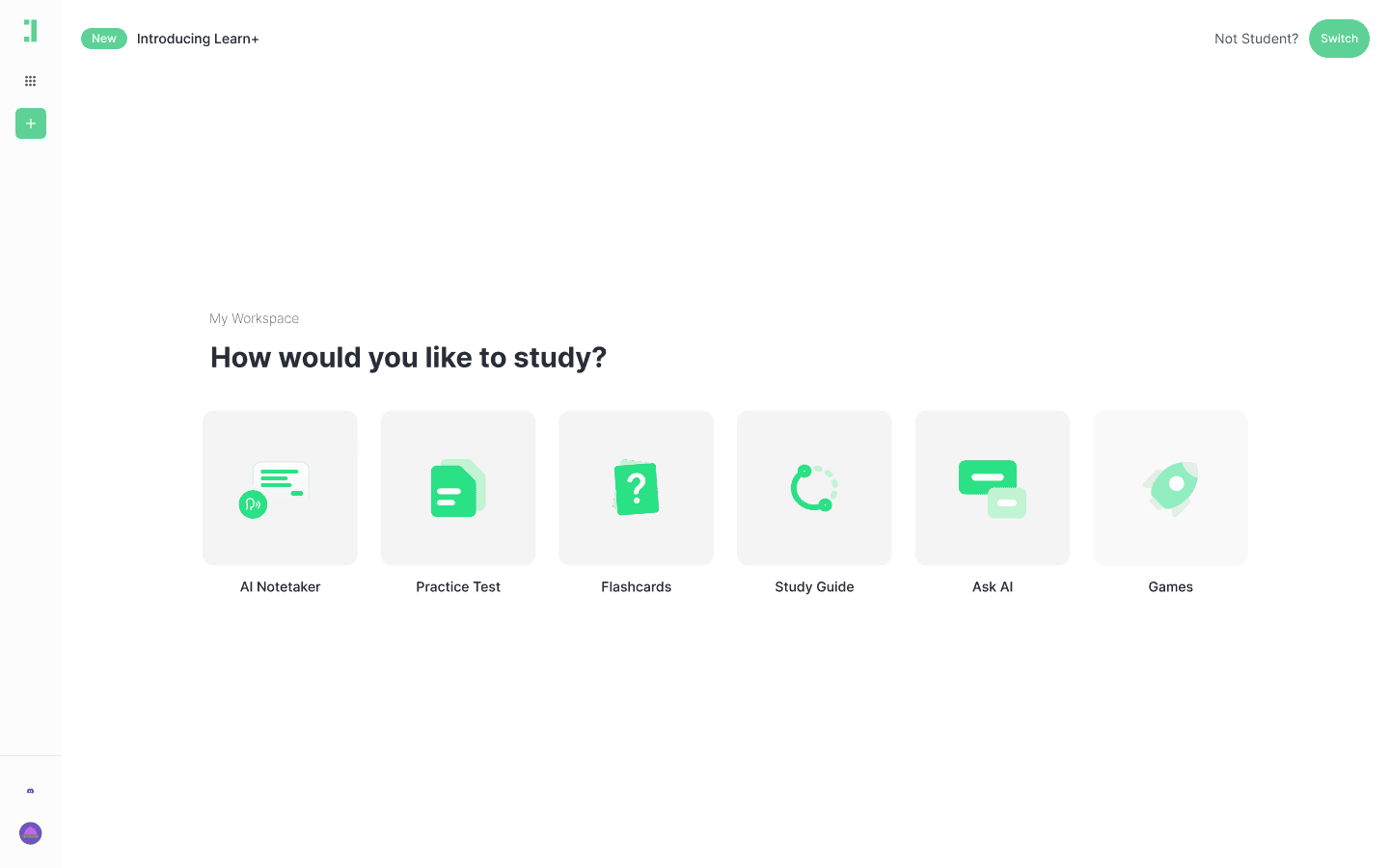
In Duetoday, the process is simple: upload your materials, generate your deck, review or edit the cards, and start studying with active recall immediately.
What are Psychological Statistics flashcards?
Psychological Statistics flashcards cover the essential mathematical tools used to analyze human behavior, including key terms, formulas, steps for running tests, and common pitfalls in data interpretation. These cards help you bridge the gap between abstract equations and practical research application.
The outcome is simple: instead of rereading dense chapters on variance or p-values, you test yourself quickly to build genuine recall. If you already have lecture notes, Duetoday can generate a clean deck in minutes, saving you hours of manual entry.
Why flashcards work for Psychological Statistics
Psychological Statistics requires a mix of rote memory for symbols and deep understanding of procedural steps. Flashcards are perfectly suited for this because they force you to produce answers rather than just recognizing them in a book.
Remember Greek symbols and statistical notations without cramming
Separate similar concepts like Type I vs. Type II errors
Learn the steps of a Z-test or T-test sequentially
Practice identifying which test to use for different levels of measurement
What to include in your Psychological Statistics flashcards
Effective flashcards follow the one idea per card rule. For statistics, this means focusing on specific definitions, assumptions, or formula components rather than trying to fit an entire chapter onto one card.
Definitions & Key Terms: What is a null hypothesis? or Define standard deviation.
Processes & Steps: What is the first step in a one-way ANOVA?
Comparisons: How does a parametric test differ from a non-parametric test?
Application: When would you use a Pearson’s r? or What happens to the p-value as the sample size increases?
Example prompts: What does 'n' represent?, Formula for degrees of freedom in a t-test?, What is the alpha level?, Identify the dependent variable in this scenario.
How to study Psychological Statistics with flashcards
Start with a two-pass approach: first, use Duetoday to build your deck from your syllabus or notes, then review in rounds. Aim for short, frequent sessions rather than one long marathon before a midterm.
Make a deck from your lab manual or lecture slides.
Do one quick round to find weak spots like probability rules.
Review weak cards (those 'hard' formulas) daily.
Mix in conceptual questions with calculation-based questions.
Do a final mixed review to ensure you can distinguish between different distributions.
Generate Psychological Statistics flashcards automatically
Making cards manually is slow, and when you're dealing with subscripts and symbols, it’s easy to make mistakes. Duetoday automates the tedious part so you can focus on the math.
Upload your Psychological Statistics PDF or slides
Click Generate Flashcards
Review the results and start studying
Start Generating Flashcards: Works with notes, PDFs, slides, and transcripts.
Common Psychological Statistics flashcard mistakes
Many students make cards that are too wordy. If a card takes 30 seconds to read, it’s a paragraph, not a flashcard. Ensure you aren't just memorizing definitions; you need cards that ask why a certain test is used. Common mistakes include ignoring the assumptions of tests or failing to include the direction of a relationship in correlation cards.
FAQ
How many flashcards do I need for Psychological Statistics? Aim for 50-100 cards per exam module to cover both definitions and procedural steps.
What’s the best format for these cards? Use a 'Question and Answer' format for concepts and 'Step-by-Step' prompts for statistical tests.
How often should I review? Daily for about 15 minutes is better than a 3-hour session once a week.
Should I make cards from a textbook or slides? Use slides for what the professor emphasizes, but use the textbook to clarify complex formulas.
How do I stop forgetting formulas? Use 'cloze deletion' cards where you fill in a missing part of the formula to build muscle memory.
What if cards feel too easy? Add 'scenario' cards where you have to decide which test to run based on a written research prompt.
Can I generate cards from a PDF? Yes, Duetoday can read your stats PDF and extract key terms and formulas automatically.
Are digital cards better than paper? Yes, digital cards allow for spaced repetition algorithms that show you the hardest cards more often.
How long does it take to make a deck? With Duetoday, you can generate a full study deck in under 60 seconds.
Can Duetoday organize my stats cards? Yes, it categorizes them by topic so you can focus on specific units like regression or probability.

Duetoday is an AI-powered learning OS that turns your study materials into personalised, bite-sized study guides, cheat sheets, and active learning flows.