Generate Flashcards for Protein Synthesis
Generate Protein Synthesis flashcards in seconds with AI. Turn notes into study tools. Try for free!
Generate Flashcards with AI Free
Generate Flashcards for Protein Synthesis
Turn your notes, PDFs, slides, or lectures into Protein Synthesis flashcards so you can review faster and remember more. Whether you are tackling DNA transcription or complex translation sequences, our AI helps you master the biology of life in minutes.
Generate Protein Synthesis FlashcardsUpload notes / paste text
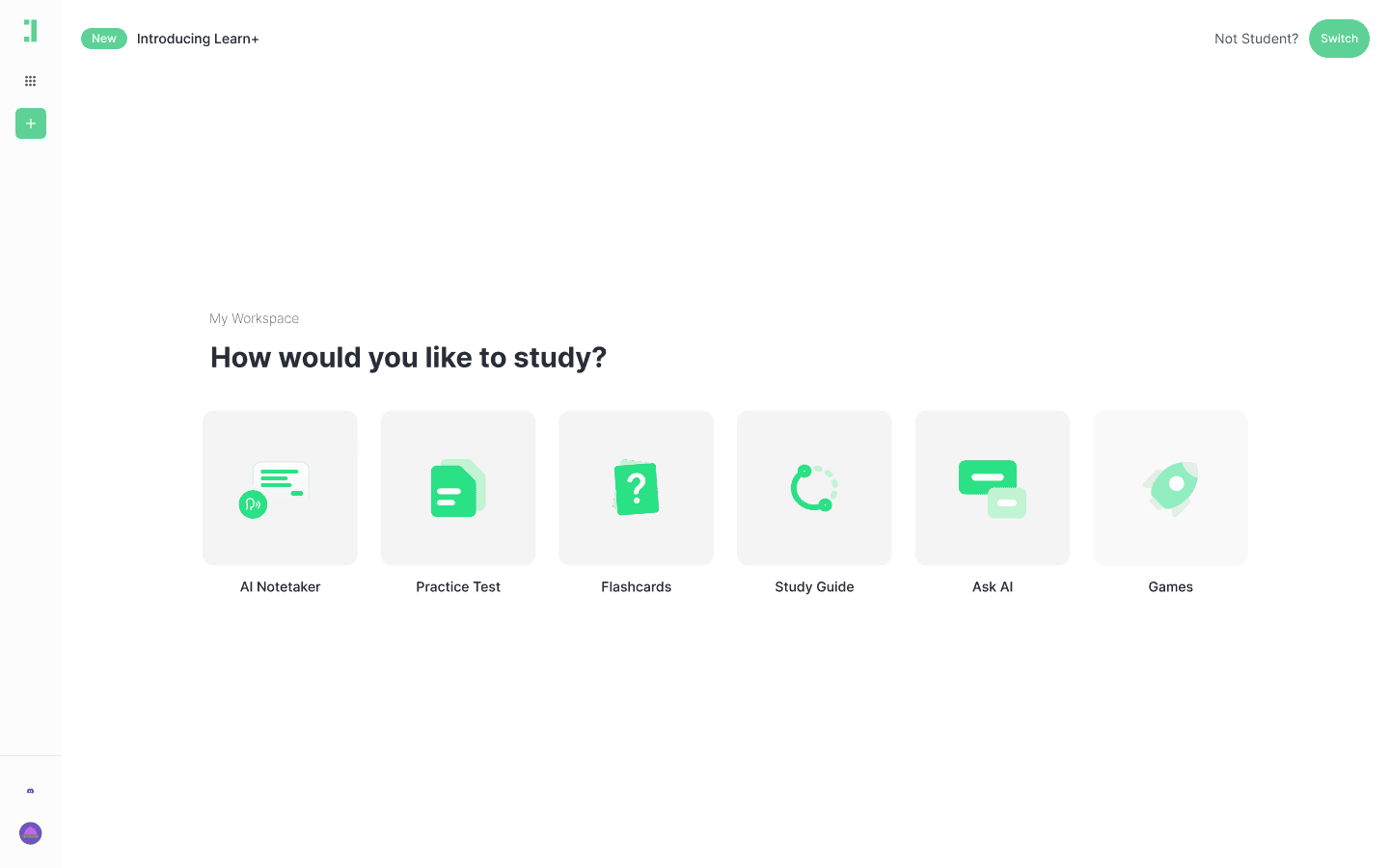
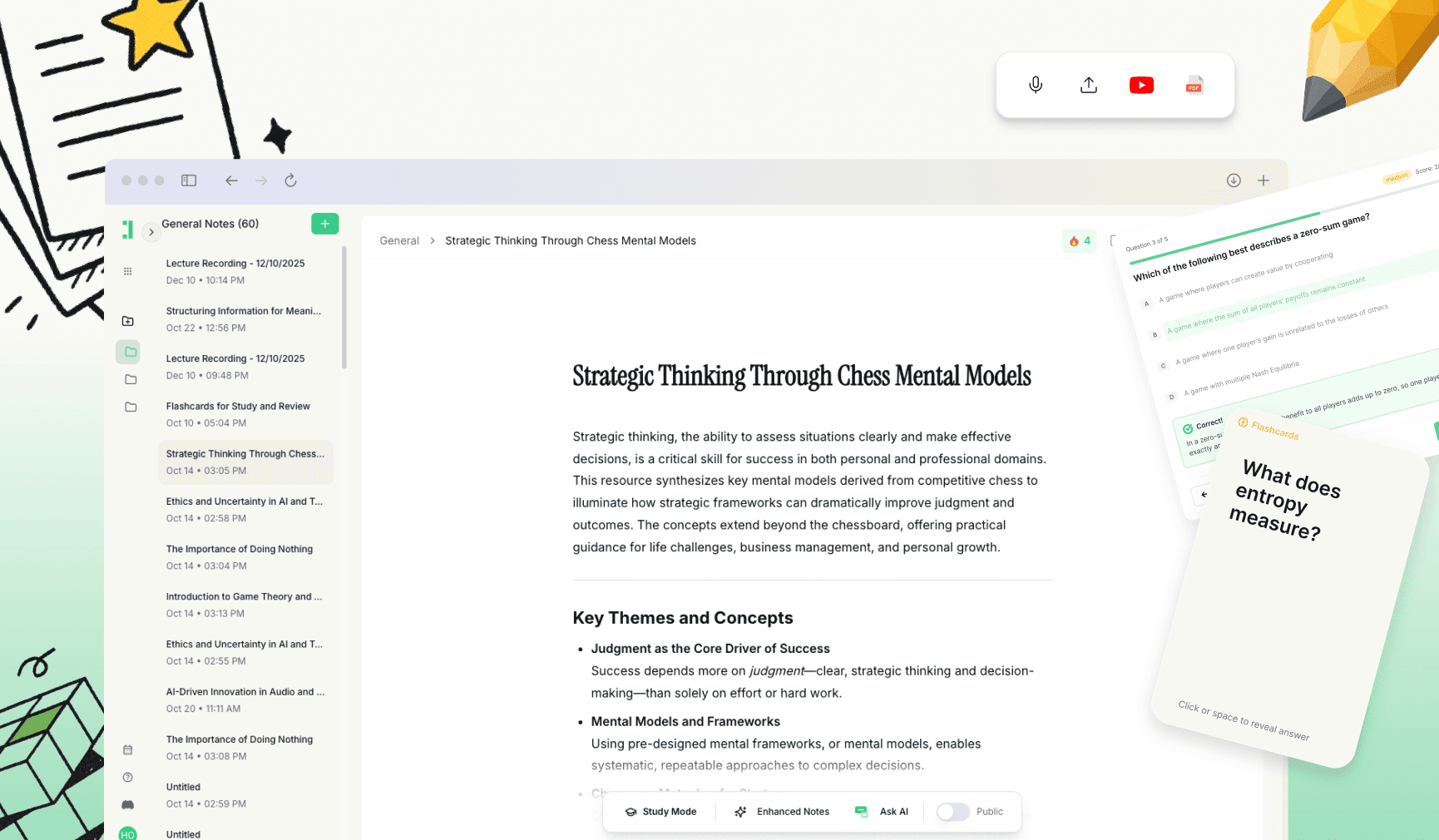
In Duetoday, the process is seamless: simply upload your biology materials, generate a custom deck, edit any specific details, and start your study session with active recall.
What are Protein Synthesis flashcards?
Protein Synthesis flashcards cover the essential biological processes where cells build proteins. This includes key terms like mRNA, tRNA, and ribosomes, as well as the specific stages of transcription in the nucleus and translation in the cytoplasm. They break down complex molecular pathways into bite-sized, testable questions.
The outcome is simple: instead of passively rereading your textbook, you test your brain on specific mechanisms and codon sequences to build long-term recall. If you already have lecture notes, Duetoday can generate a clean deck in minutes.
Why flashcards work for Protein Synthesis
Protein Synthesis requires a mix of memorizing specific definitions and understanding chronological sequences. Flashcards are perfectly suited for this because they force you to visualize the movement of molecules without looking at the answer.
Remember nitrogenous base pairing rules without cramming.
Separate similar concepts like Transcription vs. Translation.
Learn the protein-building process step-by-step (initiation, elongation, termination).
Practice applying the genetic code to convert DNA sequences into amino acids.
What to include in your Protein Synthesis flashcards
Effective flashcards follow the "one idea per card" rule. They should be question-based rather than long summaries. This ensures your brain doesn't get overwhelmed by too much information at once.
Definitions & key terms: "What is a codon?" or "Define the role of RNA polymerase."
Processes & steps: "What happens immediately after mRNA leaves the nucleus?"
Comparisons: "How is the A-site different from the P-site in a ribosome?"
Application: "If the DNA sequence is TAC, what is the corresponding mRNA codon?"
Example prompts for your deck include: "What is the start codon for translation?", "Which enzyme unwinds DNA during transcription?", and "What is the function of an anticodon?"
How to study Protein Synthesis with flashcards
We recommend a "two-pass" approach. First, build your deck using your notes and do a quick run-through to identify which steps of the central dogma are confusing you. Then, focus your energy on those specific gaps.
Make a deck from your notes (or generate it from biology slides).
Do one quick round to find weak spots in your understanding of RNA processing.
Review weak cards daily to cement the sequence in your memory.
Mix in harder application cards, like mutation effects, each session.
Do a final mixed review of both DNA and Protein Synthesis before your exam.
Generate Protein Synthesis flashcards automatically in Duetoday
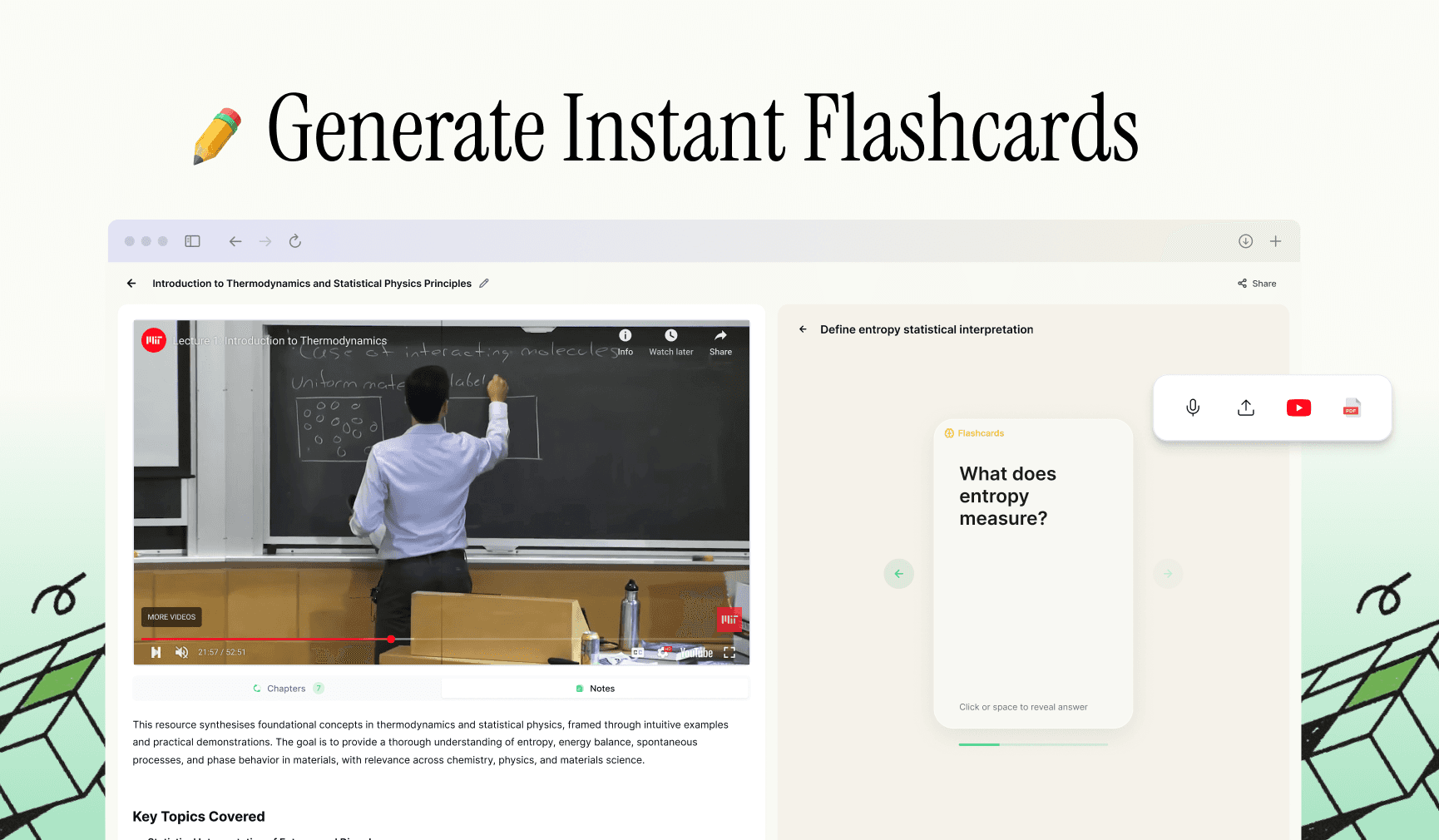
Making cards manually is slow, messy, and inconsistent—especially when you have to draw diagrams or copy long sequences. Duetoday eliminates the busywork so you can focus on learning.
Position yourself for success by uploading your PDF or lecture transcript and letting our AI handle the formatting. You get a professional study deck instantly.
Upload or paste your Protein Synthesis material.
Click Generate Flashcards.
Review, edit, and start studying.
Generate Protein Synthesis Flashcards in Duetoday
Start with your notes and get a deck you can actually use today.
Common Protein Synthesis flashcard mistakes
Most students make cards that are too wordy, which leads to "recognition" rather than "recall." Avoid these common pitfalls to study more effectively.
Cards are too long: Split complex steps like 'Translation' into five separate cards.
Only memorizing words: Add "why" prompts, such as "Why is the poly-A tail added to mRNA?"
Confusing RNA types: Create specific comparison cards for mRNA, tRNA, and rRNA.
No review schedule: Ensure you repeat the cards for the 'Elongation' phase more often if they are difficult.
Ready to generate your Protein Synthesis flashcards?
Stop rereading and start recalling. Turn your complex biology notes into a streamlined study tool in seconds.
Start Generating Flashcards
Works with notes, PDFs, slides, and transcripts.
FAQ
How many flashcards do I need for Protein Synthesis? Usually, 30 to 50 cards are enough to cover the main definitions, the steps of transcription and translation, and basic DNA coding.
What’s the best format for these flashcards? Question-and-answer format works best. For example: 'Where does translation occur?' vs 'The cytoplasm is where...'
How often should I review them? Review your deck daily for the first three days, then use spaced repetition to review every few days until your exam.
Should I make cards from a textbook or slides? Lecture slides are usually better as they highlight what your professor thinks is most important for the test.
How do I stop forgetting the steps after a few days? Use active recall without looking at your notes. If you get a step wrong, mark it as 'hard' to see it more frequently.
What if my flashcards feel too easy? Add application questions, such as 'Predict the outcome if a point mutation occurs in the second codon.'
Can I generate Protein Synthesis flashcards from a PDF? Yes, Duetoday can read your biology PDFs and extract the most important concepts for your cards.
Are digital flashcards better than paper? Digital cards are superior for this topic because they use AI to automate spaced repetition and are easier to edit.
How long does it take to make a full deck? With AI, it takes less than a minute. Manually, it could take over an hour to write and format 50 cards.
Can Duetoday organize my flashcards? Yes, Duetoday categorizes your cards by topic so you can keep transcription and translation organized.

Duetoday is an AI-powered learning OS that turns your study materials into personalised, bite-sized study guides, cheat sheets, and active learning flows.