Generate Flashcards for Property Law
Generate or make custom Property Law flashcards from your notes. A complete guide on using AI to master legal concepts.
Generate Flashcards with AI Free

Maximize Your Study Time with AI-Generated Property Law Flashcards
Turn your legal notes, case briefs, property statutes, or dense textbooks into interactive Property Law flashcards so you can review faster and master complex legal doctrines. Whether you are prepping for a 1L exam or the Bar, our tool helps you memorize rules and applications without manual data entry.
Generate Property Law Flashcards | Upload Notes
In Duetoday, you simply upload your material, and our AI extracts the key legal principles to create a custom study deck. You can then review, edit, and use our spaced repetition system to ensure you never forget a rule of perpetuity again.
What are Property Law flashcards?
Property Law flashcards are targeted study tools that cover essential legal concepts, including types of ownership, future interests, landlord-tenant law, and real estate transactions. These cards break down abstract legal theories into digestible questions regarding ownership rights and land usage.
The outcome is simple: instead of passively rereading case law or statutes, you actively test your knowledge. This builds the muscle memory required to identify legal issues in complex fact patterns quickly and accurately.
If you already have case summaries or outlines, Duetoday can generate a professional deck in minutes.
Why flashcards work for Property Law
Property Law is notorious for its archaic terminology and technical rules. Flashcards are one of the most effective ways to study this subject because they isolate specific doctrines, helping you manage the high volume of definitions and procedural steps required in legal analysis.
Memorize future interests and estates (Fee Simple, Life Estates, etc.) without cramming.
Separate similar concepts like Joint Tenancy versus Tenancy in Common.
Learn the steps for adverse possession or the requirements of a valid deed.
Practice applying the Rule Against Perpetuities to different scenarios quickly.
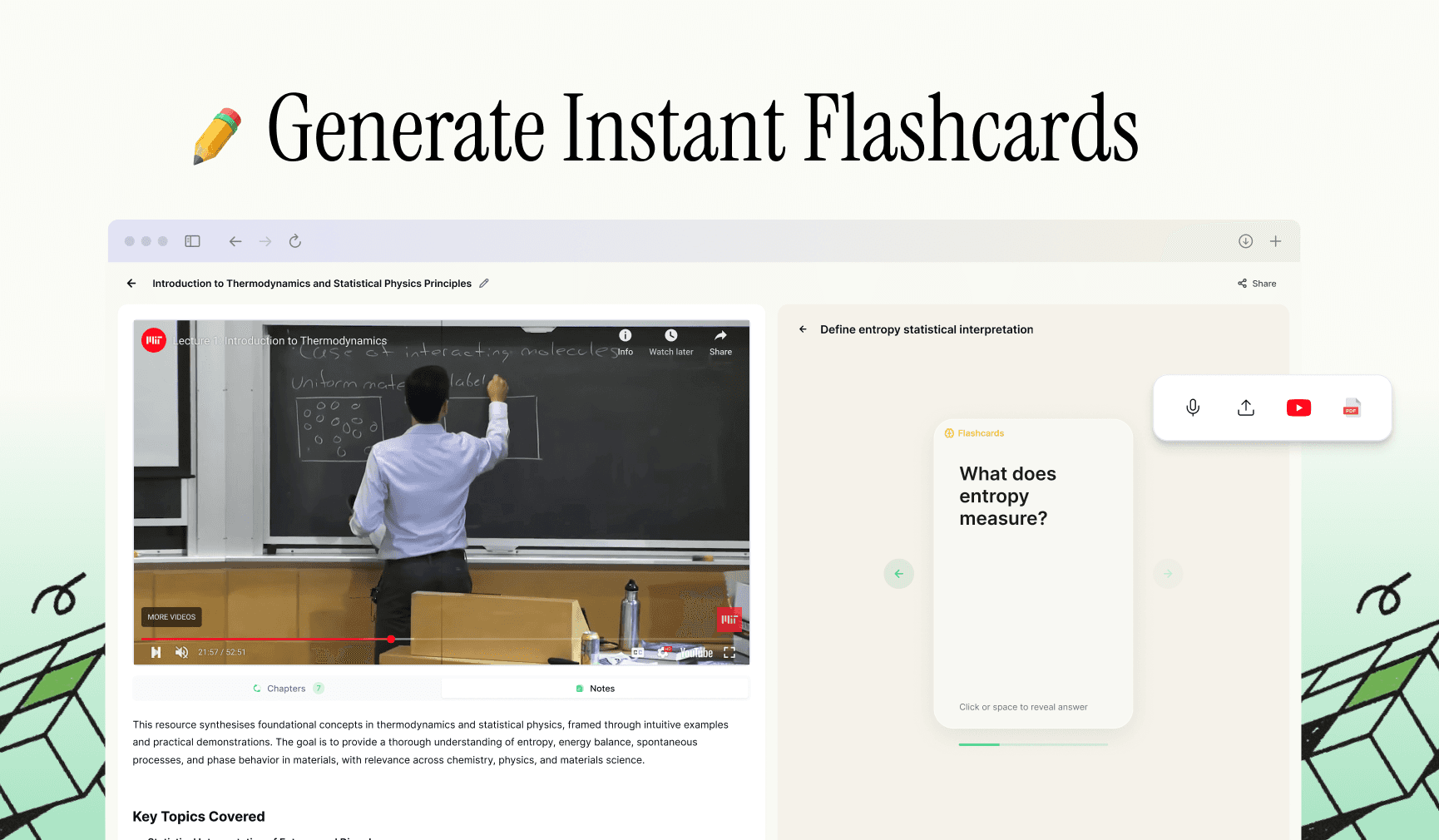
What to include in your Property Law flashcards
Effective Property Law flashcards follow the atomic rule: one specific legal concept per card. This prevents you from glazing over complex multi-part rules and ensures you truly understand each element of a statute or case.
Definitions & Terms: Focus on things like Easements by Prescription or Eminent Domain.
Elements of a Claim: List the specific requirements for things like Adverse Possession.
Comparisons: Contrast concepts such as Real Covenants versus Equitable Servitudes.
Hypothetical Scenarios: Brief What happens if... prompts to test application.
Example prompts: What are the four unities of Joint Tenancy?, Define the Fair Housing Act's scope, and What is the difference between a vested and contingent remainder?
How to study Property Law with flashcards
To master Property Law, you need a systematic approach to your review sessions. We recommend a two-pass system: build your deck from your syllabus and then refine it through active recall rounds.
Generate a deck from your class notes or casebook summaries.
Run a quick session to identify which interests or land rules are confusing.
Review these weak cards daily to move them into long-term memory.
Mix in scenario-based cards to practice issue spotting.
Perform a cumulative review before your final exam or Bar prep assessment.
Generate Property Law flashcards automatically in Duetoday
Manually writing out hundreds of cards for Property Law is a waste of valuable study time. Duetoday automates the process so you can focus on the actual learning. Simply upload your PDF outlines, lecture slides, or case briefs, and get a study-ready deck instantly.
Upload your Property Law material.
Click Generate Flashcards.
Review, edit, and keep your legal prep organized in one place.
Generate Property Law Flashcards in Duetoday
Start with your notes and get a deck you can actually use today.
Common Property Law flashcard mistakes
Most students fail by making their cards too dense. If a card contains an entire case summary, you won't remember the specific rule. Avoid long paragraphs; instead, ask What was the holding in Pierson v. Post? in a single sentence. Also, don't neglect the why—make sure to include cards that ask for the policy rationale behind specific property rules to help with essay writing.

FAQ
How many flashcards do I need for Property Law? Most students find that 150-250 cards cover the core doctrines, though specialized courses may require more.
What’s the best format for Property Law flashcards? A question-on-front, rule-on-back format is best for definitions, while scenario-based cards work best for practicing application.
How often should I review Property Law flashcards? Review daily for the first week, then use a spaced repetition schedule to revisit challenging topics like future interests every few days.
Should I make cards from a textbook or slides? Use lecture slides for what your professor emphasizes, and textbooks to fill in the technical elements of the law.
How do I stop forgetting the Rule Against Perpetuities? Use specific cards for each step of the analysis and repeat them more frequently than simpler topics.
Can I generate Property Law flashcards from a PDF? Yes, Duetoday allows you to upload legal PDFs and automatically converts the text into organized flashcards.
Are digital flashcards better than paper for law? Digital is usually better for law students because you can easily update cards as you learn new nuances and use AI for instant generation.
How long does it take to make a Property Law deck? Manually it takes hours; with Duetoday, it takes less than a minute to generate a full deck from your notes.
Can Duetoday organize my cards by topic? Yes, you can categorize your decks by sub-topics like 'Landlord-Tenant' or 'Closing and Deeds' for focused study.

Duetoday is an AI-powered learning OS that turns your study materials into personalised, bite-sized study guides, cheat sheets, and active learning flows.