Generate Flashcards for Probability Theory
Make Probability Theory flashcards from your notes to master distributions and Bayes' theorem. Use our guide to generate study decks.
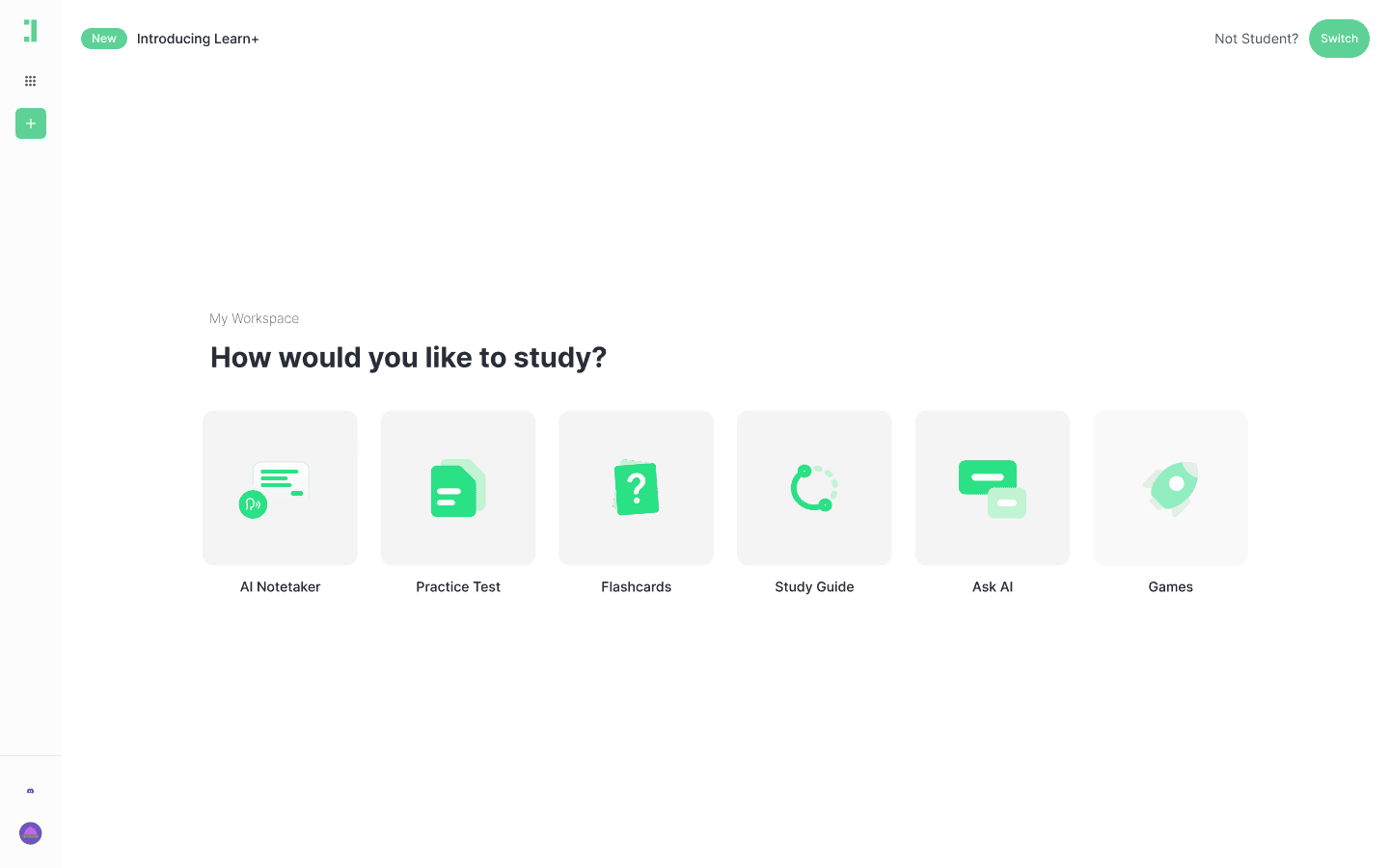
Generate Flashcards with AI Free
What are Probability Theory flashcards?
Probability Theory flashcards are concise study tools designed to help you master the mathematical framework of uncertainty. These cards cover essential concepts such as sample spaces, events, random variables, and complex probability distributions. Instead of passively reading through dense textbooks, you use these cards to force your brain to retrieve specific formulas and proofs.
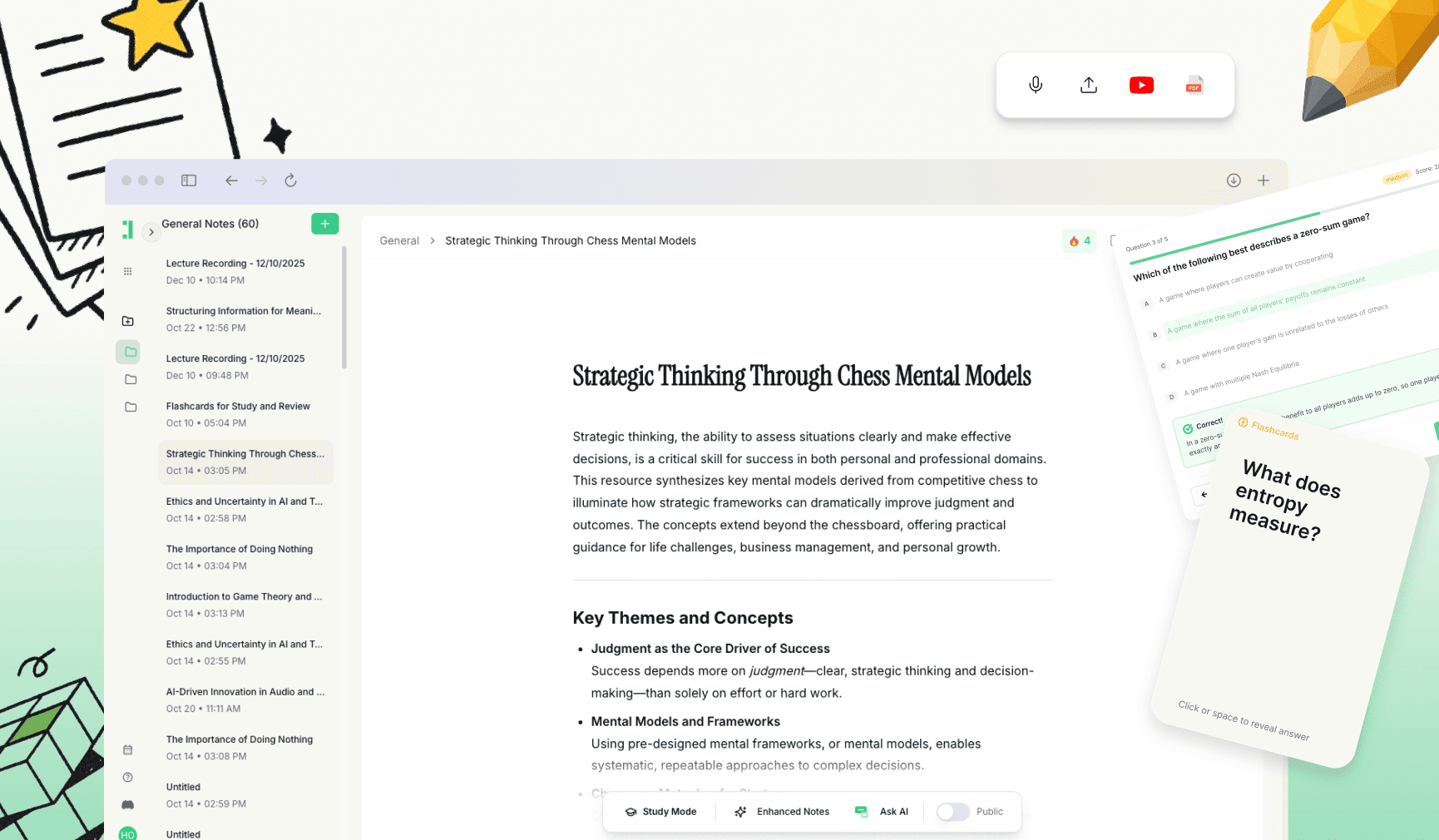
The goal is to transform abstract mathematical theories into concrete, testable questions. Whether you are dealing with frequentist statistics or Bayesian inference, flashcards help you break down complex theorems into manageable bites. If you already have notes or lecture slides, Duetoday can generate a clean deck in minutes so you can spend your time practicing rather than formatting.
Why flashcards are one of the best ways to study Probability Theory
Probability Theory requires a mix of rote memorization for formulas and logical intuition for solving problems. Flashcards bridge this gap by using active recall, which is significantly more effective than highlighting text. By testing yourself on the difference between independent and mutually exclusive events, you build stronger neural pathways for those specific concepts.
Remember complex formulas like the Central Limit Theorem without last-minute cramming.
Separate similar concepts, such as Discrete vs. Continuous random variables.
Learn multi-step processes like calculating conditional probabilities or joint distributions.
Practice applying rules like the Law of Total Probability to specific scenarios quickly.
What to include in your Probability Theory flashcards
The most effective probability cards follow the "one idea per card" rule. Avoid cluttering a single card with an entire chapter's worth of information. Focus on converting theorems into questions that require a specific answer.
Definitions & Key Terms: "What is an expected value?" or "Define a Bernoulli trial."
Processes & Steps: "What is the first step in applying Bayes' Theorem?"
Comparisons: "How does a Poisson distribution differ from a Binomial distribution?"
Application: "When would you use a T-distribution instead of a Z-distribution?"
Use these example prompts to guide your study: "State the formula for Variance," "What are the three axioms of probability?", or "Describe the properties of a Normal Distribution curve."
How to study Probability Theory with flashcards
Success in probability comes from a "two-pass" approach. First, use Duetoday to build your deck from your syllabus or notes. In the first pass, focus on understanding the logic behind the cards. In the second pass, focus on speed and accuracy. Reviewing your deck in rounds ensures that you aren't just memorizing the order of the cards, but the underlying mathematical principles.
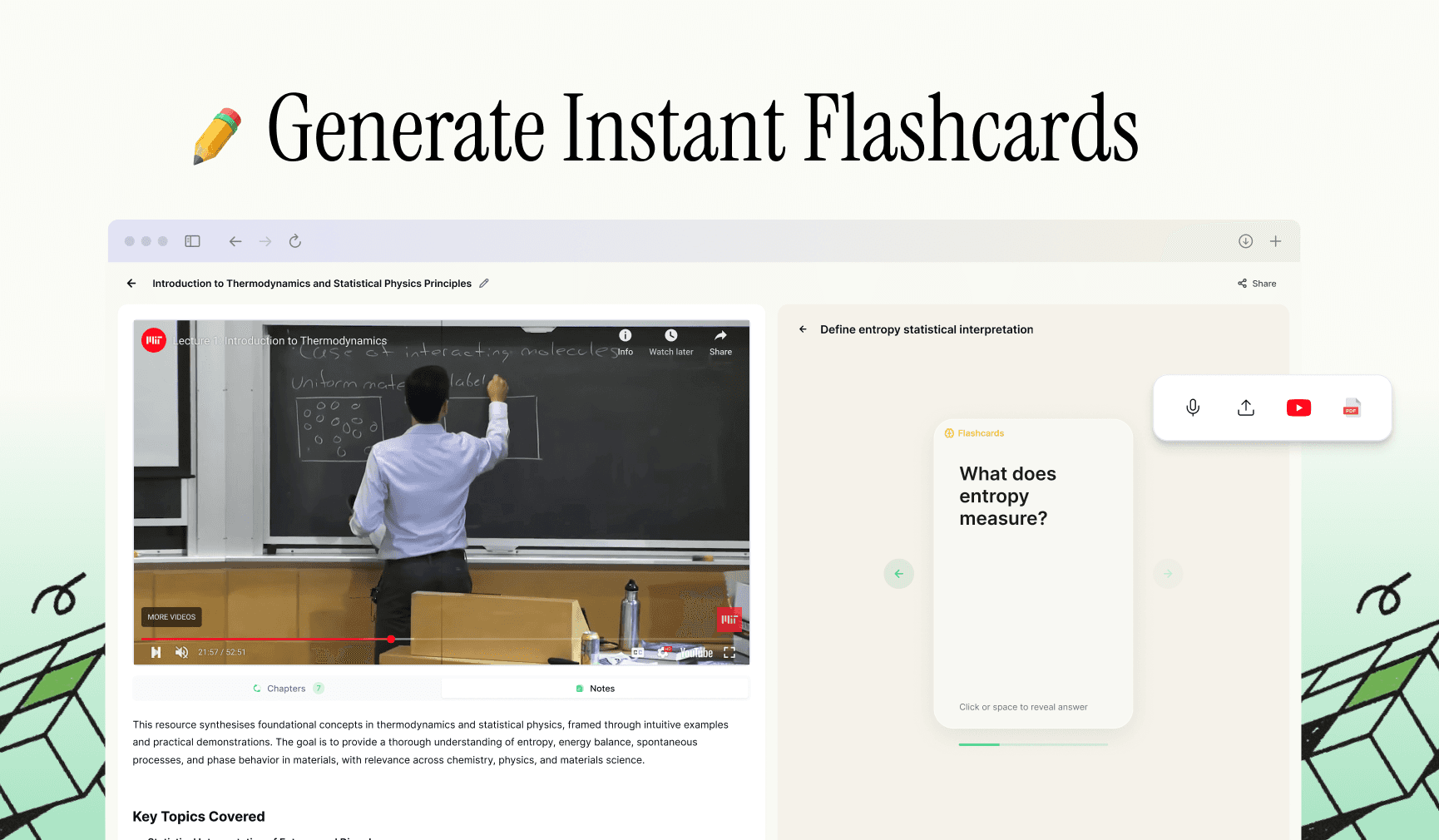
Make a deck from your notes or generate it automatically from your PDF textbook.
Do one quick round to identify which distributions or theorems are tripping you up.
Review these "weak" cards daily using spaced repetition.
Mix in harder application problems every few sessions to keep your brain challenged.
Complete a final mixed review of all topics before your exam to ensure total recall.
Generate Probability Theory flashcards automatically in Duetoday
Making math flashcards manually is a pain—typing out formulas and drawing notations takes forever. This manual process often becomes a form of procrastination. Duetoday eliminates this friction by using AI to scan your technical documents and extract the most important information for you.
By positioning Duetoday as your study partner, you can turn a 50-page PDF into a structured deck of 40 flashcards in seconds. Simply upload your materials, let the AI identify the core concepts, and start your study session immediately.
Upload or paste your Probability Theory lecture notes or slides.
Click "Generate Flashcards."
Review, edit the formulas if needed, and start studying.
Common Probability Theory flashcard mistakes
Many students create cards that are too wordy, which leads to "recognition" rather than "recall." If a card has a whole paragraph on it, you'll recognize the text without actually knowing the math. Keep your cards punchy. Another common mistake is neglecting the "why"—don't just memorize a formula; include a card that asks for the conditions under which that formula is valid. Finally, ensure you are using spaced repetition; if you only study the night before the test, you won't retain the logical intuition needed for advanced probability.
FAQ
How many flashcards do I need for Probability Theory? Aim for 50-100 cards covering the major distributions, axioms, and theorems for a standard undergraduate course.
What’s the best format for Probability Theory flashcards? A question-on-front, formula-on-back format works best, especially for practicing derivations and calculations.
How often should I review Probability Theory flashcards? Review daily for the first week, then transition to every 3 days as the concepts move into your long-term memory.
Should I make cards from a textbook or slides? Use lecture slides for the "must-know" exam topics and textbooks for deep-dives into complex proofs.
How do I stop forgetting formulas after a few days? Use spaced repetition through Duetoday to ensure you see the most difficult formulas just as you are about to forget them.
What if my flashcards feel too easy? Add "Scenario Cards" where you have to identify which distribution to use based on a word problem description.
Can I generate Probability Theory flashcards from a PDF? Yes, Duetoday can parse PDF text and formulas to create structured study decks automatically.
Are digital flashcards better than paper for math? Digital cards are superior because they allow for automated spaced repetition, which is critical for mastering complex math subjects.
How long does it take to make a full Probability deck? Using AI, you can generate a comprehensive deck in under 60 seconds, compared to hours of manual typing.
Can Duetoday organize my flashcards by topic? Yes, you can categorize your cards into decks for specific topics like 'Bayesian Stats' or 'Continuous Distributions'.

Duetoday is an AI-powered learning OS that turns your study materials into personalised, bite-sized study guides, cheat sheets, and active learning flows.