Generate Flashcards for Price Controls (Ceilings and Floors)
Generate Price Controls flashcards in seconds. Turn your Econ notes into study tools. Try for free!
Generate Flashcards with AI Free
Generate Flashcards for Price Controls (Ceilings and Floors)
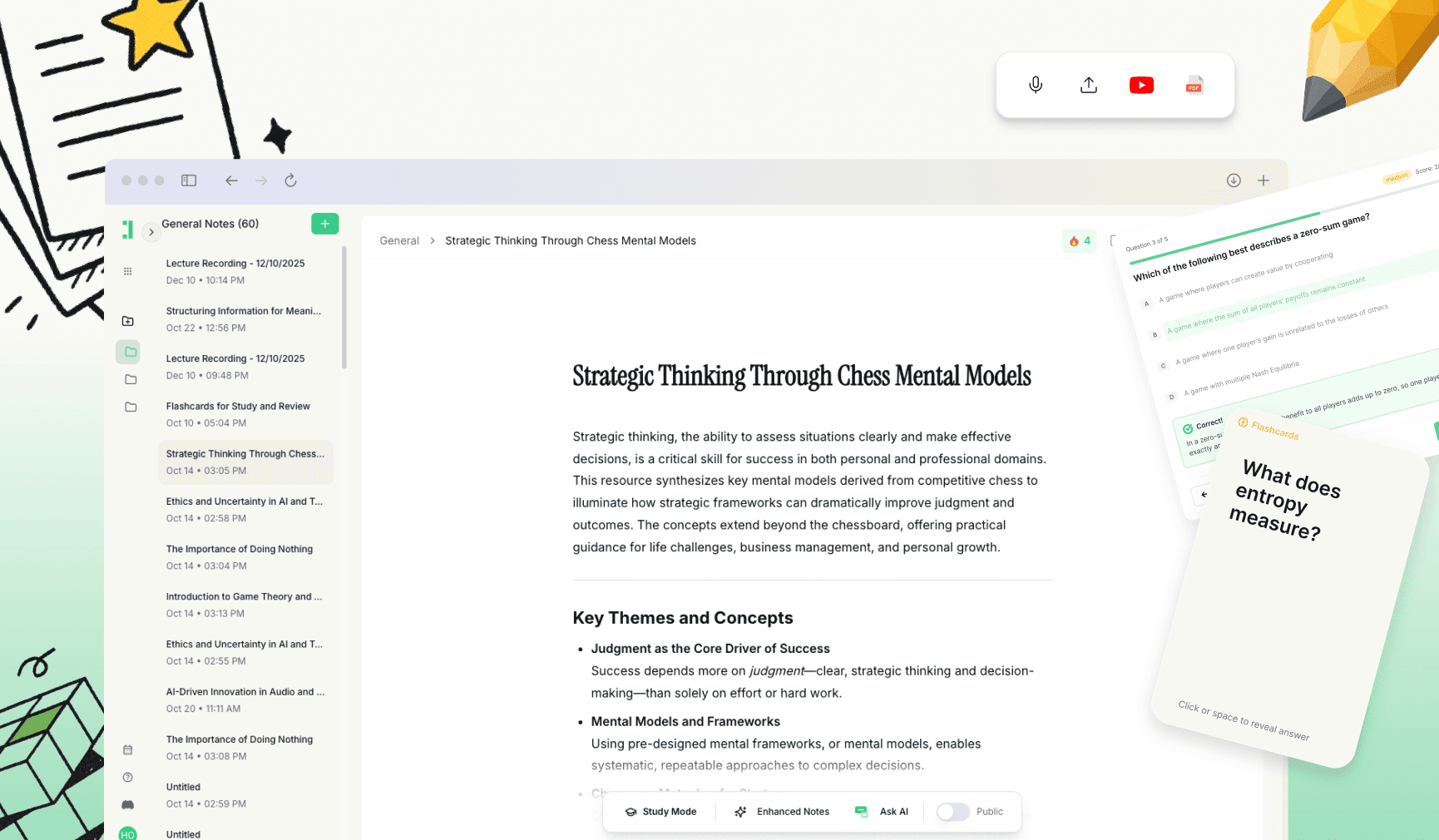
Turn your notes, PDFs, slides, or economics lectures into Price Controls flashcards so you can review faster and remember more. Whether you are studying microeconomics or global markets, mastering the mechanics of ceilings and floors is essential for exam success.
Generate Price Controls FlashcardsUpload notes / paste text
In Duetoday, the process is simple: upload your materials, and our AI identifies key economic concepts to generate a clean deck. You can then review, edit, and study using active recall to ensure you never confuse a surplus with a shortage again.
What are Price Controls flashcards?
Price controls flashcards cover the government-imposed limits on the prices of goods and services in a market. These cards focus on defining price ceilings (maximum prices) and price floors (minimum prices), identifying their placement relative to equilibrium, and predicting their impact on quantity demanded and supplied.
The outcome is a shift from passive reading to active testing. Instead of just looking at supply and demand curves, you test your ability to predict market outcomes like shortages, surpluses, and deadweight loss. If you already have notes, Duetoday can generate a clean deck in minutes.
Why flashcards are one of the best ways to study Price Controls
Price controls require a mix of rote memorization for definitions and logical application for graphing. Flashcards help you link specific government interventions to their inevitable market distortions without needing to re-read entire textbook chapters.
Remember key terms like 'binding' vs. 'non-binding' without cramming.
Separate similar concepts (e.g., Rent Control vs. Minimum Wage).
Learn the step-by-step logic of how a ceiling leads to a shortage.
Practice applying rules to determine the size of deadweight loss.
What to include in your Price Controls flashcards
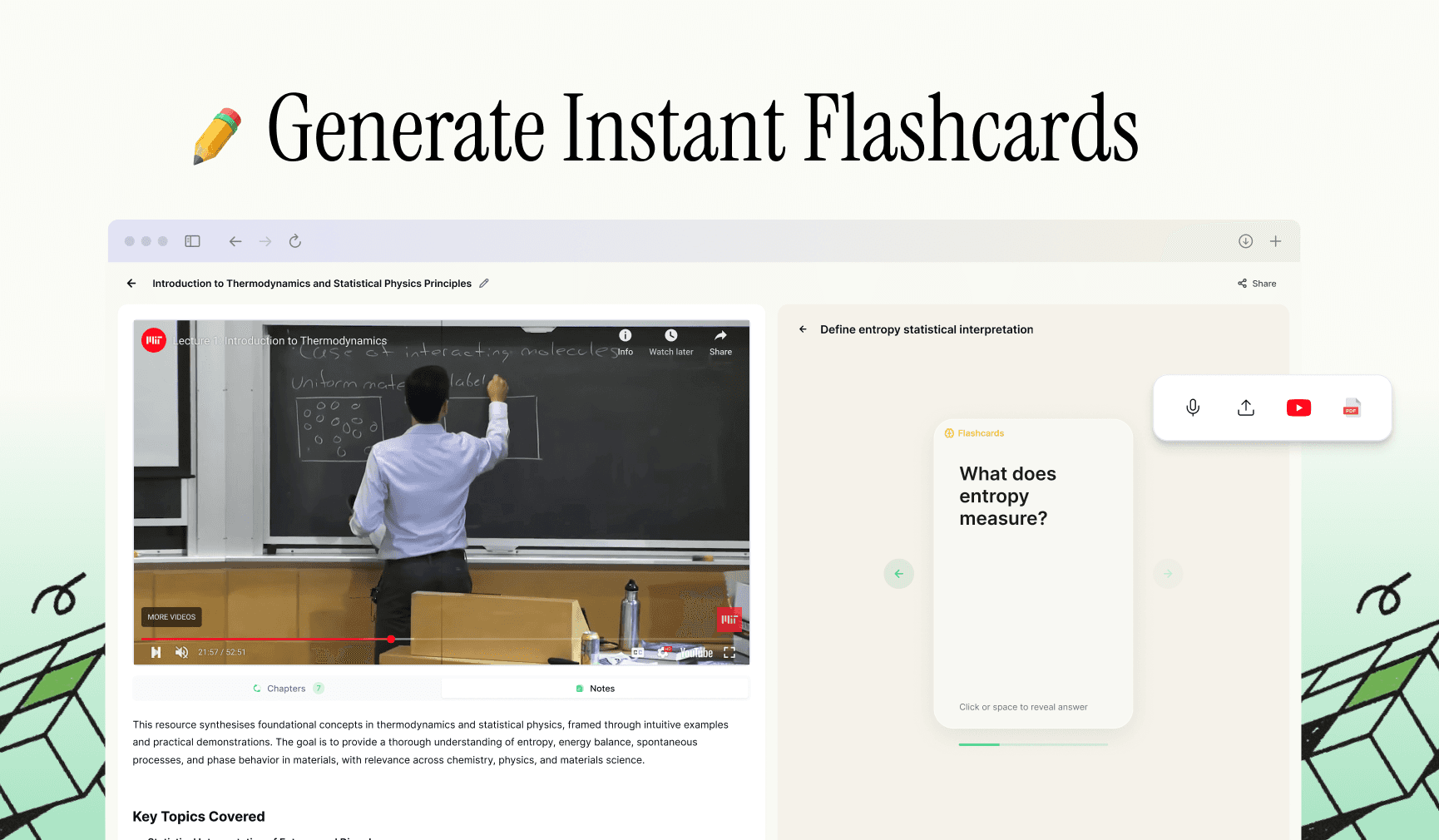
Good economics flashcards follow the "one idea per card" rule. They should be question-based to force your brain to retrieve the answer rather than just recognizing the graph.
Definitions & key terms: "What is a binding price ceiling?"
Processes & steps: "How does a price floor affect the quantity supplied?"
Comparisons: "How is a price ceiling different from a price floor in terms of market outcome?"
Application: "What happens to total surplus if a ceiling is set above equilibrium?"
Example prompts: "Define a shortage in the context of rent control," "Calculate deadweight loss from a provided graph," or "Identify the winner and loser in a minimum wage scenario."
How to study Price Controls with flashcards (a simple system)
Use a two-pass approach: build your deck using Duetoday, then review in focused rounds. When you hit a card about 'deadweight loss' that slows you down, mark it for high-frequency repetition.
Make a deck from your lecture slides or textbook chapters.
Do one quick round to find which graphs confuse you.
Review weak cards—like 'non-binding controls'—daily.
Mix in harder application cards involving consumer and producer surplus.
Do a final mixed review before your midterm or AP exam.
Generate Price Controls flashcards automatically in Duetoday
Making cards manually is slow and drawing graphs by hand can be messy. Duetoday automates the tedious part of studying so you can focus on understanding the economic theory.
Upload your Econ PDF or paste your lecture notes.
Click Generate Flashcards.
Review your AI-generated deck and start studying.
Generate Price Controls Flashcards in Duetoday
Start with your notes and get a deck you can actually use today to master market interventions.
Common Price Controls flashcard mistakes
Many students make cards that are too wordy or focus on the wrong details. Avoid these pitfalls:
Cards are too long: Don't try to explain the whole graph on one card; split it into specific questions.
Ignoring 'Non-Binding': Ensure you have cards explaining why a ceiling above equilibrium has no effect.
Only memorizing words: Include 'explain why' prompts to understand the logic behind the shortage.
No application: Add cards that ask you to predict the shift in a specific scenario, like a new tax or subsidy.
Ready to generate your Price Controls flashcards?
Stop rereading your textbook and start recalling the material. Upload your notes, generate your deck, and master Price Controls today.
Start Generating Flashcards
FAQ
How many flashcards do I need for Price Controls?
Usually, 20-30 cards are enough to cover the core concepts of ceilings, floors, binding vs. non-binding, and the resulting surpluses or shortages.
What is the best format for Price Controls flashcards?
A question-on-front, answer-on-back format works best. Try to include 'If/Then' scenarios, such as 'If the government sets a floor below equilibrium, what happens?'
How often should I review Price Controls flashcards?
Review them daily leading up to an exam. Once you master the logic, you can drop the frequency to once every few days to maintain recall.
Should I make cards from a textbook or lecture notes?
Lecture notes are often better because they highlight exactly what your professor expects you to know for the test, whereas textbooks can include excessive detail.
How do I stop forgetting the difference between ceilings and floors?
Think of them as 'opposites.' A ceiling is on top but only matters if it's 'too low' (below the middle), and a floor is on the bottom but only matters if it's 'too high.'
What if my flashcards feel too easy?
If they feel easy, start adding 'Why' questions. Instead of 'What is a floor?', ask 'Why does a price floor lead to inefficiently high quality?'
Can I generate Price Controls flashcards from a PDF automatically?
Yes, Duetoday allows you to upload any economics PDF and converts the text and concepts into organized flashcards instantly.
Are digital flashcards better than paper for Economics?
Digital cards are generally better because they allow for spaced repetition algorithms that show you the hardest economic concepts more frequently.
How long does it take to make a full Price Controls deck?
With Duetoday, it takes less than a minute. Manually, it might take you an hour to write out all the definitions and scenarios.
Can Duetoday handle the graphs in my notes?
Duetoday's AI analyzes the text descriptions and relationships within your charts to create cards that test your understanding of those visual data points.

Duetoday is an AI-powered learning OS that turns your study materials into personalised, bite-sized study guides, cheat sheets, and active learning flows.