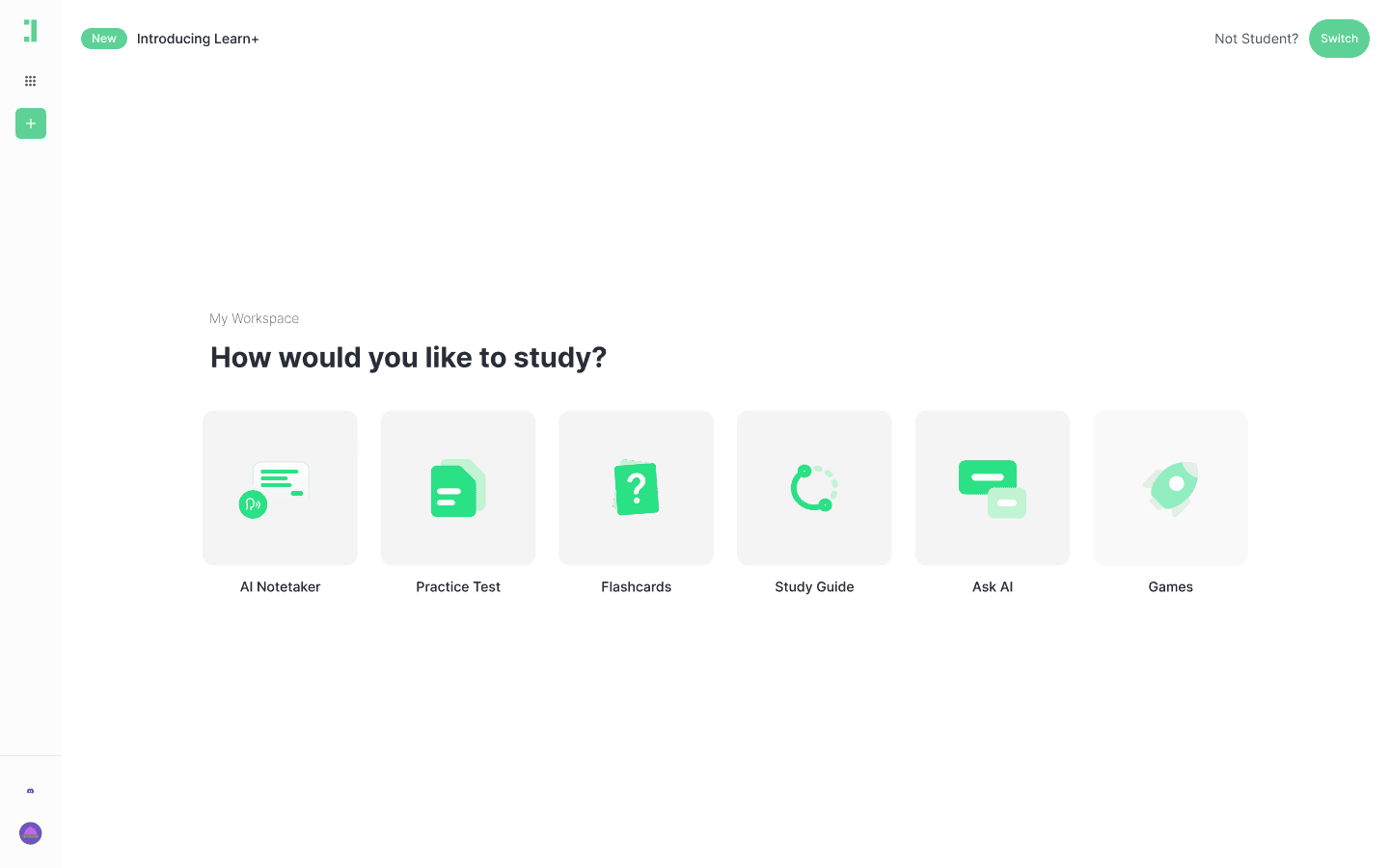
Generate Flashcards for Physiology
Make physiology flashcards from your notes. This guide shows how to generate study sets for anatomy and medical subjects.
Generate Flashcards with AI Free
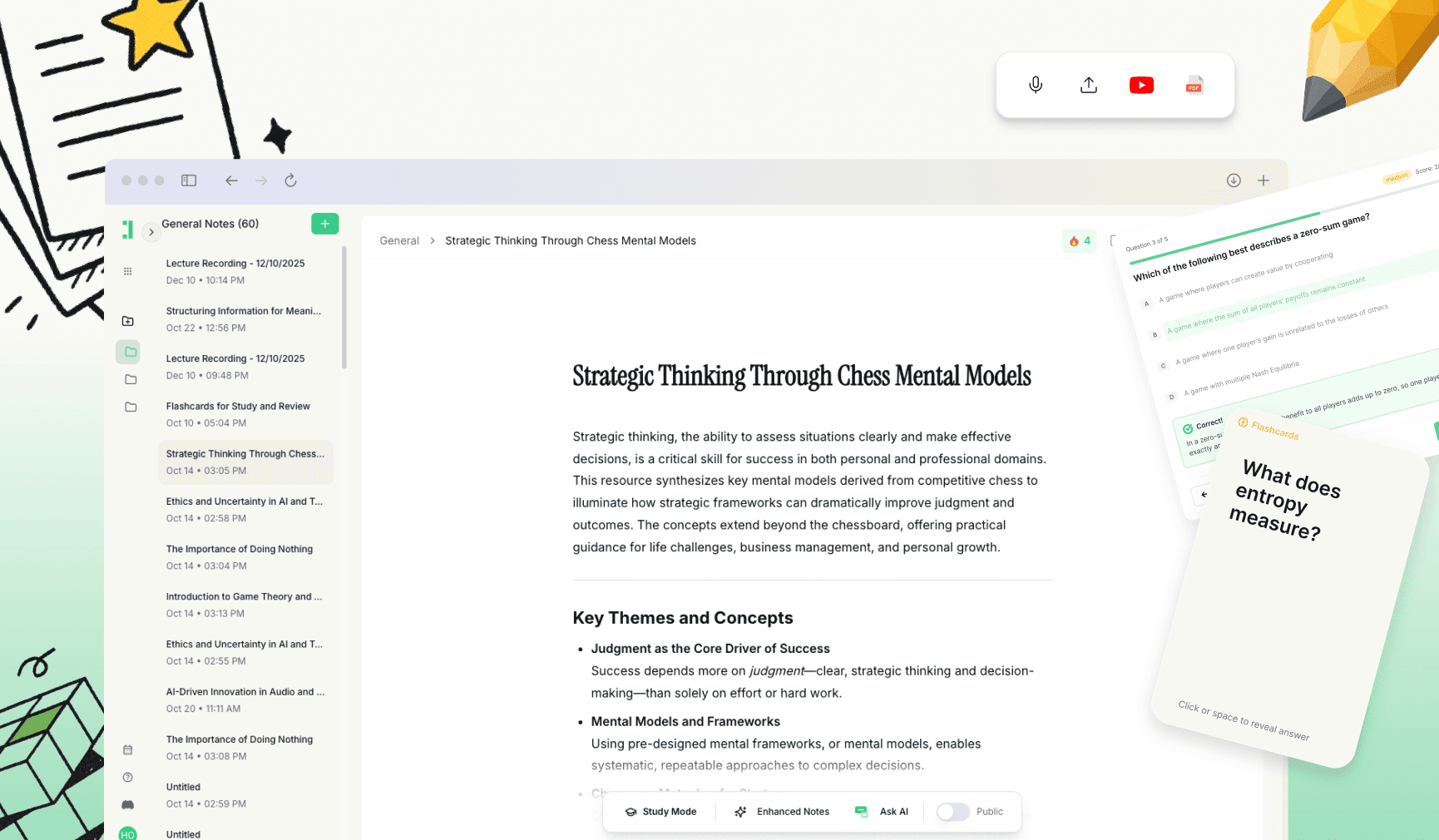
What are Physiology flashcards?
Physiology flashcards are concise study tools designed to help you master the functions and mechanisms of living systems. They cover everything from cellular signaling and metabolic pathways to the complex interactions between organ systems like the cardiovascular or nervous systems.
The goal of these flashcards is to shift your study habit from passive reading to active testing. Instead of just reviewing how a kidney filters blood, you use flashcards to prompt your brain to explain the process from scratch, building stronger neural connections and better long-term retention. If you already have lecture notes, Duetoday can generate a clean deck in minutes.
Why flashcards are one of the best ways to study Physiology
Physiology requires more than just memorizing names; it requires understanding how systems react to changes (homeostasis) and the specific sequences of biological events. Flashcards break these dense concepts into manageable bites.
By using active recall and spaced repetition, you focus more energy on the mechanisms you find difficult, ensuring you don't waste time on what you already know. This is crucial for a subject where one small misunderstanding of a feedback loop can lead to confusion across an entire chapter.
Remember complex feedback loops without cramming
Separate similar concepts (e.g., Sympathetic vs. Parasympathetic)
Learn biological processes step-by-step (e.g., the Cardiac Cycle)
Practice applying physiological rules to clinical scenarios
What to include in your Physiology flashcards
Effective physiology cards focus on why and how rather than just what. To get the most out of your study sessions, ensure your cards follow the rule of one idea per card to avoid cognitive overload.
There are four main types of cards you should focus on: definitions for foundational terminology, process steps for sequences, comparisons for contrasting systems, and application questions for clinical scenarios.
Definitions & key terms: What is the Resting Membrane Potential?
Processes & steps: What is the first step in the Renin-Angiotensin-Aldosterone System?
Comparisons: How does skeletal muscle contraction differ from smooth muscle?
Application: What happens to heart rate if the Vagus nerve is inhibited?

How to study Physiology with flashcards (a simple system)
Mastering physiology is a marathon, not a sprint. We recommend a two-pass approach: first, use Duetoday to build your deck from your syllabus, and then review in structured rounds. This ensures you cover the entire breath of the material while drilling down on the hardest mechanics.
Start with quick daily sessions. It is better to study for 20 minutes every day than for four hours once a week. Use the first pass to identify weak cards and tag them for high-frequency review.
Make a deck from your notes (or generate it from PDF content).
Do one quick round to find weak spots in system knowledge.
Review weak cards daily to master difficult pathways.
Mix in a few harder cards each session to build connections.
Do a final mixed review before your lab practicals or exams.
Generate Physiology flashcards automatically in Duetoday
Making cards manually for a subject as dense as physiology is incredibly slow. While you spend hours writing out cards for the respiratory system, you could have already finished your first review session. Duetoday automates the creation process so you can focus on learning.
Simply upload your lab manuals, textbook chapters, or lecture slides. Our AI analyzes the physiological mechanisms and creates high-quality, question-based flashcards instantly.
Upload or paste your Physiology material
Click Generate Flashcards
Review, edit, and start studying immediately
Common Physiology flashcard mistakes (and how to fix them)
Most students make their cards too wordy. If a card looks like a paragraph, you aren't testing your memory; you're testing your reading speed. Keep cards punchy and specific.
Cards are too long → split complex systems into one step per card.
Only memorizing vocabulary → add explain the mechanism prompts.
Confusing similar gradients → add comparison cards for ion movements.
No review schedule → use Duetoday's system to repeat tough cards.
Neglecting homeostatic shifts → add scenario cards (e.g., If pH drops...).
Ready to generate your Physiology flashcards?
Don't spend another hour copying notes onto paper cards. Upload your physiology materials to Duetoday and let AI handle the heavy lifting. Turn your notes into a powerful study deck and start mastering the human body today.
FAQ
How many flashcards do I need for Physiology?
For a standard chapter, 30-50 cards are usually enough to cover the main mechanisms without becoming overwhelming.
What’s the best format for Physiology flashcards?
A question-and-answer format is best, specifically focusing on cause-and-effect relationships and homeostatic responses.
How often should I review Physiology flashcards?
Review daily. Physiology is cumulative, so staying fresh on early concepts like cell transport is vital for later topics like renal function.
Should I make cards from a textbook or lecture notes?
Use lecture notes for the core concepts your professor emphasizes, and use the textbook to fill in gaps for complex processes.
How do I stop forgetting Physiology after a few days?
Use spaced rotation. Instead of stopping once you get a card right, see it again in 2 days, then 5 days, to lock it into long-term memory.
What if my flashcards feel too easy?
Try to move from 'what' questions to 'how' questions. Instead of naming a hormone, ask how that hormone changes a specific target cell's behavior.
Can I generate Physiology flashcards from a PDF automatically?
Yes, Duetoday can scan your physiology PDFs and instantly extract the key processes into a ready-to-study flashcard deck.
Are digital flashcards better than paper for Physiology?
Digital cards are generally better because they allow for easier organization of complex diagrams and the use of automated spaced repetition algorithms.
How long does it take to make a full Physiology deck?
Manually, it can take hours. With Duetoday, you can generate a comprehensive deck from your notes in under a minute.
Can Duetoday organize my flashcards by body system?
Yes, you can upload notes for specific systems like 'Cardiovascular' or 'Endocrine' and Duetoday will keep your decks organized and searchable.

Duetoday is an AI-powered learning OS that turns your study materials into personalised, bite-sized study guides, cheat sheets, and active learning flows.