Generate Flashcards for Philosophy of Mind
Generate Philosophy of Mind flashcards to help you study subjects like consciousness and dualism using AI.
Generate Flashcards with AI Free
Generate Flashcards for Philosophy of Mind
Turn your notes, PDFs, slides, or lectures into Philosophy of Mind flashcards so you can review faster and remember more. Whether you are tackling the hard problem of consciousness or debating functionalism, our AI helps you master complex theories in minutes.
Generate Philosophy of Mind FlashcardsUpload notes / paste text
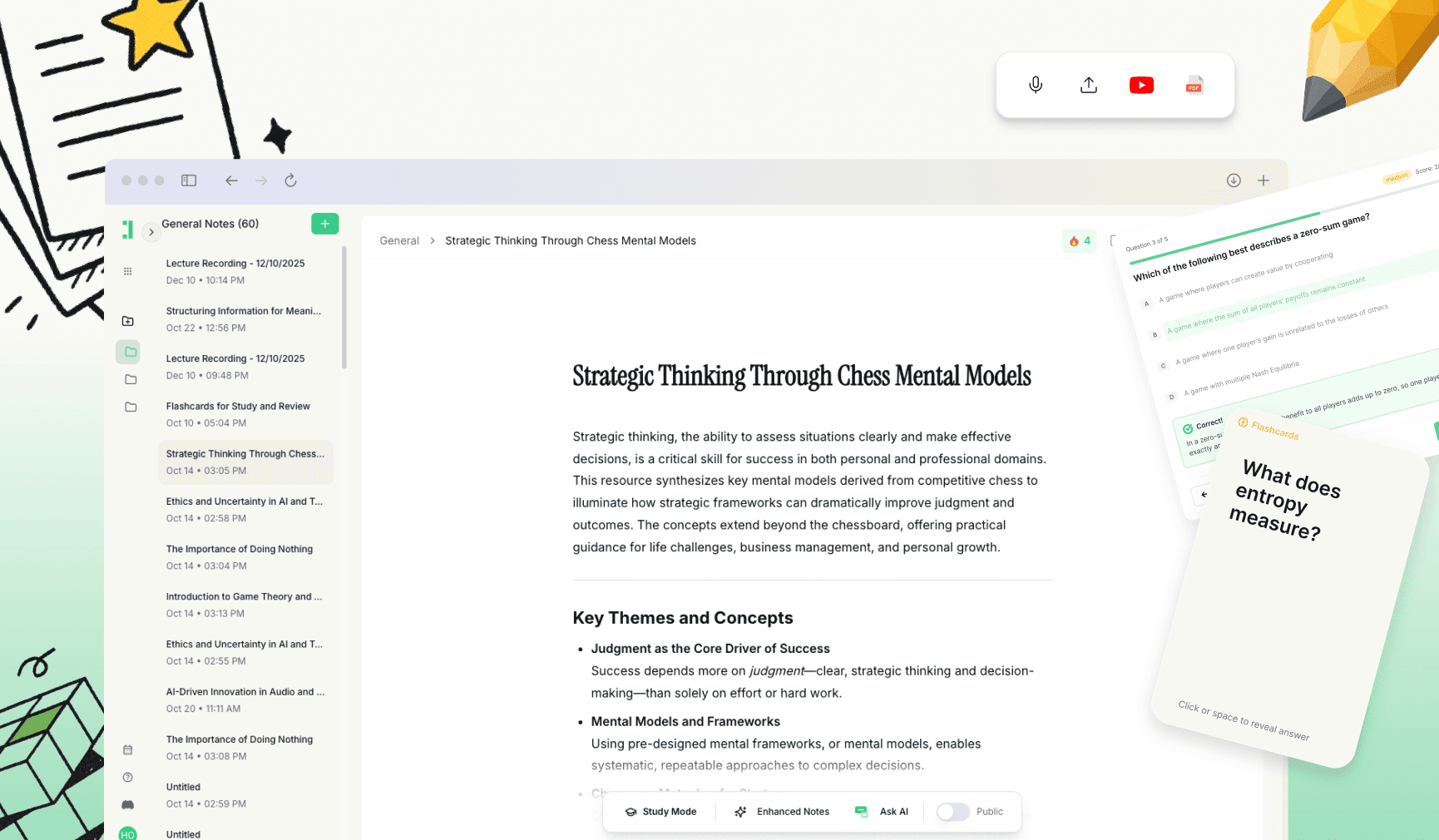
With Duetoday, the process is simple: upload your readings, generate a tailored deck, refine the cards, and start active recall. No more manual copying and pasting.
What are Philosophy of Mind flashcards?
Philosophy of Mind flashcards cover the core conceptual framework of the field, including key terms like qualia, intentionality, and physicalism. They break down dense arguments—such as Nagel’s bat or Jackson’s Mary—into digestible prompts that test your understanding of metaphysical and epistemological positions.
The outcome is a shift from passive reading to active engagement. Instead of rereading a 30-page paper on Panpsychism, you test your ability to explain the core tenets, leading to better long-term retention and deeper conceptual clarity.
If you already have notes, Duetoday can generate a clean deck in minutes.
Why flashcards work for Philosophy of Mind
Philosophy requires a precise understanding of definitions, logical relationships, and various 'isms'. Flashcards are the perfect tool to keep these frameworks distinct and accessible in your memory. They utilize active recall and spaced repetition to ensure you don't just recognize a term, but can explain the theory behind it.
Remember key terms like 'epiphenomenalism' without cramming
Separate similar concepts (e.g., Substance Dualism vs. Property Dualism)
Learn logical arguments step-by-step (premises to conclusion)
Practice applying rules to thought experiments quickly
What to include in your Philosophy of Mind flashcards
Good philosophy flashcards follow the one idea per card rule. Avoid walls of text; instead, use question-based prompts that force your brain to retrieve a specific argument or definition.
Definitions & key terms: What is the 'Hard Problem' of consciousness?
Processes & steps: What are the three stages of the Chinese Room argument?
Comparisons: How does Behaviorism differ from Functionalism?
Application: According to a Physicalist, what happens to the mind at death?
Example prompts: Who proposed the Turing Test?, Define 'Qualia' in one sentence., What is the main critique of the Identity Theory?, Explain the 'Knowledge Argument'.
How to study Philosophy of Mind with flashcards
Philosophy is about nuances. Use a two-pass approach: first, build your deck to ensure coverage of all lecture materials, then review in rounds to identify which theories are still fuzzy.
Make a deck from your readings or generate it from your syllabus.
Do one quick round to find weak spots in your understanding.
Review weak cards (like complex logic) daily for a few days.
Mix in a few harder cards each session to build mental flexibility.
Do a final mixed review before your midterm or final exam.
Generate Philosophy of Mind flashcards automatically in Duetoday
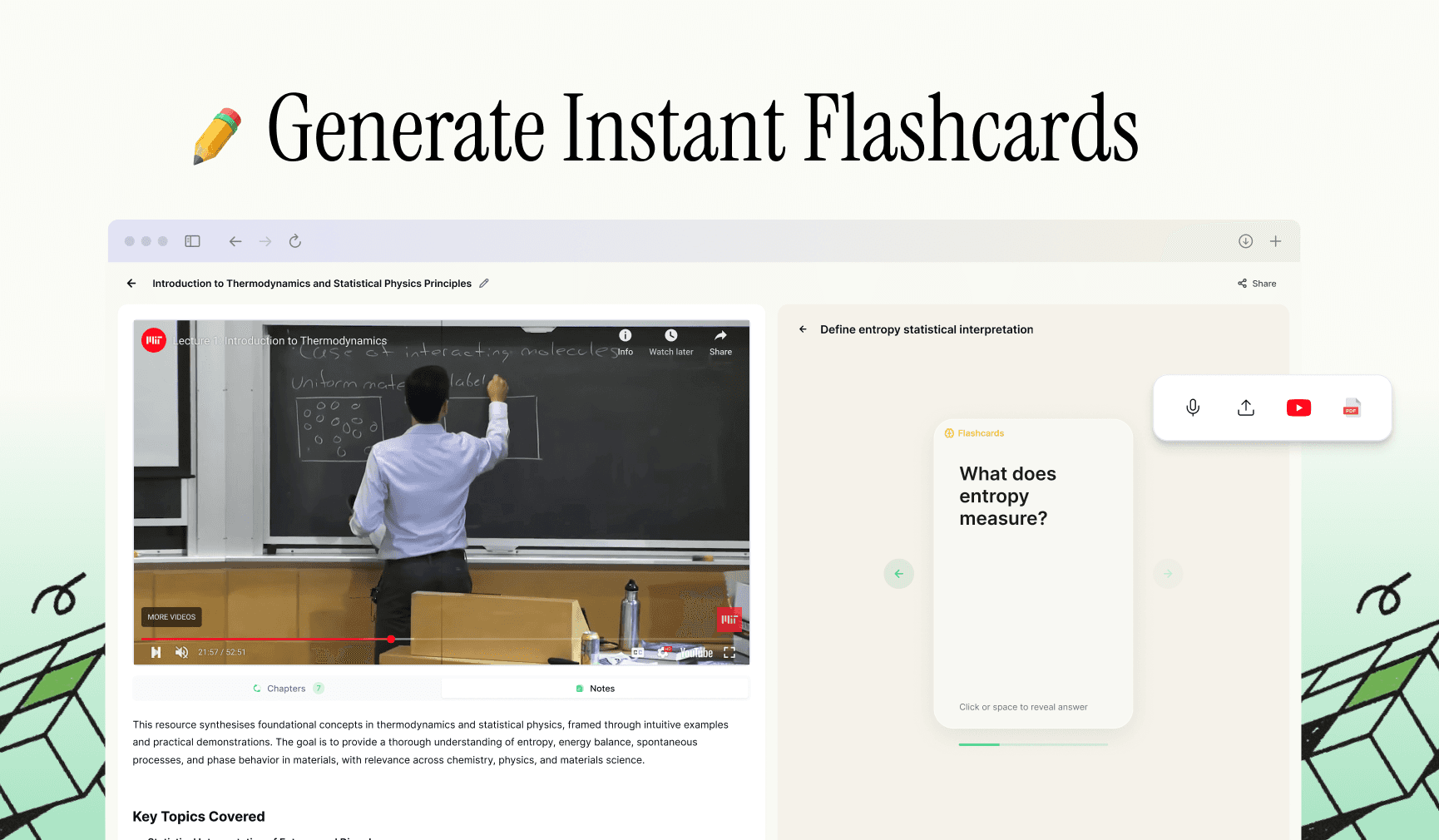
Making cards manually for philosophy is slow and often results in cards that are too wordy. Duetoday simplifies this by instantly transforming your complex transcripts and PDFs into optimized study tools.
Upload or paste your Philosophy material
Click Generate Flashcards
Review, edit, and start studying
Generate Philosophy of Mind Flashcards in Duetoday
Start with your notes and get a deck you can actually use today.
Common Philosophy of Mind flashcard mistakes
Most students make the mistake of putting an entire paragraph on a card. This leads to recognition rather than recall. Keep your cards punchy and focused on a single logical point.
Cards are too long → split into one idea per card
Only memorizing names → add explain why/how prompts
Confusing similar 'isms' → add specific comparison cards
No review schedule → use Duetoday's repetition tools
Ignoring counter-arguments → include cards on What is the objection to X?
Ready to generate your Philosophy of Mind flashcards?
Stop rereading and start recalling. Upload your notes today and let Duetoday handle the formatting while you focus on the learning.
Start Generating Flashcards
Works with notes, PDFs, slides, and transcripts.
FAQ
How many flashcards do I need for Philosophy of Mind? Usually, 50-100 cards per major unit (like Consciousness or Mental Causation) is enough to cover definitions and major arguments.
What’s the best format for these flashcards? Q&A format works best. For example: 'Front: What is the Zombie Argument? Back: A thought experiment by Chalmers to argue against physicalism.'
How often should I review my philosophy cards? Daily for new concepts, and weekly for those you've already mastered, using spaced repetition to keep them fresh.
Should I make cards from a textbook or slides? Use both! Textbooks provide the depth for the back of the card, while slides often highlight the most important terms to put on the front.
How do I stop forgetting theories after a few days? Use active recall. Don't flip the card until you have mentally or verbally stated the full answer.
What if my flashcards feel too easy? If they are too easy, you might be focusing on vocab only. Add cards that ask you to 'Compare' or 'Contrast' two different viewpoints.
Can I generate Philosophy flashcards from a PDF automatically? Yes, Duetoday is designed to read your PDFs and extract key philosophical concepts into flashcards instantly.
Are digital flashcards better than paper? Digital cards are superior for Philosophy because you can easily edit complex definitions and use automated spaced repetition algorithms.
How long does it take to make a full deck? Manually, it can take hours. With Duetoday, you can generate a full deck in under a minute.
Can Duetoday organize my cards by topic? Yes, you can categorize your decks by specific philosophical branches or exam modules within the app.

Duetoday is an AI-powered learning OS that turns your study materials into personalised, bite-sized study guides, cheat sheets, and active learning flows.