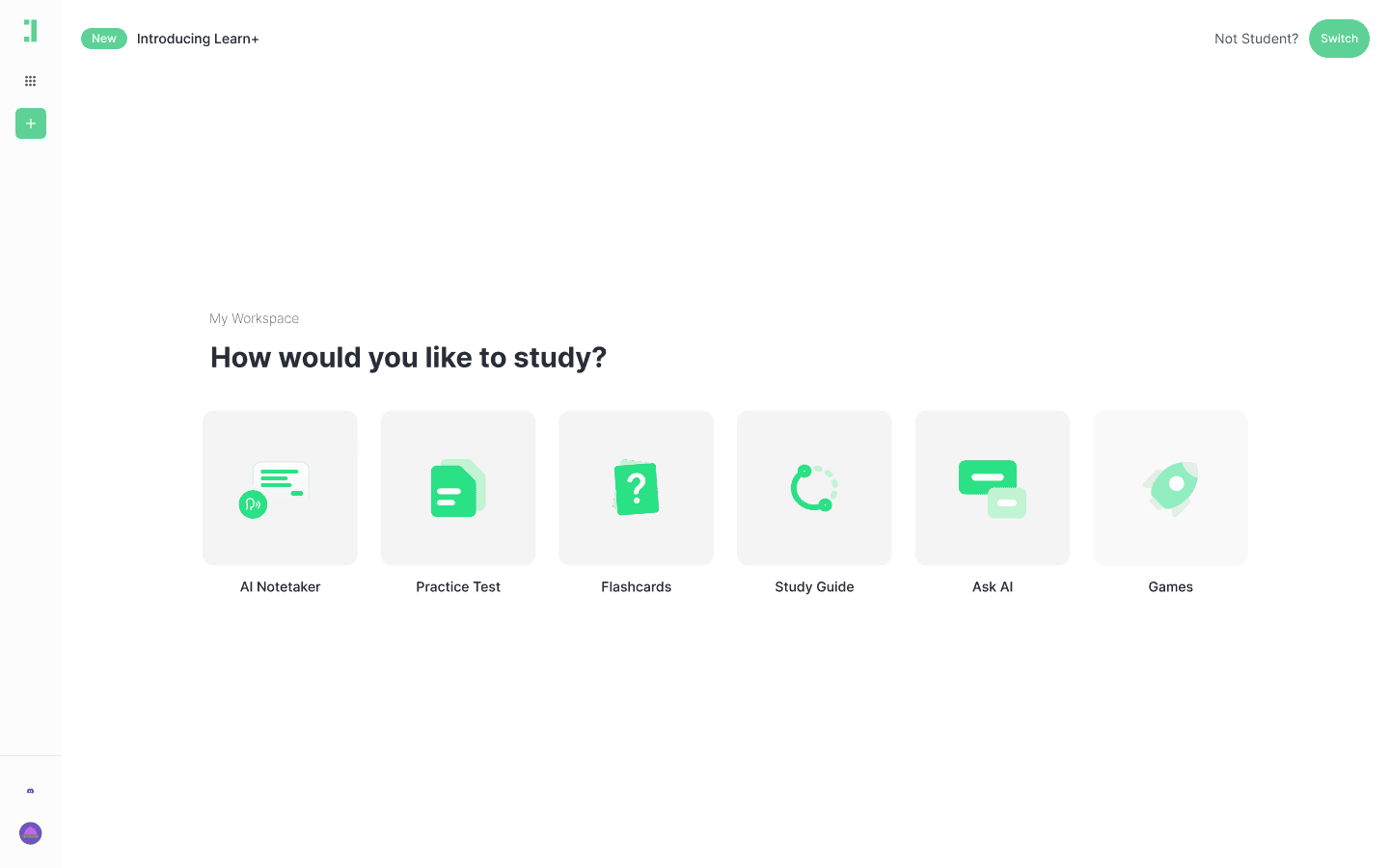
Generate Flashcards for Personality Psychology
Easily generate or make Personality Psychology flashcards to study personality theories, traits, and clinical models.
Generate Flashcards with AI Free
What are Personality Psychology flashcards?
Personality Psychology flashcards are focused study tools designed to help you master the complex theories, trait models, and clinical frameworks that explain human behavior. These cards cover everything from Freud’s structural model to the nuances of the Big Five (OCEAN) traits, helping you distinguish between similar concepts like temperament versus character.
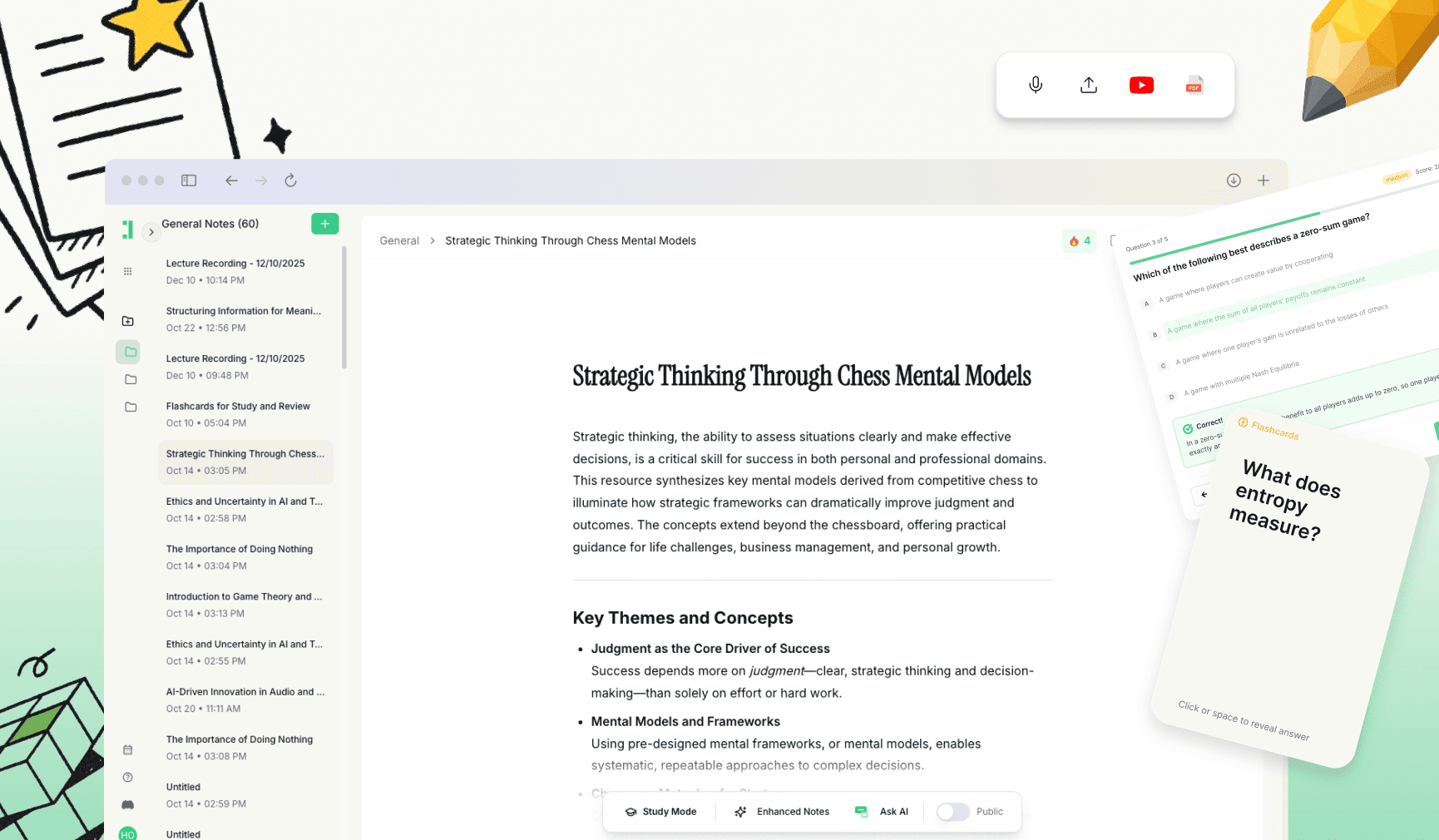
Instead of passively rereading your textbook, these flashcards force you to engage in active recall. By testing your memory on specific definitions and theoretical applications, you build stronger neural pathways. If you already have lecture notes or slides, Duetoday can generate a clean, organized deck in minutes, letting you focus on learning rather than formatting.
Why flashcards work for Personality Psychology
Personality psychology requires a deep understanding of abstract theories and specific researchers. Flashcards are perfect for this subject because they facilitate the 'spaced repetition' needed to memorize diverse psychological assessments and developmental stages.
Remember key personality traits and their definitions without cramming.
Separate similar concepts, such as id, ego, and superego.
Learn developmental stages and psychological processes step-by-step.
Practice applying theoretical rules to case study scenarios quickly.
What to include in your Personality Psychology flashcards
Effective flashcards should follow the 'one idea per card' rule. For Personality Psychology, focus on creating question-based prompts that require active explanation rather than just recognition. You want cards that challenge you to explain why a certain trait manifests in a specific behavior.
Definitions & Key Terms: What is Neuroticism? or Define Self-Efficacy.
Theories & Models: What are the five stages of psychosexual development?
Comparisons: How does Humanistic theory differ from Behavioral theory regarding free will?
Application: According to Maslow, what happens if a person's safety needs are not met?
How to study Personality Psychology with flashcards
Success in psychology isn't just about rote memorization; it's about connecting concepts. Use a two-pass approach: first, use a generated deck to learn the basic vocabulary. Second, perform mixed-review sessions where you explain the relationships between different personality models.
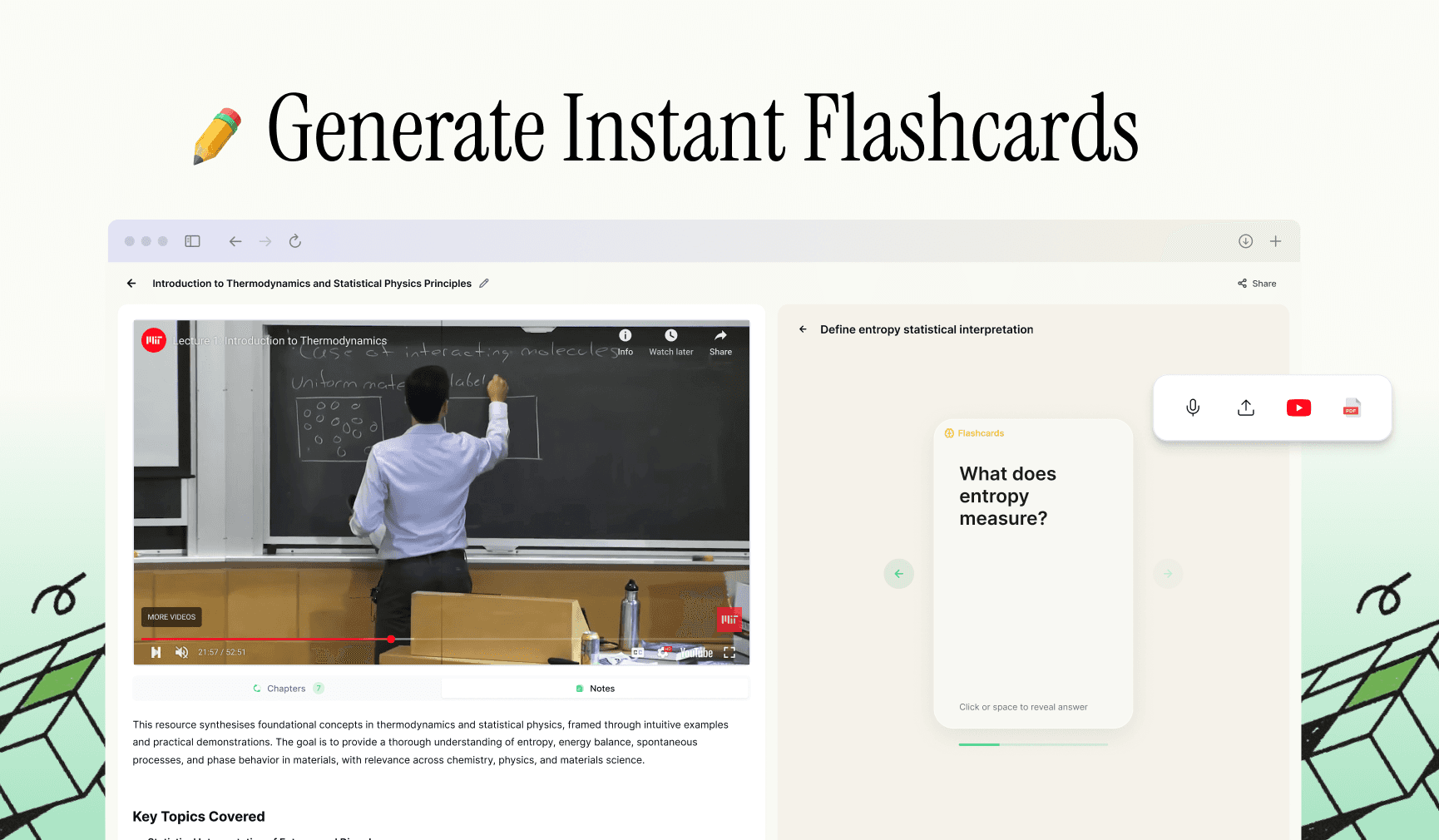
Make a deck from your notes or generate it from your textbook chapters in Duetoday.
Do one quick round to identify which theories (like Jungian or Social-Cognitive) are confusing you.
Review these weak cards daily, focusing on the how and why.
Mix in harder application cards to simulate exam questions.
Perform a final comprehensive review before your midterm or final.
Generate Personality Psychology flashcards automatically
Creating physical cards for dozens of personality theories is incredibly slow. Manual entry often leads to memory clutter where cards become too wordy to be useful. Duetoday solves this by pulling the most important points directly from your study materials.
Upload or paste your Personality Psychology PDFs, slides, or notes.
Click Generate Flashcards to create a structured deck.
Review, edit for personal context, and start studying immediately.
Generate Personality Psychology Flashcards in Duetoday
Common Personality Psychology flashcard mistakes
Many students make their cards too long by trying to fit an entire theory on one side. This makes it impossible to know if you actually remembered the key point. Ensure your cards are concise and test one specific relationship or definition at a time to maximize your study efficiency.
Cards are too wordy: Split complex theories into multiple, single-point cards.
Ignoring the 'Why': Don't just memorize the name of a trait; add a prompt for its typical behavioral outcome.
Lack of Variety: Ensure you have a mix of trait-based, biological, and humanistic cards in one deck.
Ready to generate your Personality Psychology flashcards?
Stop rereading your chapters and start testing your knowledge. Upload your notes today and let Duetoday turn your materials into a high-powered study deck.
Start Generating Flashcards
FAQ
How many flashcards do I need for Personality Psychology?
Depending on the depth of the course, a typical unit covering 2-3 major theories usually requires 40-60 flashcards to cover all traits, definitions, and key researchers.
What’s the best format for Personality Psychology flashcards?
Question-and-answer is best. Instead of writing 'Big Five' on the front, write 'What are the dimensions of the Big Five model?' to trigger active recall.
Can I generate Personality Psychology flashcards from a PDF?
Yes, Duetoday allows you to upload textbook chapters or lecture PDFs and transforms the text into concise study cards automatically.
How often should I review my personality theory cards?
Aim for daily reviews of new or difficult theories, then move to every 3-4 days once you can comfortably explain the concepts.
Is it better to study by theory or by trait?
It's best to start by theory to understand the context, then mix the cards later to ensure you can distinguish between different perspectives on the same trait.
How do I handle complex theories like Psychoanalysis?
Break them down. Create separate cards for the structure of personality (id/ego), defense mechanisms, and developmental stages rather than one giant card.
Are digital flashcards better than paper for this subject?
Digital cards are typically better because they allow for easier organization of the massive amount of terminology found in psychology and can be updated as you learn more.
How long does it take to make a full deck?
Manually, it could take hours. With Duetoday’s AI generation, you can have a full deck ready to study in under a minute after uploading your notes.

Duetoday is an AI-powered learning OS that turns your study materials into personalised, bite-sized study guides, cheat sheets, and active learning flows.