Generate Flashcards for NoSQL Databases
Easily make and generate NoSQL Databases flashcards for your Computer Science or Database Management subject guide.
Generate Flashcards with AI Free
Generate Flashcards for NoSQL Databases
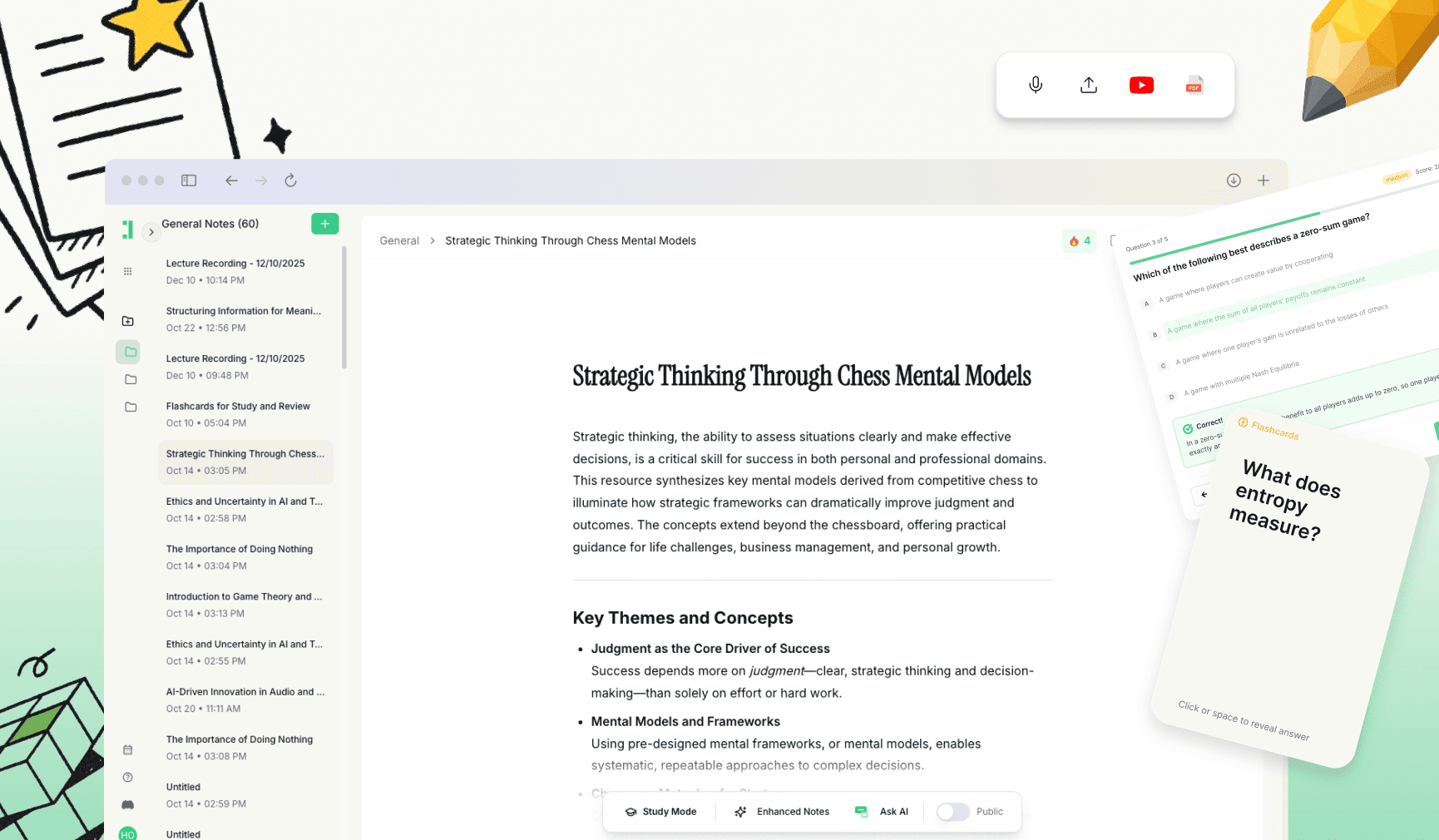
Turn your notes, PDFs, slides, or technical documentation into NoSQL flashcards so you can review faster and remember complex database architectures with ease. Instead of struggling to memorize various data models, you can convert your study material into a structured deck ready for active recall.
Primary CTA: Generate NoSQL Flashcards
Secondary CTA: Upload notes / paste text
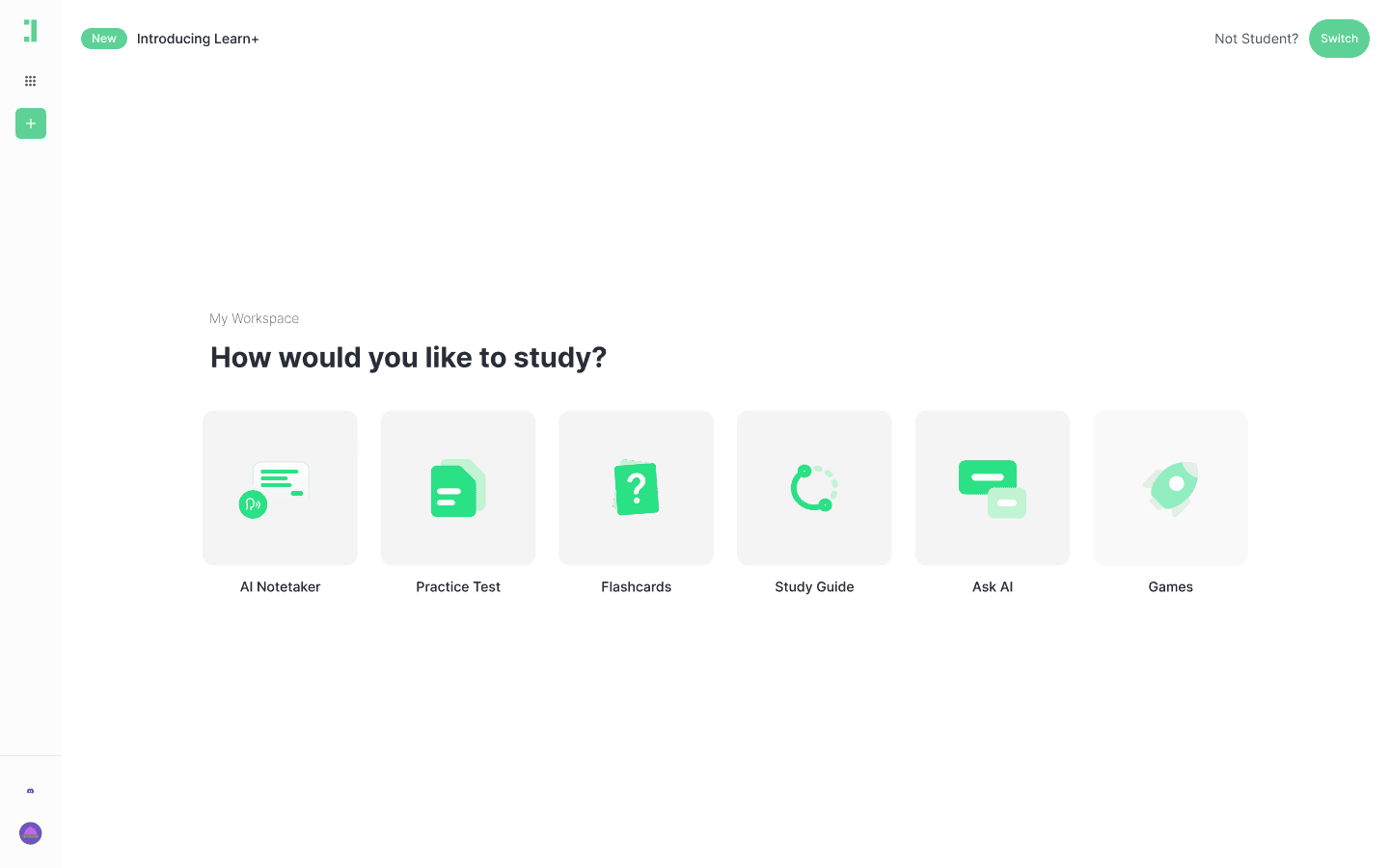
To get started in Duetoday, simply upload your database lecture notes or paste documentation. Our AI analyzes the content, identifies key architectural patterns, and generates a deck you can review, edit, and study immediately.
What are NoSQL flashcards?
NoSQL flashcards cover the fundamental shift from relational databases to non-relational systems. They focus on key terms like horizontal scaling, eventual consistency, sharding, and specific data models like Document, Key-Value, Column-family, and Graph stores.
The outcome is a shift from passive reading to active testing. Instead of re-reading a chapter on MongoDB or Cassandra, you test your knowledge on how these systems handle data distribution and schema-less design, which helps build long-term technical recall. If you already have notes, Duetoday can generate a clean deck in minutes.
Why flashcards work for NoSQL
NoSQL databases involve many moving parts, including distributed systems theory, specific query languages, and trade-offs between consistency and availability. Flashcards are ideal for this because they force you to recall the specific strengths and weaknesses of different database types without looking at the answers.
Using active recall and spaced repetition, you can internalize high-level concepts and low-level commands without the usual pre-exam cramming session. Flashcards help you:
Remember key terms like BASE vs ACID without confusion.
Separate similar concepts like Document stores vs. Columnar stores.
Learn processes like data partitioning and replication cycles.
Practice applying rules like the CAP theorem to real-world scenarios.
What to include in your NoSQL flashcards
Effective NoSQL flashcards follow the one idea per card rule. They should be question-based rather than long-winded paragraphs. This ensures your brain has to work to retrieve the specific piece of technical information.
Definitions & key terms: What is horizontal scaling? Define Sharding in NoSQL.
Processes & steps: How does a write-ahead log work in a NoSQL environment?
Comparisons: How is a Document store different from a Key-Value store?
Application: When would you choose Cassandra over MySQL? What happens if a node fails in a three-node cluster?
Use prompts like: Explain Eventual Consistency, List the three components of the CAP theorem, or Compare Redis and DynamoDB use cases.
How to study NoSQL with flashcards
Mastering NoSQL requires a systematic approach. Start with a two-pass method: first, build your deck from your syllabus or documentation, then review it in rounds to highlight areas where your understanding of distributed systems is weak.
Make a deck from your NoSQL notes or generate it from technical whitepapers.
Do a quick round to find weak spots in complex topics like consensus algorithms.
Review weak cards daily to strengthen your neural pathways.
Mix in difficult architectural cards with easier syntax cards.
Do a final mixed review before your technical interview or exam.
Generate NoSQL flashcards automatically in Duetoday
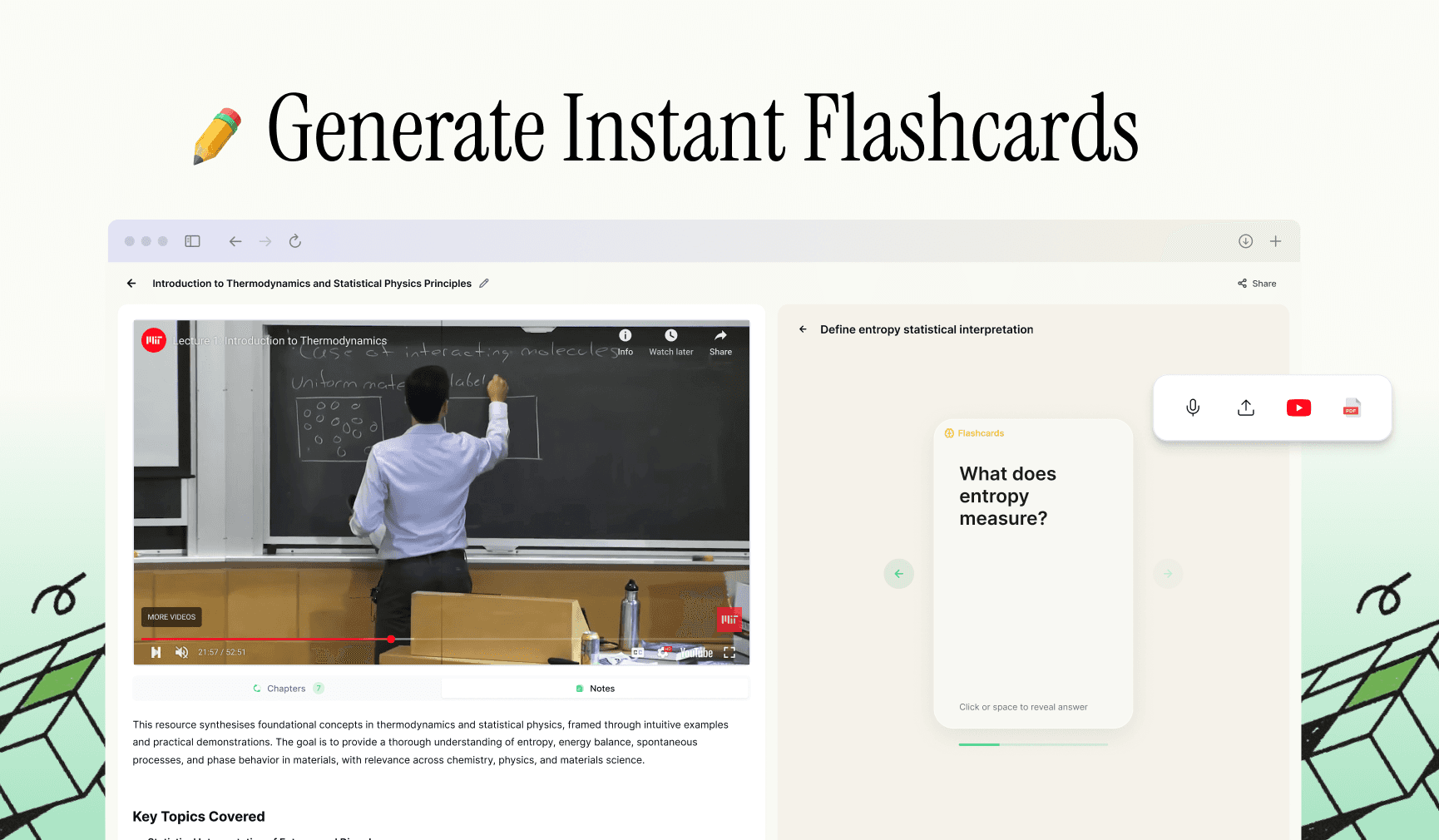
Making technical flashcards manually is slow, often leading to cards that are too wordy or disorganized. Duetoday solves this by automating the creation process. Upload your PDF, lecture slides, or documentation, and our AI generates precise, study-ready flashcards instantly.
Step 1: Upload your NoSQL material.
Step 2: Click Generate Flashcards.
Step 3: Review, edit, and start studying immediately.
Common NoSQL flashcard mistakes
Avoid making cards that are too long. If a card explains the entire CAP theorem in one go, split it into three separate cards for Consistency, Availability, and Partition Tolerance. Don't just memorize definitions—ensure you include why and how cards to understand the design trade-offs involved in NoSQL databases.
Ready to generate your NoSQL flashcards?
Stop rereading and start recalling. Turn your complex database notes into a structured study tool in seconds.
CTA: Start Generating Flashcards. Works with notes, PDFs, slides, and transcripts.
FAQ
How many flashcards do I need for NoSQL? Most students find 50–80 cards sufficient to cover the core concepts, data models, and specific database implementations like MongoDB or Neo4j.
What’s the best format for NoSQL flashcards? A mix of definition cards (terms) and scenario cards (when to use which DB) works best for technical subjects.
How often should I review NoSQL flashcards? Review new concepts daily. Once you feel comfortable, move to a spaced repetition schedule, reviewing every 3 days, then weekly.
Should I make cards from a textbook or documentation? Documentation (like the MongoDB manual) is often better for technical accuracy, while textbooks are better for high-level theory.
How do I stop forgetting NoSQL concepts? Use comparison cards. By explicitly comparing NoSQL to SQL, you anchor the new information to things you already know.
Can I generate NoSQL flashcards from a PDF? Yes, Duetoday is designed to parse complex technical PDFs and turn them into concise flashcards automatically.
Are digital flashcards better than paper for NoSQL? Digital is superior for technical topics as you can easily update cards, add code snippets, and use automated spaced repetition algorithms.
How long does it take to make a full NoSQL deck? Manually it could take hours, but with Duetoday's AI, it takes less than a minute after uploading your materials.

Duetoday is an AI-powered learning OS that turns your study materials into personalised, bite-sized study guides, cheat sheets, and active learning flows.