Generate Flashcards for NMR Spectroscopy
Generate or make NMR Spectroscopy flashcards to master chemical shifts and structure elucidation with this study guide.
Generate Flashcards with AI Free
What are NMR Spectroscopy flashcards?
NMR Spectroscopy flashcards are specialized study tools designed to help you master the complexities of Nuclear Magnetic Resonance. They cover essential topics such as chemical shifts, integration, spin-spin splitting patterns, and the fundamental physics behind how atomic nuclei behave in a magnetic field. Instead of passively reading high-level chemistry textbooks, these flashcards force you to identify functional groups and predict spectra structures actively.
The main goal is to bridge the gap between theoretical knowledge and practical data interpretation. By using flashcards, you can practice identifying shielding and deshielding effects until they become second nature. If you already have lecture notes or lab data, Duetoday can generate a professional study deck in seconds, allowing you to focus on analysis rather than manual data entry.
Why flashcards work for NMR Spectroscopy
NMR Spectroscopy requires a combination of memorization (like common chemical shift ranges) and logical application (interpreting splitting trees). Flashcards are the perfect medium for this because they utilize active recall, which strengthens the neural pathways associated with chemical structure identification.
Spaced repetition ensures you don't forget the difference between a quartet and a multiplet. By reviewing your cards at optimized intervals, you move information from short-term memory into long-term mastery. Use them to:
Memorize characteristic 1H and 13C NMR chemical shift values.
Differentiate between enantiotopic and diastereotopic protons.
Master the n+1 rule for simple splitting patterns.
Quickly identify solvents and their residual peaks.
Practice interpreting integration curves to determine proton ratios.
What to include in your NMR Spectroscopy flashcards
To make your NMR study sessions effective, your flashcards should follow the one concept per card rule. Avoid cluttering a single card with an entire molecule; instead, break the molecule down into specific spectroscopic questions.
Focus on four main categories of cards: definitions of physical constants, correlation table memorization, structural interpretation, and troubleshooting common artifacts in a spectrum.
Definitions & Key Terms: What is Gyromagnetic Ratio? or Define the Overhauser Effect.
Processes & Steps: What are the steps to determine the degree of unsaturation before analyzing an NMR?
Comparisons: How does an aldehyde proton shift differ from a carboxylic acid proton shift?
Application: Predict the splitting for a CH2 group adjacent to a CH3 group.
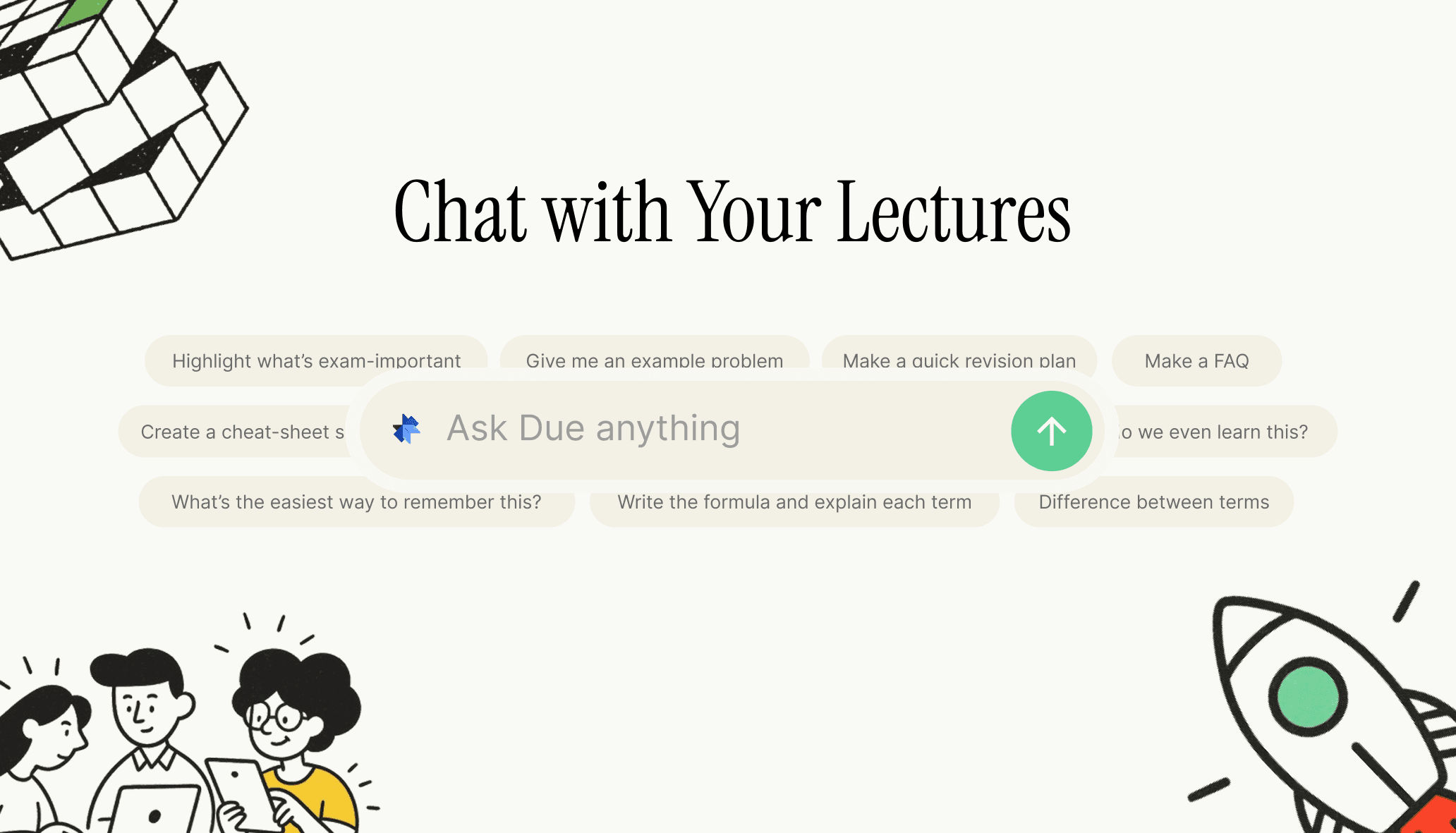
Try these example prompts: Draw the splitting tree for a doublet of doublets, Where does DMSO-d6 appear on a 1H NMR spectrum?, and What effect does electronegativity have on chemical shielding?
How to study NMR Spectroscopy with flashcards
Mastering NMR is about pattern recognition. Start with a two-pass approach. In the first pass, focus strictly on the rules—the chemical shift tables and the splitting laws. In the second pass, move toward image-based cards where you look at a spectrum and must name the molecule or functional group. This builds the mental agility needed for chemistry exams.
Review your deck in short, frequent bursts. NMR is a use it or lose it skill; reviewing five cards a day is significantly more effective than reviewing 100 cards the night before a midterm.
Generate a deck from your lecture slides or lab manuals using Duetoday.
Filter for cards on Chemical Shifts first to build a foundation.
Review difficult splitting patterns daily until they are instant.
Practice blind interpretation by looking at a spectrum before flipping the card.
Sync your review with your lab sessions to apply theory to real data.
Generate NMR Spectroscopy flashcards automatically in Duetoday
Manually drawing chemical structures and writing out shift ranges on paper cards is incredibly time-consuming. It often takes longer to make the cards than it does to actually study them. Duetoday eliminates this friction by using AI to scan your documents and create high-quality study materials instantly.
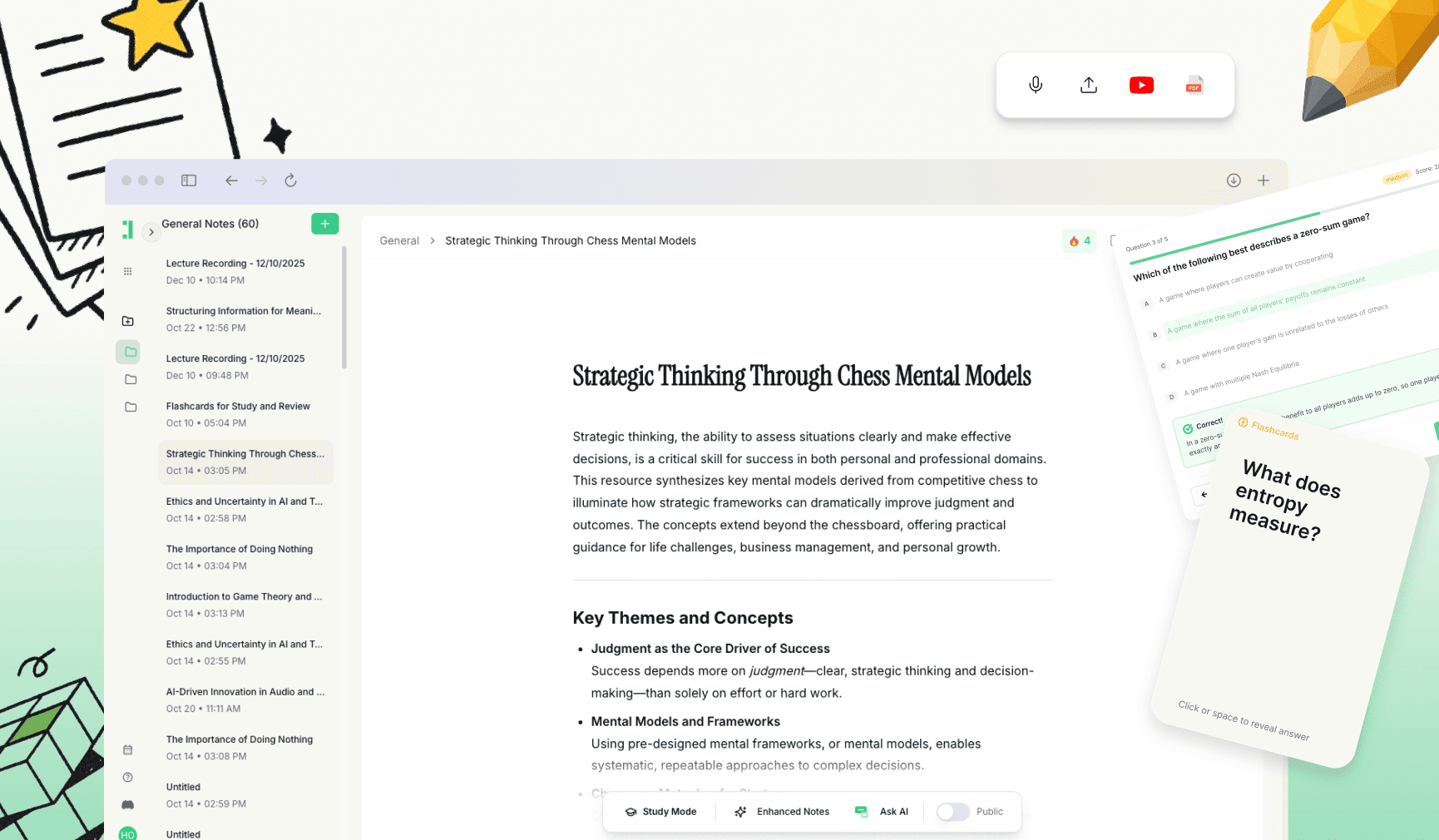
Simply upload your organic chemistry PDFs, slide decks, or even handwritten notes. Duetoday identifies the most important spectroscopic concepts and transforms them into a structured deck you can use on any device.
Upload your NMR lecture notes or textbooks.
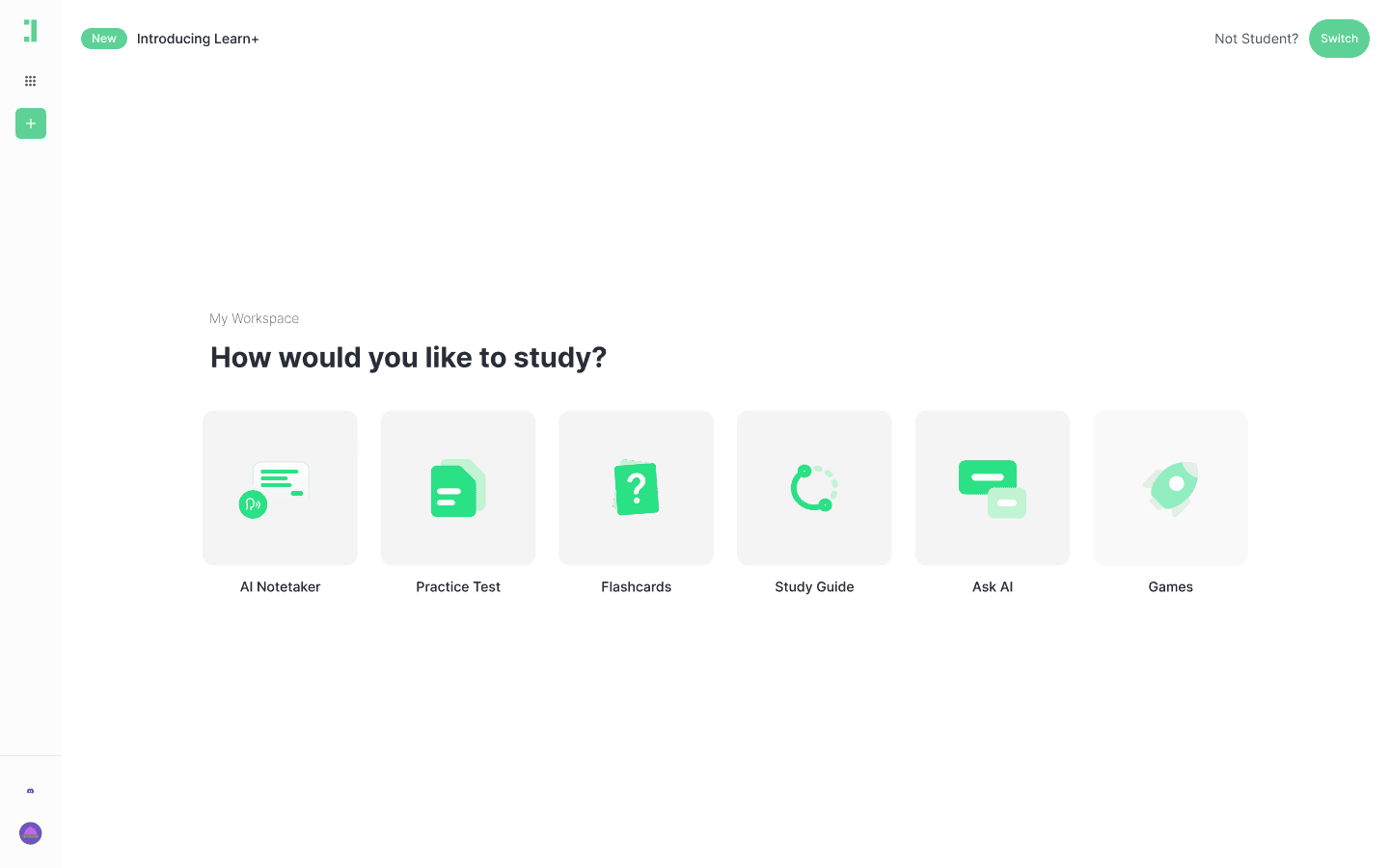
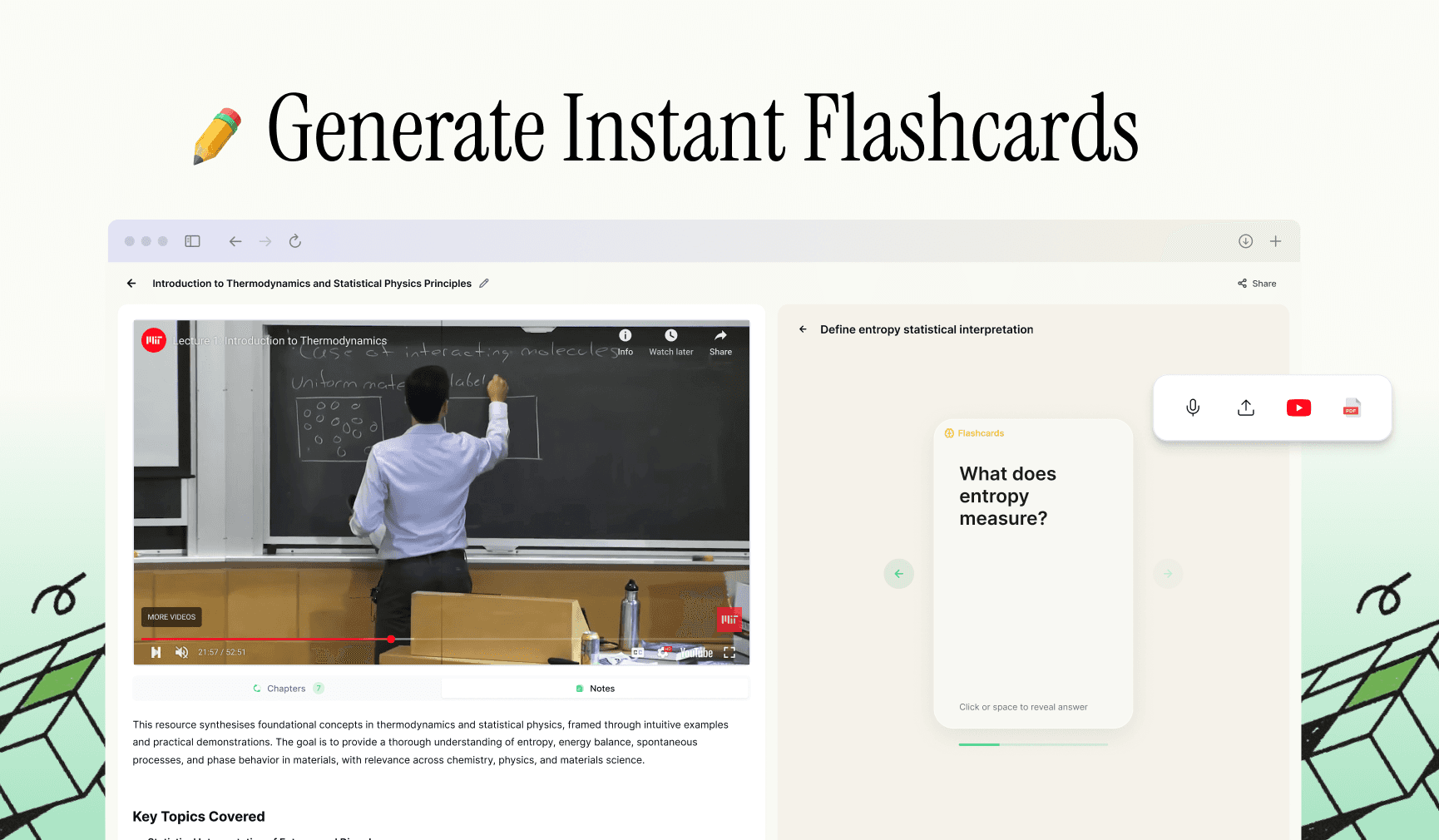
Click Generate Flashcards.
Review the AI-generated deck, add your own notes, and start your first session.
Common NMR Spectroscopy flashcard mistakes
Many students create cards that are far too complex, such as putting a whole 13-carbon chain on one side. This leads to false familiarity where you recognize the card but haven't actually learned the underlying chemistry.
Too much text: Keep cards focused on a single peak or one specific functional group.
Skipping the units: Always include ppm or Hz to ensure you understand the scale.
Ignoring solvents: Make sure to include cards for common impurities and solvent peaks.
No variety: Include both Structure to Spectrum and Spectrum to Structure cards to test both directions of logic.
Ready to generate your NMR Spectroscopy flashcards?
Stop wasting hours transcribing shift tables. Upload your materials to Duetoday and let our AI build your perfect NMR study deck in seconds. Focus on the science, not the stationary.
FAQ
How many flashcards do I need for NMR Spectroscopy?
A comprehensive deck usually contains 50–100 cards, covering shift ranges, splitting rules, and common structural units.
What is the best format for NMR flashcards?
The best format is an image-based card showing a structural fragment on one side and its predicted chemical shift and splitting on the other.
How often should I review NMR flashcards?
Review them daily during your Organic Chemistry course, specifically focusing on the most common functional groups until the values are memorized.
Should I make cards from a textbook or my own lab data?
Both. Use textbooks for general rules and shift tables, and use your own lab data to practice real-world spectrum interpretation.
How do I stop forgetting shift ranges after a few days?
Use spaced repetition. Duetoday’s system ensures you see the most difficult shift values more frequently until they stick.
Can I generate NMR Spectroscopy flashcards from a PDF automatically?
Yes, Duetoday can process chemistry PDFs and extract key spectroscopic data to create ready-to-use flashcards immediately.
Are digital flashcards better than paper for NMR?
Digital is usually better because you can easily include high-resolution images of spectra and update shift ranges as you learn more complex systems.
How long does it take to make a full NMR deck?
Manually, it can take hours. With Duetoday, you can generate a base deck from your notes in less than a minute.
Can Duetoday handle 13C and 1H NMR simultaneously?
Yes, the AI can distinguish between different types of nuclei and organize your flashcards into specific sub-topics like Carbon-13 or Proton NMR.

Duetoday is an AI-powered learning OS that turns your study materials into personalised, bite-sized study guides, cheat sheets, and active learning flows.