Generate Flashcards for Negotiation
Learn how to make or generate negotiation flashcards to master BATNA, ZOPA, and tactics for any subject or business guide.
Generate Flashcards with AI Free
What are Negotiation flashcards?
Negotiation flashcards are specialized study tools designed to help you master the art of persuasion, conflict resolution, and deal-making. They cover essential concepts such as BATNA (Best Alternative to a Negotiated Agreement), ZOPA (Zone of Possible Agreement), and various distributive or integrative strategies. Instead of just reading about negotiation tactics, these flashcards force you to define terms, recall specific techniques, and analyze psychological triggers on the spot.
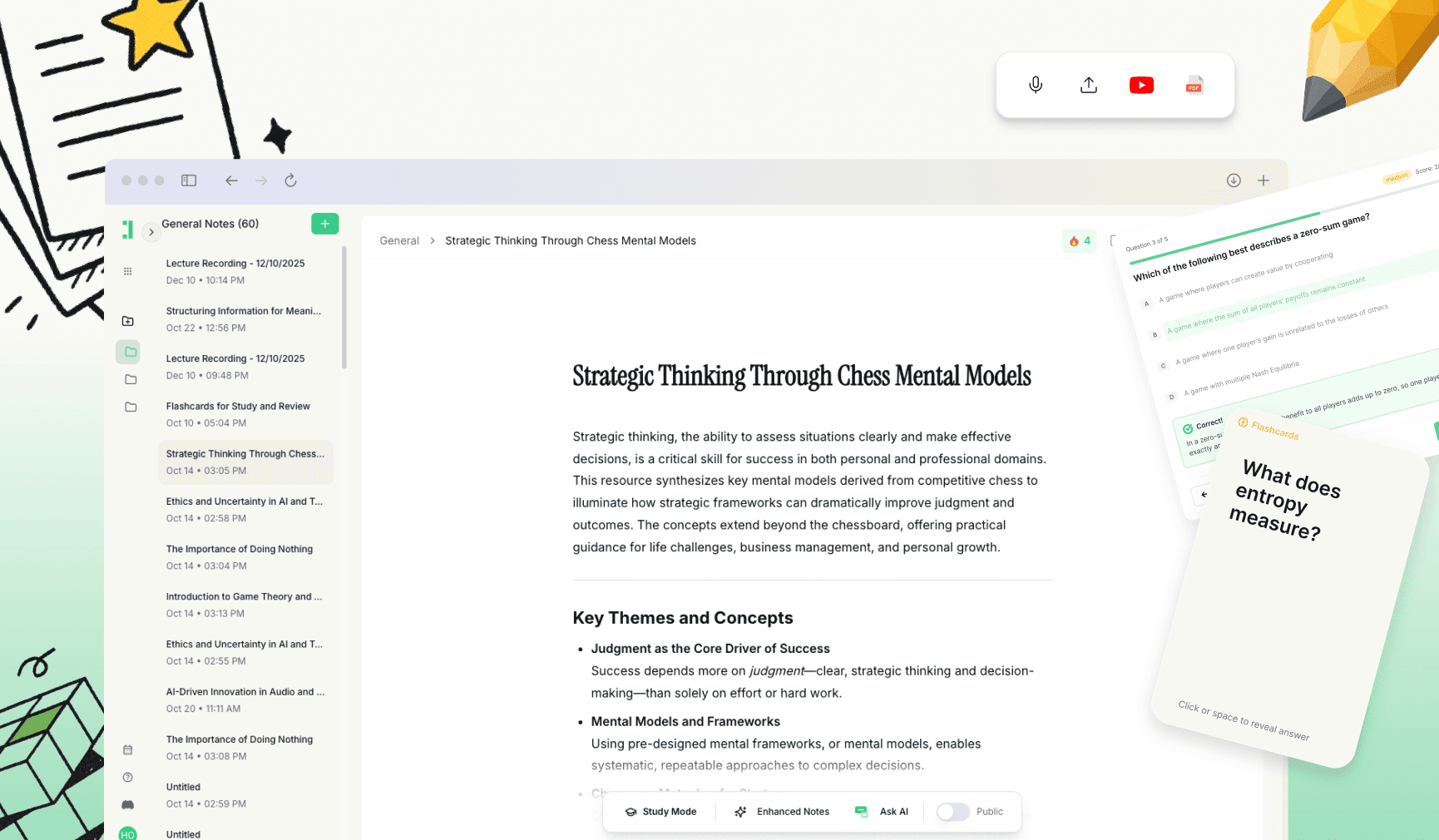
The goal is to shift from passive reading to active mastery. By testing yourself on core principles and common counter-arguments, you build the mental muscle memory needed to stay calm and effective during real-world discussions. If you already have lecture notes or a textbook chapter, Duetoday can generate a clean deck in minutes so you can spend your time practicing, not typing.
Why flashcards are one of the best ways to study Negotiation
Negotiation is a discipline that requires both deep theoretical knowledge and rapid situational awareness. Flashcards are uniquely suited for this because they break down complex social interactions into digestible, repeatable patterns. By using flashcards, you reinforce the vocabulary of the field until it becomes second nature, allowing you to focus on the person across the table rather than trying to remember what a 'fixed-pie bias' is.
Remember key tactical terms without cramming before a big meeting.
Separate similar concepts like 'interests' vs 'positions.'
Learn multi-step processes for preparing and opening a negotiation.
Practice applying psychological rules and cognitive bias checks quickly.
What to include in your Negotiation flashcards
Effective negotiation flashcards should follow the one idea per card rule to ensure clarity. You want your questions to be sharp and your answers to be actionable. Focus on creating cards that simulate the quick thinking required in a live session.
Definitions & Key Terms: What is an Anchor? Define Integrative Negotiation.
Processes & Steps: What are the four stages of the Harvard Negotiation Project model?
Comparisons: How does Distributive Bargaining differ from Principled Negotiation?
Application: What is the first step when a counterpart makes an extreme opening offer?
Use prompts like: What does BATNA stand for?, Describe the 'Salami' tactic, or What are the three types of leverage? to build a comprehensive study deck.
How to study Negotiation with flashcards (a simple system)
Studying negotiation requires a balance of memorizing theory and simulating response times. Use a two-pass approach: first, build your deck to understand the core definitions, and then move into a rapid-fire review to sharpen your reflexes. Consistency is key to moving these strategies from your short-term memory into your permanent toolkit.
Make a deck from your negotiation notes or case studies.
Do one quick round to identify which tactics you find confusing.
Review high-difficulty cards daily to build confidence.
Mix in scenario-based cards to practice applying rules in context.
Perform a final review of all terms before an exam or a high-stakes meeting.
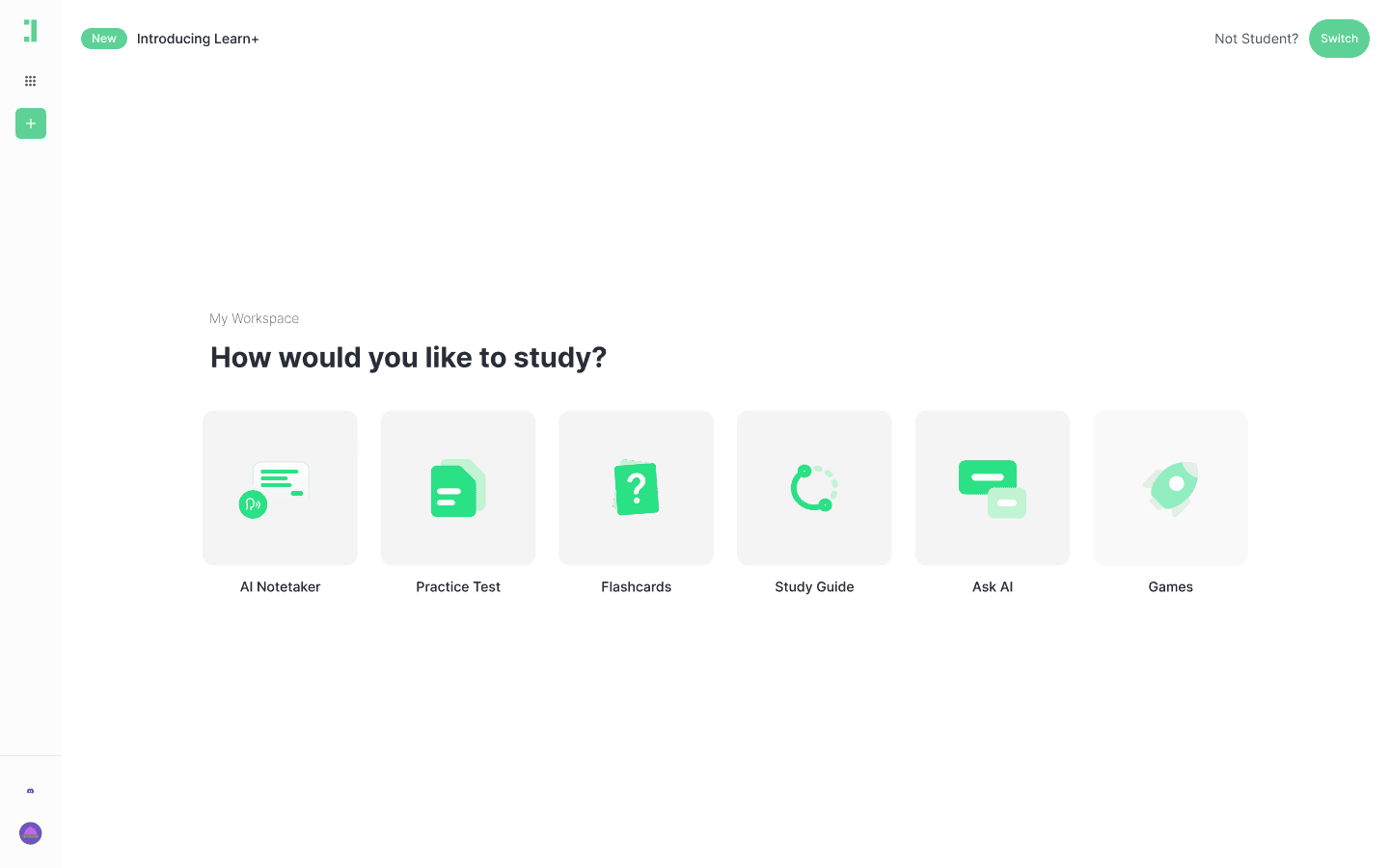
Generate Negotiation flashcards automatically in Duetoday
Building a high-quality study deck manually is incredibly time-consuming. You often end up copying long paragraphs that aren't actually helpful for memorization. Duetoday eliminates this friction by using AI to extract the most important concepts and turn them into concise, effective flashcards instantly.
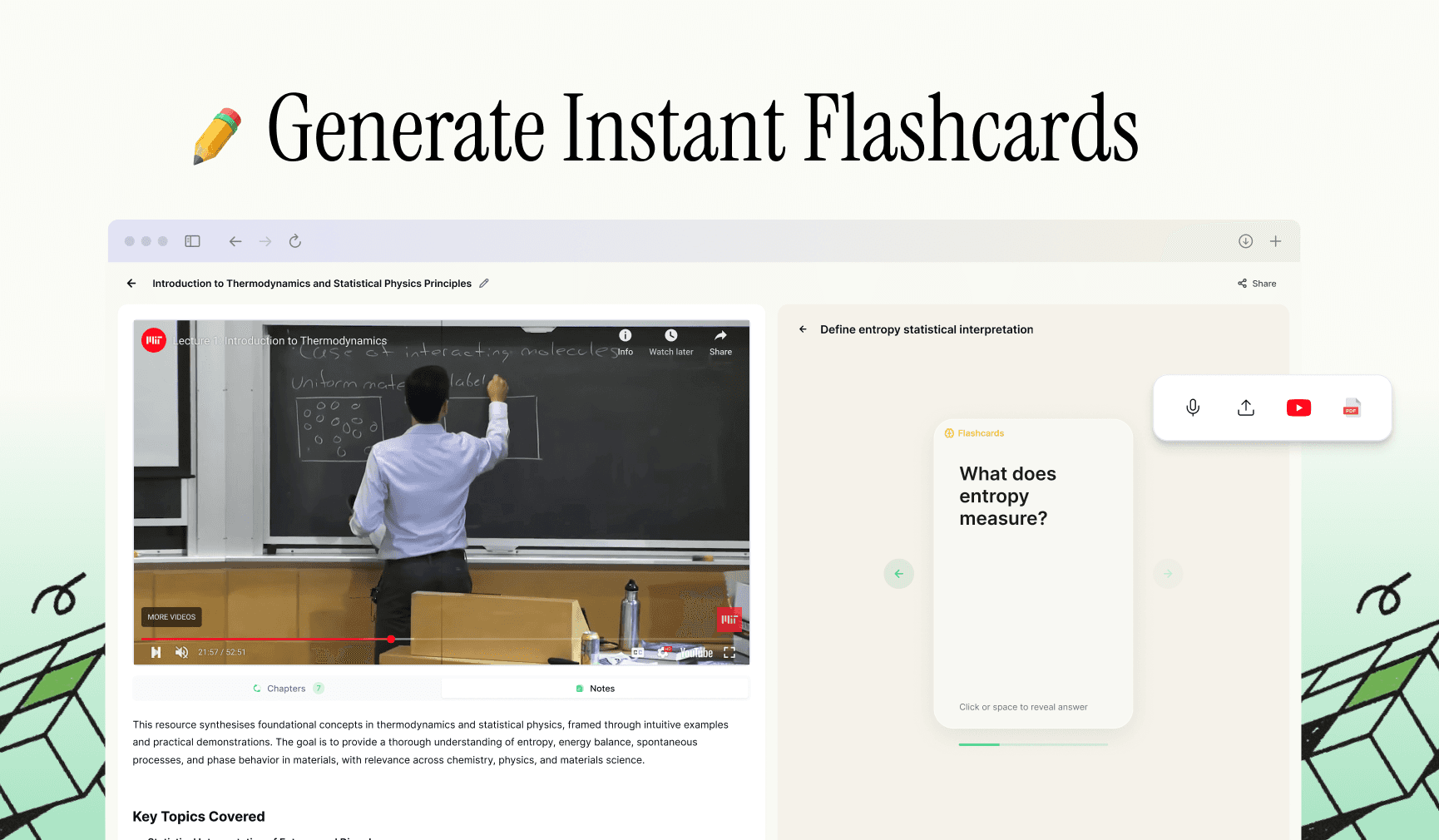
Upload your Negotiation PDFs, slides, or transcripts.
Click Generate Flashcards.
Review, edit, and start studying immediately.
Common Negotiation flashcard mistakes (and how to fix them)
Many students make the mistake of creating cards that are too wordy or focus only on definitions without application. To get the most out of your study sessions, avoid these common pitfalls:
Cards are too long: Split complex strategies into individual steps or cards.
Ignoring the 'Why': Don't just memorize the name of a tactic; include a prompt for when to use it.
Confusing similar terms: Create specific comparison cards for 'Soft' vs 'Hard' negotiators.
Lack of consistency: Spaced repetition only works if you return to the deck regularly.
No scenario practice: Ensure you include cards that ask What would you do if...?
Ready to generate your Negotiation flashcards?
Stop rereading your notes and start mastering your material. With Duetoday, you can turn your study guides into a powerful active recall system in seconds. Upload your negotiation materials today and get a deck you can actually use to win your next deal.
FAQ
How many flashcards do I need for Negotiation?
A solid foundation usually requires 50-100 cards covering major theories, vocabulary, and tactical responses. Quality of the prompt is more important than the quantity of cards.
What is the best format for Negotiation flashcards?
The best format is a question-and-answer style that focuses on active recall. Use What is... for definitions and How do you handle... for tactical applications.
How often should I review Negotiation flashcards?
Review your deck daily for the first week, then use a spaced repetition schedule, moving to every 3 days, then once a week as you master the material.
Should I make cards from a textbook or case studies?
Both are valuable. Textbooks provide the theoretical definitions (ZOPA, BATNA), while case studies provide the practical application/scenarios that test your judgment.
How do I stop forgetting negotiation terms?
Use spaced repetition. By reviewing the cards right before you are about to forget them, you strengthen the neural pathways associated with that information.
Can I generate Negotiation flashcards from a PDF automatically?
Yes, Duetoday is designed to scan your PDFs and transcripts to identify key negotiation themes and convert them into flashcards instantly.
Are digital flashcards better than paper?
Digital flashcards are generally better because they allow for automated spaced repetition, easy editing, and the ability to study on the go via your phone.
How long does it take to make a full Negotiation deck?
Manually, it can take hours. With Duetoday's AI generation, you can have a comprehensive deck ready to study in under a minute.
Can Duetoday organize my flashcards by topic?
Yes, Duetoday can categorize your cards by themes such as 'Psychological Biases,' 'Closing Tactics,' or 'Preparation Steps' to keep your study sessions organized.

Duetoday is an AI-powered learning OS that turns your study materials into personalised, bite-sized study guides, cheat sheets, and active learning flows.