Generate Flashcards for Music History
Make Music History flashcards easily. Generate a study guide for any subject or topic using AI to master composers and eras.
Generate Flashcards with AI Free
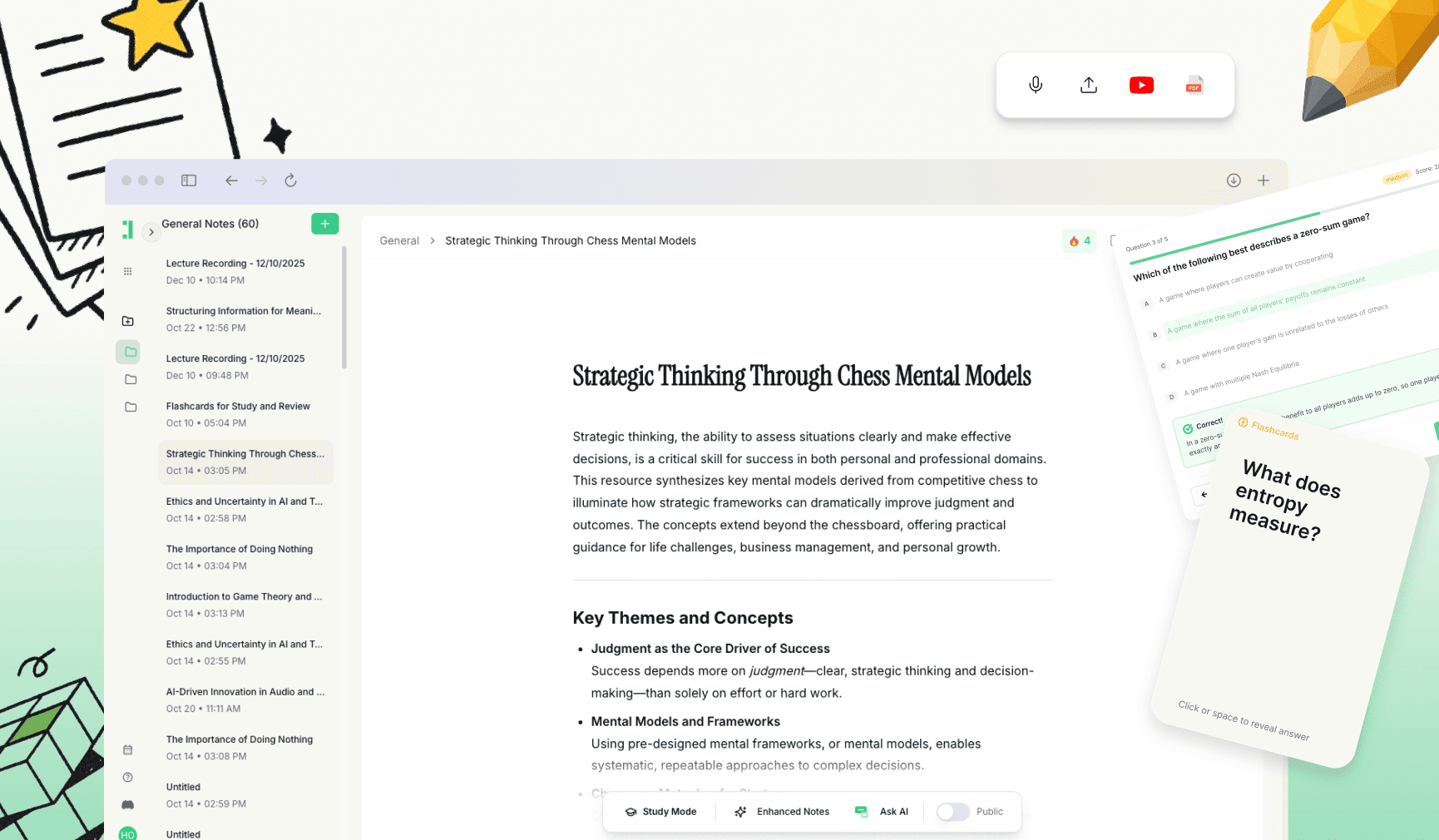
Generate Flashcards for Music History
Turn your notes, PDFs, slides, or lectures into Music History flashcards so you can review faster and remember more. Whether you are studying the nuances of the Baroque period or the complexities of 20th-century atonality, converting your material into active recall prompts is the fastest way to master the curriculum.
Generate Music History FlashcardsUpload notes / paste text
In Duetoday, the process is simple: upload your study materials, watch as the AI generates comprehensive cards, review the deck for accuracy, and start your study session immediately.
What are Music History flashcards?
Music History flashcards cover the essential pillars of the subject: key terminology, stylistic periods, composer biographies, specific musical works, and the evolution of instruments and theory. Instead of just reading about the transition from Classical to Romantic, these cards force you to identify the specific triggers and figures that defined the shift.
The outcome is a shift from passive reading to active testing. Instead of rereading a textbook chapter for the third time, you test yourself on specific facts, building stronger neural pathways and better long-term retention. If you already have notes, Duetoday can generate a clean deck in minutes.
Why flashcards work for Music History
Music History requires a mix of rote memorization (dates and names) and conceptual understanding (why a specific genre emerged). Flashcards bridge this gap by using active recall and spaced repetition to ensure you don't forget the difference between a fugue and a sonata.
Remember key terms like 'leitmotif' or 'basso continuo' without cramming.
Separate similar concepts (e.g., French Impressionism vs. German Expressionism).
Learn musical forms step-by-step (the sections of Sonata-Allegro form).
Practice identifying composers by their signature stylistic traits.
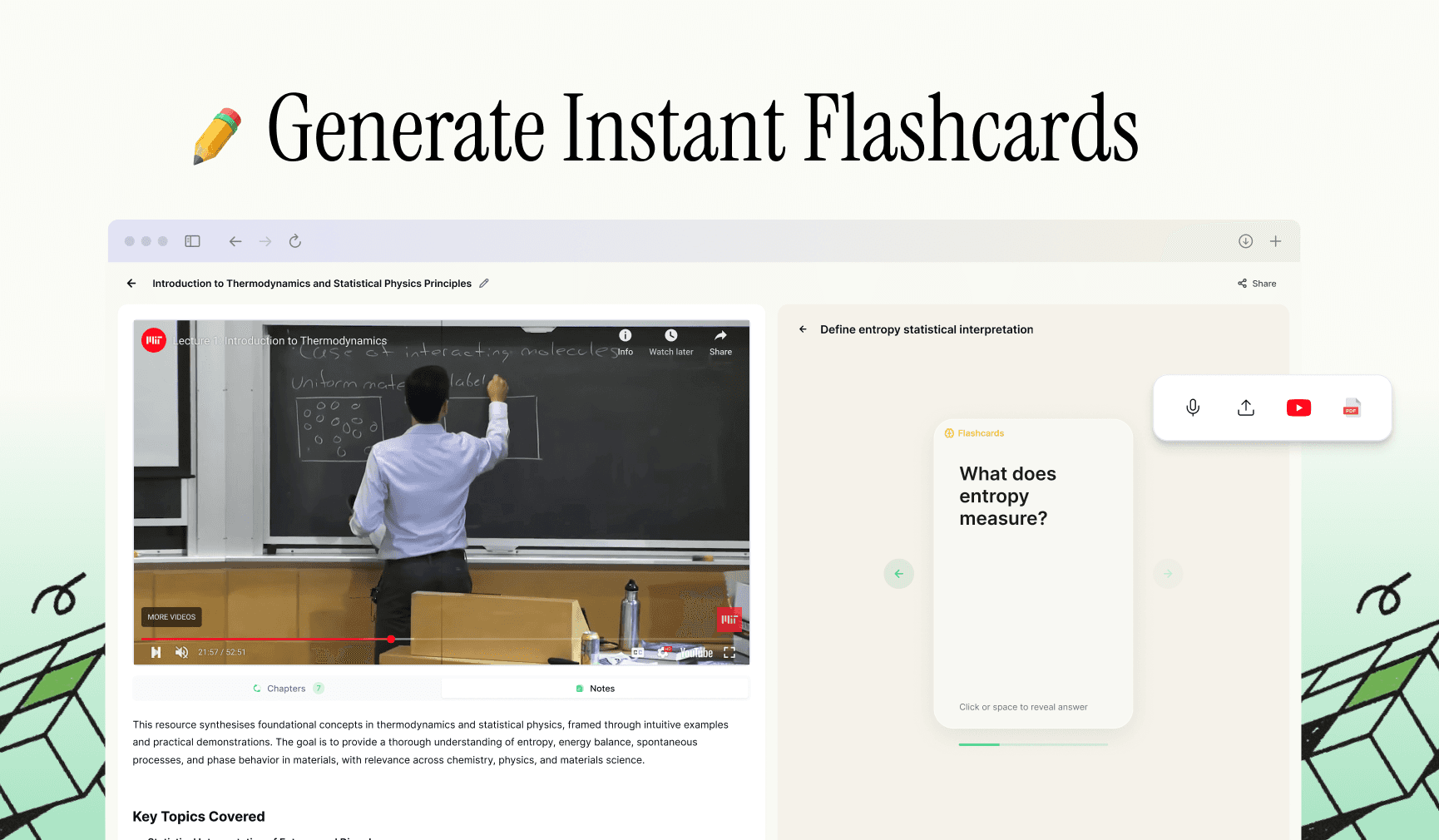
What to include in your Music History flashcards
Good Music History flashcards follow the 'atomic' rule: one idea per card. This prevents your brain from getting overwhelmed and ensures you actually know the material. Your deck should focus on four main categories.
Definitions & key terms: What is monophony? or Define the Doctrine of the Affections.
Eras & Styles: What are the primary dates of the Baroque period?
Composers & Works: Who composed the 'Symphonie Fantastique'?
Context & Theory: How did the patronage system change in the 19th century?
Example prompts include: What defines a madrigal?, Name three characteristics of Stravinsky’s Rite of Spring, and How does the Heiligenstadt Testament change our view of Beethoven?
How to study Music History with flashcards
Study Music History using a 'two-pass' approach. First, generate your deck from your lecture notes to establish the baseline of what you need to know. Then, move into repetitive rounds to solidify the memory.
Make a deck from your notes (or generate it from content).
Do one quick round to find weak spots in specific eras or composers.
Review weak cards daily for a few days to build familiarity.
Mix in harder cards, like those involving complex theory or obscure dates.
Do a final mixed review to ensure you can jump between different centuries of music without getting confused.
Generate Music History flashcards automatically in Duetoday
Making cards manually is slow, messy, and inconsistent. You often spend more time writing the cards than actually studying them. Duetoday solves this by automating the creation process. Simply upload your PDF readings, lecture slides, or even YouTube transcripts, and get a professional deck instantly. Review it, tweak the wording if needed, and start studying immediately.
Common Music History flashcard mistakes
Most students make cards that are too long or too vague. Avoid these pitfalls to maximize your study time:
Cards are too long: Don't put a whole biography on one card; split it into one fact per card.
Only memorizing dates: Add significance prompts so you understand why a date matters.
Confusing similar composers: Create specific comparison cards for contemporaries.
No review schedule: Spaced repetition only works if you actually return to the cards.
Ready to generate your Music History flashcards?
Stop rereading and start recalling. Upload your notes today and get a custom deck in seconds. Works with notes, PDFs, slides, and transcripts.
FAQ
How many flashcards do I need for Music History? Typically, a single unit or era requires 30–50 cards to cover major composers, works, and stylistic traits.
What’s the best format for Music History flashcards? Question-and-answer format is best. For example, 'Question: What is a leitmotif? Answer: A recurring musical theme associated with a particular person, idea, or situation.'
How often should I review Music History flashcards? Review daily for the first three days, then every other day once you start getting the cards right consistently.
Should I make cards from a textbook or slides? Use both. Textbooks provide the 'why,' while lecture slides usually highlight what the professor thinks is most important for the exam.
How do I stop forgetting composers after a few days? Include a specific 'unique trait' for each composer on their card to help differentiate them from their contemporaries.
What if my flashcards feel too easy? If they are too easy, combine two related concepts or ask for a deeper 'how' or 'why' instead of just a definition.
Can I generate Music History flashcards from a PDF? Yes, Duetoday is designed to parse PDFs and extract the most relevant historical and musical facts into cards.
Are digital flashcards better than paper for this subject? Digital cards are superior because they use algorithms to show you the cards you are struggling with more frequently.
How long does it take to make a full deck? With Duetoday, you can turn a 20-page PDF into a full deck in under two minutes.
Can Duetoday organize my flashcards by era? Yes, you can categorize your generated cards into specific decks like 'Baroque,' 'Classical,' and 'Modern' for organized studying.

Duetoday is an AI-powered learning OS that turns your study materials into personalised, bite-sized study guides, cheat sheets, and active learning flows.