Generate Flashcards for Monetary Policy
Generate Monetary Policy flashcards in seconds with AI. Turn notes into study decks. Try for free!
Generate Flashcards with AI Free
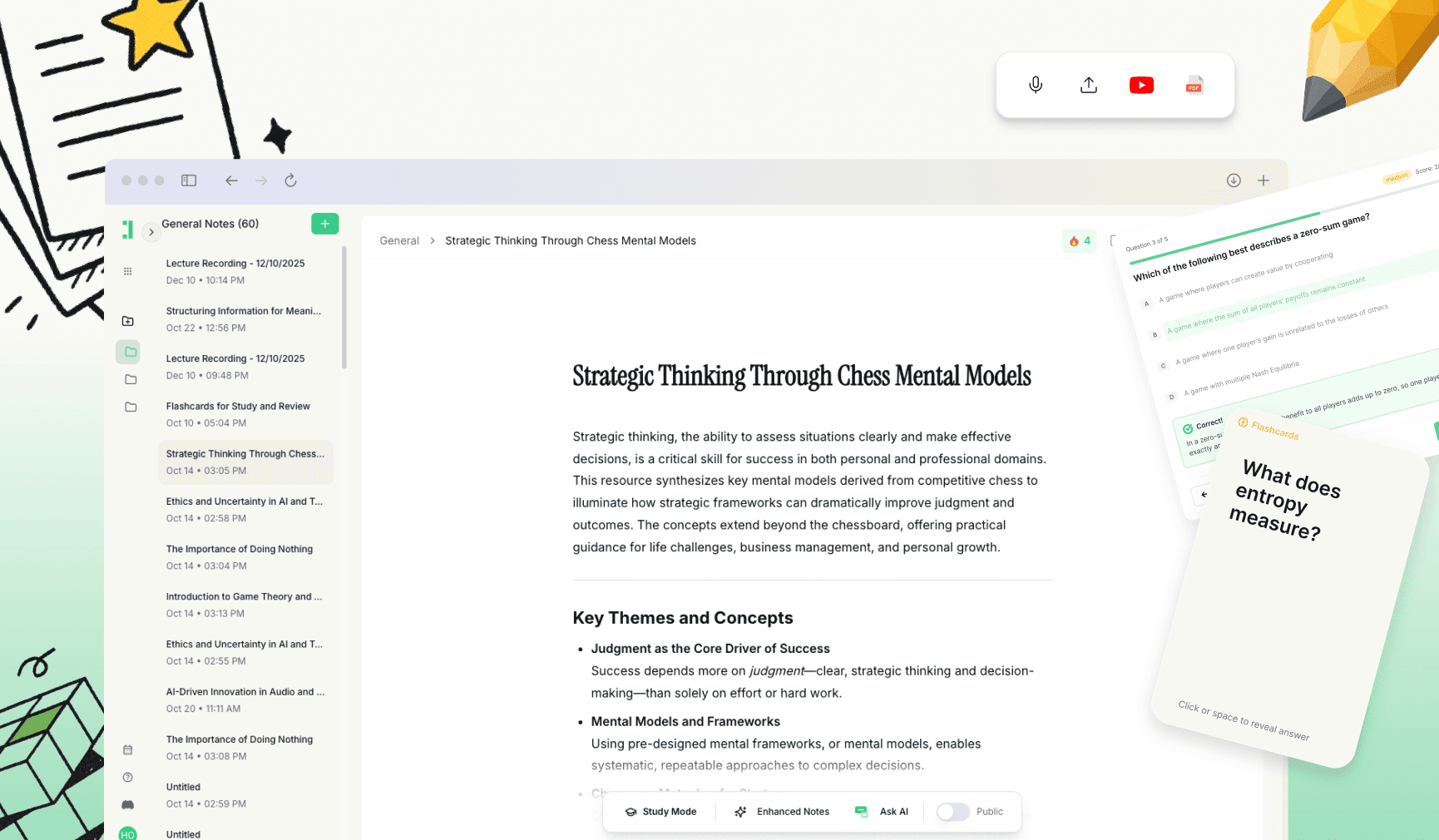
Generate Flashcards for Monetary Policy
Turn your economics notes, PDFs, slides, or lecture recordings into Monetary Policy flashcards so you can review faster and remember more. Master the complexities of central banking and economic stability without spending hours manually writing out cards.
Generate Monetary Policy FlashcardsUpload notes / paste text
In Duetoday, the process is seamless: simply upload your study materials, and our AI instantly extracts key concepts to generate a structured deck. You can then review, edit, and start studying with active recall in minutes.
What are Monetary Policy flashcards?
Monetary Policy flashcards cover the essential tools and theories used by central banks to manage a nation's money supply and interest rates. These cards break down complex topics like open market operations, discount rates, reserve requirements, and the dual mandate of price stability and maximum employment.
The outcome is a shift from passive reading to active testing. Instead of rereading a textbook chapter on the Federal Reserve, you test your ability to explain how a rate hike impacts aggregate demand, building much stronger mental pathways and long-term retention.
Stop struggling with dense economic theory; if you already have notes, Duetoday can generate a clean deck in minutes.
Why flashcards are one of the best ways to study Monetary Policy
Monetary Policy requires a deep understanding of cause-and-effect relationships and specific technical definitions. Flashcards are perfectly suited for this because they force you to link a policy action (like buying government bonds) with its economic reaction (like increasing the money supply).
By using active recall and spaced repetition, you move beyond memorizing definitions to truly understanding economic cycles. You focus your energy on the concepts you find most difficult, ensuring you don't waste time reviewing what you already know.
Remember key terms like 'Quantitative Easing' without cramming
Separate similar concepts (e.g., Expansionary vs. Contractionary policy)
Learn the step-by-step transmission mechanism of interest rates
Practice applying rules like the Taylor Rule quickly
What to include in your Monetary Policy flashcards
Effective Monetary Policy flashcards follow the "one idea per card" rule. Use question-based prompts to challenge your brain rather than just writing out long definitions. This ensures you can apply the knowledge during an exam rather than just recognizing the words.
There are four main card types to focus on for this topic:
Definitions & key terms: Focus on tools like the 'Federal Funds Rate' or 'Liquidity Trap.'
Processes & steps: Detail the stages of how a change in the reserve ratio affects bank lending.
Comparisons: Contrast the impacts of Monetary Policy versus Fiscal Policy.
Application: Predict what happens to inflation if the central bank lowers interest rates during a recession.
Example prompts include: "What is the primary goal of expansionary monetary policy?", "Define the 'Discount Rate' in one sentence.", "How does increasing the reserve requirement affect the money multiplier?", and "What happens to bond prices when interest rates rise?"
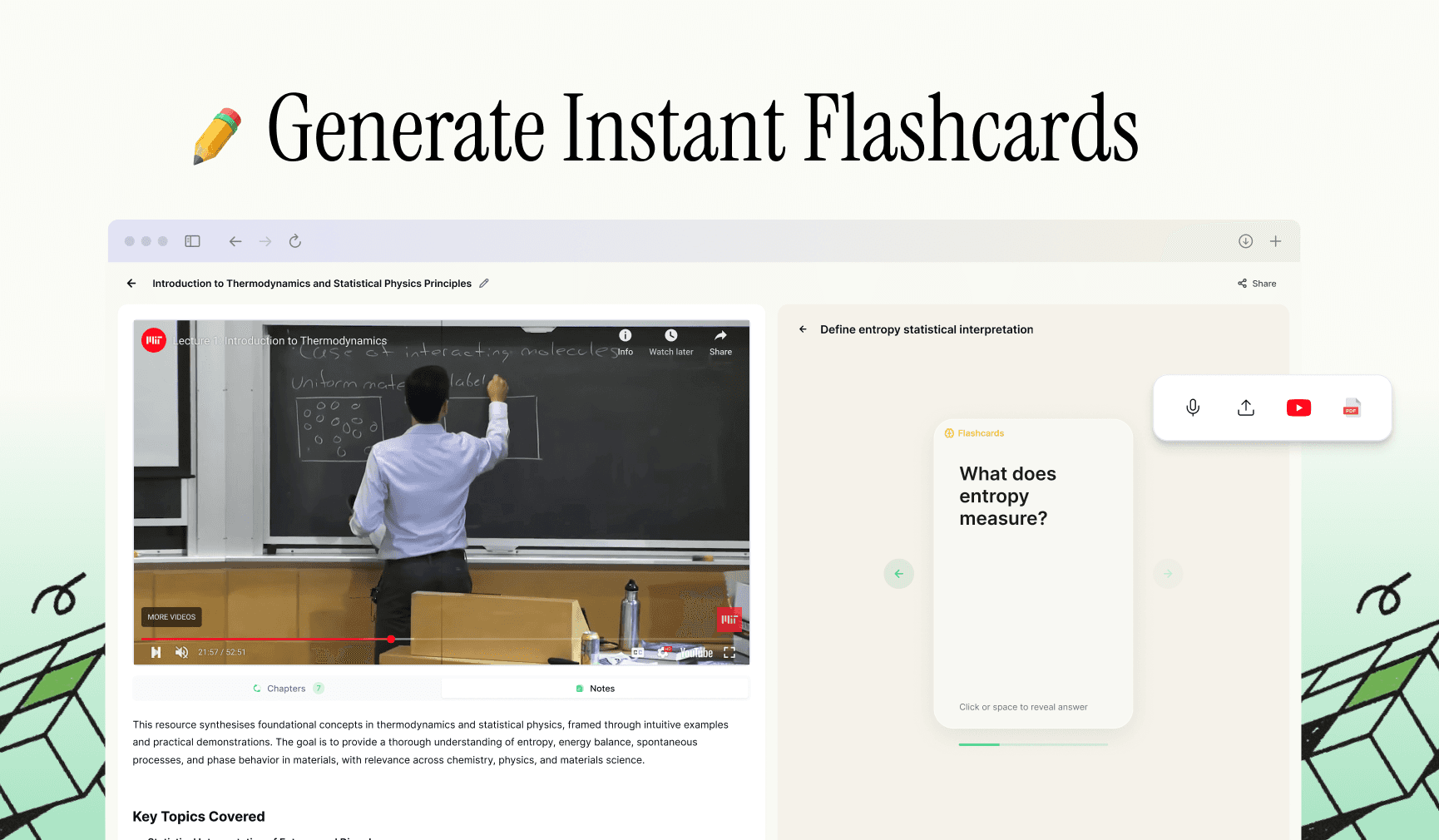
How to study Monetary Policy with flashcards (a simple system)
To master Monetary Policy, use a "two-pass" approach. First, generate your deck from your lecture slides or textbook. Then, go through the cards in focused rounds to identify which mechanisms—like the money market or investment demand curve—are tripping you up.
Review should be done in short, frequent sessions. Focus on the "why" behind the cards; don't just memorize that rates go up, explain why that leads to a decrease in consumption and investment spending.
Make a deck from your notes (or generate it from Duetoday content).
Do one quick round to find weak spots in your understanding of central bank tools.
Review weak cards daily to cement the transmission mechanisms in your memory.
Mix in a few harder application cards each session to simulate exam conditions.
Do a final mixed review before your midterm or finals to ensure total recall.
Generate Monetary Policy flashcards automatically in Duetoday
Preparing for an economics exam is stressful, and making cards manually is slow, messy, and often leads to inconsistent study habits. You should be spending your time understanding the Neutral Rate of Interest, not cutting out paper cards.
Duetoday solves this by turning your study materials into interactive tools instantly. Whether it's a 50-page PDF on macroeconomics or a recorded lecture on the Great Recession, our AI extracts the most testable material for you.
Upload or paste your Monetary Policy material
Click Generate Flashcards
Review, edit, and start studying
Generate Monetary Policy Flashcards in Duetoday
Start with your notes and get a deck you can actually use today. Stop rereading and start recalling.
Common Monetary Policy flashcard mistakes (and how to fix them)
Most students create cards that are too wordy, making it impossible to study efficiently. If a card takes 30 seconds to read, it isn't a flashcard—it's a shortened textbook page. Keep your prompts punchy and focused on a single economic outcome.
Cards are too long: Split complex mechanisms into multiple "step-by-step" cards.
Only memorizing words: Add "explain the impact on GDP" prompts to your cards.
Confusing policy types: Use comparison cards to highlight differences between Fed tools.
No review schedule: Use Duetoday's built-in repetition to repeat weak cards more often.
No application: Include scenario cards (e.g., "If inflation is at 8%, what action should the Fed take?").
Ready to generate your Monetary Policy flashcards? Upload your notes, generate your deck, and start studying with active recall today. Works with notes, PDFs, slides, and transcripts.
FAQ
How many flashcards do I need for Monetary Policy? Typically, a comprehensive deck for a standard undergraduate module requires 40-60 cards to cover tools, targets, and transmission mechanisms.
What’s the best format for Monetary Policy flashcards? Question-and-answer format is best. For example: 'Q: How does a sale of bonds affect the money supply? A: It decreases the money supply.'
How often should I review Monetary Policy flashcards? Review daily for the first week to master definitions, then every 3-4 days to maintain your understanding of the cause-and-effect relationships.
Should I make cards from a textbook or lecture notes? Lecture notes are best for understanding what your professor emphasizes, while textbooks are great for clarifying complex definitions like 'Seigniorage.'
How do I stop forgetting Monetary Policy after a few days? Use spaced repetition. By reviewing cards just as you are about to forget them, you strengthen the long-term memory of the material.
What if my flashcards feel too easy? Add application-based cards. Instead of 'What is the reserve ratio?', use 'How does a 10% reserve ratio affect a $1,000 deposit?'.
Can I generate Monetary Policy flashcards from a PDF automatically? Yes, Duetoday can ingest any economics PDF and extract the key terms and concepts into a flashcard format instantly.
Are digital flashcards better than paper for Monetary Policy? Digital cards are superior because they allow for automated spaced repetition and the ability to include complex graphs or charts easily.
How long does it take to make a full Monetary Policy deck? Manually, it can take hours. With Duetoday's AI generation, it takes less than 60 seconds.
Can Duetoday generate and organize my flashcards for me? Absolutely. Duetoday categorizes your cards by topic, ensuring your study sessions are organized and efficient.

Duetoday is an AI-powered learning OS that turns your study materials into personalised, bite-sized study guides, cheat sheets, and active learning flows.