Generate Flashcards for Modern European History
Make Modern European History flashcards to study revolutions, wars, and political shifts with our AI-powered generator.
Generate Flashcards with AI Free
What are Modern European History flashcards?
Modern European History flashcards are focused study tools designed to help you master the complex timeline of Europe from the late 18th century to the present day. These cards cover pivotal events like the French Revolution, the Industrial Revolution, the World Wars, and the formation of the European Union. Instead of just reading about the rise and fall of empires, these flashcards force you to recall key dates, figures, and causal relationships.
The main outcome of using these flashcards is a shift from passive reading to active memory retrieval. By testing yourself on specific triggers—such as the causes of the Bolshevik Revolution or the impact of the Treaty of Versailles—you build stronger neural pathways and ensure you don't confuse similar historical eras during your exams.
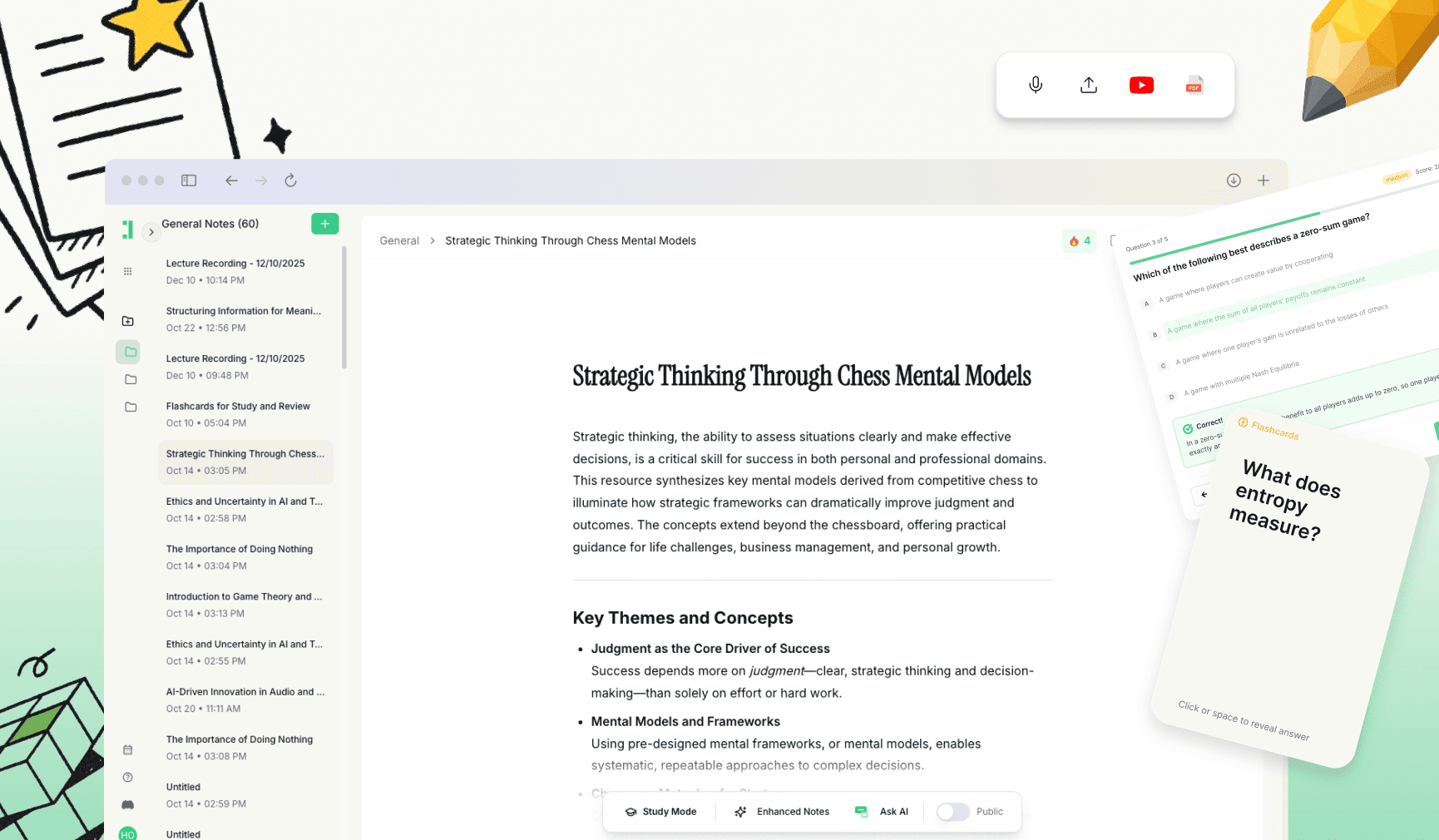
If you already have lecture notes or textbook chapters, Duetoday can generate a clean, organized deck in minutes.
Why flashcards are one of the best ways to study Modern European History
History is often a massive web of names, dates, and 'isms.' Flashcards work because they break down these dense subjects into manageable, bite-sized pieces of information. By utilizing active recall, you ensure that you actually know the material rather than just recognizing the words on a page after multiple rereadings.
Through spaced repetition, you can focus your time on the specific revolutions or political shifts that you find most difficult, ensuring a balanced understanding of the entire syllabus without the need for last-minute cramming.
Remember key terms like 'Realpolitik' or 'Glasnost' without cramming
Separate similar concepts (e.g., the Unification of Italy vs. the Unification of Germany)
Learn complex processes step-by-step (the stages of the French Revolution or the escalation of WWI)
Practice identifying the long-term causes and immediate triggers of major conflicts
What to include in your Modern European History flashcards
Effective history flashcards follow the 'atomic' rule: one specific idea or event per card. This prevents your brain from getting overwhelmed and ensures you aren't skipping over the details of complex treaties or social movements.
To get the most out of your study sessions, use a variety of card types that challenge both your factual knowledge and your analytical skills.
Definitions & Key Terms: What was the Reign of Terror? or Define the Iron Curtain.
Processes & Steps: What were the three main stages of Italian Unification?
Comparisons: How did the 1848 Revolutions differ from the French Revolution of 1789?
Application: What was the primary economic consequence of the Industrial Revolution on the working class?
How to study Modern European History with flashcards
Don't try to master the entire 19th and 20th centuries in one sitting. Use a two-pass approach: first, generate your deck from your notes or syllabus, then run through the cards rapidly to identify which decades or themes are your weakest. This allows you to prioritize the 'trouble spots' like the complexities of the Balkan Wars or Cold War proxy conflicts.
Consistency is more important than duration. Reviewing your history cards for 15 minutes a day is significantly more effective than a five-hour session the night before your midterm.
Make a deck from your notes (or generate it automatically from your PDF).
Do one quick round to find weak spots in your timeline knowledge.
Review weak cards (like specific treaty terms) daily for a few days.
Mix in harder analytical cards to ensure you understand the 'why' behind the events.
Do a final mixed-era review before your exams to master the chronology.
Generate Modern European History flashcards automatically in Duetoday
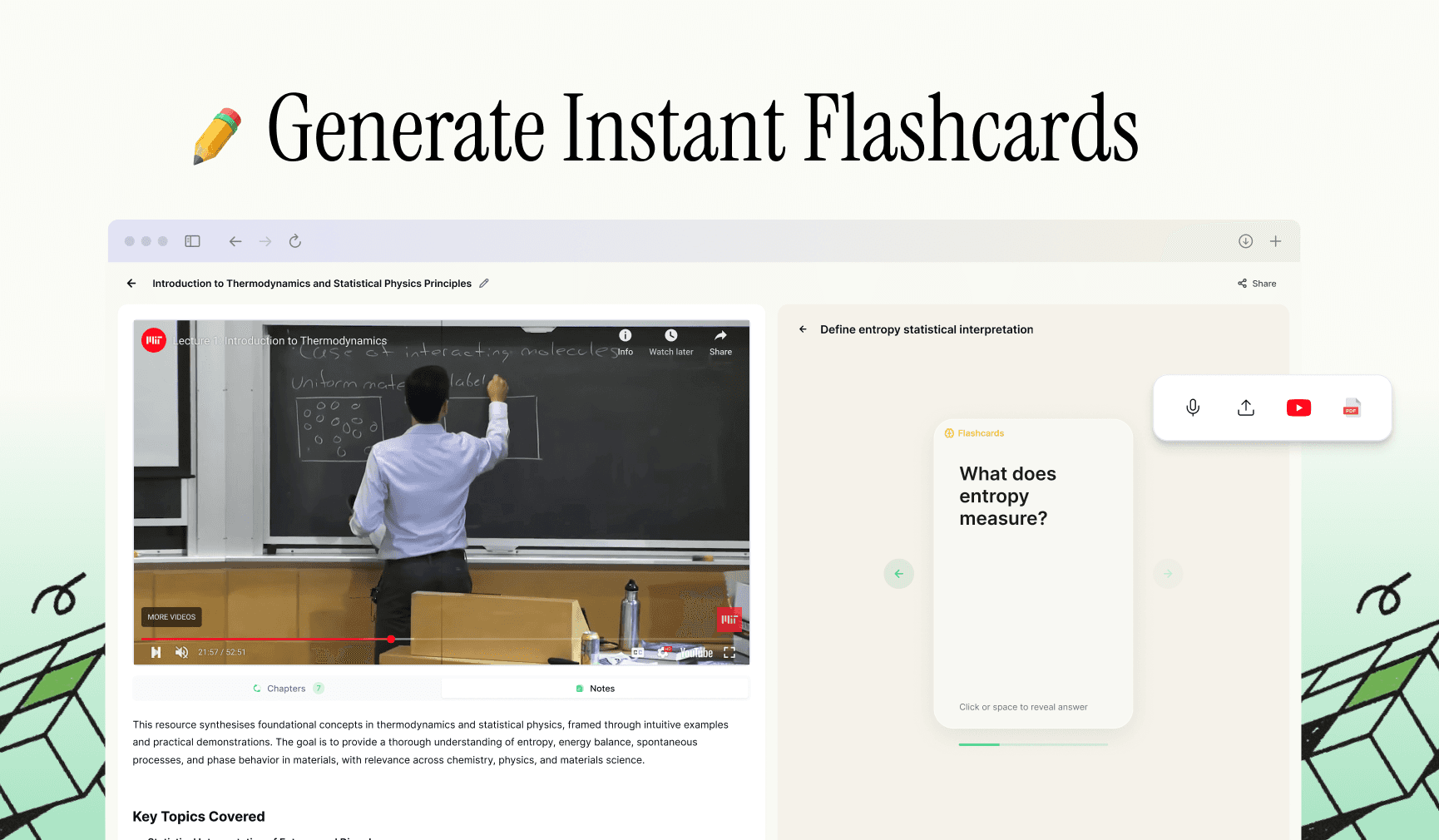
Spending hours manually writing out index cards is a waste of valuable study time. Duetoday streamlines this process by turning your messy lecture notes, textbook PDFs, and presentation slides into professional-grade flashcards instantly.
Simply upload your study material, and Duetoday’s AI will identify the most important dates, figures, and concepts, allowing you to move straight from preparation to actual learning.
Upload or paste your Modern European History material
Click Generate Flashcards
Review, edit, and start studying with active recall
FAQ
How many flashcards do I need for Modern European History?
For a standard semester course, 200–400 cards is usually sufficient to cover major events, key figures, and overarching themes without becoming overwhelmed.
What’s the best format for history flashcards?
The most effective format is the 'Question on Front, Answer on Back' style. Keep the answers short—ideally one or two sentences or a bulleted list of 3 key points.
How often should I review my history flashcards?
Aim for daily reviews of your 'new' or 'difficult' cards, while reviewing older mastered material every 4–7 days to ensure long-term retention.
Should I make cards from a textbook or my lecture notes?
Lecture notes are usually better for identifying what your professor thinks is important, but textbooks provide the necessary context. Duetoday can combine both into one comprehensive deck.
How do I stop forgetting dates after a few days?
Use spaced repetition. By reviewing the date right as you are about to forget it, you push that information deeper into your long-term memory.
Can I generate history flashcards from a PDF automatically?
Yes, Duetoday is designed to scan PDFs and extract key historical data to create study-ready decks in seconds.
Are digital flashcards better than paper for history?
Digital cards are generally superior because they allow for automated spaced repetition, easy editing, and the ability to study on the go without carrying hundreds of physical cards.
How long does it take to make a full history deck?
Manually, it can take hours. With Duetoday, you can generate a full deck from a chapter or set of notes in under a minute.
Duetoday is an AI-powered learning OS that turns your study materials into personalised, bite-sized study guides, cheat sheets, and active learning flows.