Generate Flashcards for Middle Eastern History
Easily make or generate flashcards for Middle Eastern History to master subject topics like empires and modern politics.
Generate Flashcards with AI Free
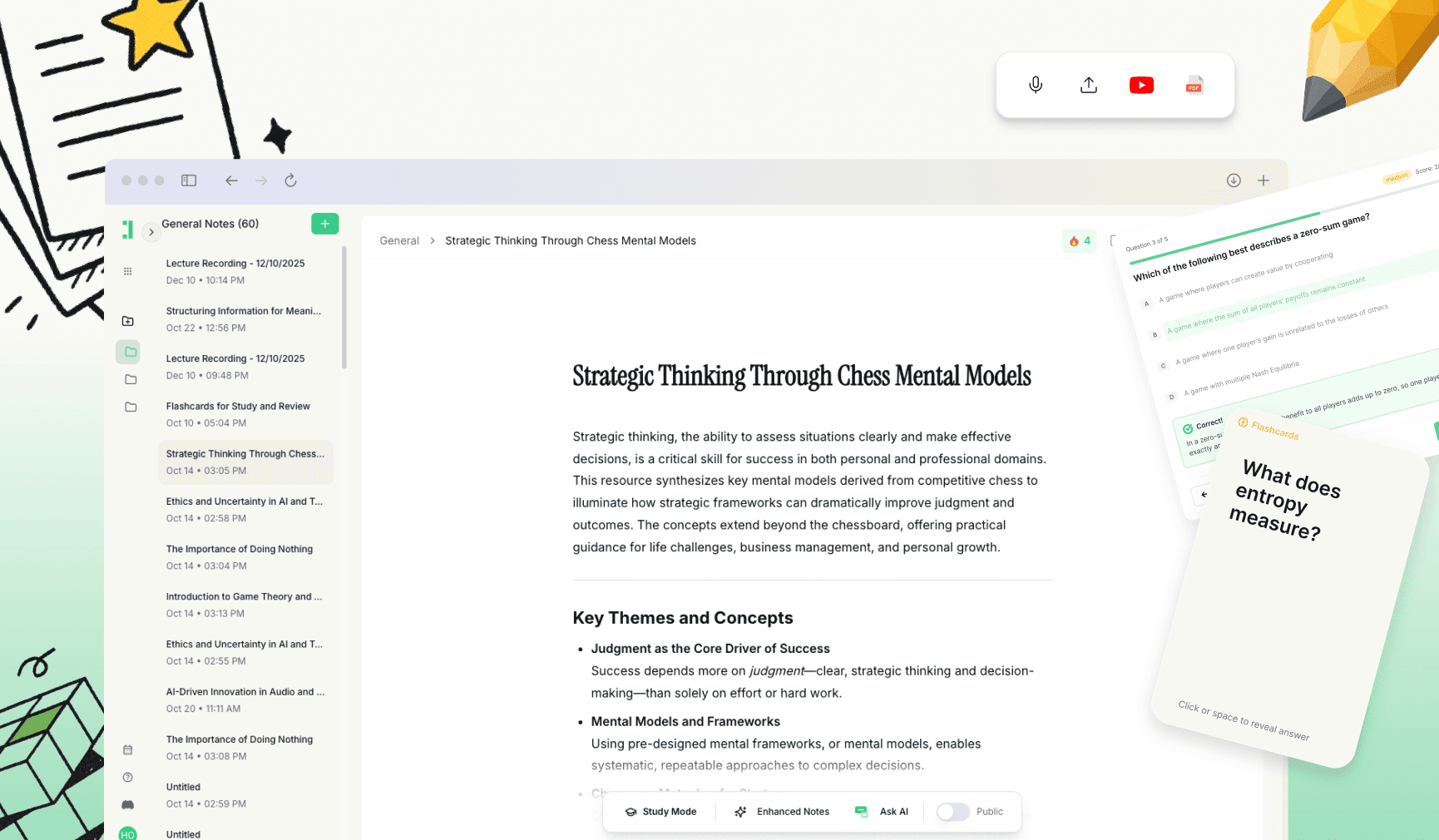
What are Middle Eastern History flashcards?
Middle Eastern History flashcards are focused study tools designed to help you master the complex timelines, diverse cultures, and geopolitical shifts of the region. These cards cover everything from ancient civilizations and the rise of major world religions to the intricate modern political landscape of the 20th and 21st centuries.
Instead of passively rereading dense textbooks or long lecture transcripts, these flashcards force you to engage in active recall. By testing yourself on specific events, leaders, and social movements, you build stronger neural connections and ensure you can retrieve the information during exams or discussions. Duetoday can transform your existing Middle Eastern history notes into a clean, organized deck in just a few minutes.
Why flashcards are one of the best ways to study Middle Eastern History
Middle Eastern History requires a balance of memorizing specific data points and understanding broad historical themes. Flashcards bridge this gap by breaking down overwhelming amounts of information into manageable bites. They utilize active recall and spaced repetition to ensure that facts move from your short-term memory into long-term retention.
Master Chronology: Keep track of complex successions and empire timelines without getting confused.
Differentiate Concepts: Lean the nuances between different religious movements, political ideologies, and regional conflicts.
Step-by-Step Processes: Understand the stages of major revolutions, peace treaties, or historical transitions.
Quick Vocabulary: Memorize specific terminology related to Islamic jurisprudence, Ottoman administration, or modern diplomacy.
What to include in your Middle Eastern History flashcards
Effective history flashcards should never be too wordy. The goal is to have one clear idea per card to avoid cognitive overload. Using a question-based format is the most efficient way to stimulate your brain during study sessions.
Definitions & Key Terms: What was the Tanzimat reform? or Define Pan-Arabism.
Processes & Steps: What were the three main stages of the Arab Spring in Egypt?
Comparisons: How did the Umayyad Caliphate differ from the Abbasid Caliphate in administration?
Application: What was the primary impact of the 1916 Sykes-Picot Agreement on modern borders?
Example prompts for your deck:
• Who was the founder of the Safavid Empire?
• Explain the significance of the 1979 Iranian Revolution.
• What was the main outcome of the Balfour Declaration?
• List the core tenets of the Young Turks movement.
How to study Middle Eastern History with flashcards
To truly learn Middle Eastern History, you need a systematic approach rather than random flipping. Start by generating a comprehensive deck from your course materials and then enter a focused review cycle. This method ensures you spend more time on what you don't know and less on what you've already mastered.
Generate your deck from notes or PDFs using Duetoday to ensure full coverage.
Perform an initial pass to identify 'weak' cards that you struggle to remember.
Review these difficult cards daily using spaced repetition.
Mix the order of your deck frequently to ensure you aren't just memorizing the sequence.
Conduct a final 'all-deck' review 48 hours before your exam.
Generate Middle Eastern History flashcards automatically in Duetoday
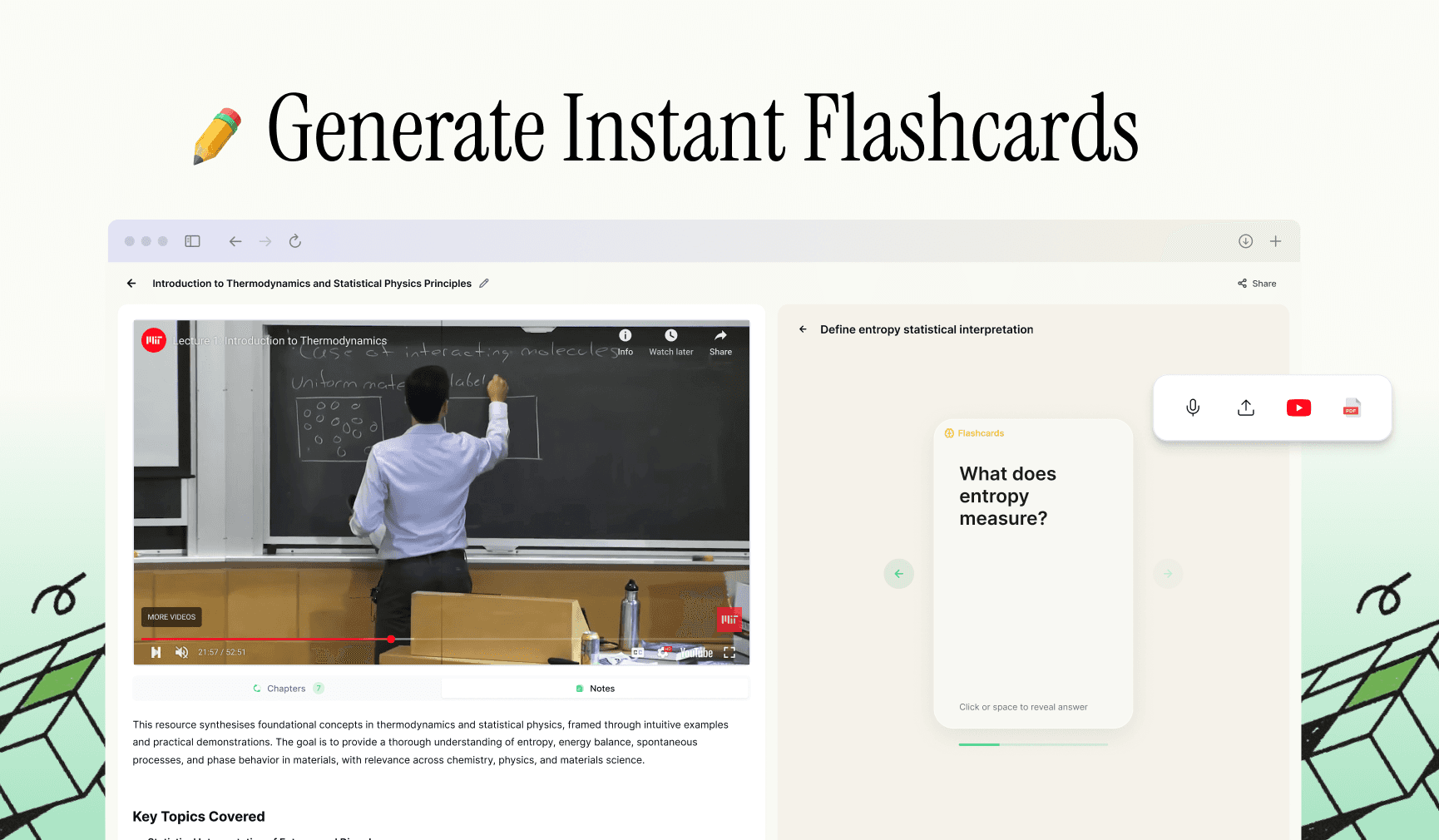
Creating history flashcards manually is incredibly time-consuming. You often spend more time writing the cards than actually studying them. Duetoday eliminates this friction by using AI to scan your materials and extract the most important historical facts instantly.
Simply upload your PDFs, lecture slides, or even YouTube transcripts of history documentaries. Duetoday will generate a structured deck that you can edit, organize, and study immediately on any device. It turns your passive reading time into an active learning session.
Upload your Middle Eastern History materials.
Click 'Generate Flashcards'.
Review, refine, and start your study session.
Common Middle Eastern History flashcard mistakes
Many students create cards that are too complex, which leads to 'recognition' rather than 'recall.' Avoid these common pitfalls to make your study time more effective:
Too much text: Keep cards limited to one question and one answer.
Ignoring the 'Why': Don't just memorize dates; include cards that ask for the significance of an event.
Neglecting Geography: Ensure you include cards about historical borders and city locations.
Inconsistency: Flashcards work best when used for 15 minutes every day rather than 5 hours once a week.
Ready to generate your Middle Eastern History flashcards?
Stop wasting hours on manual data entry. Upload your history notes to Duetoday and get a tailored study deck in seconds. Focus on learning the history, not making the tools.
FAQ
How many flashcards do I need for Middle Eastern History? It depends on the scope of your course, but generally, 100-150 cards per major historical era (e.g., The Ottoman Empire or Modern Conflicts) is a good target for depth.
What’s the best format for these flashcards? Question and answer format is best. Use the front for a specific question or term and the back for a concise, 1-2 sentence explanation.
How often should I review my history flashcards? Ideally, every day. Spaced repetition works best when you engage with the material frequently in short bursts.
Should I make cards from a textbook or my own notes? A mix of both is best! Duetoday can ingest your lecture notes and textbook PDFs simultaneously to create a comprehensive deck.
How do I stop forgetting dates? Use 'anchor' cards. Link a date to a major event and then create secondary cards that relate other events to that specific anchor year.
What if my flashcards feel too easy? This means you've mastered the facts. Try generating 'Application' cards that ask you to explain the relationship between two different events.
Can I generate flashcards from a PDF automatically? Yes, Duetoday is designed to scan PDF textbooks and lecture slides to create flashcards in seconds.
Are digital flashcards better than paper? Digital cards are generally better for history because they allow for easier organization of hundreds of cards and use AI to track which ones you need to review most.
How long does it take to make a full deck? Manually, it can take hours. With Duetoday, you can generate a full deck from a 50-page PDF in about 30 seconds.
Can Duetoday organize my cards by era? Yes, you can categorize your generated cards into different decks like 'Ancient,' 'Medieval,' or 'Modern Middle East' for better focus.

Duetoday is an AI-powered learning OS that turns your study materials into personalised, bite-sized study guides, cheat sheets, and active learning flows.