Generate Flashcards for Microeconomics
Try out free AI flashcard generation for Microeconomics. Turn notes into study decks instantly!
Generate Flashcards with AI Free
Generate Flashcards for Microeconomics
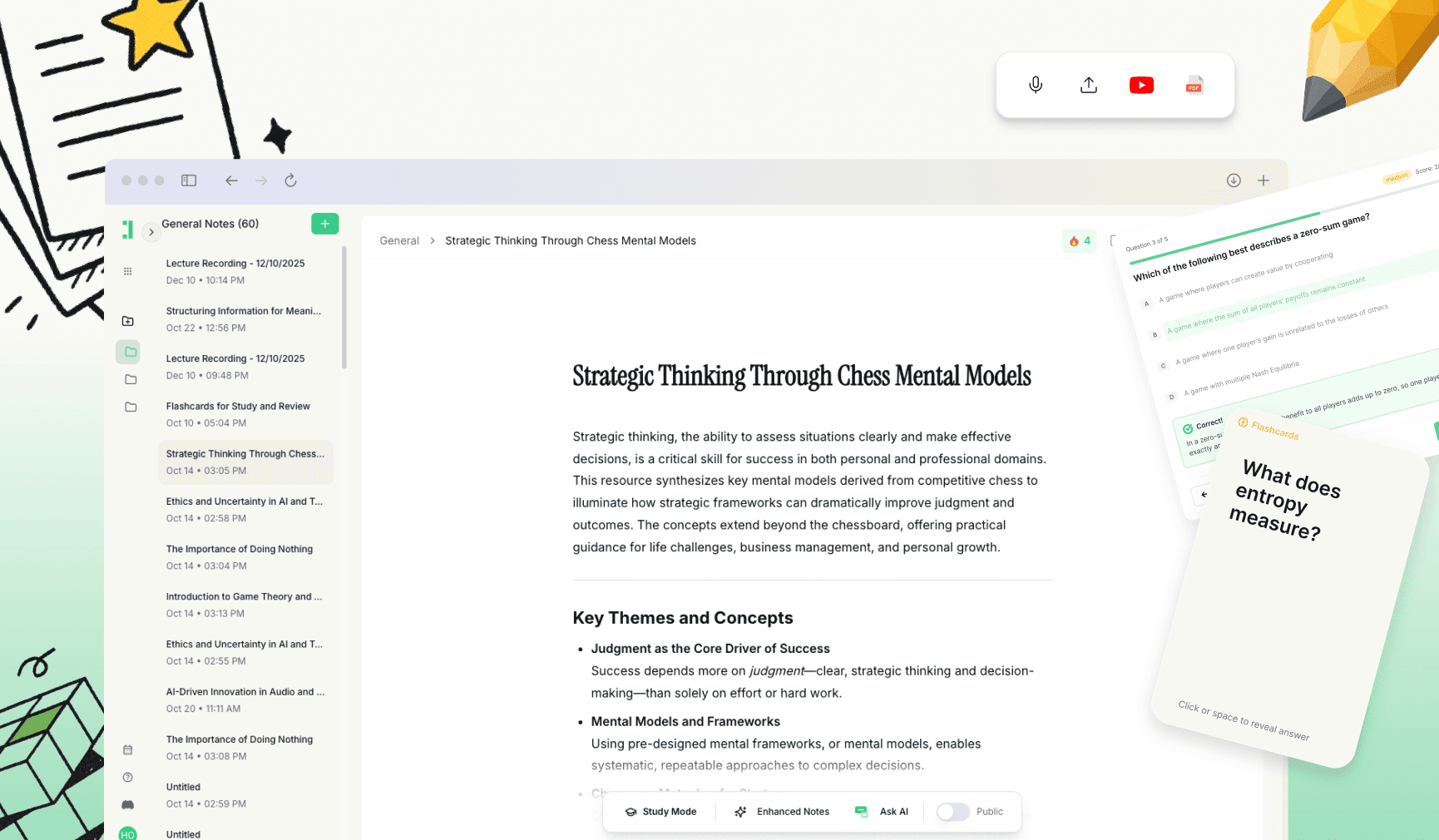
Turn your notes, PDFs, slides, or lectures into Microeconomics flashcards so you can review faster and remember more. Whether you are tackling consumer theory or firm behavior, Duetoday helps you bridge the gap between reading and mastering the material.
Generate Microeconomics Flashcards | Upload notes / paste text
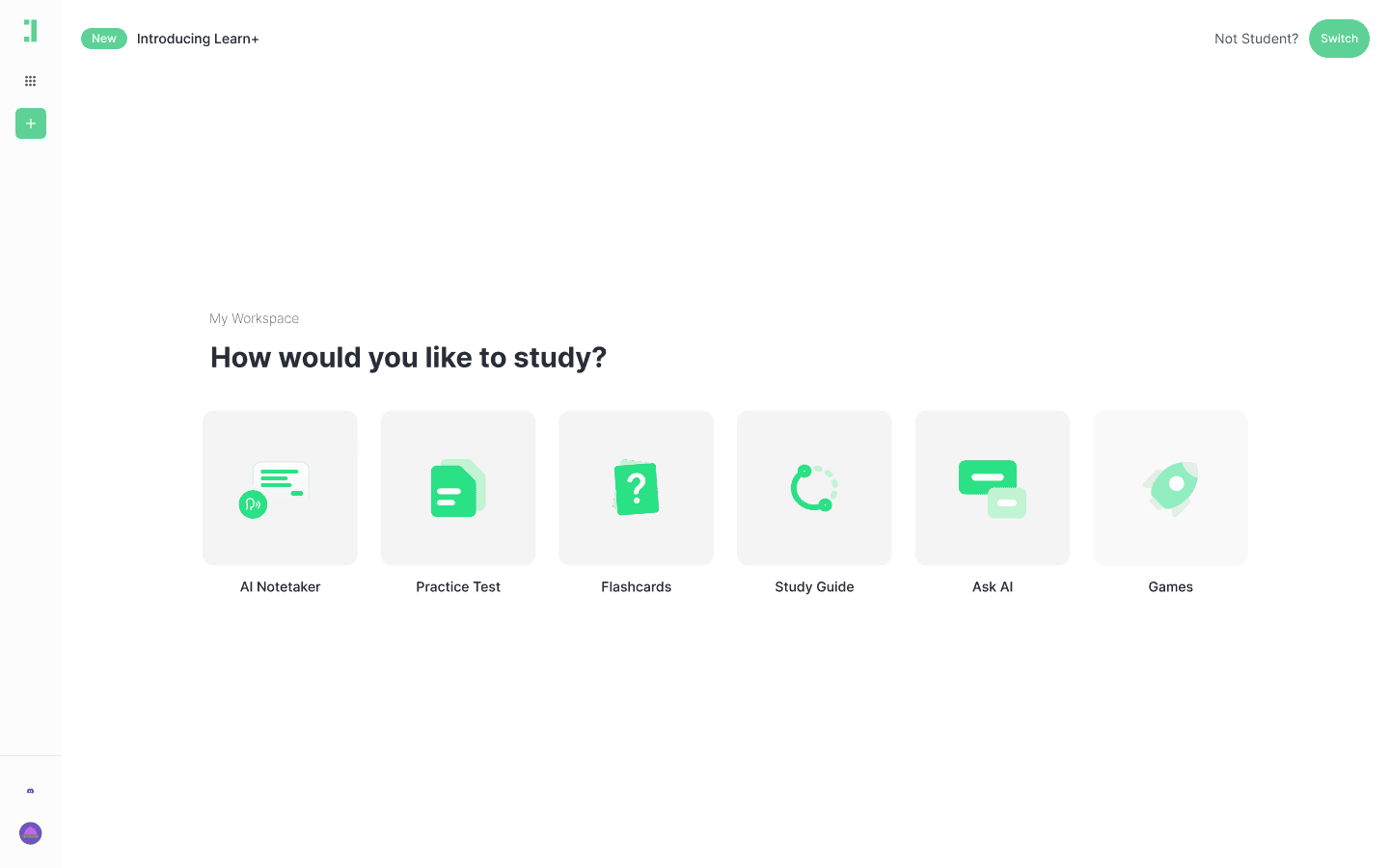
In Duetoday, the process is simple: upload your materials, generate a comprehensive deck, review or edit the cards, and start studying with active recall. No more manual data entry; just instant study tools.
What are Microeconomics flashcards?
Microeconomics flashcards are specialized study tools that cover the fundamental behavior of individual agents and markets. They typically include key terms like marginal utility, supply and demand shifts, elasticity formulas, and cost curves (fixed vs. variable costs).
Instead of passively rereading your textbook, these flashcards force you into active retrieval. By testing yourself on specific concepts like 'Deadweight Loss' or 'Nash Equilibrium,' you build stronger neural pathways and ensure you don't just recognize the material, but actually know it. If you already have notes, Duetoday can generate a clean deck in minutes.
Why flashcards are one of the best ways to study Microeconomics
Microeconomics is a subject built on definitions, specific mathematical relationships, and logical sequences. Flashcards are perfectly suited for this because they break down complex equilibrium shifts into bite-sized, testable questions.
Using active recall and spaced repetition helps you move information from short-term memory to long-term mastery without the burnout of traditional cramming sessions.
Remember key terms like 'Opportunity Cost' without cramming
Separate similar concepts (e.g., Change in Demand vs. Change in Quantity Demanded)
Learn processes step-by-step (e.g., how a firm determines profit-maximization)
Practice applying rules and formulas like Cross-Price Elasticity quickly
What to include in your Microeconomics flashcards
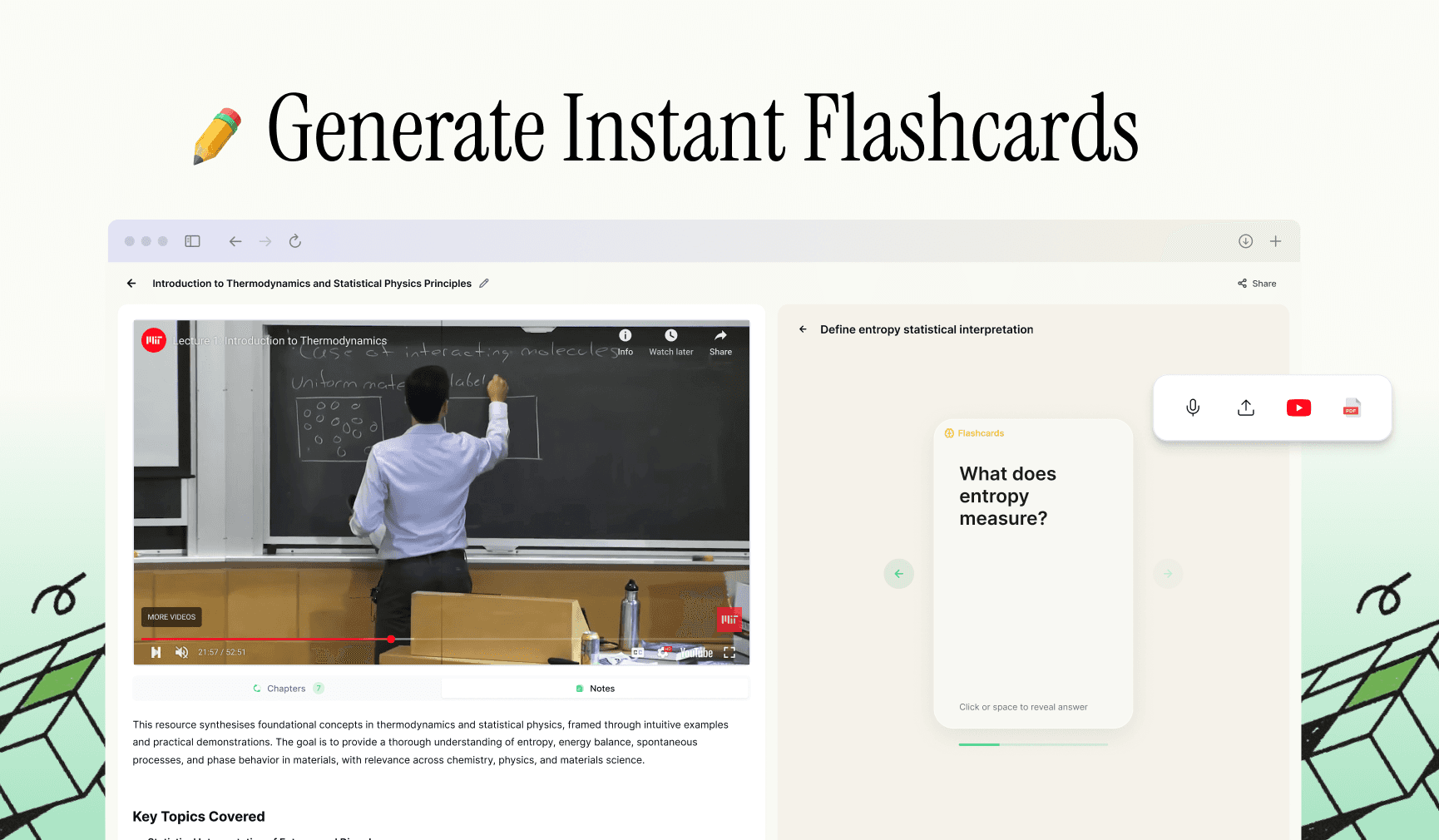
Effective Microeconomics flashcards follow the 'one idea per card' rule. They should be question-based rather than just a list of facts to ensure your brain is actually working during your study session.
Definitions & key terms: "What is an Oligopoly?" "Define Giffen goods in one sentence."
Processes & steps: "What happens to price when a ceiling is set below equilibrium?"
Comparisons: "How is Monopolistic Competition different from Perfect Competition?"
Application: "If the price of a complement rises, what happens to the demand for the primary good?"
Example prompts: "State the Law of Diminishing Marginal Utility," "Formula for Price Elasticity of Demand," or "Graph the relationship between MC and ATC."
How to study Microeconomics with flashcards (a simple system)
We recommend a 'two-pass' approach. First, build your deck from your lecture slides or textbook, then review in focused rounds to identify your knowledge gaps.
Make a deck from your notes (or generate it from content in Duetoday).
Do one quick round to find weak spots like specific graphs or formulas.
Review weak cards daily for a few days to build consistency.
Mix in harder application cards as you get comfortable with definitions.
Do a final mixed review before your midterm or final exam.
Generate Microeconomics flashcards automatically in Duetoday
Making cards manually is slow, messy, and often leads to inconsistent study habits. You spend more time writing the cards than actually learning the economic concepts.
Duetoday changes that. Simply upload your PDF textbook chapters, lecture slides, or paste your notes. Our AI generates flashcards instantly so you can focus on learning. Upload your material, click generate, and start studying immediately.
Common Microeconomics flashcard mistakes (and how to fix them)
Cards are too long: Don't put an entire chapter on one card; split them into individual concepts like 'Income Effect' vs 'Substitution Effect.'
Only memorizing words: Economics is about 'why.' Add prompts that ask what happens if a variable changes.
Confusing similar concepts: Create dedicated comparison cards for things like Normal vs. Inferior goods.
No review schedule: Use Duetoday's system to repeat the cards you find difficult more frequently.
Ready to generate your Microeconomics flashcards?
Stop rereading and start recalling. Upload your Microeconomics notes today, generate a custom deck, and master the curves and concepts with ease. Works with notes, PDFs, slides, and transcripts.
FAQ
How many flashcards do I need for Microeconomics? It depends on the unit, but usually 40-60 cards per major topic like 'Consumer Choice' or 'Market Structures' is sufficient.
What’s the best format for Microeconomics flashcards? Question and answer format is best. Use the front for a specific scenario or term and the back for the definition or graph movement.
How often should I review Microeconomics flashcards? Daily for new concepts, and then every 2-3 days once you feel confident in the core definitions.
Should I make cards from a textbook or lecture notes? Ideally both. Textbooks provide formal definitions, while lecture notes often contain the specific examples your professor prefers.
How do I stop forgetting formulas after a few days? Spaced repetition is key. Practice the formula cards daily until you can write them out from memory without hesitation.
Can I generate Microeconomics flashcards from a PDF automatically? Yes, Duetoday is designed to parse PDFs and extract the most important economic concepts into study-ready cards.
Are digital flashcards better than paper? Digital cards are superior for Microeconomics because you can carry hundreds of cards anywhere and use AI to generate them instantly.
How long does it take to make a full deck? With Duetoday, it takes seconds to generate a deck that would otherwise take hours to write by hand.
Can Duetoday organize my cards for me? Yes, Duetoday categorizes and stores your decks by topic so you can easily find your Supply and Demand deck or your Elasticity deck.

Duetoday is an AI-powered learning OS that turns your study materials into personalised, bite-sized study guides, cheat sheets, and active learning flows.