Generate Flashcards for Metaphysics
Make Metaphysics flashcards in seconds. This guide shows you how to generate study cards for philosophy exams.
Generate Flashcards with AI Free
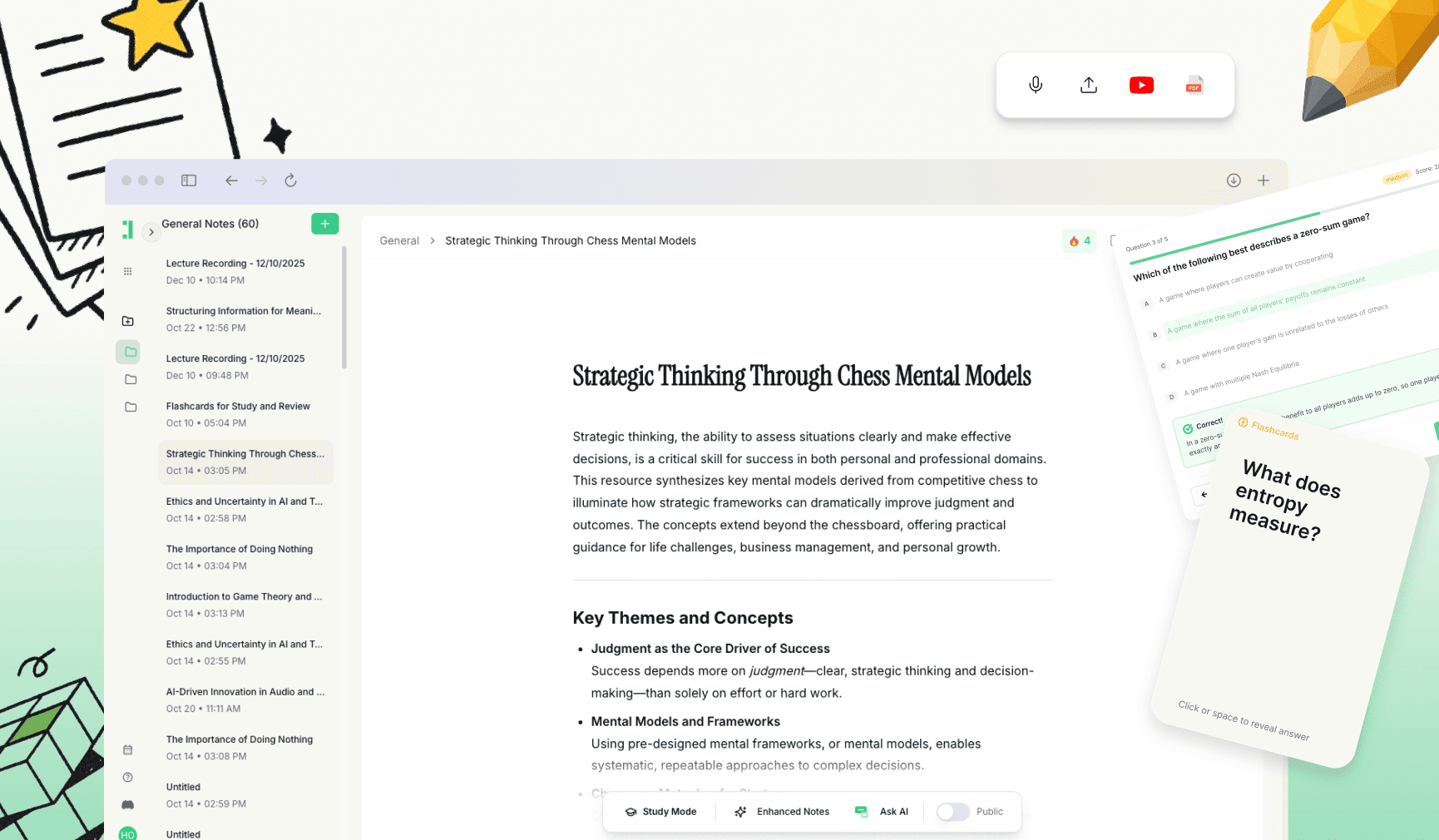
Generate Flashcards for Metaphysics
Turn your complex philosophy notes, dense PDFs, primary texts, or lecture slides into clear Metaphysics flashcards so you can review abstract concepts faster and remember more during your exams. Whether you are tackling ontology, modality, or the nature of time, our tool simplifies the process.
Primary: Generate Metaphysics Flashcards
Secondary: Upload notes / paste text
In Duetoday, the process is seamless: simply upload your philosophy reading or lecture notes, and our AI will generate a structured deck. You can then review, edit, and organize them into a study plan that ensures you never forget the core arguments.
What are Metaphysics flashcards?
Metaphysics flashcards are specialized study tools designed to break down the most fundamental questions of existence into bite-sized, testable prompts. They cover key terms (like substance, accidents, and universals), metaphysical arguments, logical steps in a proof, and common conceptual confusions between different schools of thought.
The outcome is simple: instead of rereading dense chapters by Kant or Aristotle over and over, you test your brain's ability to retrieve information. This builds a deeper connection with the material and ensures you can explain the 'why' behind the theory. If you already have notes, Duetoday can generate a clean deck in minutes.
Why flashcards work for Metaphysics
Metaphysics requires a high level of conceptual precision. Flashcards are ideal because they force you to define relationships between abstract ideas and maintain clarity on nuanced definitions that often overlap. By using active recall and spaced repetition, you move past passive reading into active engagement with the text.
Remember key ontological terms without cramming right before the exam.
Separate similar concepts (e.g., Realism vs. Nominalism or Internalism vs. Externalism).
Learn complex processes step-by-step, such as the stages of a deduction or cosmological arguments.
Practice applying metaphysical rules to thought experiments quickly.
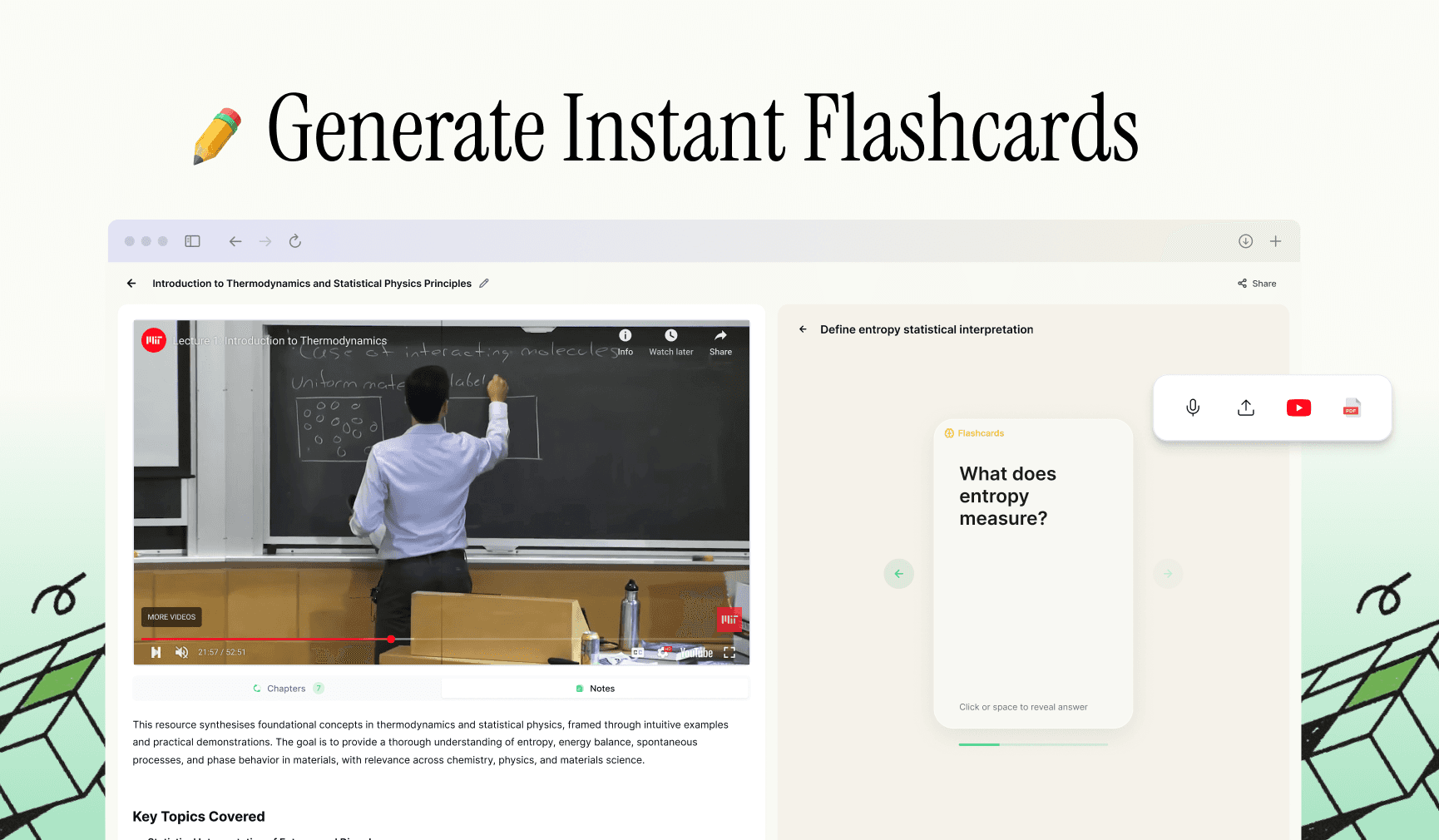
What to include in your Metaphysics flashcards
Effective Metaphysics flashcards follow the 'atomic' rule: one idea per card. Because philosophy is so wordy, it is vital to keep your questions sharp and your answers concise to avoid cognitive overload. Your deck should be built around four main card types to ensure full coverage of the subject.
Definitions & key terms: What is Hylomorphism? or Define 'Quiddity' in one sentence.
Processes & steps: What are the four causes according to Aristotle?
Comparisons: How does Dualism differ from Physicalism regarding the mind-body problem?
Application: How does the 'Ship of Theseus' challenge the concept of persistence?
Use prompts like: Explain the difference between necessary and contingent truths, What is the central claim of Mereological Nihilism? or Identify the primary critique of the Ontological Argument.
How to study Metaphysics with flashcards (a simple system)
Metaphysics is best mastered through a two-pass approach. First, use Duetoday to build your deck from your syllabus or reading list. Then, move into repetitive review cycles. Philosophy requires you to hold multiple conflicting ideas in your head; flashcards help you categorize them without getting overwhelmed.
Make a deck from your readings (or generate it from a PDF transcript).
Do one quick round to identify which theories or philosophers are your weak spots.
Review these weak cards daily, focusing on the logic behind the definitions.
Mix in a few harder application cards to simulate exam conditions.
Do a final mixed review of all major themes before your final paper or quiz.
Generate Metaphysics flashcards automatically in Duetoday
Making philosophy cards manually is notoriously slow because the concepts are so wordy. You often spend more time writing the cards than actually studying them. Duetoday eliminates this bottleneck by automating the extraction of key ideas from your material.
Upload or paste your Metaphysics material (PDF, slides, or notes).
Click Generate Flashcards.
Review the AI-generated deck, edit for nuance, and start studying.
Button: Generate Metaphysics Flashcards in Duetoday
Start with your notes and get a deck you can actually use today. Stop rereading and start recalling.
Common Metaphysics flashcard mistakes (and how to fix them)
Most students make the mistake of making their cards too complex, turning them into mini-essays rather than memory triggers.
Cards are too long: Split them until there is only one specific philosophical point per card.
Only memorizing words: Use prompts that require you to explain the 'why' behind a theory.
Confusing similar schools: Create specific comparison cards for 'Ism' vs 'Ism'.
No review schedule: Ensure you repeat the toughest metaphysical proofs more often.
Ignoring the logical structure: Use cards to map out the premises and conclusions of famous arguments.
Ready to generate your Metaphysics flashcards?
Don't spend hours transcribing definitions. Upload your philosophy notes, generate a professional deck, and start using active recall to master the nature of reality. Works with notes, PDFs, slides, and transcripts.
Button: Start Generating Flashcards
FAQ
How many flashcards do I need for Metaphysics? It depends on the scope, but typically 50-100 cards per major topic (like 'Identity' or 'Causality') ensures you cover definitions and arguments.
What’s the best format for Metaphysics flashcards? Question and Answer format is best. Avoid 'fill in the blank' for complex theories; instead, ask for an explanation or a distinction between two concepts.
How often should I review Metaphysics flashcards? Review new cards daily for the first week, then use spaced repetition to revisit them every few days until the concepts feel intuitive.
Should I make cards from a textbook or lecture notes? Ideally, both. Use textbooks for precise definitions and lecture notes for the specific arguments your professor emphasizes.
How do I stop forgetting Metaphysics after a few days? Spaced repetition is the key. By testing yourself just as you are about to forget, you strengthen the long-term neural pathways for that information.
What if my flashcards feel too easy or too hard? If they are too easy, you are likely just memorizing vocabulary. Add 'Application' cards. If they are too hard, break the concept down into smaller sub-questions.
Can I generate Metaphysics flashcards from a PDF automatically? Yes, Duetoday can read your philosophy PDFs and extract the core arguments and definitions into cards instantly.
Are digital flashcards better than paper for Metaphysics? Digital is usually better because you can easily search for terms, reorganize decks by philosopher, and use built-in spaced repetition algorithms.
How long does it take to make a full Metaphysics deck? Manually, it can take hours. With Duetoday, you can generate a comprehensive deck in under 60 seconds.
Can Duetoday generate and organize my flashcards for me? Yes, the AI handles the extraction and formatting, allowing you to focus entirely on the actual learning and critical thinking.

Duetoday is an AI-powered learning OS that turns your study materials into personalised, bite-sized study guides, cheat sheets, and active learning flows.