Generate Flashcards for Metabolism
Generate Metabolism flashcards in seconds. Upload notes or PDFs and study faster today. Try for free!
Generate Flashcards with AI Free
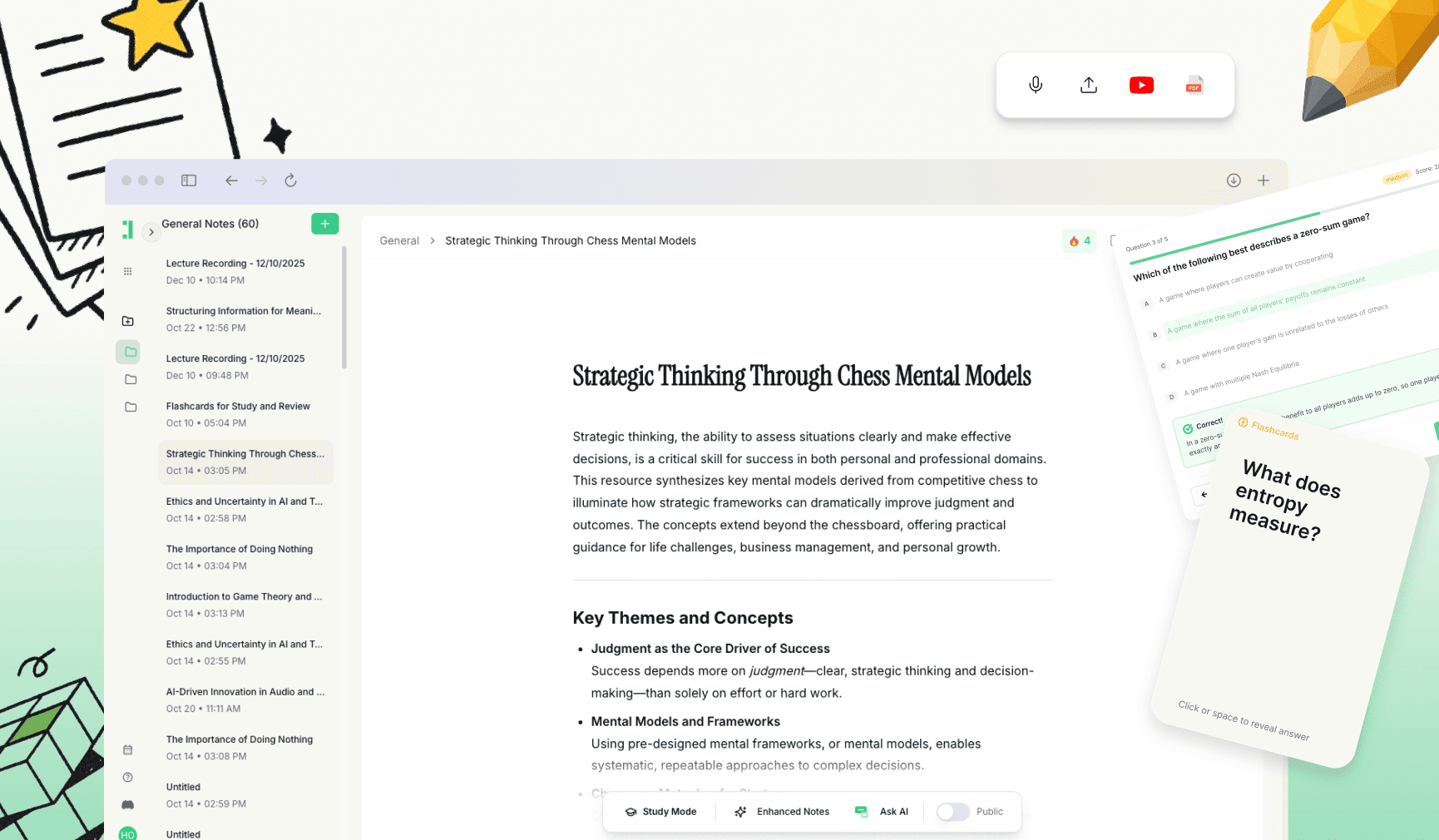
Generate Flashcards for Metabolism
Turn your notes, PDFs, slides, or lectures into metabolism flashcards so you can review faster and remember more. Whether you are studying glycolysis, the Krebs cycle, or lipid metabolism, AI-powered cards help you master complex pathways without the manual grunt work.
Generate Metabolism FlashcardsUpload notes / paste text
In Duetoday, the process is simple: upload your study material, click generate, and our AI identifies key enzymes and steps. You can then review, edit, and start studying immediately using active recall.
What are metabolism flashcards?
Metabolism flashcards are specialized study tools designed to break down the chemical reactions that occur within a living organism. They cover key terms, enzymatic steps, chemical formulas, and the cause-and-effect relationships between different metabolic states.
The outcome is simple: instead of passively rereading your textbook, you test yourself quickly and build deep recall. If you already have notes, Duetoday can generate a clean deck in minutes, helping you bridge the gap between understanding a concept and memorizing a pathway.
Why flashcards are one of the best ways to study metabolism
Metabolism is a subject that demands high-level memorization of sequences and relationships. Flashcards are perfect because they force your brain to retrieve information actively rather than just recognizing it on a page.
Remember enzyme names and substrates without late-night cramming.
Separate similar concepts like Glycolysis vs. Gluconeogenesis.
Learn processes step-by-step, including cycles and metabolic pathways.
Practice applying rules of thermodynamics and energy yields.
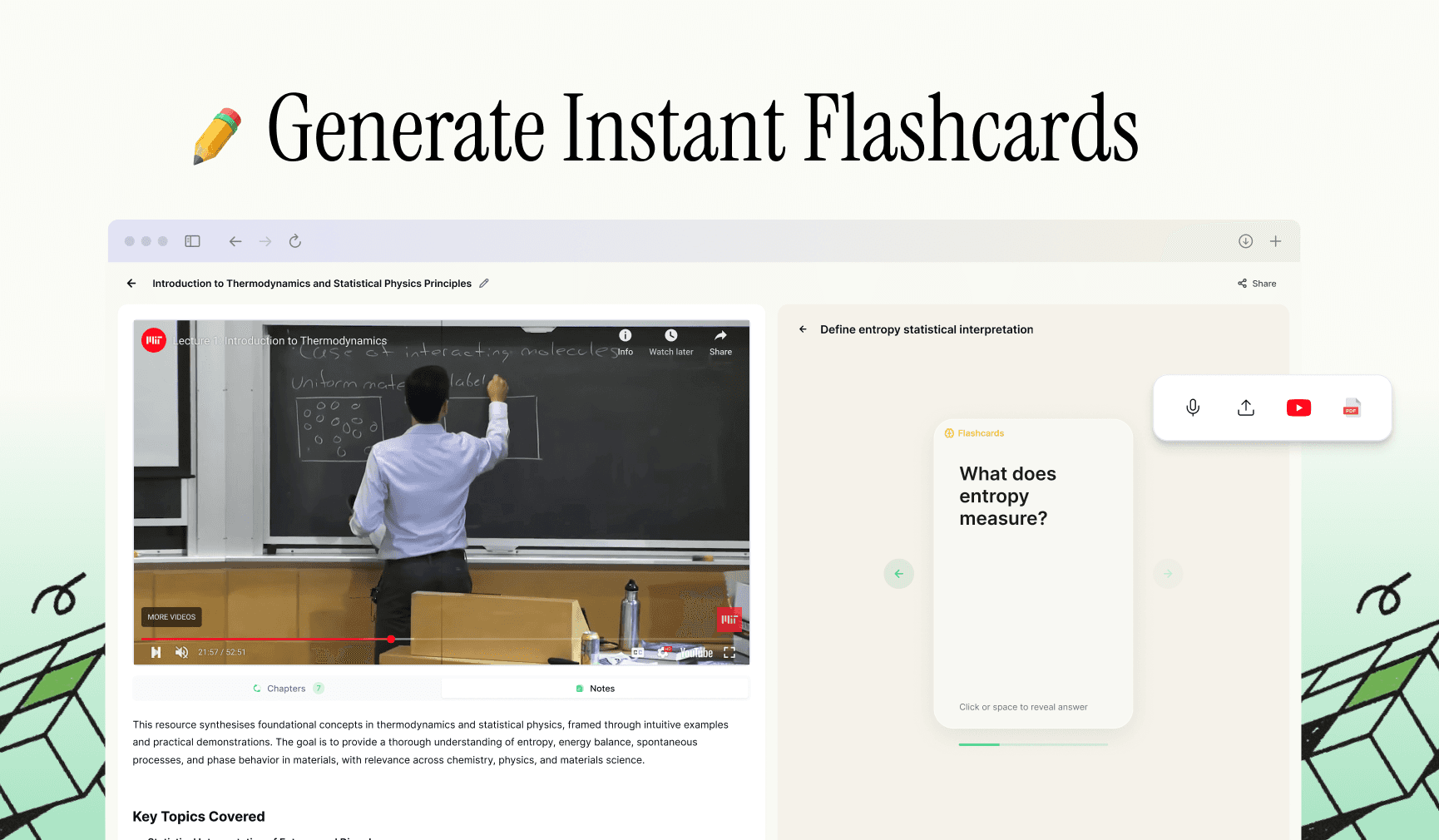
What to include in your metabolism flashcards
The secret to effective metabolism study is ensuring each card focuses on one idea. Use question-based prompts to stimulate your memory. Focus on four main categories:
Definitions & key terms: "What is anabolism?" "Define oxidative phosphorylation."
Processes & steps: "What is the rate-limiting step of glycolysis?"
Comparisons: "How does aerobic metabolism differ from anaerobic?"
Application: "What happens to glucose levels if insulin is absent?"
Example prompts: "What enzyme converts glucose to glucose-6-phosphate?", "Where does the Citric Acid Cycle occur?", "Identify the net gain of ATP in glycolysis."
How to study metabolism with flashcards (a simple system)
To master metabolism, use a "two-pass" approach. First, generate your deck from your notes or slides. Then, do a quick round to identify which pathways or enzymes are your weak spots.
Make a deck from your lecture notes or PDF.
Do one initial round to find weak spots.
Review these tough cards daily until they stick.
Mix in harder application cards once you know the basics.
Do a final mixed-category review before exams.
Generate metabolism flashcards automatically in Duetoday
Making cards manually for metabolism is slow, messy, and inconsistent. Duetoday simplifies this by instantly transforming your complex diagrams and text into study-ready cards.
Simply upload your metabolism material, click "Generate Flashcards," and start studying. Turn your notes into flashcards in minutes and stop rereading—start recalling.
Common metabolism flashcard mistakes
Avoid these common pitfalls to ensure your study time is effective:
Cards are too long: Split complex pathways into individual enzyme steps.
Only memorizing words: Add "why" prompts to understand the metabolic logic.
Confusing similar pathways: Create comparison cards for anabolic vs. catabolic states.
No review schedule: Ensure you repeat weak cards more frequently than easy ones.

FAQ
How many flashcards do I need for metabolism? It depends on the depth of the course, but usually 50-100 cards per major unit (like carbohydrates or lipids) is sufficient to cover all enzymes and intermediates.
What’s the best format for metabolism flashcards? Question-and-answer style works best for names and definitions, while 'fill-in-the-blank' is great for chemical reactions.
How often should I review metabolism flashcards? Aim for short sessions daily. Spaced repetition is the most effective way to keep metabolic pathways in your long-term memory.
Should I make cards from a textbook or lecture notes? Lecture notes are usually better because they highlight the specific enzymes your professor expects you to know.
How do I stop forgetting pathways after a few days? Consistent daily review using an AI tool like Duetoday ensures you don't lose progress on harder cycles like the Krebs cycle.
Can I generate metabolism flashcards from a PDF? Yes, Duetoday can read your biochemistry PDFs and extract key concepts to build a deck automatically.
Are digital flashcards better than paper for metabolism? Digital cards allow for quicker generation and better organization of the dozens of pathways you need to track.
How long does it take to make a full metabolism deck? Manually it could take hours, but with Duetoday's AI, you can have a full deck in under two minutes.

Duetoday is an AI-powered learning OS that turns your study materials into personalised, bite-sized study guides, cheat sheets, and active learning flows.