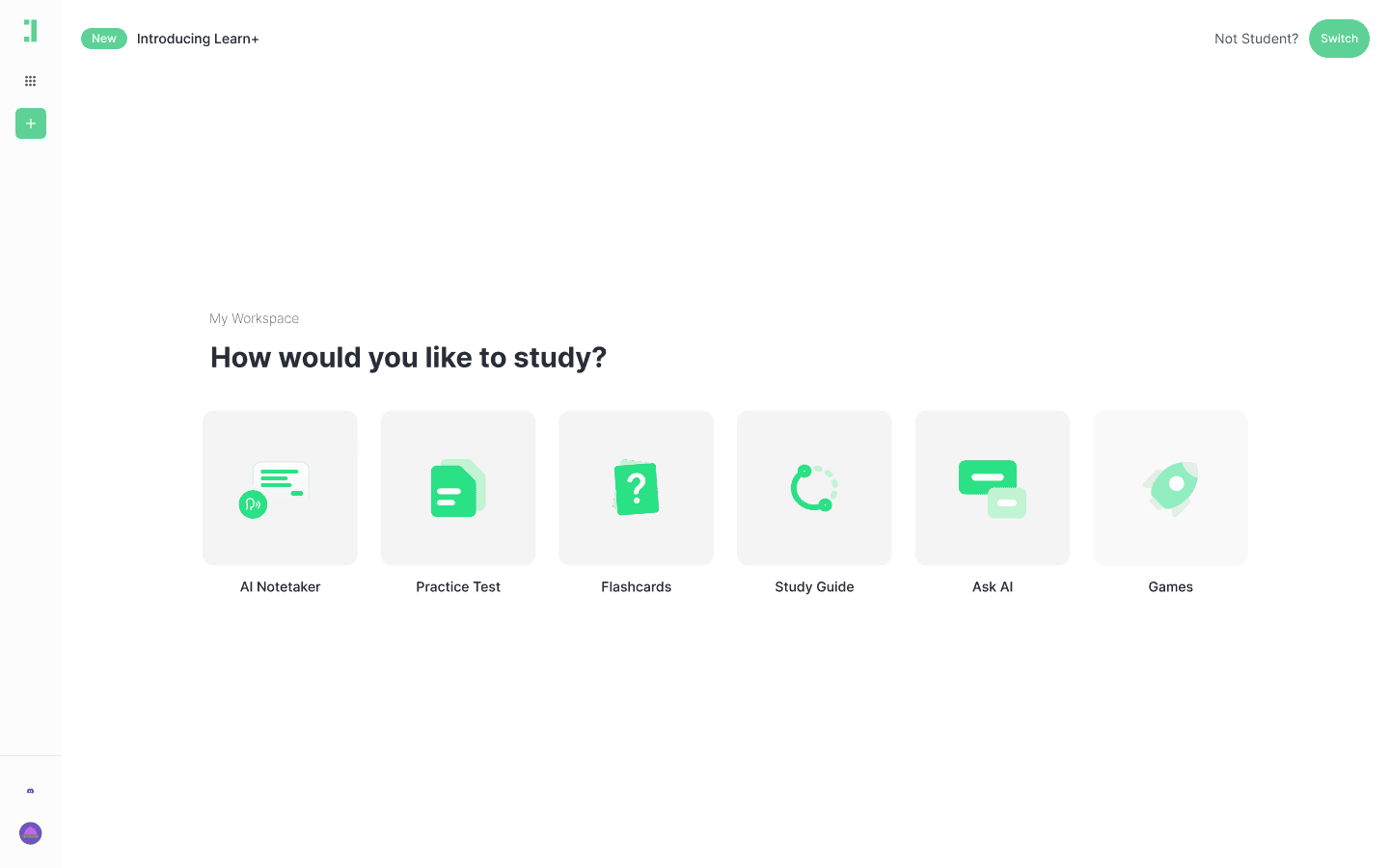
Generate Flashcards for Media Studies
Make custom Media Studies flashcards today. Generate study decks from your notes to learn theories and media effects.
Generate Flashcards with AI Free
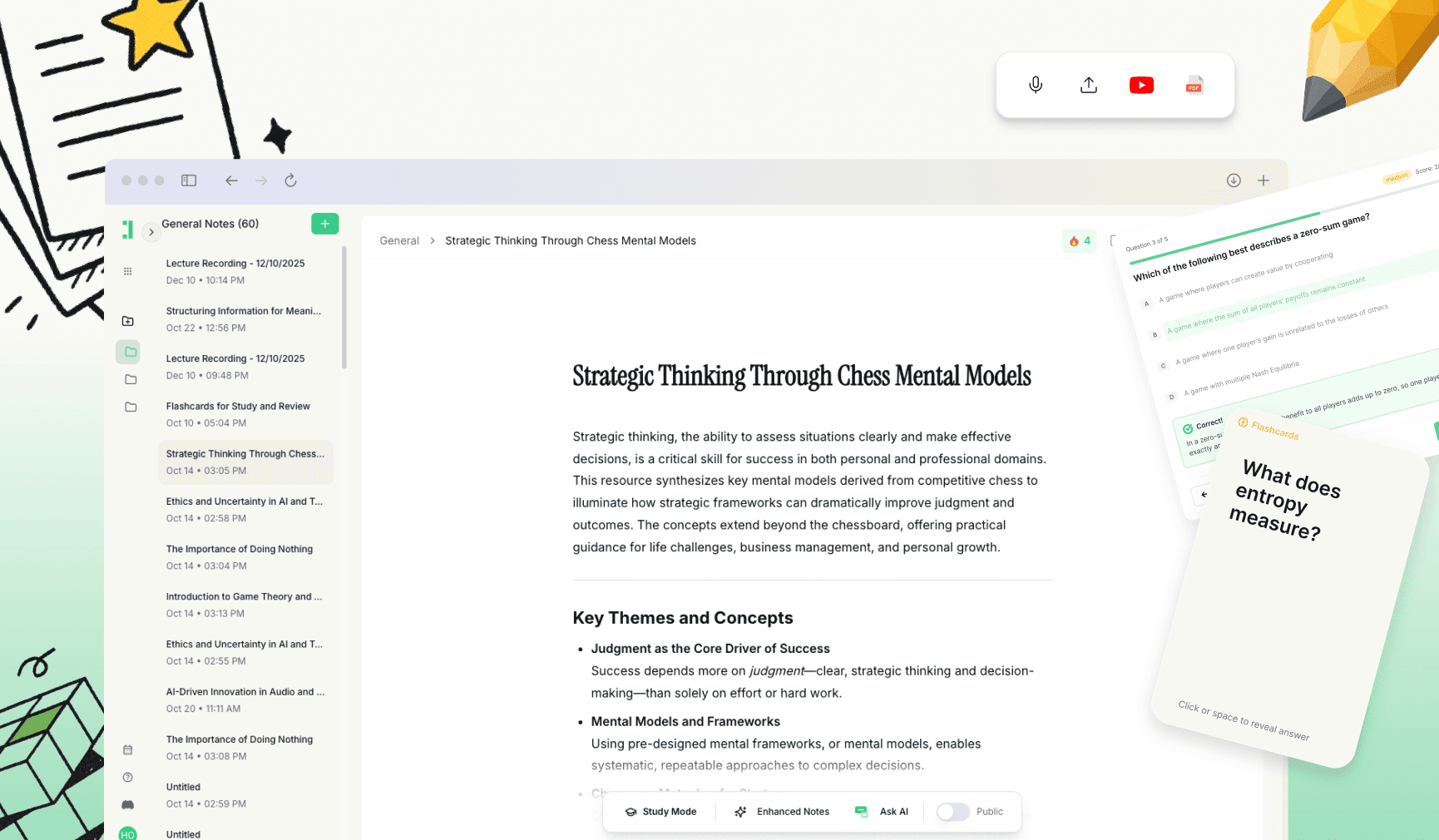
Generate Flashcards for Media Studies
Turn your notes, PDFs, slides, or lectures into Media Studies flashcards so you can review faster and remember more. Whether you are analyzing semiotics, audience theories, or media ownership, active recall is the key to mastering complex social frameworks.
Generate Media Studies FlashcardsUpload notes / paste text
In Duetoday, the process is simple: upload your course materials, click generate, and watch as our AI extracts key concepts into a structured deck. You can then review, edit, and study your flashcards across any device.
What are Media Studies flashcards?
Media Studies flashcards cover curated sets of key terms, communication theories, historical milestones, and analytical steps used to deconstruct media texts. They help you bridge the gap between reading a textbook and actually being able to apply a theoretical lens to a real-world advertisement or news broadcast.
Instead of rereading chapters on the 'Hypodermic Needle Theory' or 'Hegemony,' you test yourself on core definitions and criticisms. This active engagement forces your brain to retrieve information, which builds much stronger long-term recall for your exams and essays.
If you already have notes, Duetoday can generate a clean deck in minutes.
Why flashcards work for Media Studies
Media Studies involves a massive amount of specific terminology and interconnected theories. Flashcards help you link these abstract concepts to concrete examples and effects.
Using techniques like active recall and spaced repetition helps you move beyond passive recognition. When you see a term like 'Simulacra,' you aren't just reading it; you are mentally constructing its definition and Baudrillard’s context before checking the answer.
Remember complex theoretical definitions without late-night cramming
Separate similar concepts like 'encoding' vs. 'decoding' or 'interpellation' vs. 'ideology'
Learn the stages of media history and evolution chronologically
Practice applying regulatory rules and ethical frameworks quickly
What to include in your Media Studies flashcards
Effective flashcards follow the 'one idea per card' rule. They should be question-based and prompt you to think critically rather than just reciting a paragraph.
Definitions & key terms: Focus on the 'who' and 'what' of media terminology.
Processes & steps: Break down how a message travels from a producer to a consumer.
Comparisons: Contrast different school of thoughts, like the Frankfurt School vs. the Birmingham School.
Application: Use specific media texts as prompts for theoretical analysis.
Example prompts: What is the main argument of Cultivation Theory?, Define 'The Male Gaze' as coined by Laura Mulvey, Contrast Passive vs. Active Audience models, or How does 'Gatekeeping' function in digital journalism?
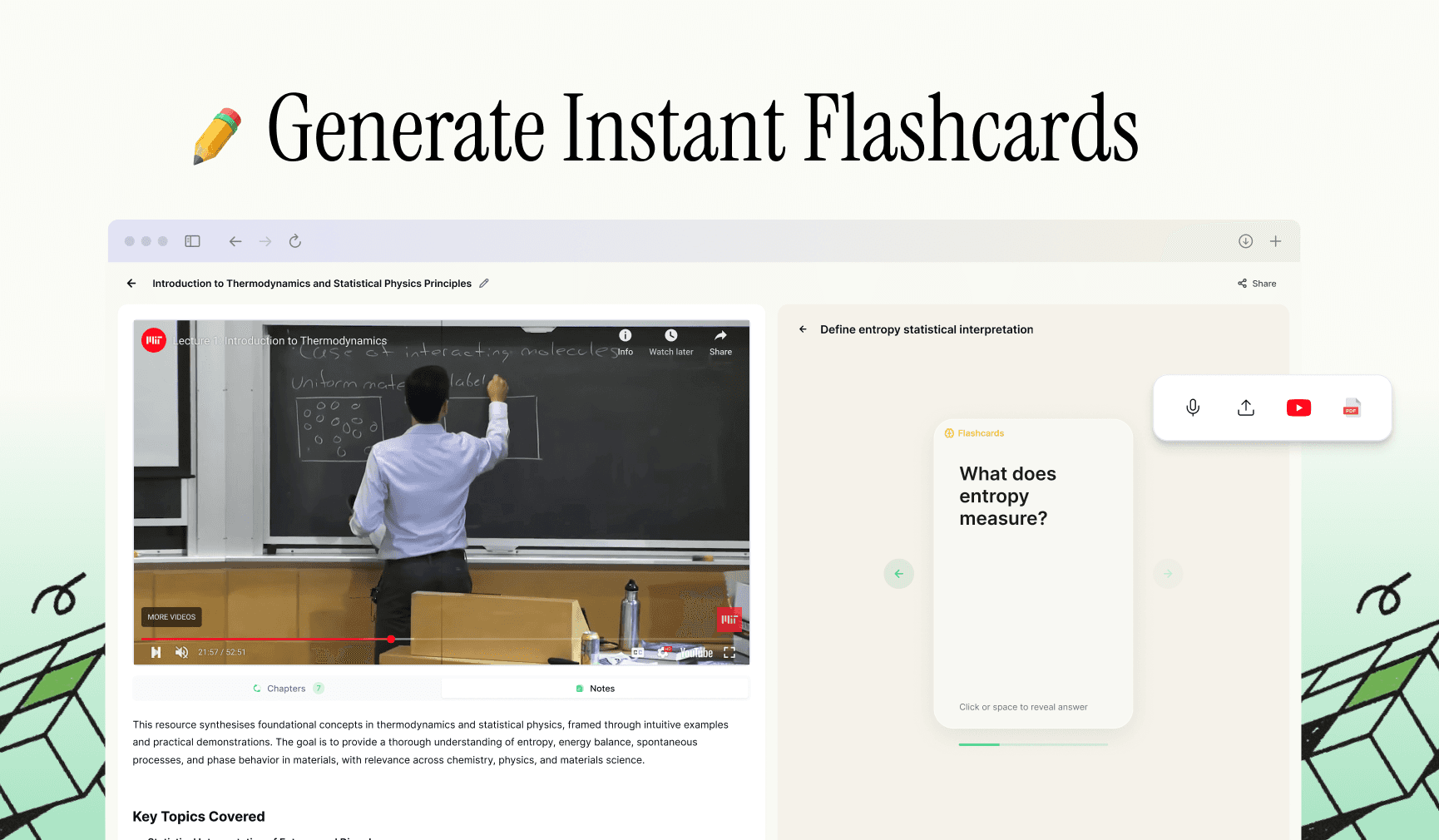
How to study Media Studies with flashcards (a simple system)
Studying Media Studies requires a two-pass approach. First, you build your deck to ensure you have coverage of the syllabus. Second, you review in rounds to identify what you actually understand versus what you've just memorized.
Review should be done in quick, 15-minute bursts. By repeating the tough cards more often, you ensure that high-level theories become second nature by the time your exam arrives.
Make a deck from your lecture notes or generate it from a textbook PDF.
Do one quick round to find weak spots in your theoretical knowledge.
Review weak cards—like specific media laws—daily for a few days.
Mix in a few harder analytical cards each session to keep your brain sharp.
Do a final mixed review of all topics before your final project or test.
Generate Media Studies flashcards automatically in Duetoday
Making flashcards manually for a subject as broad as Media Studies is slow, messy, and often leads to over-complicated cards. You spend more time writing than you do learning.
Duetoday changes that. You simply upload your notes, PDFs, or slides, and our AI generates flashcards instantly. You can then edit them for clarity and start studying right away.
Upload or paste your Media Studies material
Click Generate Flashcards
Review, edit, and start studying
Generate Media Studies Flashcards in Duetoday
Start with your notes and get a deck you can actually use today.
Common Media Studies flashcard mistakes (and how to fix them)
Many students create cards that are too dense, which makes them impossible to review quickly.
Cards are too long: Split theories into multiple cards (definition, critic, example).
Only memorizing words: Add 'explain why' prompts to ensure you understand the 'how' behind the media effect.
Confusing similar concepts: Create specific 'Compare and Contrast' cards for theories that sound alike.
No review schedule: Don't just make them; use spaced repetition to review cards you struggle with more frequently.
Ready to generate your Media Studies flashcards?
Stop rereading your syllabus and start recalling the information that matters. Upload your notes, generate your deck, and master Media Studies with active recall.
Start Generating Flashcards
Works with notes, PDFs, slides, and transcripts.
FAQ
How many flashcards do I need for Media Studies? It depends on the unit, but usually 40-60 cards per major topic (like Audience or Institutions) provides good coverage.
What’s the best format for Media Studies flashcards? Question and answer format works best, especially when asking for the 'significance' of a term rather than just its definition.
How often should I review Media Studies flashcards? Review every day for 10-15 minutes leading up to an exam to keep the terminology fresh in your mind.
Should I make cards from a textbook or lecture notes? Use both! Lecture notes often contain the specific examples your teacher wants to see, while textbooks provide broader definitions.
How do I stop forgetting theories after a few days? Use spaced repetition—a system where you review difficult cards more frequently than easy ones.
What if my flashcards feel too easy? Try adding 'Application' prompts, such as 'Apply this theory to a Netflix show you recently watched.'
Can I generate Media Studies flashcards from a PDF? Yes, Duetoday can read your PDFs and instantly turn them into structured flashcard decks.
Are digital flashcards better than paper for Media Studies? Digital cards are often better because they allow for faster organization and use automated scheduling for spaced repetition.
How long does it take to make a full deck? Manually it could take hours, but with Duetoday, you can generate a full deck in under 60 seconds.
Can Duetoday organize my cards for me? Yes, Duetoday categorizes your cards by topic so you can focus on specific areas of the Media Studies curriculum.

Duetoday is an AI-powered learning OS that turns your study materials into personalised, bite-sized study guides, cheat sheets, and active learning flows.