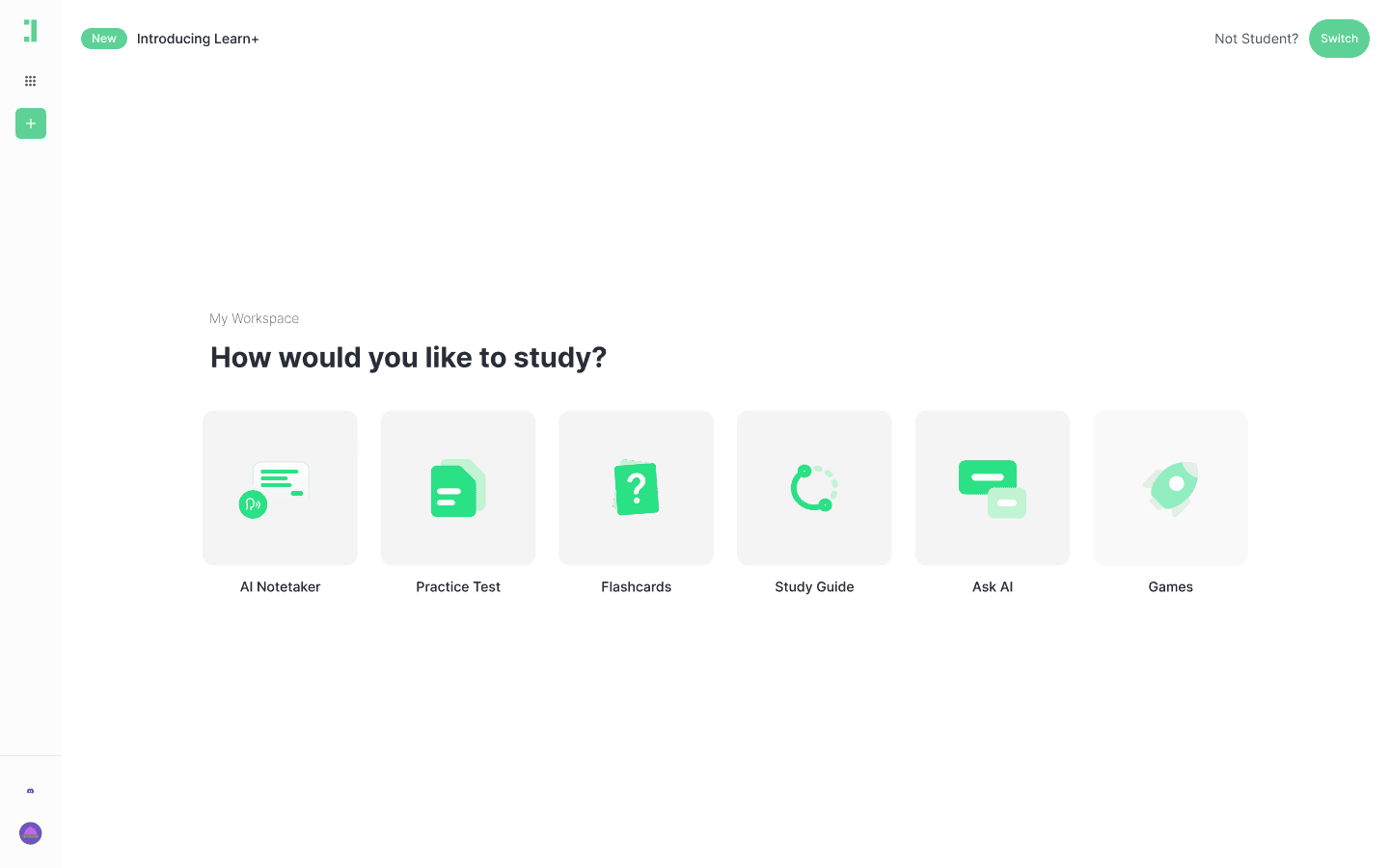
Generate Flashcards for Market Research
Turn notes into Market Research flashcards instantly. Try Duetoday for free now!
Generate Flashcards with AI Free
Generate Flashcards for Market Research
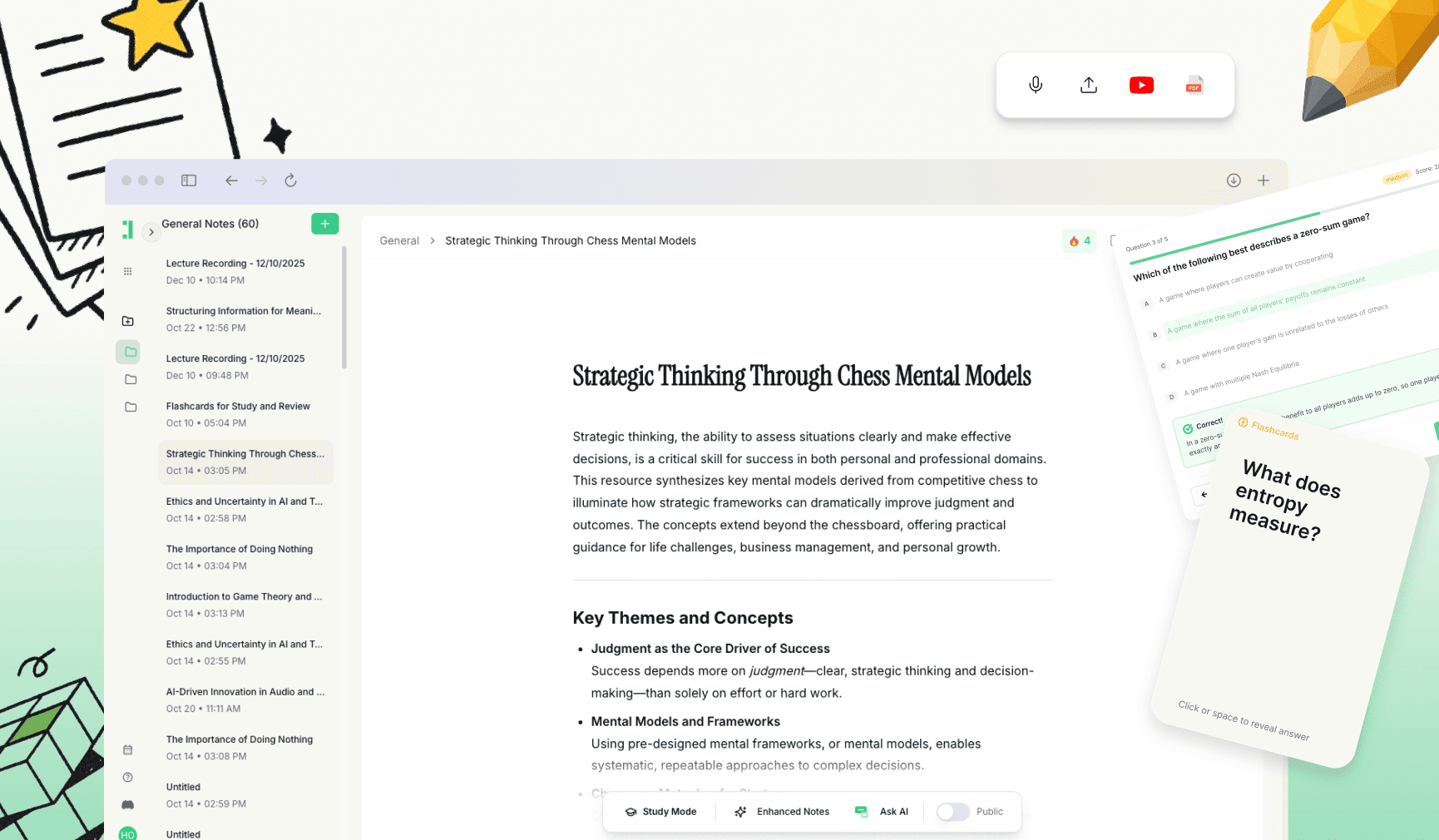
Turn your notes, PDFs, slides, or lectures into Market Research flashcards so you can review faster and remember more. Whether you are studying qualitative methods, statistical significance, or consumer psychology, Duetoday helps you transform dense theory into actionable study tools.
Generate Market Research FlashcardsUpload notes / paste text
In Duetoday, the process is simple: upload your course materials, generate a comprehensive deck, review or edit the cards, and start studying with active recall. No more manual data entry.
What are Market Research flashcards?
Market Research flashcards cover the essential frameworks, methodologies, and terminology used to gather and interpret data about customers and competitors. They typically focus on key terms like 'Net Promoter Score,' steps in the research process, statistical formulas, and the nuances between primary and secondary research.
Instead of passively rereading a textbook, these flashcards force you to retrieve information from memory. This builds stronger neural pathways and ensures you can apply research concepts in real-world scenarios or exams. If you already have notes, Duetoday can generate a clean deck in minutes.
Why flashcards are one of the best ways to study Market Research
Market Research requires a mix of rote memorization (definitions) and analytical application (interpreting results). Flashcards bridge this gap by breaking complex methodologies into bite-sized questions.
Using active recall and spaced repetition helps you move information from short-term memory to long-term mastery without the burnout of traditional cramming.
Remember complex terminology like 'Ethnography' vs 'Phenomenology.'
Separate similar concepts such as probability and non-probability sampling.
Learn research processes step-by-step, from problem definition to reporting.
Practice applying formulas like sample size calculations and margin of error.
What to include in your Market Research flashcards
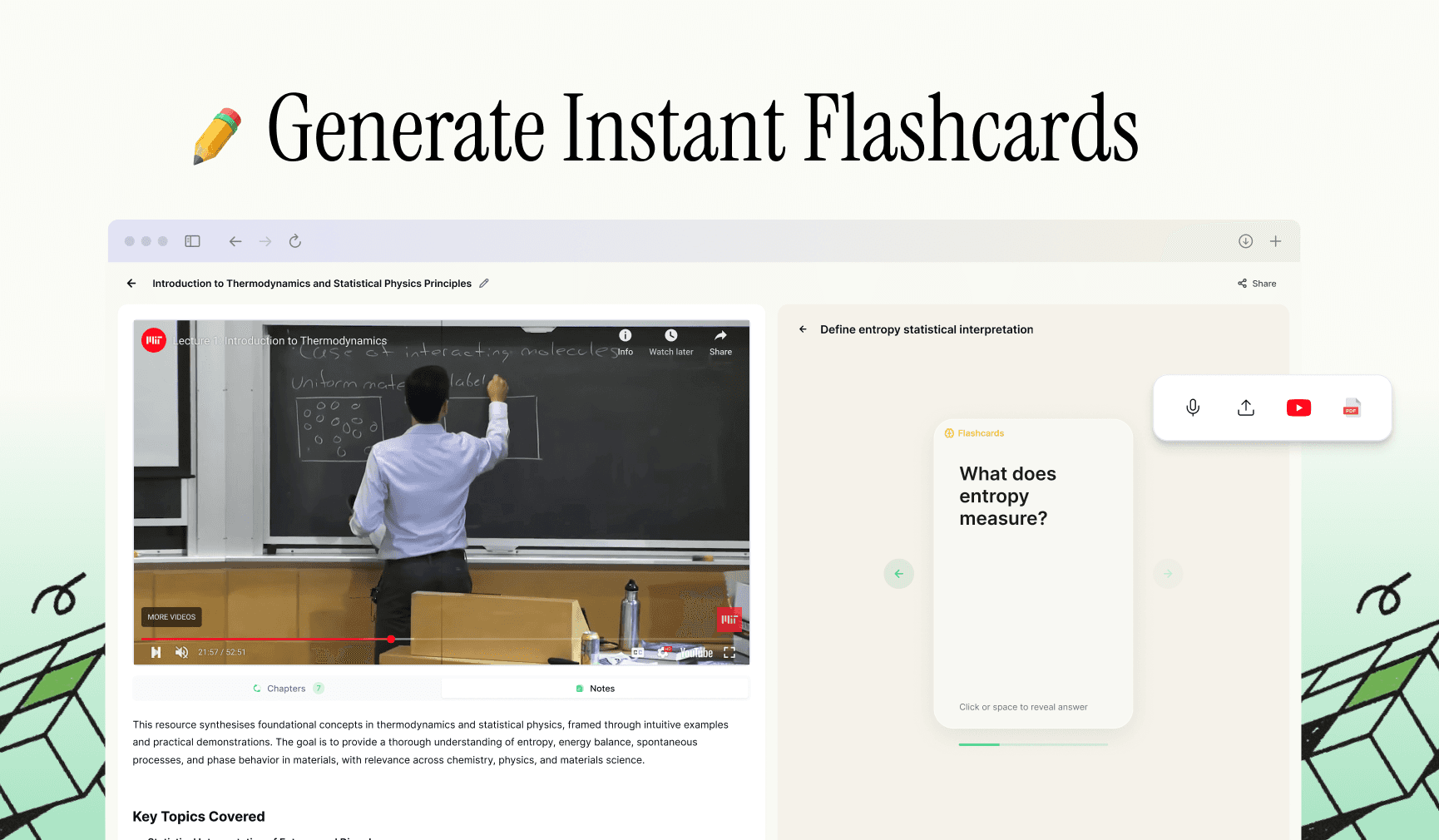
Effective flashcards follow the 'atomic' rule: one idea per card. By framing your Market Research content as specific questions, you prevent 'recognition bias' where you think you know the material just because it looks familiar.
Definitions & key terms: Focus on industry-standard jargon and metrics.
Processes & steps: Break down the stages of the research design.
Comparisons: Highlight the differences between research types.
Application: Create 'if/then' scenarios for choosing methodologies.
Example prompts for your cards: "What is the main difference between a Focus Group and a Depth Interview?", "Define 'Sampling Bias' in one sentence," and "What are the four levels of measurement?"
How to study Market Research with flashcards
To master Market Research, use a 'two-pass' approach. First, build your deck using your class notes or a syllabus. Then, go through a high-speed round to identify which concepts—like regression analysis or survey design—are tripping you up.
Make a deck from your notes (or generate it from content).
Do one quick round to find weak spots.
Review weak cards daily for a few days to build fluency.
Mix in a few harder analytical cards each session to keep your brain engaged.
Do a final mixed review of all topics before your final project or exam.
Generate Market Research flashcards automatically in Duetoday
Making cards manually is slow, messy, and often leads to cards that are too wordy to be useful. Duetoday automates the tedious part of studying so you can focus on the learning.
Upload or paste your Market Research material (PDFs, slides, transcripts).
Click 'Generate Flashcards.'
Review, edit, and start studying immediately on any device.
Generate Market Research Flashcards in Duetoday
Start with your notes and get a deck you can actually use today.
Common Market Research flashcard mistakes
Most students make cards that are essentially paragraphs. For Market Research, keep them sharp: split long lists into multiple cards, and don't just memorize the name of a concept—ensure you can explain *when* to use it. If you have a schedule, stick to it; spaced repetition only works if you repeat the cards you find difficult more frequently than the ones you know well.
Ready to generate your Market Research flashcards?
Stop rereading and start recalling. Upload your market research notes and get a study-ready deck in seconds.
Start Generating Flashcards
Works with notes, PDFs, slides, and transcripts.
FAQ
How many flashcards do I need for Market Research? It depends on the scope of your course, but usually 50–100 cards cover the core terminology and methodologies for a standard module.
What’s the best format for Market Research flashcards? Question-and-answer format is best. For example: 'Q: When is a Likert scale used? A: To measure attitudes or opinions with a range of responses.'
How often should I review Market Research flashcards? Aim for 15 minutes daily. Consistent, short sessions are more effective for memory than one long session per week.
Should I make cards from a textbook or lecture notes? Use both. Lecture notes provide the context your professor emphasizes, while textbooks provide the formal definitions and data formulas.
How do I stop forgetting formulas after a few days? Practice the formula on a flashcard by asking for the 'use case' rather than just the symbols. Spaced repetition in Duetoday will clear these up.
Can I generate Market Research flashcards from a PDF? Yes, Duetoday allows you to upload any Market Research PDF and converts the text into structured flashcards automatically.
Are digital flashcards better than paper for Market Research? Digital cards are often better because they use algorithms to show you difficult cards more often, saving you time.
How long does it take to make a full deck? With Duetoday, it takes seconds. Manually, it could take hours to format and write out 50+ cards.

Duetoday is an AI-powered learning OS that turns your study materials into personalised, bite-sized study guides, cheat sheets, and active learning flows.