Generate Flashcards for Marginal Analysis
Generate Marginal Analysis flashcards in seconds. Turn notes into study tools. Try for free!
Generate Flashcards with AI Free
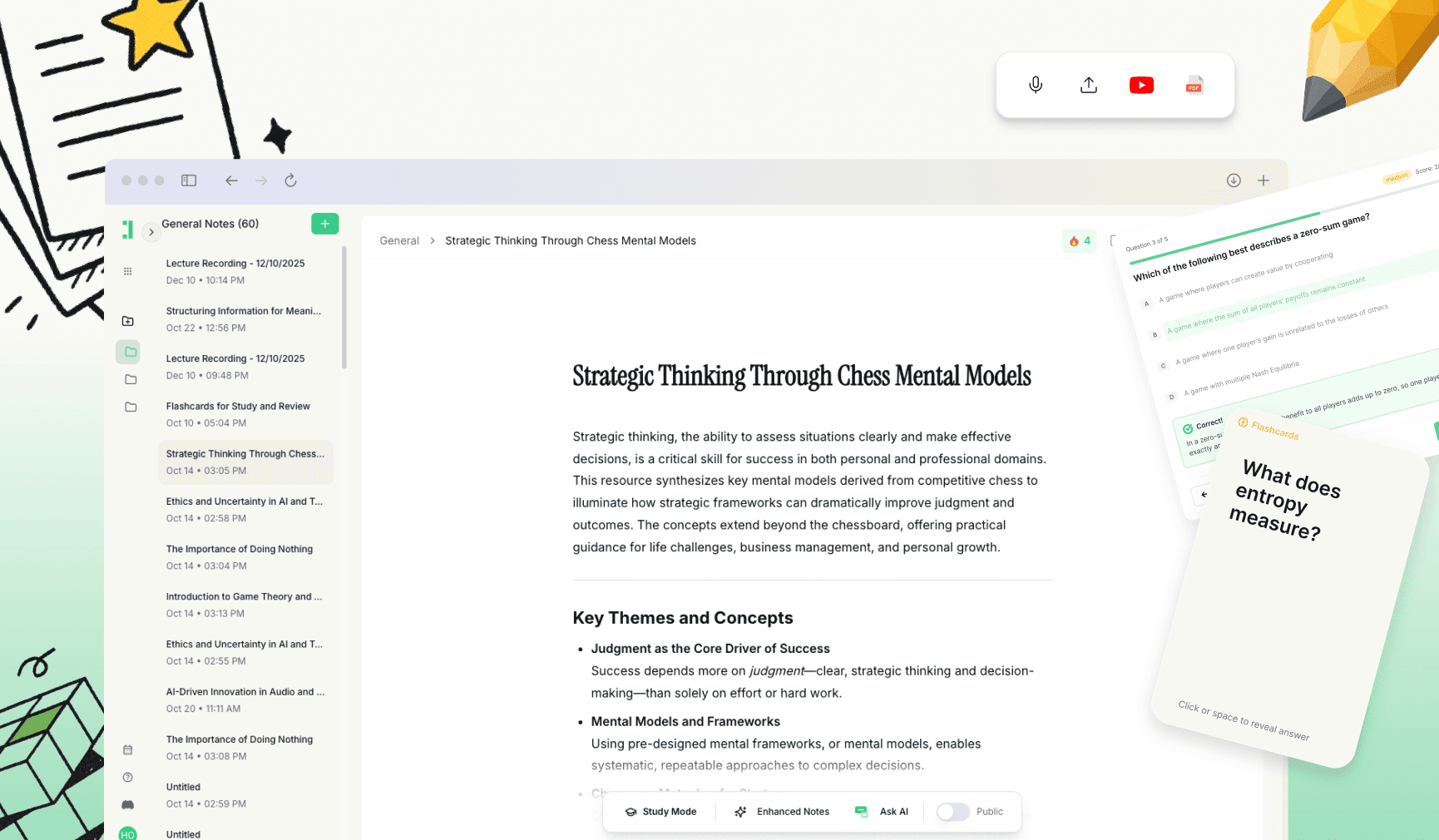
Generate Flashcards for Marginal Analysis
Turn your economics notes, PDFs, slides, or lecture transcripts into Marginal Analysis flashcards so you can review faster and remember more. Whether you are prepping for Microeconomics or an MBA exam, Duetoday helps you master the 'margin' without hours of manual data entry.
Generate Marginal Analysis FlashcardsUpload notes / paste text
In Duetoday, you simply upload your course materials, and our AI identifies key economic principles to generate a clean, structured deck. You can then review, edit, and study using active recall to ensure you never mix up marginal cost and average cost again.
What are Marginal Analysis flashcards?
Marginal Analysis flashcards cover the examination of the additional benefits of an activity compared to the additional costs incurred by that same activity. These cards focus on key terms like Marginal Utility, Marginal Revenue, Marginal Cost, and the law of diminishing returns.
The outcome is simple: instead of passively rereading a textbook chapter, you test yourself on the specific 'break-up' points and decision-making rules that define economic logic. This builds the fast recall necessary for solving complex graphing problems and word-based exam questions.
If you already have notes, Duetoday can generate a clean deck in minutes.
Why flashcards are one of the best ways to study Marginal Analysis
Marginal Analysis requires a deep understanding of incremental change and the relationship between different variables. Flashcards are perfect for this because they isolate specific rules—like MR=MC—ensuring you don't get distracted by the broader context until you've mastered the core logic.
Active recall and spaced repetition help move these formulas and concepts from short-term memory into long-term mastery. By testing yourself repeatedly on the different stages of production and utility, you train your brain to recognize patterns instantly.
Remember key formulas without late-night cramming
Separate similar concepts like Marginal vs. Total Utility
Learn the steps of profit maximization pathways
Practice applying the 'Marginal Rule' to different business scenarios

What to include in your Marginal Analysis flashcards
The best flashcards follow the "one idea per card" rule. Use question-based prompts that force your brain to retrieve the answer rather than just recognizing it. This is especially important for the four main card types in economics: definitions, processes, comparisons, and applications.
Definitions: "What is Marginal Utility?"
Processes: "How do you calculate Marginal Cost from Total Cost?"
Comparisons: "How is Marginal Revenue different for a price taker vs. an oligopoly?"
Application: "If MR > MC, should the firm produce more or less?"
Use prompts like: "Define the Law of Diminishing Marginal Returns," "What happens to MC when MP is rising?" or "State the Profit Maximization Rule."
How to study Marginal Analysis with flashcards (a simple system)
Start with a two-pass approach. First, generate your deck from your lecture slides or textbook. Then, go through the deck once to identify which rules or graphs are tripping you up the most. Focus your energy on those "weak" cards during your next session.
Make a deck from your notes or generate it automatically.
Do one quick round to find weak spots in your logic.
Review weak cards daily to cement the formulas.
Mix in harder application cards as you get more comfortable.
Do a final mixed review before your midterm or final.
Generate Marginal Analysis flashcards automatically in Duetoday
Making cards manually is slow, messy, and often leads to cards that are too wordy to be useful. Duetoday eliminates the grunt work by transforming your PDFs and slides into high-quality flashcards instantly.
Upload or paste your Marginal Analysis material
Click Generate Flashcards
Review, edit, and start studying immediately
Generate Marginal Analysis Flashcards in Duetoday
Common Marginal Analysis flashcard mistakes
Avoid making cards that are essentially paragraphs. If a card is too long, split it into two. Another common mistake is memorizing the definition of a term without understanding its application—always include "What happens if" scenarios. Also, remember to include cards that compare similar concepts so you don't confuse marginal and average values.
Ready to generate your Marginal Analysis flashcards?
Stop rereading and start recalling. Upload your notes, generate your deck, and master Marginal Analysis with ease.
Start Generating Flashcards

FAQ
How many flashcards do I need for Marginal Analysis? Usually 30–50 cards cover the core concepts of cost, revenue, and utility. Quality matters more than quantity.
What’s the best format for Marginal Analysis flashcards? Question-and-answer format is best for formulas, while 'If/Then' scenarios are perfect for decision-making rules.
How often should I review my cards? Review daily for the first three days, then space it out to every few days as you get more comfortable with the formulas.
Should I use my textbook or slides? Both! Textbooks are great for definitions, while lecture slides often highlight the specific application problems your professor prefers.
Can I generate cards from a PDF? Yes, Duetoday can read your economics PDF and extract the most important marginal formulas and theories for you.
Are digital flashcards better than paper? Yes, because digital tools use algorithms to show you the cards you struggle with more often, saving you time.

Duetoday is an AI-powered learning OS that turns your study materials into personalised, bite-sized study guides, cheat sheets, and active learning flows.