Generate Flashcards for Literary Theory
Make Literary Theory flashcards to master critical lenses and subjects like Marxism or Feminism. Generate study sets today.
Generate Flashcards with AI Free
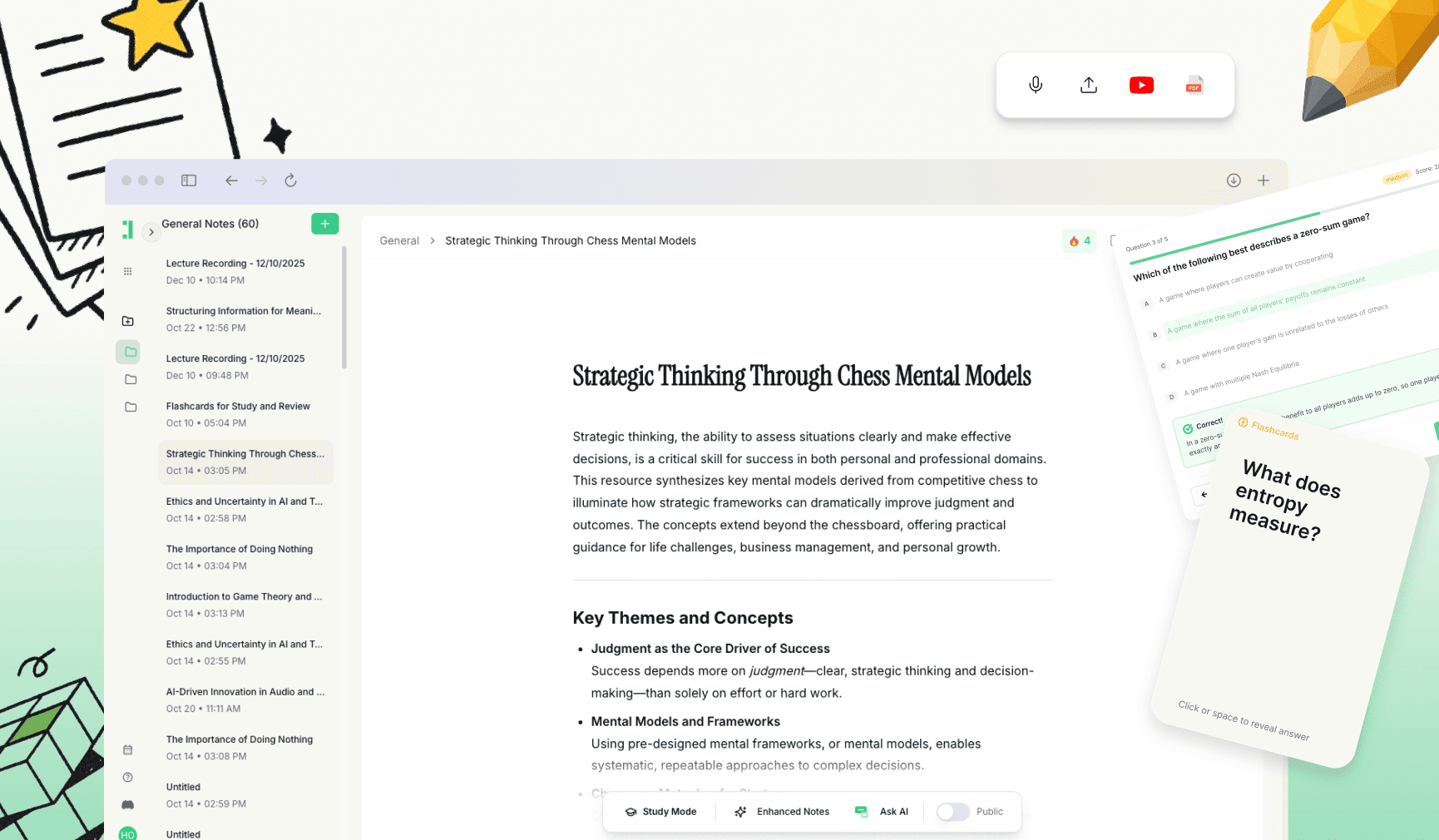
What are Literary Theory flashcards?
Literary theory flashcards are digital or physical study tools designed to help you master the complex frameworks used to interpret literature. These flashcards cover critical schools of thought, key terminology, influencing philosophers, and specific analytical lenses—ranging from Formalism and New Criticism to Post-colonialism and Queer Theory.
Instead of passively rereading dense academic essays or textbooks, literary theory flashcards force you to engage in active recall. By testing yourself on the core tenets of a theory or the definition of terms like 'hegemony' or 'intertextuality,' you build a stronger mental map of how to apply these concepts to any text. If you already have lecture notes or reading summaries, Duetoday can generate a clean, organized deck in minutes.
Why flashcards are one of the best ways to study Literary Theory
Literary theory requires a unique blend of terminology memorization and conceptual application. Flashcards bridge the gap between knowing a name (like Jacques Derrida) and understanding a concept (like Deconstruction). They allow you to isolate abstract ideas into manageable bites, ensuring you don't get overwhelmed by the jargon.
Remember complex terminology (e.g., 'the death of the author') without cramming.
Separate similar concepts like Structuralism vs. Post-structuralism.
Learn the chronological evolution of theoretical movements.
Practice applying specific lenses to hypothetical literary scenarios.
What to include in your Literary Theory flashcards
Effective literary theory flashcards should follow the 'one idea per card' rule. Avoid pasting entire paragraphs; instead, focus on specific questions that trigger deep thought. Your deck should cover definitions, key thinkers, and the 'how-to' of application.
Definitions & Key Terms: What is 'the uncanny' in Psychoanalytic theory?
Thinkers & Works: Who wrote 'The Madwoman in the Attic' and what theory is it associated with?
Comparisons: How does New Historicism differ from traditional History?
Application: Apply a Marxist lens to the concept of the 'American Dream' in Gatsby.
Example prompts for your deck: 'Define Orientalism as proposed by Edward Said,' 'What is the primary focus of Ecological criticism?', and 'Explain the concept of 'Differance' in one sentence.'
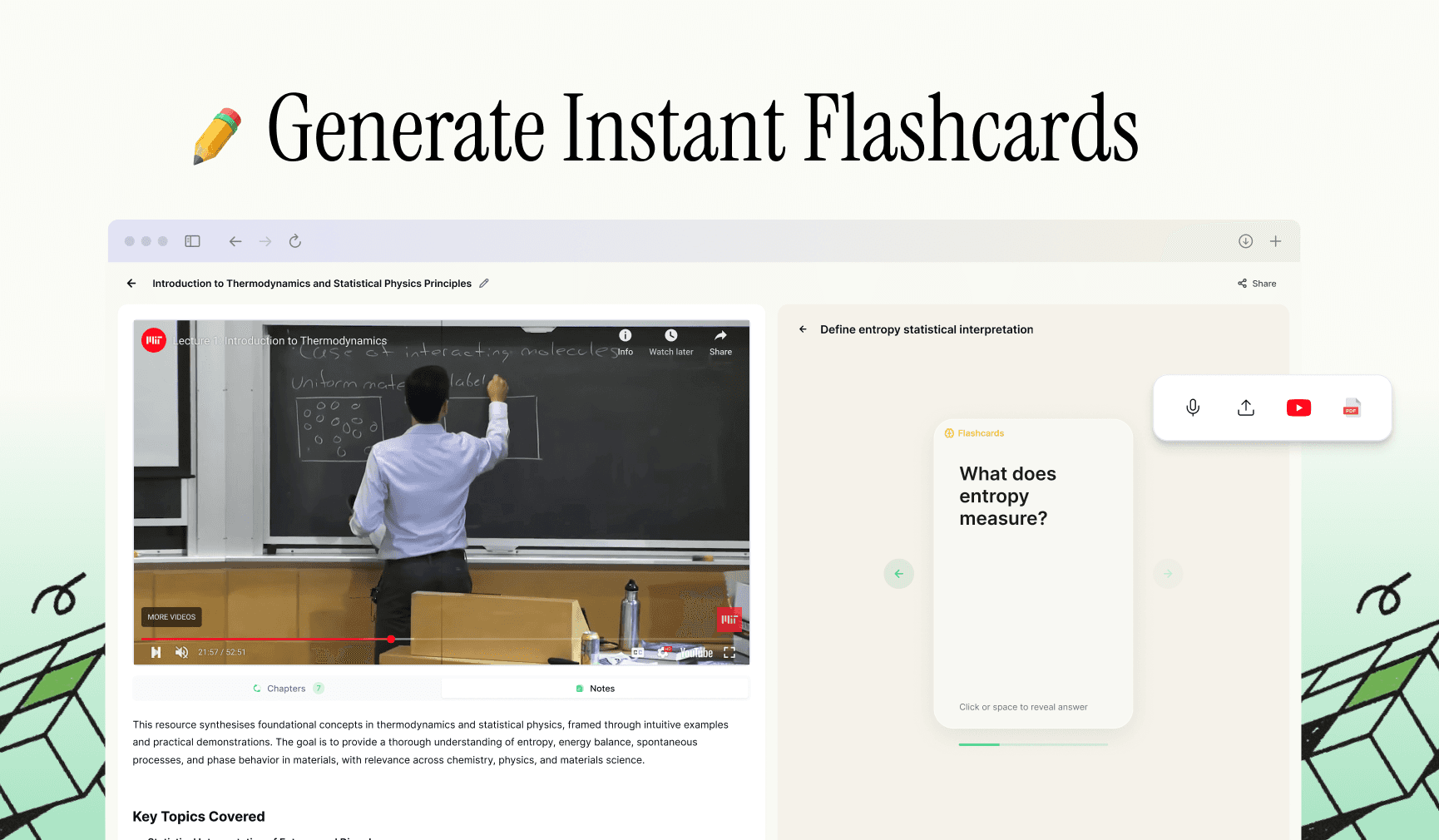
How to study Literary Theory with flashcards (a simple system)
Studying theory is about repetition and layering. Start by mastering the vocabulary, then move toward interpreting texts using those words. A 'two-pass' approach ensures you aren't just memorizing definitions but actually understanding the utility of the theory.
Make a deck from your seminar notes or reading PDFs using Duetoday.
Do a quick daily round to identify which theories (e.g., Lacanianism) are hardest for you.
Review the 'weak' cards every morning for three days.
Mix in application cards where you explain a theory to a friend.
Do a final mixed-theory review before your final essay or exam.
Generate Literary Theory flashcards automatically in Duetoday
Creating flashcards for theory manually is exhausting—you often spend more time typing definitions than actually learning them. Duetoday streamlines this by extracting the most important arguments and terms from your academic materials instantly.
Upload your theory PDFs, JSTOR articles, or lecture slides.
Click 'Generate Flashcards' to see the AI identify key themes.
Review, edit for personal nuance, and start your study session.
Generate Literary Theory Flashcards in Duetoday
Start with your notes and get a deck you can actually use today.
Common Literary Theory flashcard mistakes (and how to fix them)
Many students create cards that are too 'wordy,' which makes them impossible to review quickly. If a card takes 30 seconds to read, it isn't a flashcard—it's a note.
Cards are too long: Break down 'Post-modernism' into 5 separate cards.
Only memorizing names: Ensure you have cards that ask 'Why' a theory matters.
Ignoring the context: Include the time period for each school of thought.
No application practice: Add cards that ask you to apply a lens to a short poem.
FAQ
How many flashcards do I need for Literary Theory?
For a standard survey course, 50-100 cards usually cover the major movements and their respective key terms and figures.
What is the best format for Literary Theory flashcards?
A question-on-front, concise-answer-on-back format is best. Use 'What is...' or 'Who argued...' to keep triggers sharp.
How often should I review Literary Theory flashcards?
Reviewing for 15 minutes a day using spaced repetition is more effective than a 4-hour session once a week.
Should I make cards from textbooks or primary essays?
Both. Use textbooks for the 'big picture' definitions and primary essays (like those by Foucault or Barthes) for specific terminology.
How do I stop forgetting theory names after a few days?
Use flashcards that link the theorist's name directly to their most famous term or book title to create a mental anchor.
What if my flashcards feel too easy or too hard?
If they are too easy, add 'Apply this' cards. If they are too hard, break the complex theory into three smaller, simpler cards.
Can I generate Literary Theory flashcards from a PDF automatically?
Yes, Duetoday can scan your uploaded PDFs and automatically extract terms and concepts to create a study-ready deck.
Are digital flashcards better than paper for Literary Theory?
Digital cards are often better because they allow for easier organization of the massive amount of jargon found in literary theory.
How long does it take to make a full Literary Theory deck?
Manually it can take hours; with Duetoday's AI generation, it takes less than a minute to create a comprehensive starting deck.
Can Duetoday organize my cards by theoretical school?
Yes, you can tag or categorize your generated cards into sections like 'Feminism,' 'Marxism,' or 'Psychoanalysis' for focused study.

Duetoday is an AI-powered learning OS that turns your study materials into personalised, bite-sized study guides, cheat sheets, and active learning flows.