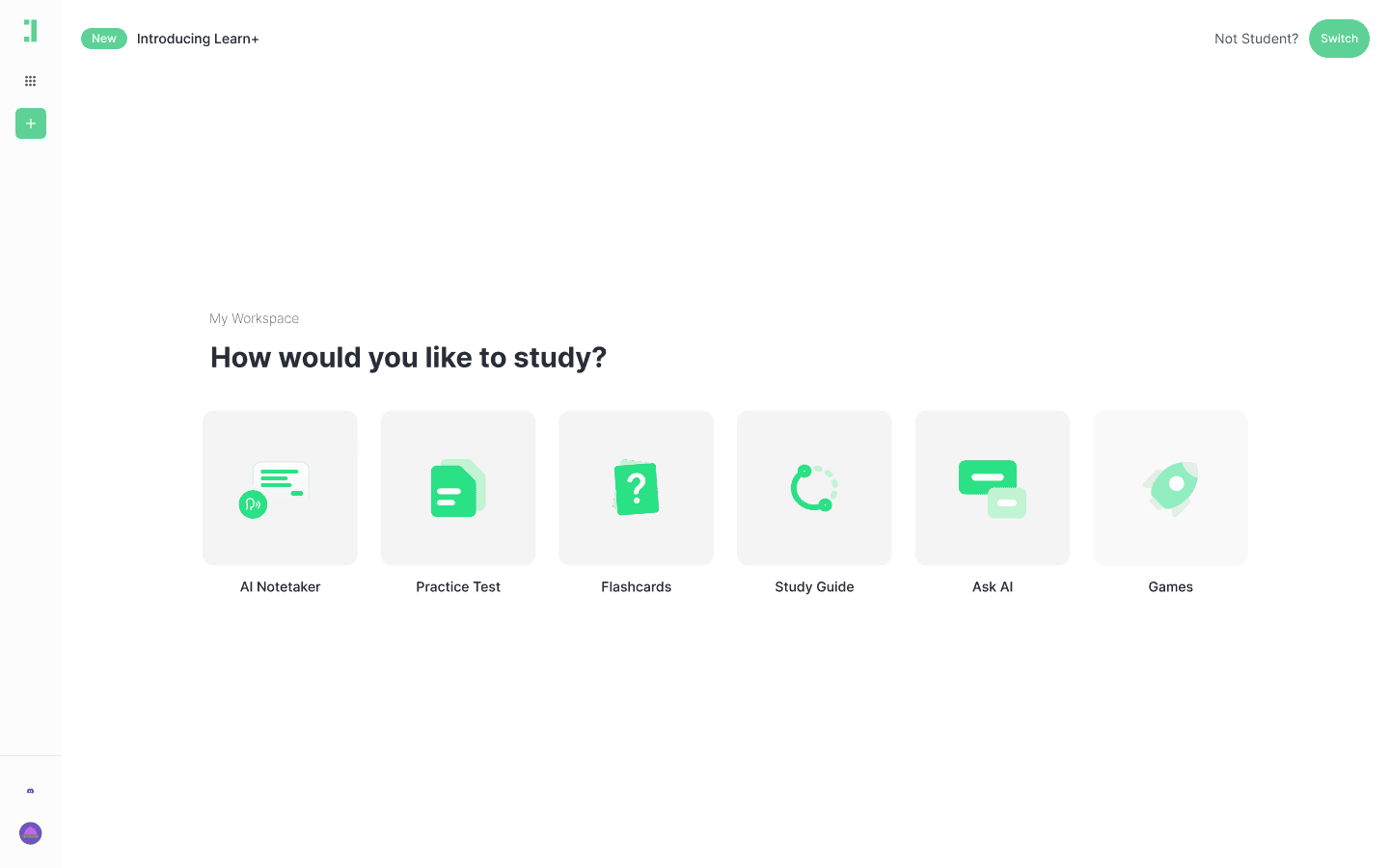
Generate Flashcards for Learning and Memory
Generate or make flashcards for Learning and Memory to master cognitive psychology and active recall techniques efficiently.
Generate Flashcards with AI Free
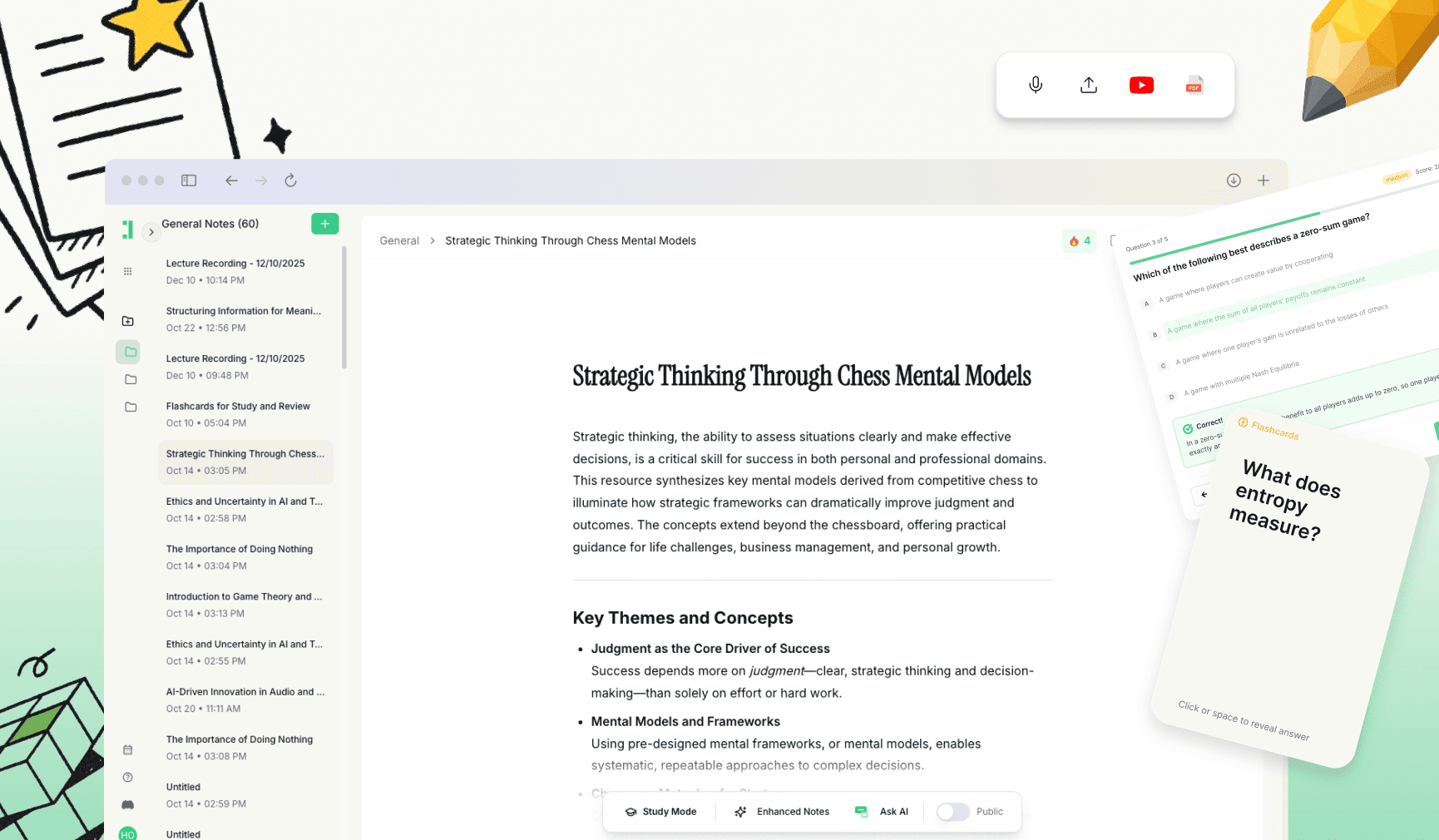
Generate Flashcards for Learning and Memory
Turn your notes, PDFs, slides, or lectures into Learning and Memory flashcards so you can review faster and remember more. Whether you are studying cognitive psychology, neuroscience, or educational theory, our AI helps you bridge the gap between reading and retaining.
Generate Learning and Memory FlashcardsUpload notes / paste text
In Duetoday, the process is simple: upload your study material, generate your deck, review or edit the cards, and start your study session. It takes the manual labor out of prep so you can focus on mastering the science of the human mind.
What are Learning and Memory flashcards?
Learning and Memory flashcards cover the fundamental mechanisms of how information is encoded, stored, and retrieved. They focus on key terms like neuroplasticity, memory stages (short-term vs. long-term), and various learning theories such as classical and operant conditioning.
Instead of passively rereading a textbook, these flashcards force you to engage in active retrieval. This tests your brain's ability to pull information from memory, which is the most effective way to strengthen neural pathways. If you already have notes, Duetoday can generate a clean deck in minutes.
Why flashcards work for Learning and Memory
Learning and Memory as a subject requires a mix of terminology, structural anatomy, and process-based understanding. Flashcards are perfectly suited for this because they break down complex psychological systems into manageable, testable bites.
By using active recall and spaced repetition, you ensure that high-level concepts like 'Long-term Potentiation' move from your working memory into long-term storage. You aren't just memorizing definitions; you are training your brain to recognize patterns and relationships.
Remember key terms like 'encoding specificity' without cramming.
Separate similar concepts like 'proactive interference' vs 'retroactive interference'.
Learn biological processes step-by-step, such as the stages of the Hippocampal-cortical loop.
Practice applying psychological rules and theories to real-world scenarios.
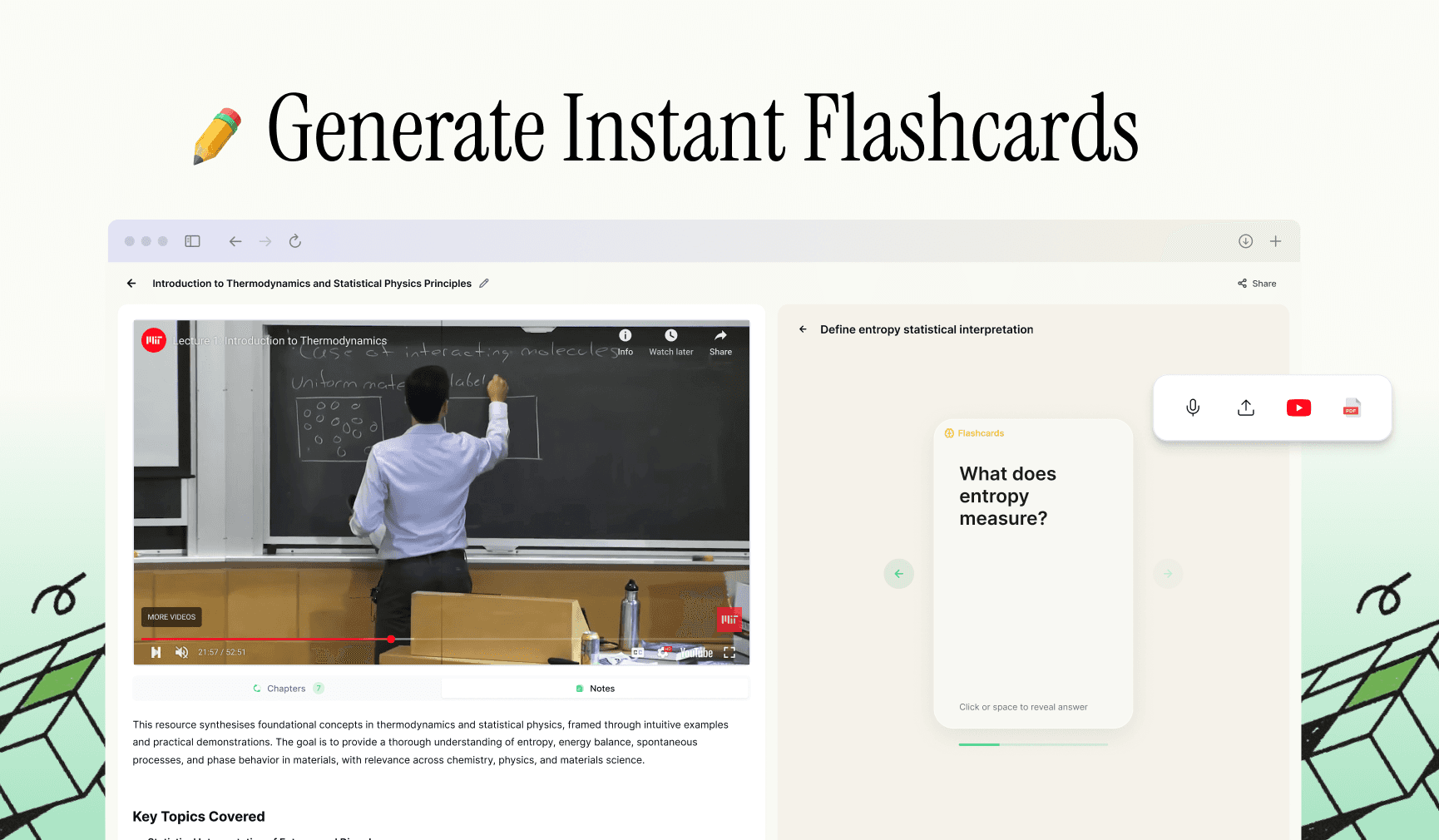
What to include in your Learning and Memory flashcards
The best flashcards follow the 'atomic' rule: one idea per card. When studying Learning and Memory, your cards should be formatted as questions that prompt a specific answer rather than broad, vague prompts.
There are four main card types that work best for this subject: Definitions for vocabulary, Processes for biological functions, Comparisons for contrasting theories, and Application for case studies.
Definitions & key terms: What is the capacity of sensory memory?
Processes & steps: What are the three stages of the Atkinson-Shiffrin model?
Comparisons: How does Semantic memory differ from Episodic memory?
Application: Give an example of a mnemonic device used for chunking.
How to study Learning and Memory with flashcards
To master this subject, use a 'two-pass' approach. Start by generating your deck from your syllabus or notes, then move into focused review rounds. Don't try to master 100 cards at once; break them into smaller sets based on sub-topics like 'Classical Conditioning' or 'Brain Anatomy'.
Consistency is more important than duration. Reviewing your cards for 15 minutes a day using a spaced repetition system is significantly more effective than a 4-hour binge session before an exam. Focus on your 'weak' cards—the ones you get wrong—by increasing their frequency in your daily deck.
Generate Learning and Memory flashcards automatically in Duetoday
Making cards manually is slow and often results in cards that are too wordy to be useful. Duetoday automates the tedious part of studying. Simply upload your lecture slides or transcript, and our AI will extract the most important concepts for you.
Upload or paste your Learning and Memory material.
Click 'Generate Flashcards'.
Review, edit, and start studying immediately.
Common Learning and Memory flashcard mistakes
Most students make the mistake of putting too much text on one card. If a card feels like a paragraph, you aren't testing your memory; you're just reading. Split complex ideas into multiple cards to ensure you actually know the material.
Cards are too long: Keep it to one question and one answer per card.
Only memorizing words: Ensure you include 'why' and 'how' questions.
Neglecting biological components: Don't forget to include brain structures like the Amygdala.
No review schedule: Spaced repetition only works if you actually space it out!
Ready to generate your Learning and Memory flashcards?
Stop rereading your notes. Start testing your knowledge with AI-generated flashcards that help you learn faster and retain longer.
Start Generating Flashcards
Works with notes, PDFs, slides, and transcripts.
FAQ
How many flashcards do I need for Learning and Memory?
A typical unit usually requires 40-70 cards to cover terms, theories, and biological processes without being overwhelming.
What’s the best format for these flashcards?
The 'Question and Answer' format is best. Use 'Fill-in-the-blank' for challenging terminology like chemical neurotransmitters.
How often should I review my flashcards?
Ideally, daily for cards you find difficult, and every 3-5 days for concepts you have already mastered.
Should I make cards from a textbook or slides?
Both are useful, but lecture slides usually highlight what your instructor considers most important for exams.
How do I stop forgetting the concepts after a few days?
Use Duetoday’s spaced repetition features to ensure you are prompted to review cards just as you are about to forget them.
Can I generate flashcards from a PDF automatically?
Yes, Duetoday allows you to upload any PDF and instantly converts the text into a structured flashcard deck.
Are digital flashcards better than paper?
Digital cards are better for Learning and Memory because they can use algorithms to automate your review schedule perfectly.
How long does it take to make a full deck?
With Duetoday’s AI, you can generate a complete, high-quality deck from your notes in less than 60 seconds.

Duetoday is an AI-powered learning OS that turns your study materials into personalised, bite-sized study guides, cheat sheets, and active learning flows.