Generate Flashcards for Latin American History
Make Latin American History flashcards and generate custom study guides for history subjects using AI tools.
Generate Flashcards with AI Free

Generate Flashcards for Latin American History
Turn your notes, PDFs, slides, or lectures into Latin American History flashcards so you can review faster and remember more. Use Duetoday to transform dense historical texts into manageable study decks that help you master the complexities of the region's past.
Generate Latin American History FlashcardsUpload notes / paste text
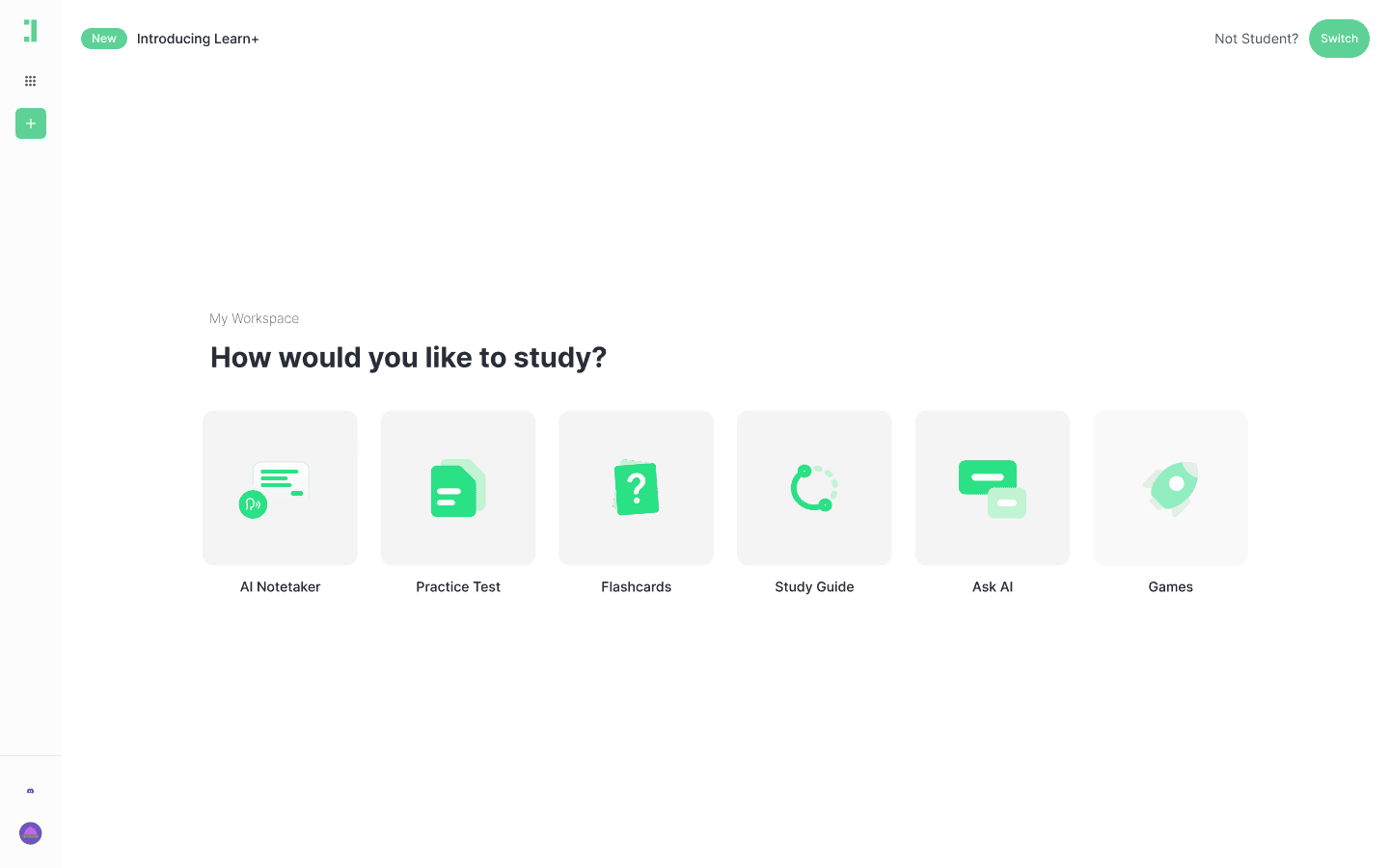
In Duetoday, the process is simple: upload your materials, generate your cards, review or edit them for accuracy, and start your study session immediately.
What are Latin American History flashcards?
Latin American History flashcards cover key terms, revolutionary movements, colonial structures, and influential figures such as Simón Bolívar or José de San Martín. They help you break down complex timelines—from pre-Columbian civilizations and Spanish conquest to modern democratic transitions—into bite-sized information pieces.
Instead of rereading long chapters on the Mexican Revolution or the Cold War in Latin America, you test yourself quickly to build long-term recall. If you already have notes, Duetoday can generate a clean deck in minutes.
Why flashcards work for Latin American History
Flashcards are ideal for history because they link names, dates, and events to their larger significance. They help you move beyond rote memorization into understanding the cause-and-effect relationships that define the region.
By using active recall and spaced repetition, you focus on the details you struggle with most, ensuring you don't forget important context between study sessions.
Remember key treaties and dates without cramming
Separate similar concepts (e.g., Encomienda vs. Hacienda systems)
Learn historical processes step-by-step (independence movements, industrialization)
Practice identifying the impact of foreign intervention

What to include in your Latin American History flashcards
Effective history flashcards follow the one idea per card rule. Use question-based prompts to ensure you are actually testing your knowledge rather than just recognizing text.
Definitions & key terms: What was the Gran Colombia? Define the Monroe Doctrine.
Processes & steps: What were the main stages of the Haitian Revolution?
Comparisons: How did the colonization of Brazil differ from Spanish colonies?
Application: How did the 1959 Cuban Revolution affect Latin American geopolitics?
Example prompts: Who was the 'Liberator' of South America?, What was the primary goal of the Alliance for Progress?, Explain the significance of the Treaty of Tordesillas.
How to study Latin American History with flashcards
Start with a two-pass approach. First, generate your deck from your syllabus or lecture notes. Then, perform an initial review to identify which periods or countries you find most confusing.
Make a deck from your notes or generate it from content.
Do one quick round to find weak spots in your timeline knowledge.
Review weak cards daily to cement dates and names.
Mix in a few harder cards, like those regarding economic theories (Dependency Theory).
Do a final mixed review before exams to see the big picture.
Generate Latin American History flashcards automatically
Manual card creation is slow and often leads to overly wordy cards. Duetoday simplifies this by extracting the most important facts from your uploads and formatting them for optimal learning.
Upload or paste your Latin American History material
Click 'Generate Flashcards'
Review, edit, and start studying
Generate Latin American History Flashcards in Duetoday
Start with your notes and get a deck you can actually use today.
Common Latin American History flashcard mistakes
Cards are too long: Split complex revolutions into multiple specific cards.
Only memorizing dates: Add cards that ask Why did this happen?
Confusing different leaders: Use comparison cards to highlight differences.
Ignoring geography: Include cards about the strategic importance of specific regions.
FAQ
How many flashcards do I need for Latin American History? For a standard survey course, a deck of 100-150 cards usually covers the major eras and figures effectively.
What’s the best format for history flashcards? A question on the front and a concise, single-concept answer on the back is most effective for recall.
How often should I review these flashcards? Review daily for the first week, then use spaced repetition to revisit them every few days until the exam.
Should I make cards from a textbook or slides? Use both! Your textbook provides the depth, while slides usually highlight the specific themes your professor emphasizes.
How do I stop forgetting dates? Link the date to a specific person or event on your flashcard to create a narrative connection.
Can I generate flashcards from a PDF automatically? Yes, Duetoday can process your historical PDFs and turn them into flashcards instantly.
Are digital flashcards better than paper? Digital cards are better for history because they allow for easy organization of massive amounts of data and offer built-in spaced repetition algorithms.
How long does it take to make a full deck? With AI generation, you can have a comprehensive deck ready in under two minutes.
Can Duetoday handle diverse historical topics? Yes, it can process everything from political history to social and economic developments in Latin America.

Duetoday is an AI-powered learning OS that turns your study materials into personalised, bite-sized study guides, cheat sheets, and active learning flows.